Tag Archives: Actors

Those who forget the past are condemned to repeat it. — George Santayana

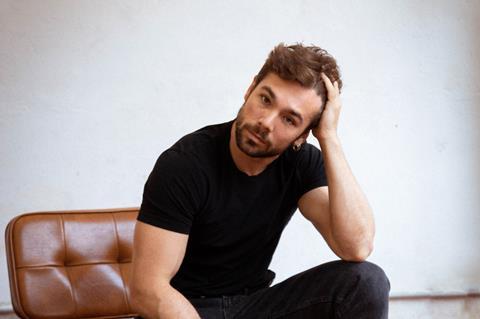
I am watching a Spanish Netflix series called Merli: Sapere Aude, and it is excellent. It is a dramedy, and the plot revolves around the protagonist, a young man named Pol Rubio, played by a fine young Spanish actor named Carlos Cuevas. Pol is a young man in his first year of studies in philosophy at a university in Barcelona. He has a bisexual orientation, and though he favours men, he does have dalliances with women occasionally. Pol is an anti-hero; while he generally strives to do good, he betrays a friend and his father when it serves his interests. He learns in the first episode of season two that he is HIV+. Pol is devastated by the news, despite the doctor’s assurance that the virus can be managed with treatment. He starts the regimen of taking the medication and tries to carry on. In a subsequent episode, Pol converses with a former co-worker who likely exposed him to the virus. His friend lost his job when the employer learned he was HIV+. The friend reminds Pol that people will feel sorry for you when you get cancer, but when you get HIV, you are viewed as a “dirty faggot.” Pol also converses with his employer, a mature gay man living with HIV. The employer lived through the AIDS crisis of the 1980s and 1990s and saw many gay men succumb to the disease. He recounted an incident where a friend was beaten to death for being queer. I bristled when I heard “queer” used to refer to a gay man, but I realized in the context of the anecdote that it was the attackers who called him a queer as they beat him to death. Queer is a slur, the last thing many gay men heard as they were beaten to death by gangs of thugs.

Continue reading

Time makes us sentimental. Perhaps, in the end, it is because of the time that we suffer. — André Aciman

This is what a gay high school boy looked like in 1979.

I like gay romance in print and on film. The positive portrayal of romance and intimacy between two men or high school boys is lovely. Gay youth and men exist and have the same need for love and companionship as the heterosexual majority. Especially given that in Western society, intimacy between men was criminalized for a long time–it was considered “gross indecency” and punishable by imprisonment. Beyond that, public prejudice was prevalent throughout the 20th century. I remember it well. Recently, I met up with a man I knew in high school. We had not seen each other since graduation in 1980. We met through a mutual friend and ex of mine. I had no idea that my high school buddy was gay. We are both in our sixties and retired. I am happily partnered, and he is single. It was good to see him again.

Continue reading

I get stage fright and gremlins in my head saying: ‘You’re going to forget your lines’. — Alan Rickman

stagefrightstage-fright

I remember listening to a recording of a very interesting interview Richard Attenborough gave on a radio program back in the 1970s. He discussed his role, that of John Christie, in the motion picture “10 Rillington Place.” John Christie was an English serial killer who was hanged for his crimes in 1953. In particular, Attenborough discussed how he went about inhabiting the character of Christie. What struck me in the interview was his opening comment (offered in a lighthearted tone),  something to the effect that “actors are dramatic people.” I chuckled when I heard his comment. “How true this is,” I thought. He continued the interview explaining that he needed a very deep level of concentration to inhabit the character of John Christie. In addition, in a subsequent interview Attenborough credited the director, Richard Fleischer, who instilled in him the confidence he needed to successfully inhabit the character of John Christie. I understand the need for a deep level of concentration and confidence to successfully inhabit a character. This comes as no surprise, but listening to Attenborough discuss acting technique made me think of stage fright, the actor’s nightmare. Continue reading

Says he, ‘I am a handsome man, but I’m a gay deceiver.’ — George Colman, the Younger ( 1762-1836)

him_and_her_bedHOLLYOAKS_TX_08_06_07_2

Is it more comfortable for gay actors to play straight characters or for heterosexual actors to play gay roles? As an actor myself, this question crossed my mind. I took training in acting techniques at the Ottawa Theatre School, in workshops with professional theatre companies and with an acting coach. I appeared in many amateur stage productions over the years. The three actors in the photographs above are known for playing gay and heterosexual characters in British television series. Russell Tovey, the man seen embracing the woman, is famous for playing heterosexual characters in Being Human and Him & Her. He is gay. James Sutton, the young man wearing the green and a cream striped pullover, and Guy Burnet, seated next to him, became widely known for their portrayal as gay characters in a relationship in the British soap opera Hollyoaks. Both of these men are heterosexual. Having seen their respective performances, I am duly impressed. They are fine actors. They were able to successfully inhabit their characters, gay and heterosexual, giving a believable portrayal; still, I wonder, is it easier for a gay actor to play straight or for a straight actor to play gay? Continue reading