Category Archives: Philosophy

If you don’t believe in freedom of speech for people you disagree with, you don’t believe in freedom of speech at all. — Noam Chomsky

Justin Trudeau, speaking ex cathedra as leader of the Liberal Party of Canada, pronounced on abortion: “I have made it clear that future candidates need to be completely understanding that they will be expected to vote pro-choice on any bills.” This pronouncement was decidedly illiberal, and something one usually expects to hear from only the most noxious, left-leaning ideologue. Given Justin Trudeau’s heritage, I would have expected a more nuanced stance on the issue. His father, Pierre Elliott Trudeau, former Minister of Justice and Prime Minister in Liberal governments in the latter half of the 20th century, is remembered for his stand on personal liberty and faith (he was a practicing Roman Catholic).

On personal liberty, particularly on matters of sexuality, Minister of Justice Trudeau famously observed in 1967, “Obviously, the state’s responsibility should be to legislate rules for a well-ordered society. It has no right or duty to creep into the bedrooms of the nation.” Prime Minister Trudeau enacted the Constitution Act, including the Canadian Charter of Rights and Freedoms, in 1982. The opening sentence reads, “Whereas Canada is founded upon principles that recognize the supremacy of God and the rule of law.” Section 2 of the Charter guarantees freedom of conscience and religion. Justin Trudeau, it seems, has decided to strip members of the Liberal Party of Canada of their right to freedom of conscience and religion, at least as it applies to the controversy over abortion.

I found Justin Trudeau’s stance on the issue untenable. He implied that the issue of abortion is settled and that there should be no further discussion. He could not be more mistaken. Abortion is an issue that needs to be addressed, and all points of view merit consideration. As a classical liberal who leans toward the libertarian camp, I am prepared to tolerate the pro-choice position, though I disapprove. I am in favour of what could be described as the pro-compromise position. While abortion should remain legal, society has a stake in the status of the unborn, and this needs to be addressed in Canadian law.

“Crimes Against the Foetus,” published by the Law Reform Commission of Canada in 1989, includes several recommendations for amendments to Canadian law in this regard. In effect, if enacted, these recommendations would make wrongful harm to the foetus criminal rather than abortion. Abortion would remain a legal surgical procedure with no restrictions in the first twelve weeks of pregnancy and with limitations brought to bear, maintaining society’s stake in the status of the unborn in the latter stages of pregnancy. The Law Reform Commission of Canada concluded such legislation is consistent with the Common Law and Charter of Rights and Freedoms.

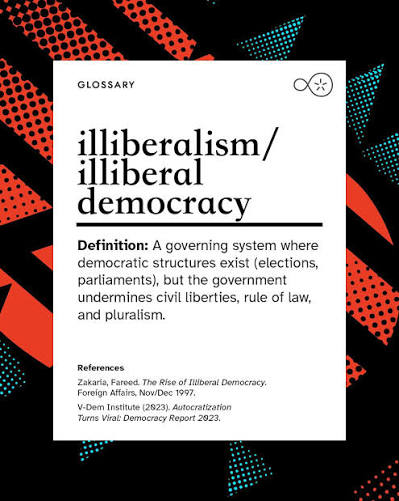
But rather than follow the direction given by the Law Reform Commission of Canada on abortion, the Liberal government led by Justin Trudeau, and now Mark Carney, continued its trend of imposing left-wing authoritarianism on Canadians. With the passage of Bill C-9, the Combating Hate Act, police forces across Canada, such as the Durham Police Force, have initiated the Community-Based Hate Reporting Program. In short, citizens are encouraged to spy on their neighbours, allowing “individuals to securely and confidentially report incidents of hate—even those that do not meet the threshold of criminality.” (Durham Region) And no doubt, the Liberal government will feign surprise when people take advantage of the opportunity to file vexatious complaints against those whose views they dislike. And why not? Your identity will be concealed, and you will face no repercussions for making a wrongful accusation. In some cases, you could be charged with mischief, but I doubt that is a priority for the police or the Crown prosecutors. For a party that has Liberal in its name, they have formed the most illiberal government in Canadian history.

Posted by Geoffrey
There is no crueller tyranny than that which is perpetuated under the shield of law and in the name of justice. — Montesquieu

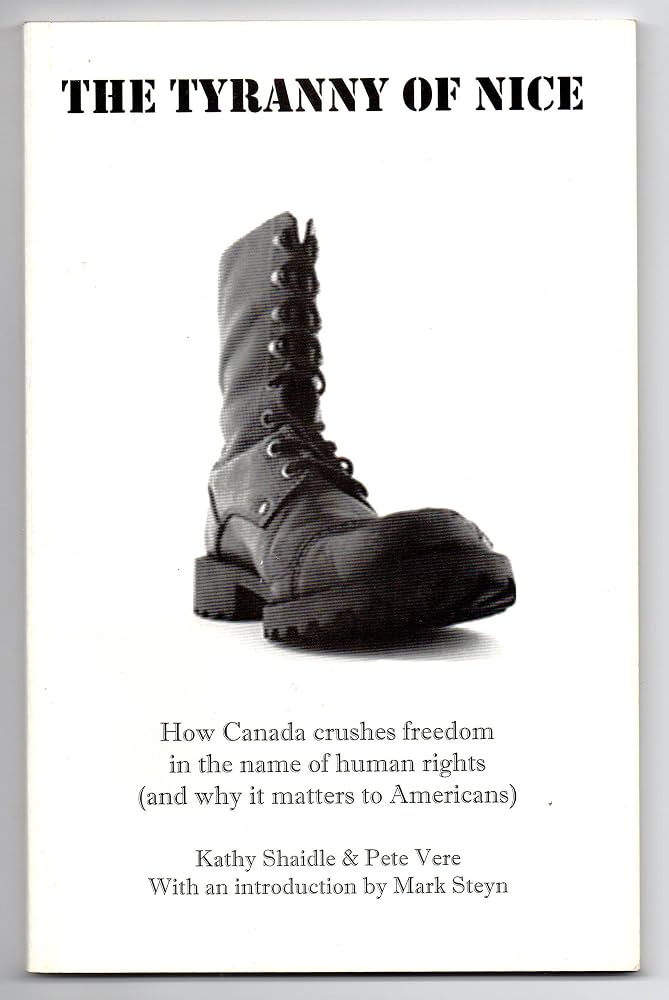
The Liberal government has made the 2SLGBTQI+ the focal point of its Woke tyranny. The acronym stands for “Two-Spirit, lesbian, gay, bisexual, transgender, queer, intersex, and additional people who identify as part of sexual and gender diverse communities. The “2S” at the front recognizes Two-Spirit people as the first 2SLGBTQI+ communities. The “I” for intersex considers sex characteristics beyond sexual orientation, gender identity and gender expression. The “+” is inclusive of people who identify as part of sexual and gender diverse communities, who use additional terminologies.” (Women and Gender Equality Canada) The premise on which 2SLGBTQI+ rests is the narrative that Canada was founded by European conquerors who imposed heternormativity and patriarchy on the Native population and the marginalized and oppressed non-Indigenous communities—particularly the BIPOC (Black, Indigenous, People of Colour). Naturally, this is patent nonsense. That is not to say that racism never existed in Canadian history and that gay and lesbian people were persecuted. There were historical wrongs that Canadians acknowledge, and changes to Canadian law have been instituted to guarantee equality under the law and opportunity, and, where appropriate, reparations have been made to affected individuals. For example, survivors of the Japanese internment during World War Two were awarded $21,000 each in 1988. Also, twelve million dollars was given to the Japanese Community Fund, along with 24 million dollars towards the creation of a Canadian Race Relations Foundation to ensure that similar injustices would never happen again. (National Association of Japanese Canadians) But for the current Liberal government, that is not enough. In short, the Liberal government uses the acronym to project Trans Queer fantasy and nonsense onto Canadian history. They are revising our history, if not trying to erase it, and making it an offence to challenge or criticize the narrative with the passage of Bill C-9, the Combating Hate Act. (Canadian Constitution Foundation)

Continue reading

Bigotry: A vice confined to the weakest minds. ~ Anonymous

What is it about my being a white man that makes some people think any argument I make in any discussion I join on any topic is invalid? Honestly, what do my sex and skin colour have to do with my ability to think, form, and express a thought? I am an educated man. I was fortunate to have been born in Canada in the mid-twentieth century. I had the benefit of a public education and earned two university degrees. My schooling included lessons in history, music, drama, and logic. I learned how important objectivity is in the pursuit of knowledge and truth. I also learned that you should judge others as individuals according to their character. So, then why, in 2026, do my sex and race matter to so many people? So much so that I am attacked for being an old white man with no regard to my character. The thing to remember is that despite being white and male, I had to compete for spots in university and employment. Nothing was guaranteed. I suffered hardship and disappointment along the way. Like many Canadians my age, I had to move back in with my parents for a while after graduating from university with a B.A., only to find there was no room for me in the workforce. I remember well when I was in grade 8, my teacher lectured the class on the importance of getting an education. It was that, or you could expect to draw a welfare cheque. I remember the ads in the 1990s that pitched the message, “More education equals more job choices.” I did as my elders told me, only to end up educated, unemployed, and having to move in with my parents. I did not give up. I struggled to find work and initially found jobs through temporary employment agencies. It was at one of these temporary jobs that my supervisor suggested I enroll in library school. I applied and was offered admission to the School of Library and Information Science at the University of Western Ontario (now called Western University) in 1990. I graduated in 1993 with a Master of Library and Information Science degree.

Continue reading

For every complex problem there is an answer that is clear, simple, and wrong. — H. L. Mencken

The Liberal Party of Canada, the governing Party in 2016, rewrote the Canadian Human Rights Act to include gender identity and expression as prohibited grounds of discrimination. It was puzzling at the time, as they could not define gender identity conclusively. The Canadian Human Rights Act defines gender identity as follows:

Gender identity is each person’s internal and individual experience of gender. It is their sense of being a woman, a man, both, neither, or anywhere along the gender spectrum. A person’s gender identity may be the same as or different from the gender typically associated with their sex assigned at birth. For some persons, their gender identity is different from the gender typically associated with their sex assigned at birth; this is often described as transgender or simply trans. Gender identity is fundamentally different from a person’s sexual orientation. (Canadian Human Rights Act)

Basically, it is an individual’s belief in something that cannot be observed or measured. It is a subjective sense of self, based on irrational ideas; it can be anything you want or nothing at all. That is entirely up to the individual. That in itself is fine. Canadian law guarantees the right to freedom of belief and conscience—as it should. That being the case, belief in gender identity was guaranteed in existing law. Also, existing Canadian law prohibits discrimination based on religion. The thing to remember is that while you are free to believe in gender identity, you are also free not to. From what I surmise, belief in gender identity asserts that we have gendered souls which can be either male, female, or anything in between. Hence, people who are sure of their sex, male or female, are called “cisgender,” as their gender identity and sex align. “Transgender” people are those whose sex and gender identity do not align; they sometimes say that they were born in the wrong body. Again, that is a matter of personal belief and conviction, and no one is stopping anyone from holding these beliefs. Jordan Peterson warned at the time the Liberal government revised the Canadian Human Rights Act to include gender identity and expression, that it would result in compelled speech. His concerns were dismissed, mockingly. Unfortunately, state institutions like the public service, military, police, and schools have been compelled to adopt the belief in gender identity as dogma. Yes, the Party, the Liberal Party of Canada, decreed that in Canada, 2+2=5, in that gender identity is grounded in reality because they say so. Not only that, but anyone who dissents is a heretic whose rejection of the doctrine must be singled out and sanctioned. In short, Canadians are expected to bend the knee to this particular belief system, which runs contrary to Canadian law, notably the Canadian Charter of Rights and Freedoms. I do not understand why the Liberal Party of Canada is so determined to overlay this doctrine of gender identity on Canadians. It is as if they want to impose a new state religion. In doing so, they sowed division among Canadians, resulting in bitter conflict. It is as if the Party declared in fact and established in law that not only do angels exist, but how many angels can fit on the head of a pin, so that the public can quarrel over how many angels do fit on the head of a pin or if angels even exist.

I look at things logically, and the law of non-contradiction, a fundamental law of logic, states that contradictory propositions cannot both be true at the same time and in the same sense. The Liberal Party of Canada decided that it is possible to be male and female at the same time and in the same sense. We saw an example of how this played out in the recent mass shooting in Tumbler Ridge, British Columbia, where the RCMP and the state-funded news media insisted that the suspect was female despite having been born male. Of course, to most people viewing the news reports from the RCMP spokesman, who initially used the term “gunperson” and female in referring to the suspect, when it was quickly revealed that he was an 18-year-old male who had decided to identify as female four years prior. They insisted on referring to him as “she/her” in their statements. The police and court records will show that he was a she, despite the reality that he was male, because in existing Canadian law, whether an individual is male or female is determined by self-identification, and frankly, that is absurd. No, the reality is that 2+2=4, and sex is observable, measurable, and immutable. In this instance, eight people, two adults and six children, died, and twenty-seven were injured, some critically. The RCMP and the state-funded media feel compelled to walk on eggshells so as not to “misgender” the suspect who died at the scene for fear of being condemned for heresy against doctrine. Their priority should be enforcing the law and reporting on current events objectively, without being compelled to adhere to the tenets of any particular belief system, and without looking ridiculous in the process.

Posted by Geoffrey

Alas, how quickly the gratitude owed to the dead flows off, how quick to be proved a deceiver. — Sophocles

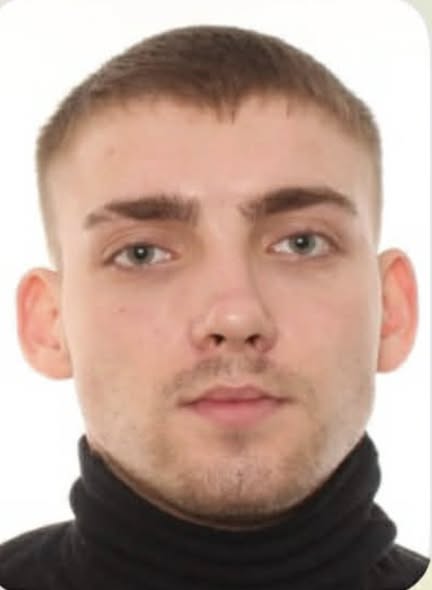
Kirill was a good and decent man.

Groundhog Day, February 2, 2026, is my sixty-fifth birthday, and I have mixed feelings. On the one hand, I am thankful to be alive and for all the good things I have. I have lived longer than many of the people I have known, and despite the hardship I experienced along the way, things are generally good. At the same time, I am feeling bummed because I learned of the senseless and untimely death of a young man in Ukraine whose name was Kirill. He was killed in action serving in the Ukrainian Army in the ongoing war with Russia. He was twenty-four years old. He was conscripted into military service at nineteen and survived many battles before his luck ran out. I only knew him remotely through my fishing buddy Colin, who was one of many of Kirill’s friends. I learned about Kirill, his background, and character through conversations with Colin and the photos and videos he shared with me. Kirill was a fine young man who withstood the privations and stresses of compulsory military service in a useless war over a territorial dispute. What bothers me about his death, beyond the fact that he was so young and had his whole life ahead of him, is that looking back on my life, I served as a volunteer in the Canadian Army at his age. At the time, I thought military service would be an adventure. My grandfathers and great-uncles served in the Canadian Army and the Royal Canadian Navy during the Second World War. They had a sense of duty and volunteered. One of my great-uncles was killed in France during the battle for Caen. He is buried in the Commonwealth War Cemetery in Calais. I also had a sense of duty. I served for 4 years as a reservist from 1978 to 1982, and I was free to leave the service at any time. I was mustered out after 4 years, and that completed my brief, undistinguished stint of military service.

Continue reading

In the acronym LGBTQ+, “queer” is one of the multiple meanings for the Q. But that general acceptability does not erase queer’s treacherous and hateful history. — A. Pallas Gutierrez

I remember submitting an essay for grading in a course on the sociology of religion I took at Queen’s University in 1983. When the essay was returned to me with the grade and the professor’s comments, he noted that I used the terms Catholic and Christian interchangeably. He pointed out that while Catholics are Christians, so are Protestants. By using the terms Catholic and Christian interchangeably, I blurred the distinction between the two and risked giving the reader the impression that Protestants were somehow not Christians. Naturally, I understand that there are several denominations and sects in Christendom that profess different beliefs concerning Christian doctrine. However, I took the professor’s point that a little clarity goes a long way. What prompted the memory of my essay and the comment is how I noticed that so many people use the terms gay and queer interchangeably. I see this in news articles and discussions on online forums. Occasionally, someone refers to me as queer or a member of the queer community. I politely correct them, telling them that I am gay, not queer, and no, I am not a member of the queer community. I ask that they respectfully not refer to me as a queer, as I do not like it. The term is a slur, a derogatory term used historically to describe a gay man. It is like calling a black man a coon or a Jewish man a Hebe. Yes, I know that there is a countercultural constituency that claimed to have “reclaimed” the term. They are free to call themselves what they want, but it is objectionable when they use the terms gay and queer interchangeably when referring to gay men. In short, a gay man is a male homosexual, a man who experiences same-sex romantic and sexual attraction. Gay men are represented in all races and ethnicities. They are individuals, and the only thing they have in common is their sex and orientation.

Sadly, countercultural thinking in gay rights activism emerged in 1990 with the introduction of Queer theory; this is an ideological position, as Renee Janiak notes, the Queer theory holds:

To be queer means, “fighting about social injustice issues all the time, due to the structure of sexual order that is still deeply embedded in society” (Warner: 1993). Queer people are not assigned into a specific group or category, which would be comparable with any other type of grouping such as “class” or “race” (Warner: 1993). Queer people have made a change with how they identify themselves, they went from “gay” to “queer”. The self- identification change is due to that fact that “queer” represents the struggle of not wanting to fit into the systems of being “normal”. Queer theory has allowed for new political gender identities (Butler: 1990). (Queer Theory)

By 2016, Noah Michaelson, editorial director of HuffPost Gay Voices, rebranded the blog as HuffPost Queer Voices. In doing so, he claimed, “We, like many others before us, have chosen to reclaim ‘queer’ and to rename the section HuffPost Queer Voices because we believe that word is the most inclusive and empowering one available to us to speak to and about the community — and because we are inspired by all of the profound possibilities it holds for self-discovery, self-realization and self-affirmation,” […]. “We also revere its emphasis on intersectionality, which aids in creating, building and sustaining community while striving to bring about the liberation of all marginalized people, queer or not.” (Advocate) He added, “For a lot of people, intersectionality is difficult,” […]. “I think that a lot of groups who are marginalized or disenfranchised have their sights set on trying to bring about liberation for that particular group. It’s only been recently that people understand that most oppressions are all tied together. We’re not going to really get very far if we’re just trying to work in our own lane. We actually have to be working with each other because at the end of the day we’re all trying to get the same thing, I hope. And that is liberation for all marginalized people and for all people.” (Advocate)

Queer or 2SLGBTQQIA+ replaced gay and lesbian, meaning gay and lesbian people not wanting to fit in “existing social institutions,” defined by the queer theory as “heteronormativity.” Queer activists strive to organize a community composed of “the more socially conscious” gays and lesbians “to provide leadership to the whole mass of social variants” in developing a parallel “queer culture.” Yes, they are free to promote this narrative and pursue their desired goal. That said, in reality, gay remains gay, a demographic, not a community, and increasingly, many gay men, myself included, have actively rejected that narrative. When I mention in passing that I am gay, I typically mention my husband, Mika, with whom I have been for twenty-seven years. We are a conventional gay couple who are not at odds with heterosexuality or “heteronormativity.” Others understand that we are gay, male homosexuals, in a loving and committed relationship. We are assuredly not queer; what does that even mean? What we think of the “marginalized and disenfranchised” has nothing to do with your sex, race, orientation, or anything else. When it comes to the queer community, we ask that they stay in their own lane and kindly stop using the terms gay and queer interchangeably in referring to gay men. Yes, a little clarity goes a long way.

Posted by Geoffrey

Reason obeys itself, and ignorance submits to whatever is dictated to it. — Thomas Paine

Those of us across the world who are working to end the involuntary genital cutting of boys are at an impasse. We have demonstrated beyond any doubt that intact genitals are as nature intended and debunked the claims that the male prepuce was a vestigial piece of skin that served no purpose. Despite that, cowardly politicians insist their hands are tied because they cannot breach the rights to religious liberty and parental autonomy over their children’s bodies. At least not when boys are at issue. They had no trouble enacting prohibitions on all forms of genital alteration on girls, no matter how minimal, despite the religious sensibilities and autonomy of parents to raise their daughters how they saw fit. Western nations lead an international effort through the United Nations to end female genital mutilation. When Iceland, a European country with a population of 340,000 people, moved to update its legislation in 2018, prohibiting involuntary genital cutting of girls to include boys, the United States intervened. The US House of Representatives Foreign Affairs Committee, in a letter sent to the Embassy of Iceland, Congressmen Ed Royce, the Republican chairman of the committee, and Eliot Engel, its top Democrat, wrote: “While Jewish and Muslim populations in Iceland may be small, your country’s ban could be exploited by those who stoke xenophobia [read anti-Muslim prejudice] and anti-Semitism in countries with more diverse populations.[…] As a partner nation, we urge your government to stop this intolerant bill from advancing any further.” (Times of Israel.) The Amendment to the legislation did not pass.
 
The thing to remember, also, is that in Iceland and the rest of Europe, the majority of the population does not cut the genitals of boys and girls involuntarily–which might make people think that a ban is moot. Still, one wonders why the ban on cutting girls is not viewed as something that “could be exploited by those who stoke xenophobia” [read anti-Muslim attitudes] in countries with more diverse populations.” Somehow, that only applies if you make the ban on involuntary genital cutting universal by including boys, and that is irrational. Despite these hurdles, the effort to protect boys continues — no one said it was easy. There is an interesting development in the recent controversy over “gender-affirming care” for minors. The issues of religious liberty and parental autonomy are back at the fore in the dispute over the ethics and legality of subjecting children to surgeries and drug therapies that result in the chemical and surgical castration of children whose parents believe they were of the opposite sex into which they were born. The Supreme Court of the United States ruled that a Tennessee law that prohibits gender-affirming care for minors is constitutional. The challenge to the law was based on the 14th Amendment, with arguments that the ban was discriminatory based on sex and violated the laws and the rights of parents to make medical decisions for their children, following their beliefs. The court did not consider the latter arguments in reaching its decision.
 
Given this development, one wonders how scurvy politicians will justify the involuntary genital cutting of boys based on the superstitions and wants of their parents. Why is it not tolerable to alter a girl’s private parts or allow parents to authorize sex changes on their children regardless of their beliefs, but it is bearable to allow radical and irreversible alterations to a boy’s genitals for no other reason than someone else wants it? Why is the notion that boys have rights, particularly to the integrity and security of their person, so contentious? I am cautiously optimistic that the Supreme Court ruling that upheld a ban on gender-affirming care for minors will cause renewed attention to the ethical and legal issues of the involuntary genital cutting of boys. I hope that the Icelandic parliament will reintroduce its legislation to protect boys and girls alike from involuntary genital cutting and that other Western jurisdictions will follow suit. This invidious state of affairs has gone on too long.
 
Posted by Geoffrey

I also survived circumcision, a barbaric practice designed to remind you as early as possible that your genitals are not your own. — George Carlin

*

I learned what male genital cutting was in high school in health class. The teacher handed out mimeographed copies of pages from a textbook that had crude illustrations. He did this by mistake and hurriedly told us to ignore them, but the cat was out of the bag. Once I knew what it was, I began to think about it. I finally understood why other boys I knew over the years, particularly when I lived in England in the late 1960s with my family, looked different. A couple of years later, while one of my aunts visited, a news story came on the television about male genital cutting. She spoke up about how it could not be done to her firstborn son at birth because of complications following his birth, and that they never saw the need for it later. She had a second son years later, and he was left intact. I remember how pained my father looked when she related that to us. My mother was absent from the conversation, leaving the impression that she was behind it for my brother and me. As I grew older, I came to deeply resent what was done to me.

Continue reading

The sad truth is that most evil is done by people who never make up their minds to be good or evil. — Hanna Arendt

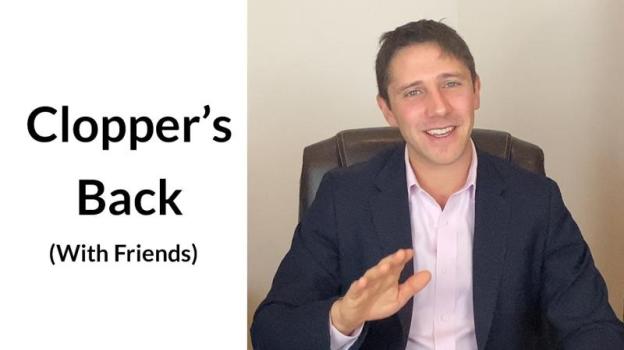
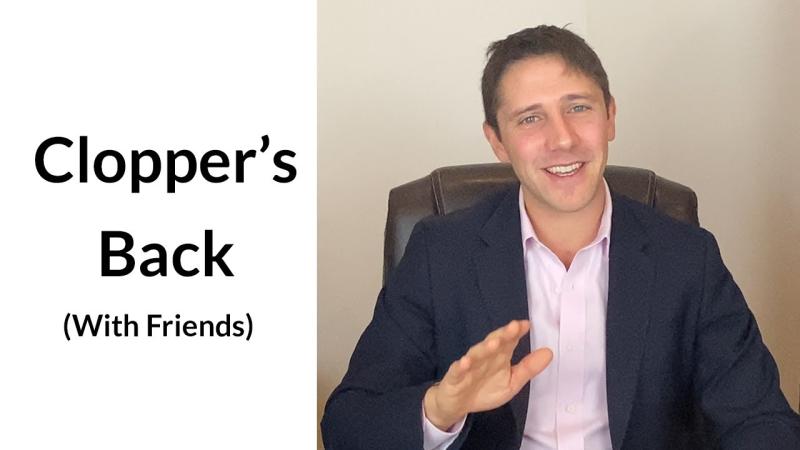
Hannah Arendt developed the concept of the banality of evil: “Evil comes from a failure to think. It defies thought for as soon as thought tries to engage itself with evil and examine the premises and principles from which it originates, it is frustrated because it finds nothing there. That is the banality of evil.” I am reminded of this when I note the dismay of Intactivists when Facebook posts pop up where a newborn boy is subject to involuntary genital cutting for any reason or no reason. I also note the angry reactions of the parents who do not care for the criticism or condemnation for doing this to their newborn sons. Yes, there is no shortage of people who see nothing wrong with it and will tell you to mind your own business. That and they retort, “Don’t choose it for your son if that’s how you feel!” I watch with interest as Eric Clopper, Attorney at Law and Founder & President of Intact Global, mounts a constitutional challenge in Oregon for the protection of boys from involuntary genital cutting. I stand with him and hope for the best as he and his team of lawyers proceed with the challenge. The challenge is based on the constitutional guarantee of legal equal protection. As the involuntary genital cutting of girls is prohibited in US law (in several states, not federally), the reasoning is that boys deserve equal protection. Though I am neither a lawyer nor a legal scholar, as a well-informed layman, I expect the challenge will be an uphill battle.

Continue reading

Those who forget the past are condemned to repeat it. — George Santayana

I am watching a Spanish Netflix series called Merli: Sapere Aude, and it is excellent. It is a dramedy, and the plot revolves around the protagonist, a young man named Pol Rubio, played by a fine young Spanish actor named Carlos Cuevas. Pol is a young man in his first year of studies in philosophy at a university in Barcelona. He has a bisexual orientation, and though he favours men, he does have dalliances with women occasionally. Pol is an anti-hero; while he generally strives to do good, he betrays a friend and his father when it serves his interests. He learns in the first episode of season two that he is HIV+. Pol is devastated by the news, despite the doctor’s assurance that the virus can be managed with treatment. He starts the regimen of taking the medication and tries to carry on. In a subsequent episode, Pol converses with a former co-worker who likely exposed him to the virus. His friend lost his job when the employer learned he was HIV+. The friend reminds Pol that people will feel sorry for you when you get cancer, but when you get HIV, you are viewed as a “dirty faggot.” Pol also converses with his employer, a mature gay man living with HIV. The employer lived through the AIDS crisis of the 1980s and 1990s and saw many gay men succumb to the disease. He recounted an incident where a friend was beaten to death for being queer. I bristled when I heard “queer” used to refer to a gay man, but I realized in the context of the anecdote that it was the attackers who called him a queer as they beat him to death. Queer is a slur, the last thing many gay men heard as they were beaten to death by gangs of thugs.

Continue reading