Category Archives: Civil Rights

I was raised in a household where being gay was like, the most normal thing. My brother is gay, all of my best friends are gay. When my brother came out of the closet, it wasn’t a big deal for my family. — Ariana Grande

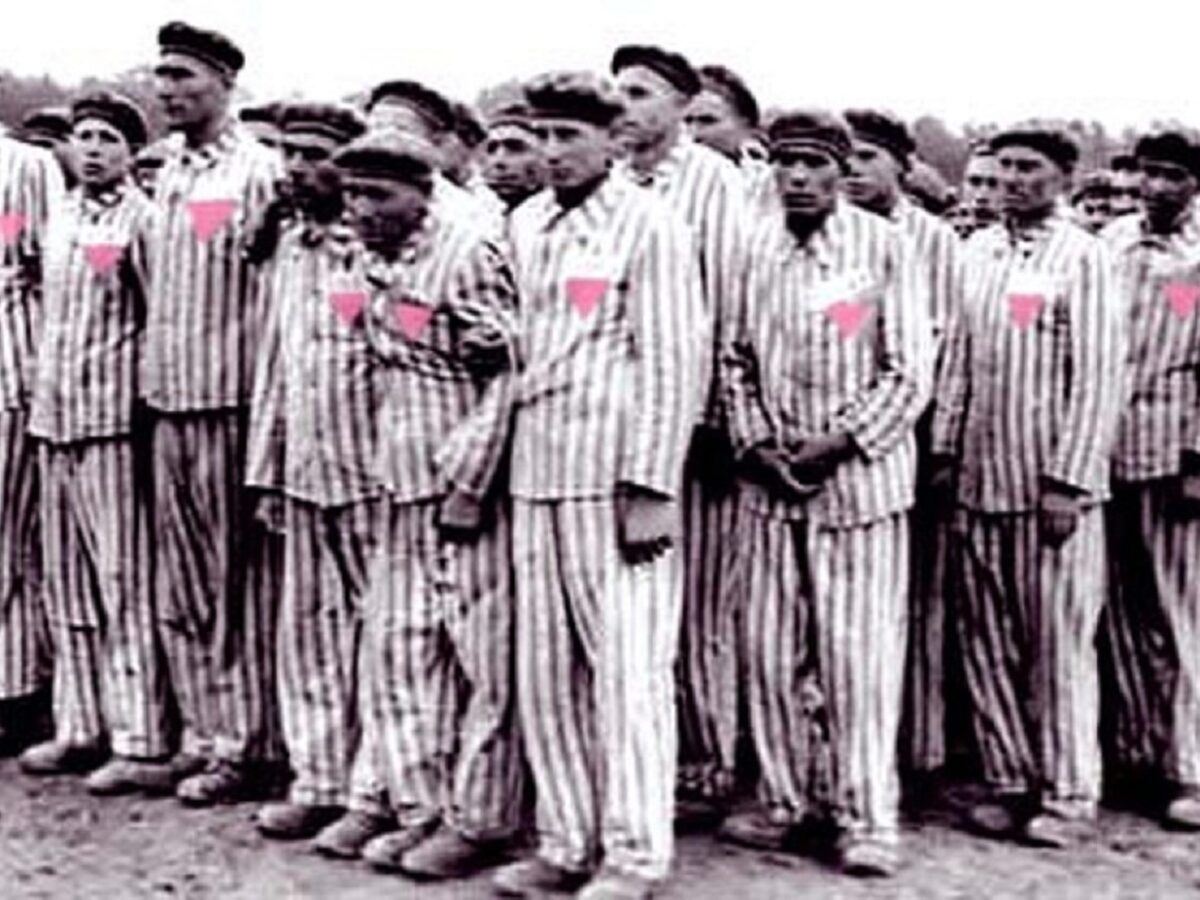
Gay men have long been seen as a novelty, a standard deviation in the demographic where most of humanity is heterosexual. Attitudes toward male homosexuality varied throughout history. In Antiquity, for the Etruscans, Greeks, and Romans, it was a part of life. They understood that people were sexual, so same-sex liaisons were common and depicted in their artwork. With the development of the Abrahamic faiths, Judaism, Christianity, and Islam, male homosexuality was viewed in a critical light. Eventually, it was condemned in the Abrahamic faiths and in the wider society. Gay men lived and died through centuries where, at best, they were tolerated, sometimes, and at worst, persecuted and imprisoned. By the eighteenth century in England, the argument was advanced by the British philosopher, Jeremy Bentham, for the decriminalisation of homosexual behaviour between consenting adults in private, in his essay Offences Against Oneself. He wrote the essay around 1785, but it was published posthumously in 1931. Bentham thought homosexuality, as Jeffrey Weeks notes, “an ‘imaginary offence’ dependent on changing concepts of taste and morality.” (Wolfenden and beyond: the remaking of homosexual history) Bentham thought through the issue and reasoned:

To what class of offences shall we refer these irregularities of the venereal appetite which are stiled [sic] unnatural? When hidden from the public eye there could be no colour for placing them any where else: could they find a place any where it would be here. I have been tormenting myself for years to find if possible a sufficient ground for treating them with the severity with which they are treated at this time of day by all European nations: but upon the principle utility I can find none. (Offences Against Oneself)

However, in England and Wales, the passage of the Criminal Law Amendment Act 1885 (48 & 49 Vict. c.69) included Section 11, in particular the clause known as the Labouchere Amendment, which applied to male homosexuality. In short, the clause provided for a term of imprisonment “not exceeding two years”, with or without hard labour, for any man found guilty of “gross indecency” with another male, whether “in public or in private”.  The Labouchere Amendment was enforced sparingly and selectively. However, the consequences of arrest and conviction could be devastating. John Gielgud very nearly saw his career as an actor come to an abrupt end in 1953 when a scandal arose over his arrest for ‘persistently importuning male persons for immoral purposes’ (he was caught trying to pick up a man in a public washroom). He was fined £10, and news of the arrest reached the press, causing him a most personal humiliation and the refusal of a visa to travel to the United States with his company to perform Shakespeare’s The Tempest. Gielgud was fortunate that the theatre-going public forgave his momentary indiscretion, and he continued his acting career both in the United Kingdom and the United States. Also, in 1953, the Home Secretary, David Maxwell Fyffe, referred to male homosexuality as a “plague over England,” and vowed to wipe it out. The Labouchere Amendment was repealed in English law in 1967—interestingly, a backbench Conservative Member of Parliament, Margaret Thatcher, broke ranks with the party to vote for its repeal. Since the decriminalisation of male homosexuality in England and Wales in 1967, many countries followed. It was decriminalised in Canada in 1969.
 
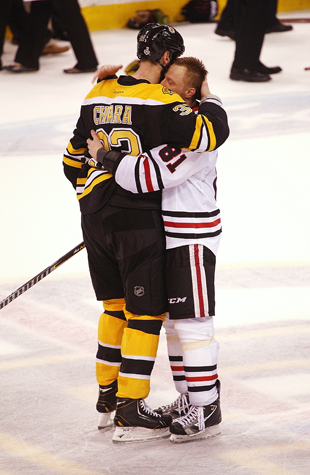
Now, in the twenty-first century, male homosexuality is seen by most as inconsequential. It is a natural expression of human sexuality. True, gay men remain a minority, but are free to take their place in society and live openly. Gay men marry and have families. They are represented in all occupations, and take part in a plurality of pastimes like anyone else. Unfortunately, for some, gay men remain a novelty. The series, Heated Rivalry, released by Crave, a Canadian streaming service, has become a worldwide hit with viewers. The series is based on novels by Rachel Reid, a Canadian author. I do not begrudge her success or the television series’s success, but what concerns me is that the story is pure fantasy. Yes, it is good writing and acting, absolutely, only it made me think of a quotation by Maria Von Trapp. When she saw the first production of The Sound of Music, she said, “That’s a nice story, but it’s not my story.” The story of two professional hockey players, one bisexual and the other gay, came from the imagination of a heterosexual woman. I am not saying there is anything wrong with that. Hardly, she is free to write stories about any characters she chooses. Though they say, “Art imitates life,” sometimes, particularly in romance novels, the lives of the characters are idealised beyond belief. The reality is that there is nothing novel about gay men living in the twenty-first century in most Western jurisdictions. There is no need to fashion romantic fantasies about how you imagine gay men live, how they feel, and what they think. The truth is, we are like everybody else, despite being a minority. There are plenty of openly gay professional athletes, including Jason Collins (an NBA player), Robbie Rogers (an NFL player), Tom Daley (a diver for the British Olympic team), Gus Kenworthy (a skier for the U.S. Olympic team), and Carl Nassib (an NFL player). I do not know much about the personal lives of these men, except for Tom Daley, whose private life is on the public record. Daley is married to his husband, Dustin Lance Black, and has two sons. They lead a conventional life like any other married couple. So, why are people so agog over a fantasy television series that treats the ordinary lives of gay men as something new and unusual?
 
Posted by Geoffrey
 

Love him and let him love you. Do you think anything else under heaven really matters? — James Baldwin

Connor Storrie and Hudson Williams as Ilya Rozanov and Shane Hollander.

I noticed the sensation generated by the release of the series Heated Rivalry on Crave. It piqued my interest. I subscribed to Crave and settled in to watch the first episode of the series. Based on the first episode of the series, I expected the rest to be decidedly underwhelming. Thankfully, I found the following episodes much improved. I get what the storyline is about; at least I think so. The story is about two young men, one from Canada — his name is Shane Hollander — and the other from Russia — his name is Ilya Rozanov — who are rising stars in elite-level Junior Hockey and fierce competitors. They go on to become professional hockey players and captains of their respective teams. Each one has issues with his family and feels the pressures of navigating the byzantine world of professional hockey. Their story progresses through several years; along the way, they found they had a mutual sexual attraction. That further complicated things for them.

Continue reading

When I joined the military it was illegal to be homosexual, then it became optional, and now it’s legal. I’m getting out before the Democrats make it mandatory. — Sgt. Harry Berres, USMC

A gay Marine greets his husband upon his return from a deployment.

The Netflix series “Boots” is not “woke garbage,” as the United States Department of Defence alleged. No, while it is fiction, it is good storytelling. I admit, when I saw the trailer and the still images, a part of me rolled my eyes. I suspected it might be a cheesy rom-com featuring queeny ephebes prancing through the United States Marine Corps boot camp. On the contrary, the protagonist, Cameron Cope, is a gay seventeen-year-old high school graduate who chose military service, specifically the Marines, because his good friend had enlisted, and he wanted a change. The story is set in 1990, when male homosexuality was grounds for refusal in enlistment and grounds for discharge. He was reminded of that upon arrival at Parris Island, where a sign at the entrance for induction listed reasons for disqualification that included homosexuality. He kept his homosexuality to himself, though those around him suspected that he was gay.

The U.S. Department of Defense was clear when it issued the following regulation to clarify its stand in 1981:

(DOD Directive 1332.14 (Enlisted Administrative Separations), January 1981)

Homosexuality is incompatible with military service. The presence in the military environment of persons who engage in homosexual conduct or who, by their statements, demonstrate a propensity to engage in homosexual conduct, seriously impairs the accomplishment of the military mission. The presence of such members adversely affects the ability of the armed forces to maintain discipline, good order, and morale; to foster mutual trust and confidence among service members; to ensure the integrity of the system of rank and command; to facilitate assignment and worldwide deployment of service members who frequently must live and work in close conditions affording minimal privacy; to recruit and retain members of the armed forces; to maintain the public acceptability of military service; and to prevent breaches of security.

Under this regulation, persons having homosexual proclivities were deemed unfit for military service and either refused induction into military service or quietly mustered out with either a general, undesirable or dishonorable discharge if found out after having been inducted. The consequences of the three types of discharge varied in degree of severity. Still, in each, the individual was ineligible for veterans’ benefits and could face discrimination in employment in civilian life. That was the reality in 1990. The Don’t Ask, Don’t Tell policy in the United States Military was not enacted until 1993. So, serving in the U.S. Military in 1990 as a gay man meant you had to conceal the truth about yourself on pain of serious consequences.

As the story unfolded, it was revealed that one of the drill instructors, Staff Sergeant Sullivan, a seasoned Marine with a distinguished service record and a recipient of the Silver Star, was a gay man. Despite his impeccable record, he came under investigation when a man, a Major in the Marine Corps, with whom he had a romance, was outed and dismissed from the service. Despite the support of his commanding officer and enlisted colleagues, he chose to nearly beat a man to death in a bar fight, knowing it would result in a dishonorable discharge from the service. In his estimation, a conviction of aggravated assault of a civilian was preferable to being outed and dismissed in disgrace as a homosexual. The tragedy in his case was that had he held on another three years, he could have continued his career in the Marines—the U.S. Department of Defense is correct in pointing out that in 2025, gay men are free to serve openly. The Don’t Ask, Don’t Tell policy and the general ban on gays serving in the military were lifted in 2011. “Boots,” however, is set in 1990, when gay men did not have the option of serving with discretion, let alone openly. So, no, “Boots” is not “woke garbage,” it is well-written and superbly acted by the stellar cast. I highly recommend watching the series.

Posted by Geoffrey

We don’t rise to the level of our expectations, we fall to the level of our training. — Archilocus

I was a gunner in the 30th Field Artillery Regiment in 1980.

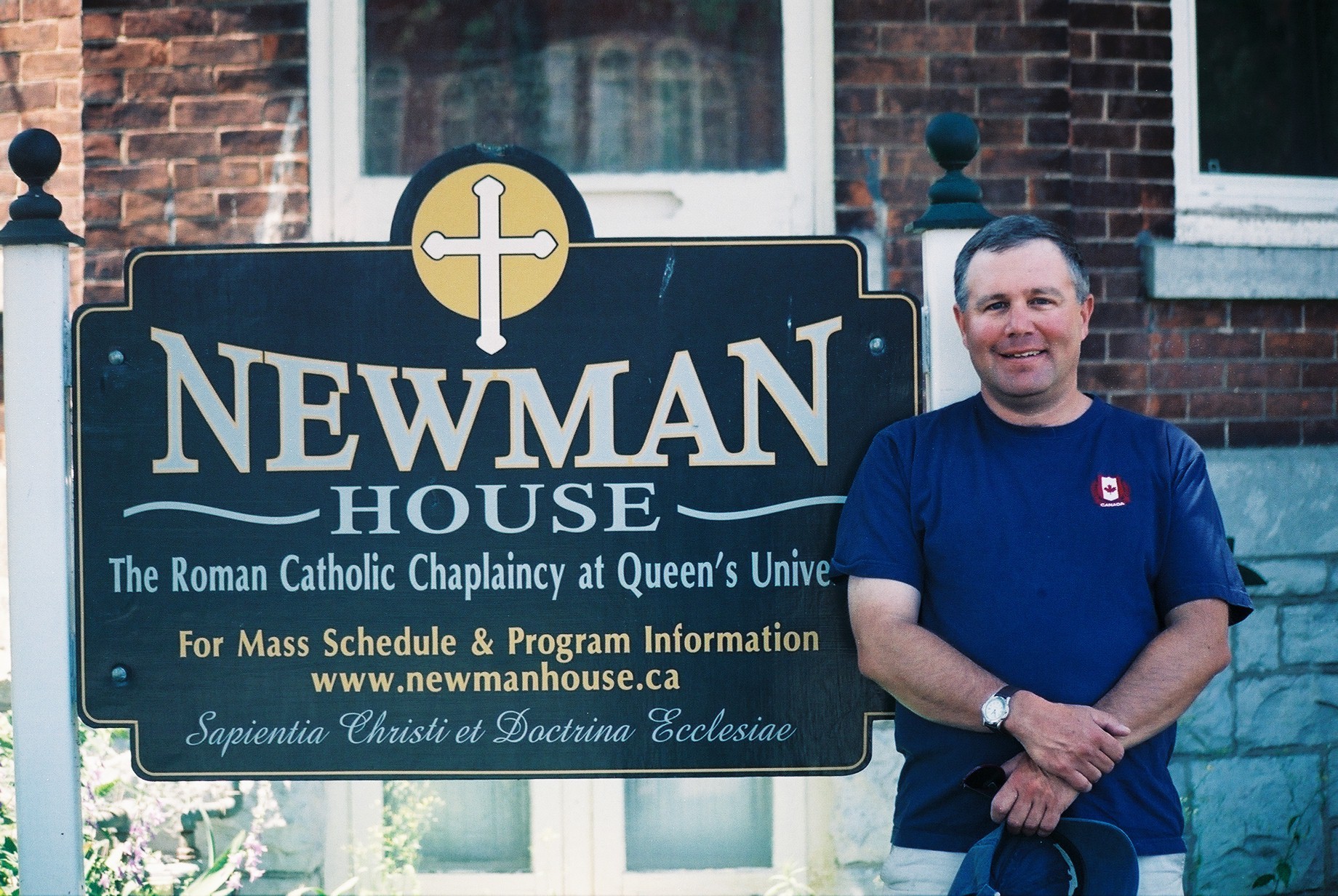
Watching the Netflix series “Boots” resonated with me. It brought back memories of my military service as a Reservist in the Canadian Army. I joined the Canadian Army as a recruit in the 30th Field Artillery Regiment in Ottawa, Ontario, late in 1978, at seventeen–a few weeks before my eighteenth birthday. Unlike the characters in “Boots,” I was not a professional soldier, and neither did I experience boot camp. I served on weeknights and weekends, and with the Regular Force during the summer months. I had the opportunity to serve with the Regular Force on the UN Peacekeeping deployments or with the Regular Force in Europe for extended periods, but chose not to. I was a closeted gay youth serving in the Canadian Army when male homosexuality was grounds for dismissal from the service. I overheard once an NCO mention the dismissal of a man from the service because he was caught “butt fucking” another man. Like the protagonist in “Boots,” Cameron Cope, I chose military service because I wanted a change and hoped to form a more positive view of myself. My father was ex-military and hated the Army. He tried to talk me out of it. Interestingly, my high school music teacher, a veteran, also told me I was not suited for military service.

Continue reading

So, I’m a big Second Amendment fan but I think most politicians are cowards when it comes to defending why we have a Second Amendment. — Charlie Kirk

Sighting in my Tikka T3 in .243.

The murder weapon used in the killing of Charlie Kirk was a Mauser bolt-action rifle in 30-06 with a scope, a make and model of hunting rifle commonly used in North America. I have several left-hand bolt-action rifles topped with scopes in my collection in various calibres. I use them for hunting small game, varmints and big game. I occasionally visit the rifle range to ensure the rifles are sighted in before hunting. I am a good shot. When you choose to kill a game animal, you want to place the bullet in its vital area to ensure a quick, humane death. The suspect in the killing of Charlie Kirk, I will not mention his name, allegedly shot Mr. Kirk in the neck from a distance of two hundred yards. I have no idea of the suspect’s history with guns or whether he was a good shot. Regardless, he succeeded in mortally wounding Charlie Kirk with either a well-placed or a lucky shot. Of course, that is reprehensible. When a hunting rifle is used in a homicide, inevitably, some people blame the rifle, guns and gun owners in general. There is an expectation that I should rethink being a gun owner and hunter because someone used a hunting gun to commit murder.

Continue reading

Reason obeys itself, and ignorance submits to whatever is dictated to it. — Thomas Paine

Those of us across the world who are working to end the involuntary genital cutting of boys are at an impasse. We have demonstrated beyond any doubt that intact genitals are as nature intended and debunked the claims that the male prepuce was a vestigial piece of skin that served no purpose. Despite that, cowardly politicians insist their hands are tied because they cannot breach the rights to religious liberty and parental autonomy over their children’s bodies. At least not when boys are at issue. They had no trouble enacting prohibitions on all forms of genital alteration on girls, no matter how minimal, despite the religious sensibilities and autonomy of parents to raise their daughters how they saw fit. Western nations lead an international effort through the United Nations to end female genital mutilation. When Iceland, a European country with a population of 340,000 people, moved to update its legislation in 2018, prohibiting involuntary genital cutting of girls to include boys, the United States intervened. The US House of Representatives Foreign Affairs Committee, in a letter sent to the Embassy of Iceland, Congressmen Ed Royce, the Republican chairman of the committee, and Eliot Engel, its top Democrat, wrote: “While Jewish and Muslim populations in Iceland may be small, your country’s ban could be exploited by those who stoke xenophobia [read anti-Muslim prejudice] and anti-Semitism in countries with more diverse populations.[…] As a partner nation, we urge your government to stop this intolerant bill from advancing any further.” (Times of Israel.) The Amendment to the legislation did not pass.
 
The thing to remember, also, is that in Iceland and the rest of Europe, the majority of the population does not cut the genitals of boys and girls involuntarily–which might make people think that a ban is moot. Still, one wonders why the ban on cutting girls is not viewed as something that “could be exploited by those who stoke xenophobia” [read anti-Muslim attitudes] in countries with more diverse populations.” Somehow, that only applies if you make the ban on involuntary genital cutting universal by including boys, and that is irrational. Despite these hurdles, the effort to protect boys continues — no one said it was easy. There is an interesting development in the recent controversy over “gender-affirming care” for minors. The issues of religious liberty and parental autonomy are back at the fore in the dispute over the ethics and legality of subjecting children to surgeries and drug therapies that result in the chemical and surgical castration of children whose parents believe they were of the opposite sex into which they were born. The Supreme Court of the United States ruled that a Tennessee law that prohibits gender-affirming care for minors is constitutional. The challenge to the law was based on the 14th Amendment, with arguments that the ban was discriminatory based on sex and violated the laws and the rights of parents to make medical decisions for their children, following their beliefs. The court did not consider the latter arguments in reaching its decision.
 
Given this development, one wonders how scurvy politicians will justify the involuntary genital cutting of boys based on the superstitions and wants of their parents. Why is it not tolerable to alter a girl’s private parts or allow parents to authorize sex changes on their children regardless of their beliefs, but it is bearable to allow radical and irreversible alterations to a boy’s genitals for no other reason than someone else wants it? Why is the notion that boys have rights, particularly to the integrity and security of their person, so contentious? I am cautiously optimistic that the Supreme Court ruling that upheld a ban on gender-affirming care for minors will cause renewed attention to the ethical and legal issues of the involuntary genital cutting of boys. I hope that the Icelandic parliament will reintroduce its legislation to protect boys and girls alike from involuntary genital cutting and that other Western jurisdictions will follow suit. This invidious state of affairs has gone on too long.
 
Posted by Geoffrey

I also survived circumcision, a barbaric practice designed to remind you as early as possible that your genitals are not your own. — George Carlin

*

I learned what male genital cutting was in high school in health class. The teacher handed out mimeographed copies of pages from a textbook that had crude illustrations. He did this by mistake and hurriedly told us to ignore them, but the cat was out of the bag. Once I knew what it was, I began to think about it. I finally understood why other boys I knew over the years, particularly when I lived in England in the late 1960s with my family, looked different. A couple of years later, while one of my aunts visited, a news story came on the television about male genital cutting. She spoke up about how it could not be done to her firstborn son at birth because of complications following his birth, and that they never saw the need for it later. She had a second son years later, and he was left intact. I remember how pained my father looked when she related that to us. My mother was absent from the conversation, leaving the impression that she was behind it for my brother and me. As I grew older, I came to deeply resent what was done to me.

Continue reading

The sad truth is that most evil is done by people who never make up their minds to be good or evil. — Hanna Arendt

Hannah Arendt developed the concept of the banality of evil: “Evil comes from a failure to think. It defies thought for as soon as thought tries to engage itself with evil and examine the premises and principles from which it originates, it is frustrated because it finds nothing there. That is the banality of evil.” I am reminded of this when I note the dismay of Intactivists when Facebook posts pop up where a newborn boy is subject to involuntary genital cutting for any reason or no reason. I also note the angry reactions of the parents who do not care for the criticism or condemnation for doing this to their newborn sons. Yes, there is no shortage of people who see nothing wrong with it and will tell you to mind your own business. That and they retort, “Don’t choose it for your son if that’s how you feel!” I watch with interest as Eric Clopper, Attorney at Law and Founder & President of Intact Global, mounts a constitutional challenge in Oregon for the protection of boys from involuntary genital cutting. I stand with him and hope for the best as he and his team of lawyers proceed with the challenge. The challenge is based on the constitutional guarantee of legal equal protection. As the involuntary genital cutting of girls is prohibited in US law (in several states, not federally), the reasoning is that boys deserve equal protection. Though I am neither a lawyer nor a legal scholar, as a well-informed layman, I expect the challenge will be an uphill battle.

Continue reading

It is a great plague to be too handsome a man. — Plautus

When I first viewed the photo, the portrait of the two young men struck me. Initially, I could not quite place why, but then it dawned on me. In the summer of 1980, I was a reservist in the Canadian Army. I served in the 30th Field Artillery Regiment based in Ottawa. It was the summer following my graduation from high school and before my enrollment at Queen’s University in Kingston. I went to Canadian Forces Base Petawawa to work as a driver in a transportation company through July and August. I worked with young men from other regiments who were posted there, too–we were in our late teens and early twenties.

Continue reading

I am the Love that Dare not Speak its Name. ― Alfred B. Douglas

This self-portrait, taken in Havelock, New Brunswick, shows the simplicity of the intimacy shared by Leonard Olive Keith (1891-1950) and Joseph Austin “Cub” Coates (1899-1965), who lived and loved in the first half of the 20th century. They were two men in love in Canada when male homosexuality was a crime in Canadian law, and public prejudice against male homosexuality was openly expressed. It was as simple as it is in the present. Some men are romantically and sexually attracted to men. It is a natural expression of human sexual attraction and behaviour. To those who knew and loved them, they were Len and Cub, a homosexual couple. To those who reviled male homosexuals, they were beneath contempt. They were what we call normal gays in the 21st century. Len was a harness racing driver who opened a garage after serving as an engineer in the Canadian Army in World War I. Cub was a mechanic who served as an engineer in the Canadian Army in World War I and volunteered for service in the Canadian Army in World War II. They were ordinary men who had a sense of duty, served their King and country as volunteers in the Great War, and found love and companionship in each other’s company. Despite their discretion, suspicion over their relationship in Havelock drove them apart in the 1920s. Len moved to the United States, where he lived out his days. Cub married in 1940. That fate was not unusual for gay men in Canada in the 20th century.

Continue reading