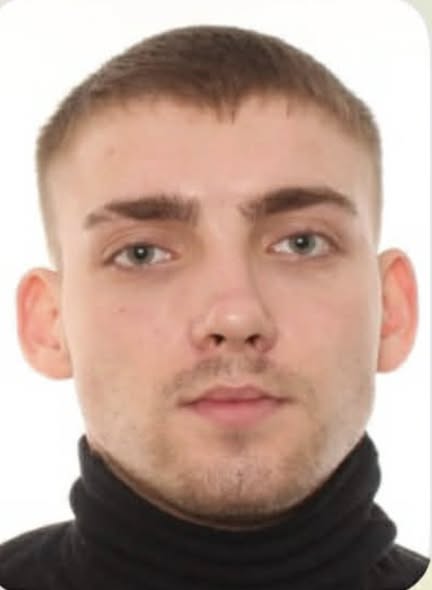
Groundhog Day, February 2, 2026, is my sixty-fifth birthday, and I have mixed feelings. On the one hand, I am thankful to be alive and for all the good things I have. I have lived longer than many of the people I have known, and despite the hardship I experienced along the way, things are generally good. At the same time, I am feeling bummed because I learned of the senseless and untimely death of a young man in Ukraine whose name was Kirill. He was killed in action serving in the Ukrainian Army in the ongoing war with Russia. He was twenty-four years old. He was conscripted into military service at nineteen and survived many battles before his luck ran out. I only knew him remotely through my fishing buddy Colin, who was one of many of Kirill’s friends. I learned about Kirill, his background, and character through conversations with Colin and the photos and videos he shared with me. Kirill was a fine young man who withstood the privations and stresses of compulsory military service in a useless war over a territorial dispute. What bothers me about his death, beyond the fact that he was so young and had his whole life ahead of him, is that looking back on my life, I served as a volunteer in the Canadian Army at his age. At the time, I thought military service would be an adventure. My grandfathers and great-uncles served in the Canadian Army and the Royal Canadian Navy during the Second World War. They had a sense of duty and volunteered. One of my great-uncles was killed in France during the battle for Caen. He is buried in the Commonwealth War Cemetery in Calais. I also had a sense of duty. I served for 4 years as a reservist from 1978 to 1982, and I was free to leave the service at any time. I was mustered out after 4 years, and that completed my brief, undistinguished stint of military service.
The Cambridge Dictionary defines masculinity as “the characteristics that are traditionally thought to be typical of or suitable for men.” (Cambridge Dictionary) The Collins Dictionary elaborates on the definition of masculinity, stating, “There are many positive qualities that have historically been defined as either masculine (leadership, strength, courage) or feminine (nurturing, compassion, caring). In reality, people are individuals with a unique combination of attributes.” (Collins Dictionary) Fair enough, it is possible for men and women to have both masculine and feminine qualities, or you can be a masculine woman or a feminine man. Either way, it is fine. Personally, I think people who know me would say I blend masculine and feminine qualities. Although the Canadian Army did not think I had the qualities of leadership they wanted, in civilian life, I have exercised leadership, strength, and courage numerous times in emergencies. I have given emergency first aid to strangers at car accident scenes, to a man who suffered a grand mal seizure, and put out a fire that broke out in my house—a candle ignited a curtain that a stray gust of wind blew into the flame. By the time I retrieved the fire extinguisher, the flames had consumed the curtains in the front window of the house and were spreading across the ceiling. By the time the fire department arrived, the fire was out. The firefighters told me I had done a good job putting out the fire, and the insurance company was happy with me, because, as a friend said, “You saved them a piss pot full of money.” Interestingly, it was my military service where I learned to keep my cool in a crisis, to exercise leadership, to give emergency first aid, and to fight fires. In those situations, when I took the lead, those around me followed, and the crisis was brought to a successful conclusion. People who know me also tell me I have the gift of wisdom. They tell me I always know what to say when they are stressed or hurting. I offer more than banalities and platitudes in a difficult situation. They refer to this as an innate gentleness I possess. Yes, it puzzles them that I am a keen hunter. How can someone so gentle make the choice to go hunting and kill game birds and animals?
I am reminded of the “unique combination of attributes” from a documentary on hunting I watched many years ago. The film is called “In the Blood.” The film, made in 1989 by George Butler, documents the safari that descendants of Theodore Roosevelt retraced—the one he took with his son Kermit in 1909. The film provides insight into hunting in general and African big-game hunting in particular. The safari was led by a professional hunter, Robin Hurt, a man’s man and dedicated conservationist. In one segment, Butler’s thirteen-year-old son is taken on a hunt for a cape buffalo. Robin Hurt guided the boy on the hunt across the savanna and wetlands as they closed in on a herd of cape buffalo. When a buffalo was selected, the boy placed two shots into the animal, killing it cleanly. As he walked up to the carcass, tears welled up in his eyes, and he tried to fight them back. Robin Hurt, the great white hunter, seeing this, told the boy, “Don’t hold back. Let them flow; it’s a natural reaction.” Yes, I know how the boy felt. When you make the choice to kill a game animal or bird, the natural reaction is a feeling of triumph and sorrow. Hurt understood that and told the boy there was nothing shameful or unmanly in his reaction.
I am a keen hunter, but I am an actor, too. I have performed roles on stage and screen. Acting requires the ability to connect with your emotions and express them genuinely. It is challenging for me as I am not overly emotional. I do not frighten easily, and have the restraint to keep stupid people from baiting me. I tend to be stoic in my expression of grief, though there are notable exceptions. My maternal grandmother died two weeks after my thirtieth birthday. I had a close relationship with her. My family was surprised at how composed I was. I wrote and delivered the eulogy at her funeral. It was not until two years passed that I finally shed a few tears for her in the cathedral in Lyon, France. On the other hand, when I held my first dog, Christie, as she was euthanized, I cried harder than ever before in my life. For years, following Christie’s death, on the anniversary of her passing, I could not hold back my tears. I loved my grandmother and my dog, Christie, dearly, and I can not explain how I remained so calm and reserved when my grandmother died, and how I went to pieces when I lost Christie. I think my friends are correct. I am a “unique combination of attributes.” As I go through life, I apply these attributes the best I can. I am a man, and I have nothing to be ashamed of about my blend of masculine and feminine qualities.
Connor Storrie and Hudson Williams as Ilya Rozanov and Shane Hollander.
I noticed the sensation generated by the release of the series Heated Rivalry on Crave. It piqued my interest. I subscribed to Crave and settled in to watch the first episode of the series. Based on the first episode of the series, I expected the rest to be decidedly underwhelming. Thankfully, I found the following episodes much improved. I get what the storyline is about; at least I think so. The story is about two young men, one from Canada — his name is Shane Hollander — and the other from Russia — his name is Ilya Rozanov — who are rising stars in elite-level Junior Hockey and fierce competitors. They go on to become professional hockey players and captains of their respective teams. Each one has issues with his family and feels the pressures of navigating the byzantine world of professional hockey. Their story progresses through several years; along the way, they found they had a mutual sexual attraction. That further complicated things for them.
I was a gunner in the 30th Field Artillery Regiment in 1980.
Watching the Netflix series “Boots” resonated with me. It brought back memories of my military service as a Reservist in the Canadian Army. I joined the Canadian Army as a recruit in the 30th Field Artillery Regiment in Ottawa, Ontario, late in 1978, at seventeen–a few weeks before my eighteenth birthday. Unlike the characters in “Boots,” I was not a professional soldier, and neither did I experience boot camp. I served on weeknights and weekends, and with the Regular Force during the summer months. I had the opportunity to serve with the Regular Force on the UN Peacekeeping deployments or with the Regular Force in Europe for extended periods, but chose not to. I was a closeted gay youth serving in the Canadian Army when male homosexuality was grounds for dismissal from the service. I overheard once an NCO mention the dismissal of a man from the service because he was caught “butt fucking” another man. Like the protagonist in “Boots,” Cameron Cope, I chose military service because I wanted a change and hoped to form a more positive view of myself. My father was ex-military and hated the Army. He tried to talk me out of it. Interestingly, my high school music teacher, a veteran, also told me I was not suited for military service.
When I first viewed the photo, the portrait of the two young men struck me. Initially, I could not quite place why, but then it dawned on me. In the summer of 1980, I was a reservist in the Canadian Army. I served in the 30th Field Artillery Regiment based in Ottawa. It was the summer following my graduation from high school and before my enrollment at Queen’s University in Kingston. I went to Canadian Forces Base Petawawa to work as a driver in a transportation company through July and August. I worked with young men from other regiments who were posted there, too–we were in our late teens and early twenties.
This self-portrait, taken in Havelock, New Brunswick, shows the simplicity of the intimacy shared by Leonard Olive Keith (1891-1950) and Joseph Austin “Cub” Coates (1899-1965), who lived and loved in the first half of the 20th century. They were two men in love in Canada when male homosexuality was a crime in Canadian law, and public prejudice against male homosexuality was openly expressed. It was as simple as it is in the present. Some men are romantically and sexually attracted to men. It is a natural expression of human sexual attraction and behaviour. To those who knew and loved them, they were Len and Cub, a homosexual couple. To those who reviled male homosexuals, they were beneath contempt. They were what we call normal gays in the 21st century. Len was a harness racing driver who opened a garage after serving as an engineer in the Canadian Army in World War I. Cub was a mechanic who served as an engineer in the Canadian Army in World War I and volunteered for service in the Canadian Army in World War II. They were ordinary men who had a sense of duty, served their King and country as volunteers in the Great War, and found love and companionship in each other’s company. Despite their discretion, suspicion over their relationship in Havelock drove them apart in the 1920s. Len moved to the United States, where he lived out his days. Cub married in 1940. That fate was not unusual for gay men in Canada in the 20th century.
I recall when I was in university in 1982. I enrolled in a film studies class, and one of the films we watched was Pagan Rhapsody. There is a scene in the film where two men play a sex scene. Though the scene was as vanilla as possible–there was kissing and a little friendly groping (nothing graphic)–the student audience’s vocal expressions of disgust were notable. In 2024, male homosexuality was generally accepted as a natural expression of human intimacy and treated with sensitivity in film and television. Netflix series such as Young Royals and Heartstopper feature a gay romance and intimacy between high school boys in a way that leaves something to the viewers’ imagination. Both series are immensely popular with younger viewers. Things have changed since the screening of Pagan Rhapsody in 1982. Still, when it comes to public perceptions of intimacy between gay men, there are a lot of people who have an unsavoury fixation on what they imagine goes on when two men are intimate. I get expressions of disgust in the comments on blog posts I write on gay rights advocacy, where people say things like, “There’s nothing more disgusting than two men fucking each other in the ass,” and “Cocksucking is not a men’s issue.” I mean, that is beyond the pale.
In the summer of 1987, I lived with my boyfriend Fabio in a two-bedroom apartment in Kingston, Ontario. We met as students at Queen’s University and secretly carried on our love affair before moving in together. We became boyfriends during the burgeoning AIDS crisis. One evening, we sat in bed and watched a panel discussion held by one of the American News Networks–I cannot remember which one. What struck me was the inflammatory opening remark made by a conservative Congressman, whose name I do not remember, who asserted that “perversion and promiscuity” were to blame for the AIDS crisis. That sentiment was shared through the 1980s. I remember the stand-up comic Sam Kinison, who screamed in one of his routines that AIDS became an epidemic “because a few fags fuck some monkeys; they got tired of their own assholes.” Jerry Falwell claimed it was God’s judgement on homosexuals and blamed the spread of the disease into the innocent heterosexual population on bisexual men. Yes, AIDS was seen as a gay plague. Fabio and I, like countless gay men in the 1980s, were concerned. There was uncertainty about how easily the virus was transmitted. Before the dawn of the AIDS crisis, our biggest concern as students in the 1980s was the risk of an unwanted pregnancy or getting herpes.
I like reminiscing, looking back on my life, and thinking of the people I knew as a boy and from my younger days in adolescence and manhood. Sadly, some of them have departed. Still, I think about those still alive and hope they are happy. I served as a reservist in the Canadian Army from 1978 to 1982, when I was in high school and university. I joined the 30th Field Artillery Regiment based in Ottawa. I trained in a group of private recruits under the supervision of a Bombardier who was a Carleton student. We had our differences and misunderstandings during my basic training. I spent almost every night and weekend on the defaulter’s parade. I served three years in the 30th Field and one year as an attached posting to the Princess of Wales Own Regiment (an infantry regiment) in Kingston, where I attended university. I transferred to the PWOR in 1982 and was promptly mustered out when the unit was downsized. I had a brief, undistinguished stint of military service in the Canadian Army, but I am proud that I served my Queen and country.
A recurring theme in ancient Greek mythology is that you cannot outrun your fate. I think about that idea when I look back on my life and how, throughout it, people assumed that I was a homosexual. In grade school, a woman who lived across the street from my family was hired by my parents to prepare lunch for my siblings and me when we came home from school. I recall how she said that I would end up a confirmed bachelor. A confirmed bachelor was code for a homosexual historically. In middle school, I had a fleeting romance with a girl. When my seventh-grade teacher learned of our liaison, she expressed surprise; she never imagined me being interested in girls. In high school, I asked my brother if he would sound out a girl I fancied to see if she was interested in me. He reported that when the girl realized what he was up to, she retorted, “He’s a fairy!” When I joined the Canadian Army as a Reservist at eighteen, I entered the classroom one day at the Armoury and found a caricature of me as a pink bunny drawn on the blackboard captioned with anti-gay slurs. To their credit, the other recruits told me it was intended as a joke–that they liked me. Still, I wondered why people thought I was a homosexual.








 Geoffrey & Mika