Tag Archives: Islam

“After all, what’s a life, anyway? We’re born, we live a little while, we die.” ― E.B. White, Charlotte’s Web

66506_483152090378_1731430_nJuno1

In memory of my beloved Juno (May 21, 2008 – August 15, 2012)

“Each of us owes God a death.” So I heard Gwynne Dyer proclaim in an episode of his television series War. Death is a reality; it comes for us all. When I was a small boy I did not understand the reality of death. I remember, I must have been three years old and seeing my grandmother with some old baby clothes and toys she said were my aunt Lonny’s. My impression in seeing this was to imagine that people must grow up, then grow back down to being babies again. I asked my mother if this was so and she corrected me, telling me no, people grow, then they grow old and die. She added that nobody wants to die, but everyone has to. I did not really understand what it meant to die and did not give it much thought until I was a little older, maybe five years old when I asked my mother and father “what happens when you die?” They told me “your spirit goes up,” presumably to heaven. I still did not understand and was a little frightened by the prospect, but decided that must be a long way off so I would not worry about it. Continue reading
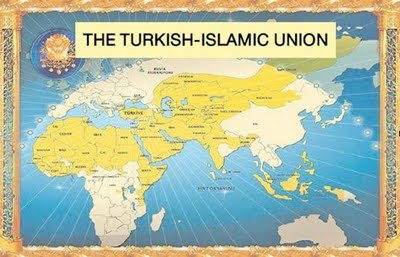
The caliphate is the sign of Islamic unity, and the manifestation of the connection between the Islamic peoples, and an Islamic symbol which the Muslims are obligated to think about, and to be concerned with its issue — Imam Hasan al-Banna

CaliphateTurkish-Islamic-Union002175-003_772

In previous essays I discussed the topic of religion and state in the Western world, notably the role of Christianity, Catholic and Protestant, in the development of Western civilization. For centuries the Catholic Church had authority in temporal affairs and collected taxes in much of Europe. Following the Reformation in the 16th century there were instances where Protestant Churches had authority in temporal affairs. Geneva under the rule of John Calvin (1509-1564), the founder of Calvinism, was governed according to the Ecclesiastical Ordinances which were administered by the Consistory. The Enlightenment in the 18th century introduced new thinking in the natural rights of man and the place of religion in society. Enlightenment thinkers valued religious liberty, but also favoured a strict separation between religion and the state. By the end of the 18th century there were the American and French Revolutions which introduced constitutional law and separation of church and state. In the 19th century the last vestiges of church authority in temporal affairs were swept away with capture of Rome and the Papal States in the drive to unify Italy as a nation. Constitutional guarantees of religious liberty and separation of religion and state make religious pluralism an integral part of Western societies in the present, while Christianity remains the dominant faith, people are free to practice any religion they wish or none at all. How does the history and development of the Islamic world then compare to that of the Western world? Continue reading

To go against conscience is neither right nor safe. I cannot, and I will not recant. Here I stand. I can do no other, so help me God. Amen. — Martin Luther

lossy-page1-558px-Martin_Luther_by_Cranach-restoration.tifmarkedfor-death-geert-wilders

Freedom of conscience is a cornerstone of Western Civilization. However, history demonstrates that freedom of conscience often carries a high price. The quotation listed as the title of this post is attributed to Martin Luther (1483-1546), who is said to have spoken these words at the Diet of Worms on April 18, 1521. What he really said is as follows:

Unless I am convinced by Scripture and plain reason – I do not accept the authority of the popes and councils, for they have contradicted each other – my conscience is captive to the Word of God. I cannot and will not recant anything for to go against conscience is neither right nor safe. God help me. Amen.

His protest against abuses in the Church, particularly the sale of indulgences, brought him to make this declaration, written down in his “95 Theses” in 1517. Before his appearance at the Diet of Worms, his “95 Theses” was forwarded to Rome, where several sentences, upon examination, were condemned as heretical. After ignoring a warning from Pope Leo X, Luther was excommunicated on January 3, 1521. Excommunication in 16th-century Europe meant proscription. You were made an outlaw; that is, you no longer had the protection of the law; it was forbidden for anyone to offer you food and shelter, and you could be killed on sight without consequence. As it was the responsibility of civil authority to enforce the law, Luther was offered the chance to recant at the Diet of Worms, which was the general assembly of the estates of the Holy Roman Empire with Emperor Charles V presiding. He refused, putting his life on the line in doing so. He was offered protection from Prince Frederick III, Elector of Saxony, and continued his efforts, which led to the Protestant Reformation.
Continue reading

“When you tear out a man’s tongue, you are not proving him a liar, you’re only telling the world that you fear what he might say.” –George R.R. Martin, A Clash of Kings

Image

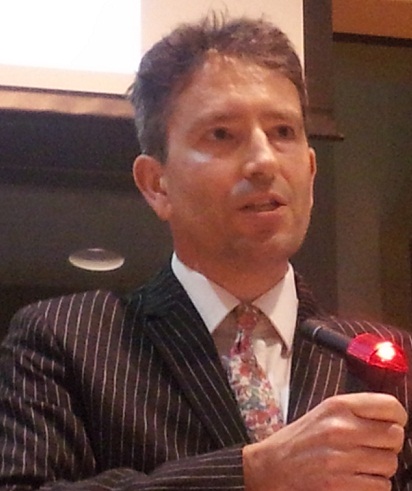
Gavin Boby delivered his speech at the Ottawa Public Library last Monday night without incident it turns out, but there was a fuss raised locally from various politically correct prigs who obstinately accuse Mr. Boby of promoting hate against Muslims. Their objections, aside from the content of Mr. Boby’s public speaking, is that the Ottawa Public Library rented him space to speak. Thankfully, they refrained from coming out in force to shout him down as was the case when Ann Coulter came to Ottawa for a speaking engagement at the University of Ottawa in March of 2012. Strangely enough the people who shout down those whose thoughts and opinions they dislike deny this is censorship. On the contrary, they insist, it is about stopping the likes of Mr Boby from inciting hatred against vulnerable minority groups in our society. In the case of Mr. Boby’s speech, it seems that any criticism of Islam is viewed as hate speech by the politically correct. I chose not to go hear Mr. Boby speak, but Mika and I have since viewed the segments of his recent speeches on video which is published on the internet. On the basis of what we viewed, we are satisfied that this is not hate speech. Mr. Boby is not without his critics either. In his opening remarks, Mr. Boby shared with the audience some of the epithets he has received in the press back in England. He gets more than his share of unflattering commentary in the British press, to say the least. Continue reading

I do not agree with what you have to say, but I’ll defend to the death your right to say it.–Voltaire

Image

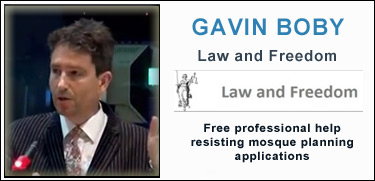
Gavin Boby, a lawyer from the United Kingdom, and leader of the Law and Freedom Foundation is on a speaking tour in Canada. He is due to speak at the Ottawa Public Library tomorrow evening. Mr. Boby is a controversial figure as the Law and Freedom Foundation provides a free legal service for those who oppose mosque developments. Through his foundation he claims to have stopped the construction of 16 out of 17 mosques across Britain. Mr. Boby objects to the construction of mosques on the grounds that mosques act as bridgeheads within Western society for the advance of Islam. Mr. Boby maintains:

A mosque is not merely a place of worship. Islamic doctrine requires the application of Islamic law within its geographical reach. As homosexuals, Jews, and those attached to freedom of speech discover, Islamic law claims supremacy over the conduct of Muslims and non-Muslims alike. It mandates violence against those who resist it. British common law is clear that there can be no justification for: the preaching of sedition; claims that women, Jews, homosexuals or non-Muslims are inferior and can be abused; the call for persecution or murder of Muslim apostates. Continue reading

Geoffrey & Mika: Till marriage do us part

In light of the recent demonstrations in France against same sex marriage, demonstrations mounted by Catholics and Muslims by and large, I offer comments on religious opposition to same sex marriage and why marriage rights are so important to gay couples.

Posted by Geoffrey