Category Archives: History

There’s this illusion that homosexuals have sex and heterosexuals fall in love. That’s completely untrue. Everybody wants to be loved. — Boy George

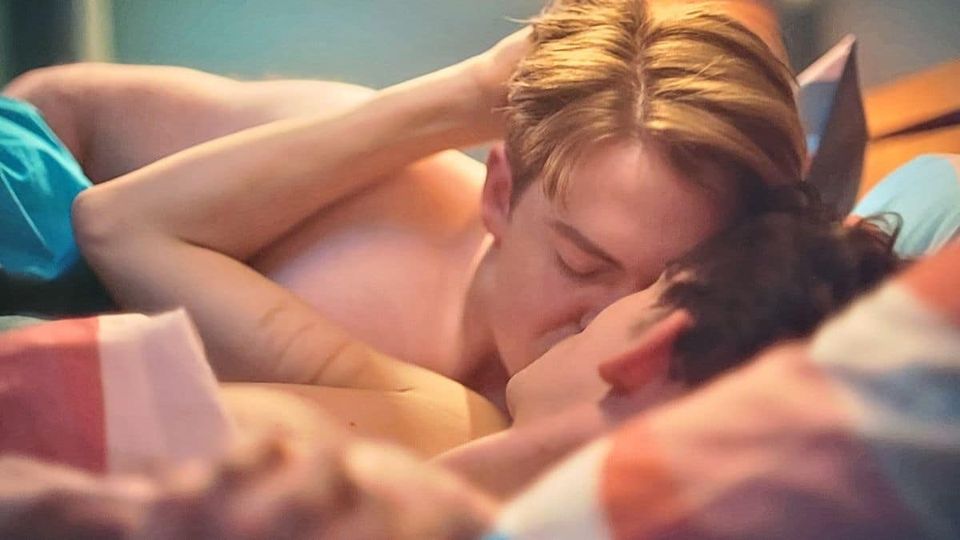
I recall when I was in university in 1982. I enrolled in a film studies class, and one of the films we watched was Pagan Rhapsody. There is a scene in the film where two men play a sex scene. Though the scene was as vanilla as possible–there was kissing and a little friendly groping (nothing graphic)–the student audience’s vocal expressions of disgust were notable. In 2024, male homosexuality was generally accepted as a natural expression of human intimacy and treated with sensitivity in film and television. Netflix series such as Young Royals and Heartstopper feature a gay romance and intimacy between high school boys in a way that leaves something to the viewers’ imagination. Both series are immensely popular with younger viewers. Things have changed since the screening of Pagan Rhapsody in 1982. Still, when it comes to public perceptions of intimacy between gay men, there are a lot of people who have an unsavoury fixation on what they imagine goes on when two men are intimate. I get expressions of disgust in the comments on blog posts I write on gay rights advocacy, where people say things like, “There’s nothing more disgusting than two men fucking each other in the ass,” and “Cocksucking is not a men’s issue.” I mean, that is beyond the pale.

Continue reading

Those who forget the past are condemned to repeat it. — George Santayana

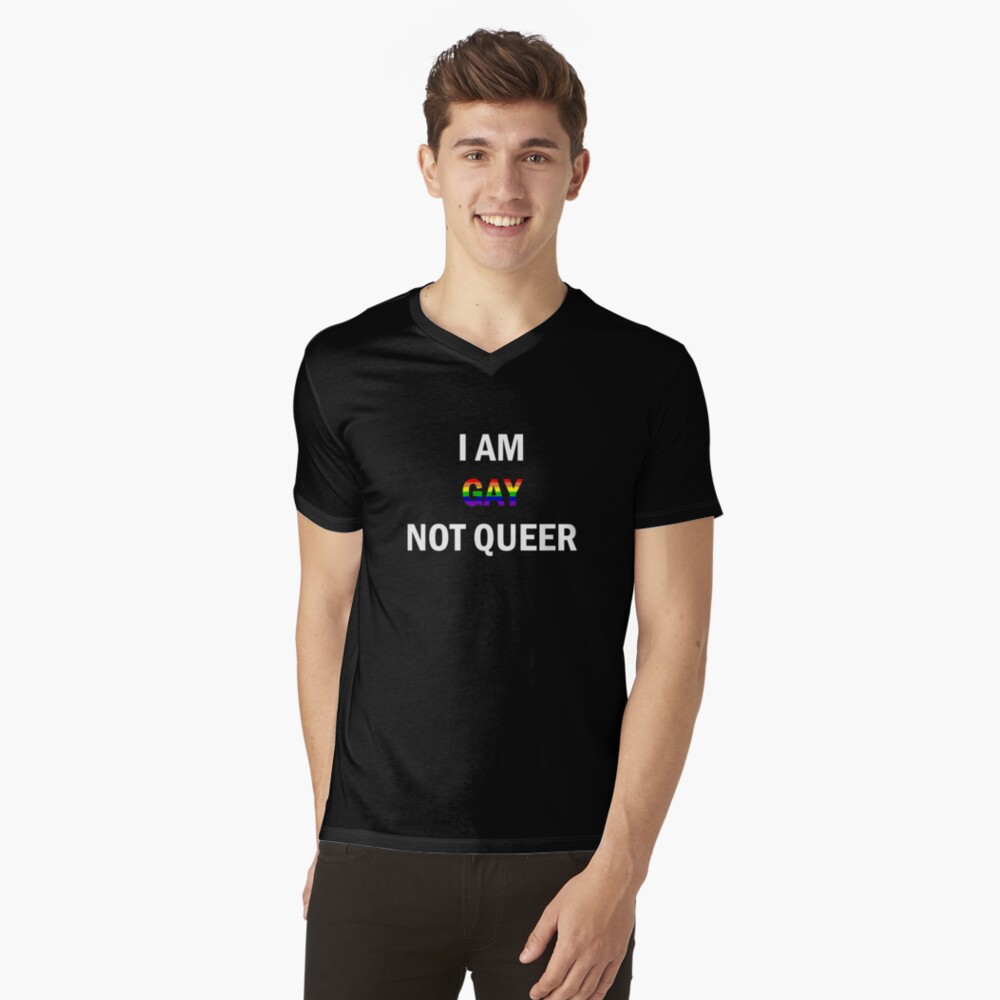
I am watching a Spanish Netflix series called Merli: Sapere Aude, and it is excellent. It is a dramedy, and the plot revolves around the protagonist, a young man named Pol Rubio, played by a fine young Spanish actor named Carlos Cuevas. Pol is a young man in his first year of studies in philosophy at a university in Barcelona. He has a bisexual orientation, and though he favours men, he does have dalliances with women occasionally. Pol is an anti-hero; while he generally strives to do good, he betrays a friend and his father when it serves his interests. He learns in the first episode of season two that he is HIV+. Pol is devastated by the news, despite the doctor’s assurance that the virus can be managed with treatment. He starts the regimen of taking the medication and tries to carry on. In a subsequent episode, Pol converses with a former co-worker who likely exposed him to the virus. His friend lost his job when the employer learned he was HIV+. The friend reminds Pol that people will feel sorry for you when you get cancer, but when you get HIV, you are viewed as a “dirty faggot.” Pol also converses with his employer, a mature gay man living with HIV. The employer lived through the AIDS crisis of the 1980s and 1990s and saw many gay men succumb to the disease. He recounted an incident where a friend was beaten to death for being queer. I bristled when I heard “queer” used to refer to a gay man, but I realized in the context of the anecdote that it was the attackers who called him a queer as they beat him to death. Queer is a slur, the last thing many gay men heard as they were beaten to death by gangs of thugs.

Continue reading

Nature made a mistake, which I have corrected. – Christine Jorgensen

For years, I have tried to comprehend the feminist claim that gender identity and expression are a men’s rights issue. Finally, I got a little clarity listening to a radical feminist, a former member of the British Labour Party, discuss the issue of trans-identified men’s participation in women’s sports. She said something to the effect that “women’s sports matter more than men’s feelings.” I get it. Radical feminists made trans-identified men’s participation in women’s sports the focal point of their opposition to gender ideology. In doing so, they overlook the fact that it was pro-feminist governments, the Obama Administration in the United States, and the Liberal Government in Canada led by Justin Trudeau, that made gender identity and expression prohibited grounds of discrimination. It was based on Titles VII and IX in the Civil Rights Act of 1964 in the United States–provisions in the legislation that addressed women’s equality. In Canada, Trudeau openly and proudly proclaimed that he was a feminist and wanted everyone to convert. The Trudeau government amended the Canadian Human Rights Act with the passage of Bill C-16 to include gender identity and expression as prohibited grounds of discrimination. Continue reading

I consider promiscuity immoral. Not because sex is evil, but because sex is too good and too important. — Ayn Rand

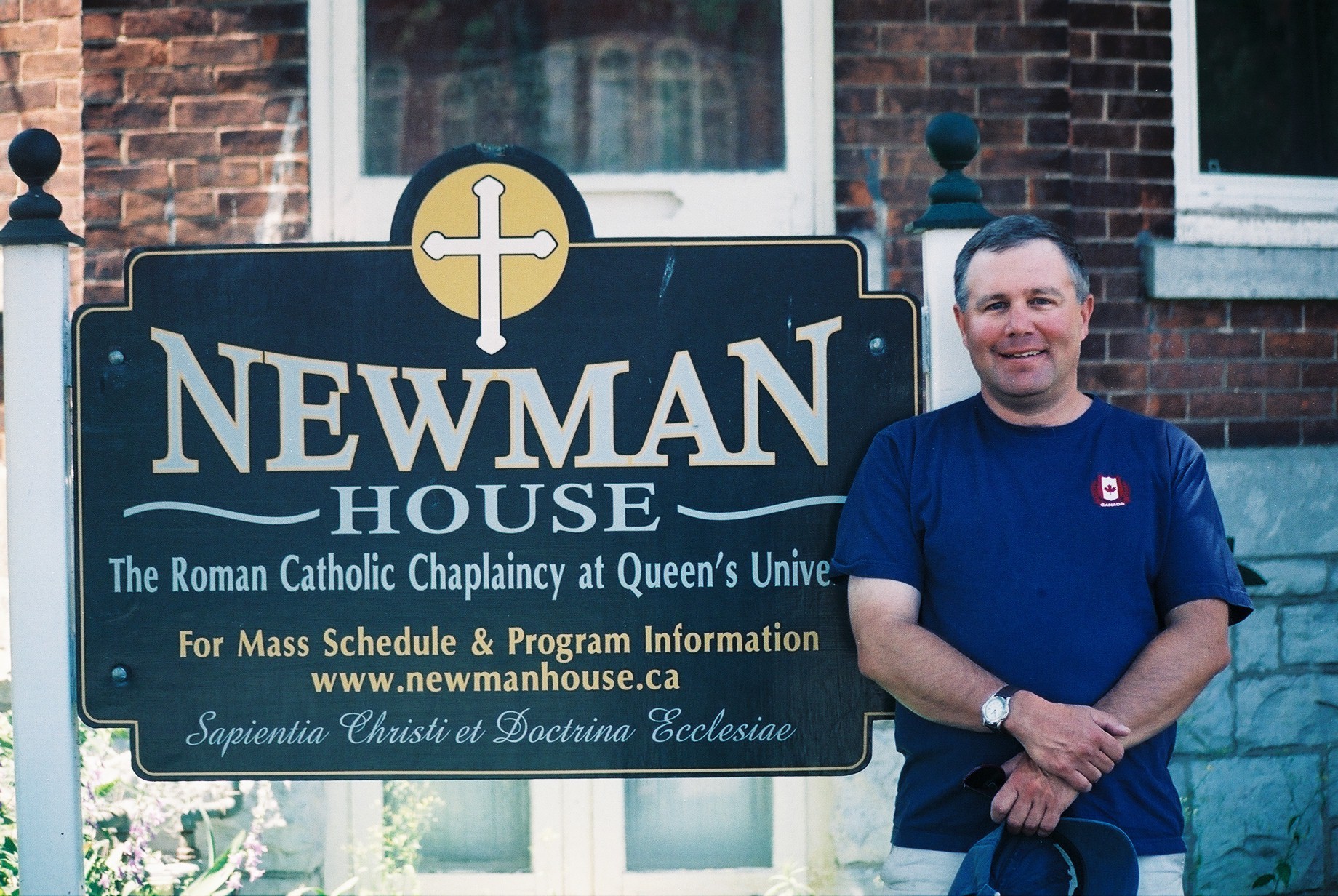
In the summer of 1987, I lived with my boyfriend Fabio in a two-bedroom apartment in Kingston, Ontario. We met as students at Queen’s University and secretly carried on our love affair before moving in together. We became boyfriends during the burgeoning AIDS crisis. One evening, we sat in bed and watched a panel discussion held by one of the American News Networks–I cannot remember which one. What struck me was the inflammatory opening remark made by a conservative Congressman, whose name I do not remember, who asserted that “perversion and promiscuity” were to blame for the AIDS crisis. That sentiment was shared through the 1980s. I remember the stand-up comic Sam Kinison, who screamed in one of his routines that AIDS became an epidemic “because a few fags fuck some monkeys; they got tired of their own assholes.” Jerry Falwell claimed it was God’s judgement on homosexuals and blamed the spread of the disease into the innocent heterosexual population on bisexual men. Yes, AIDS was seen as a gay plague. Fabio and I, like countless gay men in the 1980s, were concerned. There was uncertainty about how easily the virus was transmitted. Before the dawn of the AIDS crisis, our biggest concern as students in the 1980s was the risk of an unwanted pregnancy or getting herpes.

Continue reading

Being gay is like being left-handed. Some people are, most people aren’t and nobody really knows why. It’s not right or wrong, it’s just the way things are. — Unknown

I watched a documentary in the 1990s. It was about the investigation into the molestation and murder of a prepubescent boy in England in the 1970s. It was in the 1970s, so suspicion immediately fell on gay men. The police opened an investigation and right away approached known homosexuals and entered gay bars, asking men to come to the station for questioning. The men were photographed, and detailed notes were taken of the interviews. At one point, a gay man was accused by another of the crime. Once the accused realized that he was under suspicion, he told the detectives interviewing him that he was saying nothing without his solicitor present. It turned out that the accusation was wrongful and levelled against him by another man who had a grudge. Eventually, the culprit was found and confessed when presented with evidence against him. He was not a gay man and had no previous suspicion of sexual interference with boys. He said that the boy struggled during and after the assault and that he had not meant to kill him. The man was convicted of the crimes of manslaughter and sexually assaulting the boy. He was imprisoned for his crimes. With the case closed, the police destroyed the evidence they collected in their investigation: the photos and notes from the interviews of the gay men.

Continue reading

Gay men don’t have much in common with lesbians. — Douglas Murray

The thing to remember is that gay is a demographic, not a coherent community. I am a gay man, a free thinker and a skeptic. I am proudly Anglo-Saxon; both sides of my family came from the British Isles, my father’s family from England and my mother’s from Ireland. Short of taking a DNA test, it is anyone’s guess what blend of ethnicities may be in my ancestry. However, that is neither here nor there. The fact remains that I am a middle-aged, gay white man. That said, those characteristics are irrelevant. Above all else, I am an individual. I am the man I am today because of my childhood and adolescence circumstances. I grew up in Canada in the latter half of the 20th century. I remember the Centennial celebrations in 1967 on Canada’s 100th birthday. I learned to take pride in my heritage, and the freedoms and opportunities afforded me as a Canadian. Still, growing up gay in my generation had its challenges. Continue reading

Gentlemen, you may include me out. — Samuel Goldwyn

I declined an audition recently. The audition call was for an actor to play a senior gay man, a closeted gay man married to a lesbian who had children and grandchildren. They enthusiastically come out late in life, embracing their “queerness” in all its grotesque flamboyance. The role is a lead for a series of ten episodes. I am okay with playing a gay man on screen, provided I can play him straight. By that, I mean playing a man who is gay. I am uncomfortable playing a gay man as a caricature, even in jest. That resembles a black actor playing a minstrel show role in jest. Mainly as I am on record for criticism of queer culture, I think that queer culture is demeaning and detrimental to the well-being and happiness of gay men and boys. I said in the note explaining my decision to drop the audition that the role was outside my character type. My character type is the mature father figure. As an older gay man, I do not want to risk being typecast as an older, flamboyant homosexual. 

Continue reading

You can’t just look at someone and guess their sexuality. There’s no point in assuming that every gay man has just one personality type. — Cameron Monaghan

I had a similar experience to the one dramatized in the video. It was in the late spring, early summer of 1980. I had graduated from high school and eagerly looked forward to enrolling at Queen’s University in the Fall. I served as a Reservist in the Canadian Army in an artillery regiment in Ottawa and made friends with another young man I met in the unit. We became fast friends. I made friends with that man and others in my regiment. Still, I was ribbed, called the “Regimental Fag” in the banter among the ranks. When I came to the Christmas Party in 1979 with a young woman for my date, I was asked, “So, you like girls?” We spent time alone together at his mother’s house. We sat on the living room floor and listened to Beatles records on the stereo. I remember my overwhelming desire for him; I wanted to throw my arms around him and kiss him. I did not understand why I felt that way, which was horrifying. I dared not try it as that would have gone badly for me (assuming he was not gay or did not return my feelings). Had I been singled out as a homosexual in 1980, it would have meant dismissal from the Service. I would likely have lost my friends and become the butt of salacious gossip. 

Continue reading

Olivier said that drama is an affair of the heart, or it’s nothing, and he was right. — Pam Gems

Joe Locke and Kit Connor as Charlie and Nick in Heartstopper.

I watched season two of the charming Netflix series Heartstopper. I liked it despite it being aimed at a much younger audience. What drew me to the series was the gay storyline; the romance between the two protagonists, the high school boys Nick and Charlie. The series is a drama, although it pulls its punches. The boys never go past kissing and cuddling in their relationship. Also, Nick is bisexual, and Charlie is gay. It is cute and appealing to its teenage audience. I like that a teenage gay romance is portrayed as a positive thing. Coincidentally, the actors who play Nick and Charlie are, like the characters they play, gay and bisexual. Kit Connor, who plays Nick, declared his bisexuality. Joe Locke, who plays Charlie, is openly gay. That the young actors are gay and bisexual is interesting. It is nice that they are free to be themselves.

Continue reading

Those who know that they are profound strive for clarity. Those who would like to seem profound to the crowd strive for obscurity. ― Friedrich Nietzsche,  The Gay Science

Listening to a true believer in gender identity and gender expression explain why they believe reminds me of when I was a pious Roman Catholic. I am sure I sounded much the same to non-believers when I explained why I had taken the leap of faith to practice Roman Catholicism. I accepted the theological arguments, the authority of Scripture, and the Apostolic Tradition that compose Roman Catholicism. I attended mass daily, said my prayers, and tried to do good and avoid doing evil. I regularly examined my conscience and tried to turn away from sin. It was reasonable to me at the time. Though I tried to be true to my faith, lingering doubt remained. Eventually, I realized that I could not continue as it was hypocritical of me. I stopped going to mass. I no longer believe in the claims of Christianity.

Continue reading