Category Archives: Intellectual Freedom

In the acronym LGBTQ+, “queer” is one of the multiple meanings for the Q. But that general acceptability does not erase queer’s treacherous and hateful history. — A. Pallas Gutierrez

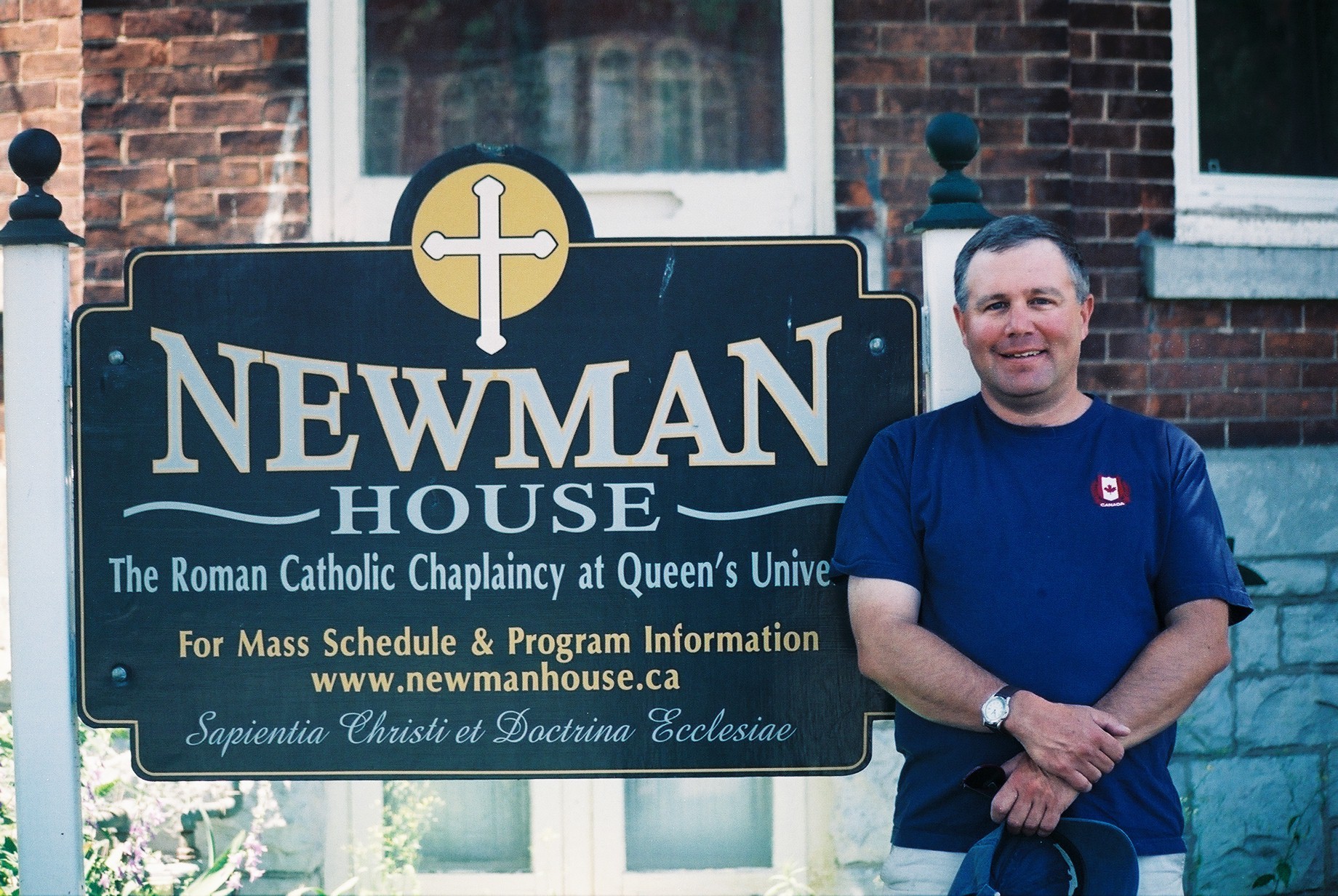
I remember submitting an essay for grading in a course on the sociology of religion I took at Queen’s University in 1983. When the essay was returned to me with the grade and the professor’s comments, he noted that I used the terms Catholic and Christian interchangeably. He pointed out that while Catholics are Christians, so are Protestants. By using the terms Catholic and Christian interchangeably, I blurred the distinction between the two and risked giving the reader the impression that Protestants were somehow not Christians. Naturally, I understand that there are several denominations and sects in Christendom that profess different beliefs concerning Christian doctrine. However, I took the professor’s point that a little clarity goes a long way. What prompted the memory of my essay and the comment is how I noticed that so many people use the terms gay and queer interchangeably. I see this in news articles and discussions on online forums. Occasionally, someone refers to me as queer or a member of the queer community. I politely correct them, telling them that I am gay, not queer, and no, I am not a member of the queer community. I ask that they respectfully not refer to me as a queer, as I do not like it. The term is a slur, a derogatory term used historically to describe a gay man. It is like calling a black man a coon or a Jewish man a Hebe. Yes, I know that there is a countercultural constituency that claimed to have “reclaimed” the term. They are free to call themselves what they want, but it is objectionable when they use the terms gay and queer interchangeably when referring to gay men. In short, a gay man is a male homosexual, a man who experiences same-sex romantic and sexual attraction. Gay men are represented in all races and ethnicities. They are individuals, and the only thing they have in common is their sex and orientation.

Sadly, countercultural thinking in gay rights activism emerged in 1990 with the introduction of Queer theory; this is an ideological position, as Renee Janiak notes, the Queer theory holds:

To be queer means, “fighting about social injustice issues all the time, due to the structure of sexual order that is still deeply embedded in society” (Warner: 1993). Queer people are not assigned into a specific group or category, which would be comparable with any other type of grouping such as “class” or “race” (Warner: 1993). Queer people have made a change with how they identify themselves, they went from “gay” to “queer”. The self- identification change is due to that fact that “queer” represents the struggle of not wanting to fit into the systems of being “normal”. Queer theory has allowed for new political gender identities (Butler: 1990). (Queer Theory)

By 2016, Noah Michaelson, editorial director of HuffPost Gay Voices, rebranded the blog as HuffPost Queer Voices. In doing so, he claimed, “We, like many others before us, have chosen to reclaim ‘queer’ and to rename the section HuffPost Queer Voices because we believe that word is the most inclusive and empowering one available to us to speak to and about the community — and because we are inspired by all of the profound possibilities it holds for self-discovery, self-realization and self-affirmation,” […]. “We also revere its emphasis on intersectionality, which aids in creating, building and sustaining community while striving to bring about the liberation of all marginalized people, queer or not.” (Advocate) He added, “For a lot of people, intersectionality is difficult,” […]. “I think that a lot of groups who are marginalized or disenfranchised have their sights set on trying to bring about liberation for that particular group. It’s only been recently that people understand that most oppressions are all tied together. We’re not going to really get very far if we’re just trying to work in our own lane. We actually have to be working with each other because at the end of the day we’re all trying to get the same thing, I hope. And that is liberation for all marginalized people and for all people.” (Advocate)

Queer or 2SLGBTQQIA+ replaced gay and lesbian, meaning gay and lesbian people not wanting to fit in “existing social institutions,” defined by the queer theory as “heteronormativity.” Queer activists strive to organize a community composed of “the more socially conscious” gays and lesbians “to provide leadership to the whole mass of social variants” in developing a parallel “queer culture.” Yes, they are free to promote this narrative and pursue their desired goal. That said, in reality, gay remains gay, a demographic, not a community, and increasingly, many gay men, myself included, have actively rejected that narrative. When I mention in passing that I am gay, I typically mention my husband, Mika, with whom I have been for twenty-seven years. We are a conventional gay couple who are not at odds with heterosexuality or “heteronormativity.” Others understand that we are gay, male homosexuals, in a loving and committed relationship. We are assuredly not queer; what does that even mean? What we think of the “marginalized and disenfranchised” has nothing to do with your sex, race, orientation, or anything else. When it comes to the queer community, we ask that they stay in their own lane and kindly stop using the terms gay and queer interchangeably in referring to gay men. Yes, a little clarity goes a long way.

Posted by Geoffrey

I was raised in a household where being gay was like, the most normal thing. My brother is gay, all of my best friends are gay. When my brother came out of the closet, it wasn’t a big deal for my family. — Ariana Grande

Gay men have long been seen as a novelty, a standard deviation in the demographic where most of humanity is heterosexual. Attitudes toward male homosexuality varied throughout history. In Antiquity, for the Etruscans, Greeks, and Romans, it was a part of life. They understood that people were sexual, so same-sex liaisons were common and depicted in their artwork. With the development of the Abrahamic faiths, Judaism, Christianity, and Islam, male homosexuality was viewed in a critical light. Eventually, it was condemned in the Abrahamic faiths and in the wider society. Gay men lived and died through centuries where, at best, they were tolerated, sometimes, and at worst, persecuted and imprisoned. By the eighteenth century in England, the argument was advanced by the British philosopher, Jeremy Bentham, for the decriminalisation of homosexual behaviour between consenting adults in private, in his essay Offences Against Oneself. He wrote the essay around 1785, but it was published posthumously in 1931. Bentham thought homosexuality, as Jeffrey Weeks notes, “an ‘imaginary offence’ dependent on changing concepts of taste and morality.” (Wolfenden and beyond: the remaking of homosexual history) Bentham thought through the issue and reasoned:

To what class of offences shall we refer these irregularities of the venereal appetite which are stiled [sic] unnatural? When hidden from the public eye there could be no colour for placing them any where else: could they find a place any where it would be here. I have been tormenting myself for years to find if possible a sufficient ground for treating them with the severity with which they are treated at this time of day by all European nations: but upon the principle utility I can find none. (Offences Against Oneself)

However, in England and Wales, the passage of the Criminal Law Amendment Act 1885 (48 & 49 Vict. c.69) included Section 11, in particular the clause known as the Labouchere Amendment, which applied to male homosexuality. In short, the clause provided for a term of imprisonment “not exceeding two years”, with or without hard labour, for any man found guilty of “gross indecency” with another male, whether “in public or in private”.  The Labouchere Amendment was enforced sparingly and selectively. However, the consequences of arrest and conviction could be devastating. John Gielgud very nearly saw his career as an actor come to an abrupt end in 1953 when a scandal arose over his arrest for ‘persistently importuning male persons for immoral purposes’ (he was caught trying to pick up a man in a public washroom). He was fined £10, and news of the arrest reached the press, causing him a most personal humiliation and the refusal of a visa to travel to the United States with his company to perform Shakespeare’s The Tempest. Gielgud was fortunate that the theatre-going public forgave his momentary indiscretion, and he continued his acting career both in the United Kingdom and the United States. Also, in 1953, the Home Secretary, David Maxwell Fyffe, referred to male homosexuality as a “plague over England,” and vowed to wipe it out. The Labouchere Amendment was repealed in English law in 1967—interestingly, a backbench Conservative Member of Parliament, Margaret Thatcher, broke ranks with the party to vote for its repeal. Since the decriminalisation of male homosexuality in England and Wales in 1967, many countries followed. It was decriminalised in Canada in 1969.
 
Now, in the twenty-first century, male homosexuality is seen by most as inconsequential. It is a natural expression of human sexuality. True, gay men remain a minority, but are free to take their place in society and live openly. Gay men marry and have families. They are represented in all occupations, and take part in a plurality of pastimes like anyone else. Unfortunately, for some, gay men remain a novelty. The series, Heated Rivalry, released by Crave, a Canadian streaming service, has become a worldwide hit with viewers. The series is based on novels by Rachel Reid, a Canadian author. I do not begrudge her success or the television series’s success, but what concerns me is that the story is pure fantasy. Yes, it is good writing and acting, absolutely, only it made me think of a quotation by Maria Von Trapp. When she saw the first production of The Sound of Music, she said, “That’s a nice story, but it’s not my story.” The story of two professional hockey players, one bisexual and the other gay, came from the imagination of a heterosexual woman. I am not saying there is anything wrong with that. Hardly, she is free to write stories about any characters she chooses. Though they say, “Art imitates life,” sometimes, particularly in romance novels, the lives of the characters are idealised beyond belief. The reality is that there is nothing novel about gay men living in the twenty-first century in most Western jurisdictions. There is no need to fashion romantic fantasies about how you imagine gay men live, how they feel, and what they think. The truth is, we are like everybody else, despite being a minority. There are plenty of openly gay professional athletes, including Jason Collins (an NBA player), Robbie Rogers (an NFL player), Tom Daley (a diver for the British Olympic team), Gus Kenworthy (a skier for the U.S. Olympic team), and Carl Nassib (an NFL player). I do not know much about the personal lives of these men, except for Tom Daley, whose private life is on the public record. Daley is married to his husband, Dustin Lance Black, and has two sons. They lead a conventional life like any other married couple. So, why are people so agog over a fantasy television series that treats the ordinary lives of gay men as something new and unusual?
 
Posted by Geoffrey
 

The sad truth is that most evil is done by people who never make up their minds to be good or evil. — Hanna Arendt

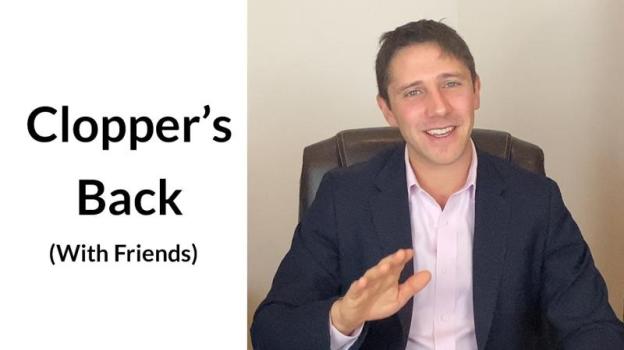
Hannah Arendt developed the concept of the banality of evil: “Evil comes from a failure to think. It defies thought for as soon as thought tries to engage itself with evil and examine the premises and principles from which it originates, it is frustrated because it finds nothing there. That is the banality of evil.” I am reminded of this when I note the dismay of Intactivists when Facebook posts pop up where a newborn boy is subject to involuntary genital cutting for any reason or no reason. I also note the angry reactions of the parents who do not care for the criticism or condemnation for doing this to their newborn sons. Yes, there is no shortage of people who see nothing wrong with it and will tell you to mind your own business. That and they retort, “Don’t choose it for your son if that’s how you feel!” I watch with interest as Eric Clopper, Attorney at Law and Founder & President of Intact Global, mounts a constitutional challenge in Oregon for the protection of boys from involuntary genital cutting. I stand with him and hope for the best as he and his team of lawyers proceed with the challenge. The challenge is based on the constitutional guarantee of legal equal protection. As the involuntary genital cutting of girls is prohibited in US law (in several states, not federally), the reasoning is that boys deserve equal protection. Though I am neither a lawyer nor a legal scholar, as a well-informed layman, I expect the challenge will be an uphill battle.

Continue reading

Nature made a mistake, which I have corrected. – Christine Jorgensen

For years, I have tried to comprehend the feminist claim that gender identity and expression are a men’s rights issue. Finally, I got a little clarity listening to a radical feminist, a former member of the British Labour Party, discuss the issue of trans-identified men’s participation in women’s sports. She said something to the effect that “women’s sports matter more than men’s feelings.” I get it. Radical feminists made trans-identified men’s participation in women’s sports the focal point of their opposition to gender ideology. In doing so, they overlook the fact that it was pro-feminist governments, the Obama Administration in the United States, and the Liberal Government in Canada led by Justin Trudeau, that made gender identity and expression prohibited grounds of discrimination. It was based on Titles VII and IX in the Civil Rights Act of 1964 in the United States–provisions in the legislation that addressed women’s equality. In Canada, Trudeau openly and proudly proclaimed that he was a feminist and wanted everyone to convert. The Trudeau government amended the Canadian Human Rights Act with the passage of Bill C-16 to include gender identity and expression as prohibited grounds of discrimination. Continue reading

Double standards do not diminish the reality of the truth. — T. Allen

The Ottawa Public Library is on board with International Pride Month in 2024, which is fine. Public libraries have a mandate to promote literacy, and librarians have a mandate to uphold intellectual freedom, freedom of expression, and freedom to read. Among the activities at the Ottawa Public Library is facilitating a Q&A and book signing for a transgender author named Kai Cheng Thom. The description of the event promises attendees, “This highly engaged, practically focused presentation will leave you with: 1) A simple but powerful psychological framework for understanding love and resilience as a practice, 2) 3 simple tools that you can use to resolve conflict and engage in meaningful conversations with people who may hold bigoted or prejudiced beliefs, 3) A visualization practice for self-care and personal development.” (Ottawa Public Library)

Continue reading

‘Woman’ is not an idea in a man’s head. — J. K. Rowling

Despite Rowling’s proposition being a non sequitur, she is correct that “woman is not an idea in a man’s head.” The majority of men, rational men at least, know that the definition of a woman is an adult human female. The definition of a woman she refers to in her topsy-turvy proposition is that of feminists who subscribe to queer theory and their half-baked metaphysics that spawned gender identity and expression. The belief that people have gendered souls is a feminist invention made into a sacred cow by the Woke with their triune doctrine of Equity, Diversity and Inclusion (more aptly known as Division, Iniquity and Exclusion). Yes, it was queer feminists such as Judith Butler and barbara findlay (she insists on spelling her name without capital letters) who fashioned gender identity and expression. 

Continue reading

Those who know that they are profound strive for clarity. Those who would like to seem profound to the crowd strive for obscurity. ― Friedrich Nietzsche,  The Gay Science

Listening to a true believer in gender identity and gender expression explain why they believe reminds me of when I was a pious Roman Catholic. I am sure I sounded much the same to non-believers when I explained why I had taken the leap of faith to practice Roman Catholicism. I accepted the theological arguments, the authority of Scripture, and the Apostolic Tradition that compose Roman Catholicism. I attended mass daily, said my prayers, and tried to do good and avoid doing evil. I regularly examined my conscience and tried to turn away from sin. It was reasonable to me at the time. Though I tried to be true to my faith, lingering doubt remained. Eventually, I realized that I could not continue as it was hypocritical of me. I stopped going to mass. I no longer believe in the claims of Christianity.

Continue reading

I would say that I’m a feminist theorist before I’m a queer theorist or a gay and lesbian theorist. — Judith Butler

The quotation by Judy Rebick at the start of the Wikipedia article on lesbian feminism prompted me, in part, to discuss the detrimental effect of the infiltration of feminism on the gay rights movement. “According to Judy Rebick, a leading Canadian journalist and feminist activist, lesbians were and always have been “the heart of the women’s movement,” while their issues were “invisible” in the same movement.” (Cited in Wikipedia) Rebick is an American ex-pat who lives in Toronto. I could write at great length about her impropriety, but I digress. What I remember about Rebick is what she said in an interview in 1990 regarding feminism. She said, in short, that feminism was dominated and too focused on the interests of middle-class heterosexual white women. It needed to be more inclusive, broaden its scope to include lesbians and non-white women, and take up the cause of gay rights. When I heard that, I was aghast. “Whoa there, Medusa,” I thought, “stay in your own lane! No one asked for your help. Gay men are doing just fine in standing up for their civil rights.” Continue reading

People have gone down this spiral of cancel culture and the idea that everything is offensive. — Bianca Del Rio

Jason and I are good friends and hunting buddies.

Here is a photo of my friend and hunting buddy Jason and me. Jason is a family man and a man’s man; he is happily married and has a six-year-old daughter. Not long after we became hunting buddies some years ago, I told him I am gay. His response was, “and that will affect our hunting how?” Since then, our friendship and hunting partnership flourished. It was under Jason’s guidance I took up whitetail deer hunting. Hitherto, I was first and foremost a gamebird hunter. Upon taking up deer hunting with Jason as my mentor, I took four deer to date, starting in the 2012 season with a nice doe, a nine-point buck in 2016, a spike horn buck in 2017, and an eight-point buck in 2020. As a result, I have a presence online as a gay hunter. I publish a blog, Geoffrey’s Hunting Diary, subtitled “memoirs of a gay huntsman.” In addition, I have a YouTube channel called The Gay Huntsman. Those who view my videos and read my blog posts find the emphasis on hunting and not that I am gay. Yes, Jason gets it; my sexual orientation is irrelevant–it has no bearing on our shared passion for hunting and our friendship. Continue reading

“Nothing is more deceitful,” said Darcy, “than the appearance of humility. It is often only carelessness of opinion, and sometimes an indirect boast.” ― Jane Austen, Pride and Prejudice

Jacinda

Jacinda Ardern, Prime Minister of New Zealand, posing with Justin Trudeau, Prime Minister of Canada and Sadiq Khan, Lord Mayor of London.


I remember in 1968, my mother enrolled me in a class at the Holy Family parish in Kingston, Ontario. The class was to prepare me for my First Communion. I was seven years old, and in the class, I received my first lessons from the Roman Catholic Church in its perceived need that I learn humility. I have fleeting memories of the classes–on the whole, I think I enjoyed attending them. After our lesson, we got to play games like hide and seek. One night we got to watch That Darn Cat. The experience that lingers in my memory was delivered by the young woman who taught the course. She told us that Jesus, as a boy did not talk back to his parents and teachers; neither did he fight with other children. I think the children in the class took this lesson to heart. The experience was not unreasonable in and of itself–Christianity, Roman Catholic, Orthodox and Protestant, teaches that we should try to be like Jesus. Knowing that I talked back to my parents on occasion and got into scraps with my siblings left me feeling a little abashed–so I did my best to follow the example set by the boy Jesus. I learned at that early age that I am not perfect–that despite it, I should strive to do good and avoid doing evil. At the time, I did not appreciate that it was easy for the boy, Jesus, as He was Divine, unlike the rest of the children in the class and me. Continue reading