Tag Archives: librarian

Bigotry: A vice confined to the weakest minds. ~ Anonymous

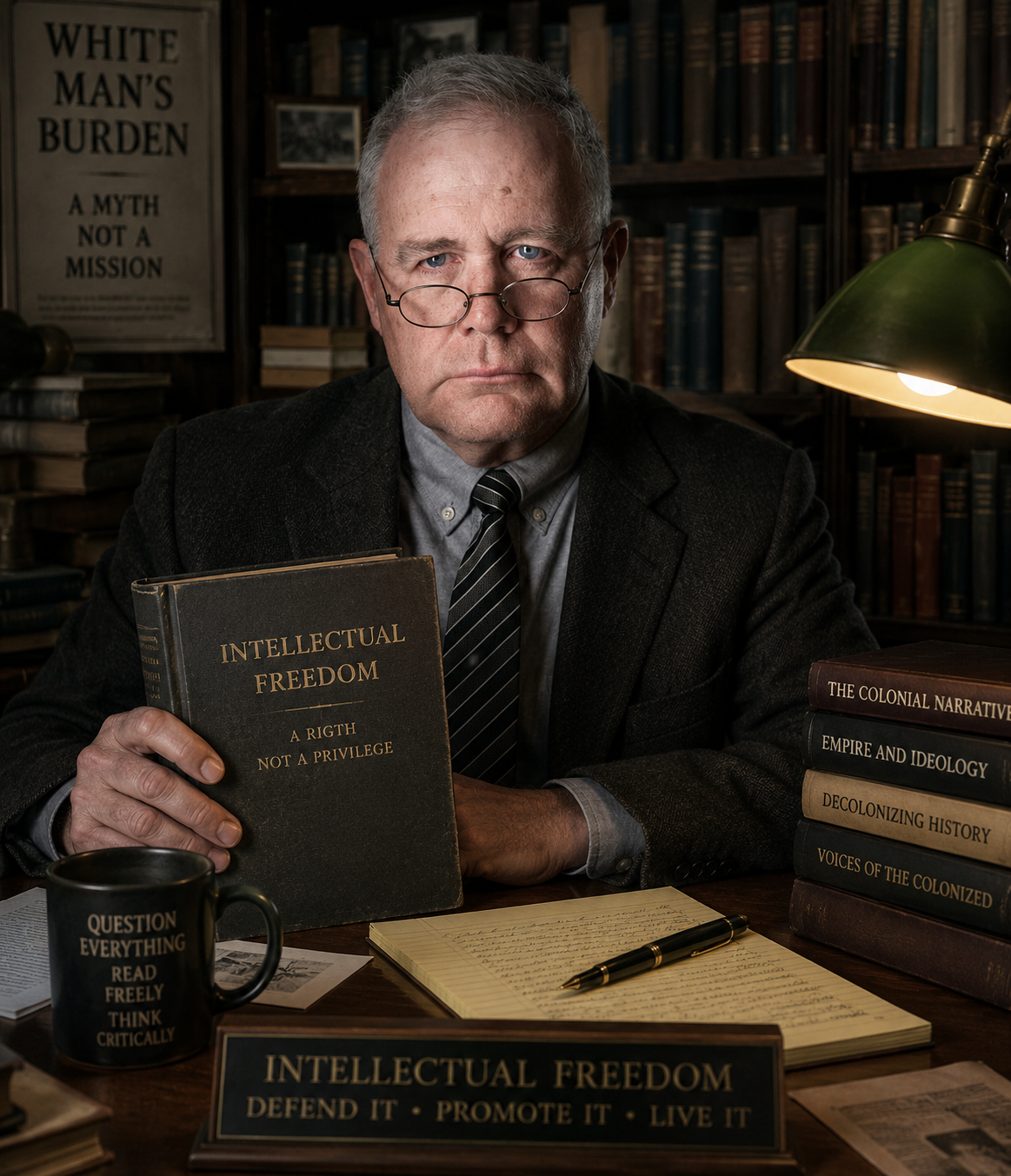
What is it about my being a white man that makes some people think any argument I make in any discussion I join on any topic is invalid? Honestly, what do my sex and skin colour have to do with my ability to think, form, and express a thought? I am an educated man. I was fortunate to have been born in Canada in the mid-twentieth century. I had the benefit of a public education and earned two university degrees. My schooling included lessons in history, music, drama, and logic. I learned how important objectivity is in the pursuit of knowledge and truth. I also learned that you should judge others as individuals according to their character. So, then why, in 2026, do my sex and race matter to so many people? So much so that I am attacked for being an old white man with no regard to my character. The thing to remember is that despite being white and male, I had to compete for spots in university and employment. Nothing was guaranteed. I suffered hardship and disappointment along the way. Like many Canadians my age, I had to move back in with my parents for a while after graduating from university with a B.A., only to find there was no room for me in the workforce. I remember well when I was in grade 8, my teacher lectured the class on the importance of getting an education. It was that, or you could expect to draw a welfare cheque. I remember the ads in the 1990s that pitched the message, “More education equals more job choices.” I did as my elders told me, only to end up educated, unemployed, and having to move in with my parents. I did not give up. I struggled to find work and initially found jobs through temporary employment agencies. It was at one of these temporary jobs that my supervisor suggested I enroll in library school. I applied and was offered admission to the School of Library and Information Science at the University of Western Ontario (now called Western University) in 1990. I graduated in 1993 with a Master of Library and Information Science degree.

Continue reading

Double standards do not diminish the reality of the truth. — T. Allen

The Ottawa Public Library is on board with International Pride Month in 2024, which is fine. Public libraries have a mandate to promote literacy, and librarians have a mandate to uphold intellectual freedom, freedom of expression, and freedom to read. Among the activities at the Ottawa Public Library is facilitating a Q&A and book signing for a transgender author named Kai Cheng Thom. The description of the event promises attendees, “This highly engaged, practically focused presentation will leave you with: 1) A simple but powerful psychological framework for understanding love and resilience as a practice, 2) 3 simple tools that you can use to resolve conflict and engage in meaningful conversations with people who may hold bigoted or prejudiced beliefs, 3) A visualization practice for self-care and personal development.” (Ottawa Public Library)

Continue reading

Censorship, like charity, should begin at home, but, unlike charity, it should end there. — Clare Boothe Luce

censorship1censorship2

Freedom to Read week begins this year in Canada on February 26th and runs through March 4th. As a librarian, I support the right to intellectual freedom and stand firmly opposed to censorship. As to what is censorship, I find the following definition of what constitutes censorship formed by the American Library Association the most comprehensive and inclusive:

Censorship is the suppression of ideas and information that certain persons—individuals, groups or government officials—find objectionable or dangerous. It is no more complicated than someone saying, “Don’t let anyone read this book, or buy that magazine, or view that film, because I object to it! ” Censors try to use the power of the state to impose their view of what is truthful and appropriate, or offensive and objectionable, on everyone else. Censors pressure public institutions, like libraries, to suppress and remove from public access information they judge inappropriate or dangerous, so that no one else has the chance to read or view the material and make up their own minds about it. The censor wants to prejudge materials for everyone. (American Library Association)

The critical point in this definition is the fact that “the censor wants to prejudge materials for everyone.” Continue reading

Morality is simply the attitude we adopt towards people whom we personally dislike.–Oscar Wilde (1854-1900)

ClosetPhoto-By-Salon1

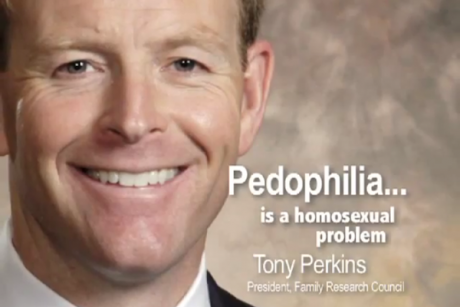
While attitudes toward gay people have changed a great deal for the better in my lifetime, prejudice and stereotypes remain. There is one stereotype in particular that kept me from coming out until later in life: that of the gay man as a predator from whom children must be protected. I am told I am good in my interaction with children and young people. I am gentle and soft-spoken and very easy going, and children generally like me. Because of this, it was suggested that I consider a career in teaching by one of my mentors at Queen’s University. I was reluctant to go into teaching because of this stereotype. I was confronted with this stereotype and the prejudice against gay men as teachers in 1986, the year I graduated from Queen’s. The Chairman of the Frontenac County Board of Education, in commenting on the amendment to the Ontario Human Rights Code which added sexual orientation to the list of prohibited grounds of discrimination, was dismayed that he no longer had any legal grounds to refuse to hire a teacher if he knew he was dealing with an “obvious faggot.” Continue reading