
Category Archives: Marriage Equality

Blog posts on the issue of same sex marriage.

I am the Love that Dare not Speak its Name. ― Alfred B. Douglas

This self-portrait, taken in Havelock, New Brunswick, shows the simplicity of the intimacy shared by Leonard Olive Keith (1891-1950) and Joseph Austin “Cub” Coates (1899-1965), who lived and loved in the first half of the 20th century. They were two men in love in Canada when male homosexuality was a crime in Canadian law, and public prejudice against male homosexuality was openly expressed. It was as simple as it is in the present. Some men are romantically and sexually attracted to men. It is a natural expression of human sexual attraction and behaviour. To those who knew and loved them, they were Len and Cub, a homosexual couple. To those who reviled male homosexuals, they were beneath contempt. They were what we call normal gays in the 21st century. Len was a harness racing driver who opened a garage after serving as an engineer in the Canadian Army in World War I. Cub was a mechanic who served as an engineer in the Canadian Army in World War I and volunteered for service in the Canadian Army in World War II. They were ordinary men who had a sense of duty, served their King and country as volunteers in the Great War, and found love and companionship in each other’s company. Despite their discretion, suspicion over their relationship in Havelock drove them apart in the 1920s. Len moved to the United States, where he lived out his days. Cub married in 1940. That fate was not unusual for gay men in Canada in the 20th century.

Continue reading

There’s this illusion that homosexuals have sex and heterosexuals fall in love. That’s completely untrue. Everybody wants to be loved. — Boy George

I recall when I was in university in 1982. I enrolled in a film studies class, and one of the films we watched was Pagan Rhapsody. There is a scene in the film where two men play a sex scene. Though the scene was as vanilla as possible–there was kissing and a little friendly groping (nothing graphic)–the student audience’s vocal expressions of disgust were notable. In 2024, male homosexuality was generally accepted as a natural expression of human intimacy and treated with sensitivity in film and television. Netflix series such as Young Royals and Heartstopper feature a gay romance and intimacy between high school boys in a way that leaves something to the viewers’ imagination. Both series are immensely popular with younger viewers. Things have changed since the screening of Pagan Rhapsody in 1982. Still, when it comes to public perceptions of intimacy between gay men, there are a lot of people who have an unsavoury fixation on what they imagine goes on when two men are intimate. I get expressions of disgust in the comments on blog posts I write on gay rights advocacy, where people say things like, “There’s nothing more disgusting than two men fucking each other in the ass,” and “Cocksucking is not a men’s issue.” I mean, that is beyond the pale.

Continue reading

I consider promiscuity immoral. Not because sex is evil, but because sex is too good and too important. — Ayn Rand

In the summer of 1987, I lived with my boyfriend Fabio in a two-bedroom apartment in Kingston, Ontario. We met as students at Queen’s University and secretly carried on our love affair before moving in together. We became boyfriends during the burgeoning AIDS crisis. One evening, we sat in bed and watched a panel discussion held by one of the American News Networks–I cannot remember which one. What struck me was the inflammatory opening remark made by a conservative Congressman, whose name I do not remember, who asserted that “perversion and promiscuity” were to blame for the AIDS crisis. That sentiment was shared through the 1980s. I remember the stand-up comic Sam Kinison, who screamed in one of his routines that AIDS became an epidemic “because a few fags fuck some monkeys; they got tired of their own assholes.” Jerry Falwell claimed it was God’s judgement on homosexuals and blamed the spread of the disease into the innocent heterosexual population on bisexual men. Yes, AIDS was seen as a gay plague. Fabio and I, like countless gay men in the 1980s, were concerned. There was uncertainty about how easily the virus was transmitted. Before the dawn of the AIDS crisis, our biggest concern as students in the 1980s was the risk of an unwanted pregnancy or getting herpes.

Continue reading

Being gay is like being left-handed. Some people are, most people aren’t and nobody really knows why. It’s not right or wrong, it’s just the way things are. — Unknown

I watched a documentary in the 1990s. It was about the investigation into the molestation and murder of a prepubescent boy in England in the 1970s. It was in the 1970s, so suspicion immediately fell on gay men. The police opened an investigation and right away approached known homosexuals and entered gay bars, asking men to come to the station for questioning. The men were photographed, and detailed notes were taken of the interviews. At one point, a gay man was accused by another of the crime. Once the accused realized that he was under suspicion, he told the detectives interviewing him that he was saying nothing without his solicitor present. It turned out that the accusation was wrongful and levelled against him by another man who had a grudge. Eventually, the culprit was found and confessed when presented with evidence against him. He was not a gay man and had no previous suspicion of sexual interference with boys. He said that the boy struggled during and after the assault and that he had not meant to kill him. The man was convicted of the crimes of manslaughter and sexually assaulting the boy. He was imprisoned for his crimes. With the case closed, the police destroyed the evidence they collected in their investigation: the photos and notes from the interviews of the gay men.

Continue reading

Gay men don’t have much in common with lesbians. — Douglas Murray

The thing to remember is that gay is a demographic, not a coherent community. I am a gay man, a free thinker and a skeptic. I am proudly Anglo-Saxon; both sides of my family came from the British Isles, my father’s family from England and my mother’s from Ireland. Short of taking a DNA test, it is anyone’s guess what blend of ethnicities may be in my ancestry. However, that is neither here nor there. The fact remains that I am a middle-aged, gay white man. That said, those characteristics are irrelevant. Above all else, I am an individual. I am the man I am today because of my childhood and adolescence circumstances. I grew up in Canada in the latter half of the 20th century. I remember the Centennial celebrations in 1967 on Canada’s 100th birthday. I learned to take pride in my heritage, and the freedoms and opportunities afforded me as a Canadian. Still, growing up gay in my generation had its challenges. Continue reading

The counterculture is always repackaged and made into a product. It’s part of America. — Jim Jarmusch

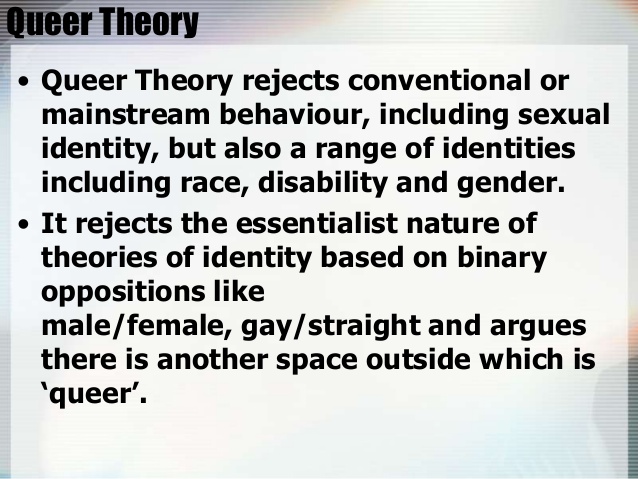
queer-theory-6-638

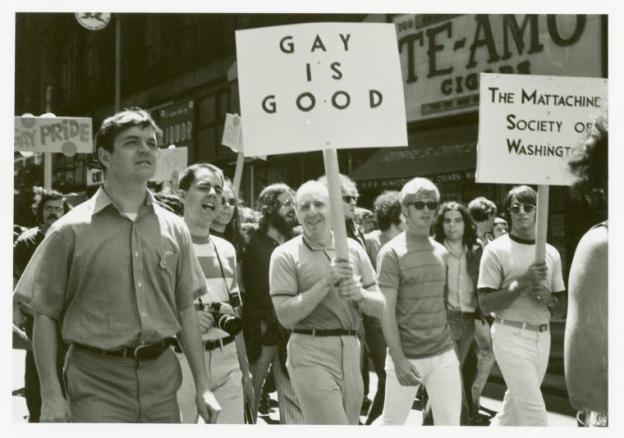
The history of the gay rights movement in the United States is fascinating. Is it a civil rights movement or is it a social justice movement? Is gay a demographic or is gay a community? Are gay rights the drive for civil rights, that gay people be at liberty, as individuals, to participate in society, openly, and free from persecution? Is it a social justice movement, the gay community driven by a countercultural constituency, intent on separating itself from mainstream culture? The answer to these questions is the gay rights movement in the United States is a combination of the two perspectives. To date, the successes of the gay rights movement in the United States are laudable. The repeal of laws that criminalized homosexual sex is a significant gain. Gay people live openly and are free to marry. True, elements of anti-gay prejudice linger, mainly from the ranks of the religious and socially conservative; moreover, there is only a patchwork of laws in place across the 50 states that prohibit discrimination in employment on the grounds of sexual orientation. However, I think these are the least of the worries for the gay rights movement in the United States. While both perspectives, civil rights and social justice, contributed to the success of the gay rights movement; what most concerns me about the current state of the gay rights movement in the United States is the influence of a decidedly countercultural constituency of U.S. society on the gay rights movement. In my opinion, this only undermines the successes of the gay rights movement in the United States and hinders its progress as a civil rights movement. Continue reading

I think gay men are more masculine than straight men. Because, guess what? They love other men! — Sir Ian McKellen

gladtobegay-badge-2go

I came across an article featuring an interview with Angela Davis Fegan, an artist and LGBTQ activist, in which Fegan condemned the gay rights movement for what she views as its domination by white, straight-acting gay men. She cited the campaign for same-sex marriage rights with its prescient concern for the legal and financial status of same-sex couples to illustrate her complaint. She asserted, “the push for marriage was largely about granting real estate and tax benefit rights to straight-acting, white, gay men.” (as cited in POPSUGAR) I am a masculine, white, gay man and view the gay rights movement and the legalization of same-sex marriage in particular as a good thing for all same-sex couples regardless of their sex, race or ethnicity. Fegan is not alone in her condemnation of the gay rights movement for the alleged domination by “white, straight-acting gay men.” Amrou Al-Kadhi, a gay drag performer, is critical of “the glorification of Olympic Poster boy Tom Daley and Academy Award winner Dustin Lance’s relationship. While it is a sign of progress that a gay relationship is celebrated nation wide, it is done in a manner that is “digestible” for a PG audience — a straight-acting Disney-fied gay couple (both attractive, white, masculine), giving gay men a pretty unobtainable ideal of success.” (as cited in i-D Magazine). Still, by made me think about why I took up with the gay rights movement as a masculine, white, gay man beginning in 1989. Continue reading

When a man does a queer thing, or two queer things, there may be a meaning to it, but when everything he does is queer, then you begin to wonder. ― Arthur Conan Doyle, The Case-Book of Sherlock Holmes

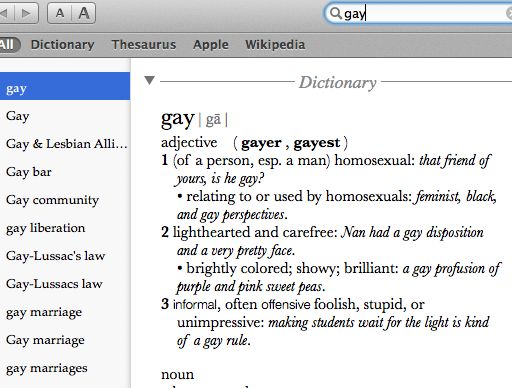
dictionary

002 (5)

Geoffrey and Mika in their library.

I cancelled my subscription to what was formerly Huff Post Gay Voices when the editorial director Noah Michelson changed the title to Huff Post Queer Voices earlier this year. Michelson justifies substituting “queer” in place of “gay” on the grounds the “word is the most inclusive and empowering one available to us to speak to and about the community.” (Noah Michelson as cited in OUT) The thinking behind it is people who are gay, lesbian, bisexual, transsexual, etc. form a “community,” that is they share a collective group identity. Following this train of thought, Michelson asserts “‘queer’ functions as an umbrella term that includes not only the lesbians, gays, bisexuals and transgender people of ‘LGBT,’ but also those whose identities fall in between, outside of or stretch beyond those categories, including genderqueer people, intersex people, asexual people, pansexual people, polyamorous people and those questioning their sexuality or gender, to name just a few.” (Noah Michelson as cited in OUT) I get that “queer” is used by some as a blanket term for gay, lesbian, bisexual, transsexual, etc., but I heartily disagree with and refute of this point of view. Continue reading

I think we must suspect that his ‘conversion’ was largely imaginary. […] Fine feelings, new insights, greater interest in ‘religion’ mean nothing unless they make our behaviour better. — C.S. Lewis

ambitionhypocrite-quotes-1

There is a great deal of discussion about Kim Davis, the clerk for Rowan County, Kentucky, jailed by U.S. District Court Judge David Bunning who found her in contempt of court on September 3, 2015. She defied the court order to issue marriage licenses as required in her capacity as County Clerk. Davis refuses to issue marriage licenses in protest of the Supreme Court of the United States ruling in Obergefell v. Hodges on June 26, 2015 that made same-sex marriage lawful across the United States. She justifies her refusal to issue marriage licenses on the grounds of her religious objection to same-sex marriage.  As she stated: “to issue a marriage license which conflicts with God’s definition of marriage, with my name affixed to the certificate, would violate my conscience.” (New York Times) The question here is whether her refusal to issue marriage licenses is genuinely a matter of faith and conscientious objection to same-sex marriage or, as many of her critics allege, simply a cynical ploy on her part to draw attention to herself and feather her own nest in the process. Is this nothing more than religious hypocrisy on her part? Continue reading

If a couple of gay guys want to throw the gayest, most fabulous wedding of all time, the only way it should offend you is if you weren’t invited. ― Orlando Winters

sweetcakesTennessee-No-Gays-Allowed-Sign-x400

“No shirt, no shoes, no service,” how often do I find a sign with these words posted when I approach the entrance to a restaurant or shop. There are hotels, bed & breakfasts, resorts and housing developments that refuse to allow children. I remember in 1968 my mother and father were asked by owners to leave their bed & breakfast in Cheltenham, England because other guests did not like that there were children on the premises. I remember back in 1987 when I was a student at Wilfrid Laurier University trying to find a place to live in Kitchener-Waterloo. It was a very tight market for student housing and for one of the ads I answered was told curtly by the voice on the telephone “we only take girls.” In 1989 back in Ottawa as I browsed ads in the newspaper for shared accommodation, I noticed more than a few that included the phrase “straight only.” People discriminate against others in the marketplace for various reasons, and in many cases, such as those listed above, it is lawful to do so, while in others it is not. The question is what is the appropriate response if you find yourself confronted with a situation when you think you are the butt of either unjust or unlawful discrimination. Continue reading