
Criticism of religion is a tender subject. Criticism of Islam, in particular, is especially so as is evidenced by the court battle that threatened to take shape between the National Council of Canadian Muslims (NCCM), Prime Minister Stephen Harper and Jason MacDonald (spokesman for Prime Minister Harper). The NCCM filed a notice of libel in the Ontario Superior Court of Justice over remarks made by Jason MacDonald in dismissing their objection to the inclusion of Rabbi Daniel Korobkin of the Beth Avraham Yosef Synagogue in Toronto as part of the delegation that accompanied Prime Minister Harper on a visit to Israel in January 2014. MacDonald dismissed their objection stating “we will not take seriously criticism from an organization with documented ties to terrorist organization such as Hamas.” (as cited in CTV News) The NCCM objected to the inclusion of Rabbi Korobkin in the delegation accompanying Prime Minister Harper because he hosted speaking engagements featuring Robert Spencer and Pamela Geller, two noted critics of Islam, in September 2013. Continue reading
Category Archives: Religion
Miracles, in the sense of phenomena we cannot explain, surround us on every hand: life itself is the miracle of miracles. — George Bernard Shaw
A miracle is a form of religious experience, essentially an event without a rational explanation attributed to the divine. I first remember learning about miracles as a boy in grade school. Religious instruction, Christian, was part of the public school curriculum in Ontario in the mid-1960s when I started school. My first-grade teacher, Miss Boss, read bible stories to the class every morning before we started the day’s lessons. If memory serves, I was most impressed by the story of the loaves and fishes. A year later, at junior school in England, one of the teachers, Mrs. Checketts, told us the story of Jesus raising a girl from the dead. As Mrs. Checketts related the story to us, “He called to her spirit “Talitha koum!” (which means “Little girl, I say to you, get up!”) and she was returned to life.” Again, I was duly impressed, but as I grew older, I began to wonder about the veracity of these accounts and of miracles in general. I started to wonder, also, just how common it is for people to continue to believe in miracles and how a miracle is identified in the present. Continue reading
If a believer demands that I, as a nonbeliever, observe his taboos in the public domain, he is not asking for my respect, but for my submission. ― Flemming Rose
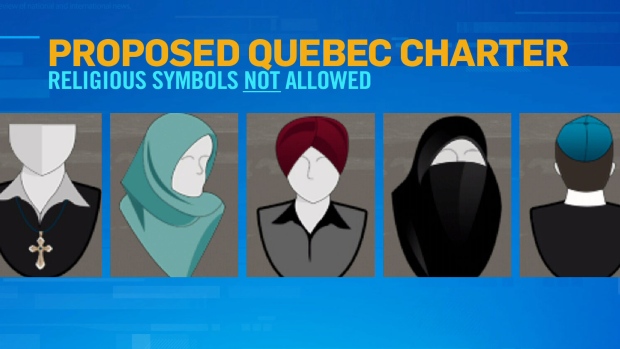
Religion is part of the fabric of Canadian society; Canadians hold a plurality of beliefs. The most recent census data (from the 2001 census) show that Christianity remains the most widely held and practiced religion with Roman Catholics in the majority at 43.2 %. People of non-Christian faiths make up a tiny percentage of the population: Muslims 2.0 %, Jewish 1.1 %, Hindus 1.0 %, Sikhs 0.9 %, Buddhist 1.0 %. Freedom of belief and conscience is enshrined in Canadian law; it is guaranteed in the Charter of Rights and Freedoms in section 2 Fundamental Freedoms. That said, it is important to note that religion is a matter of private conscience. Canada is a secular nation-state. There is no state religion in Canada. Religious belief is something one chooses; no one is forcing you to adhere to a particular set of ideas and the rules of any specific religious institution. Issues are arising in the present over the accommodation of religious folk in the secular, public realm of Canadian society. Continue reading
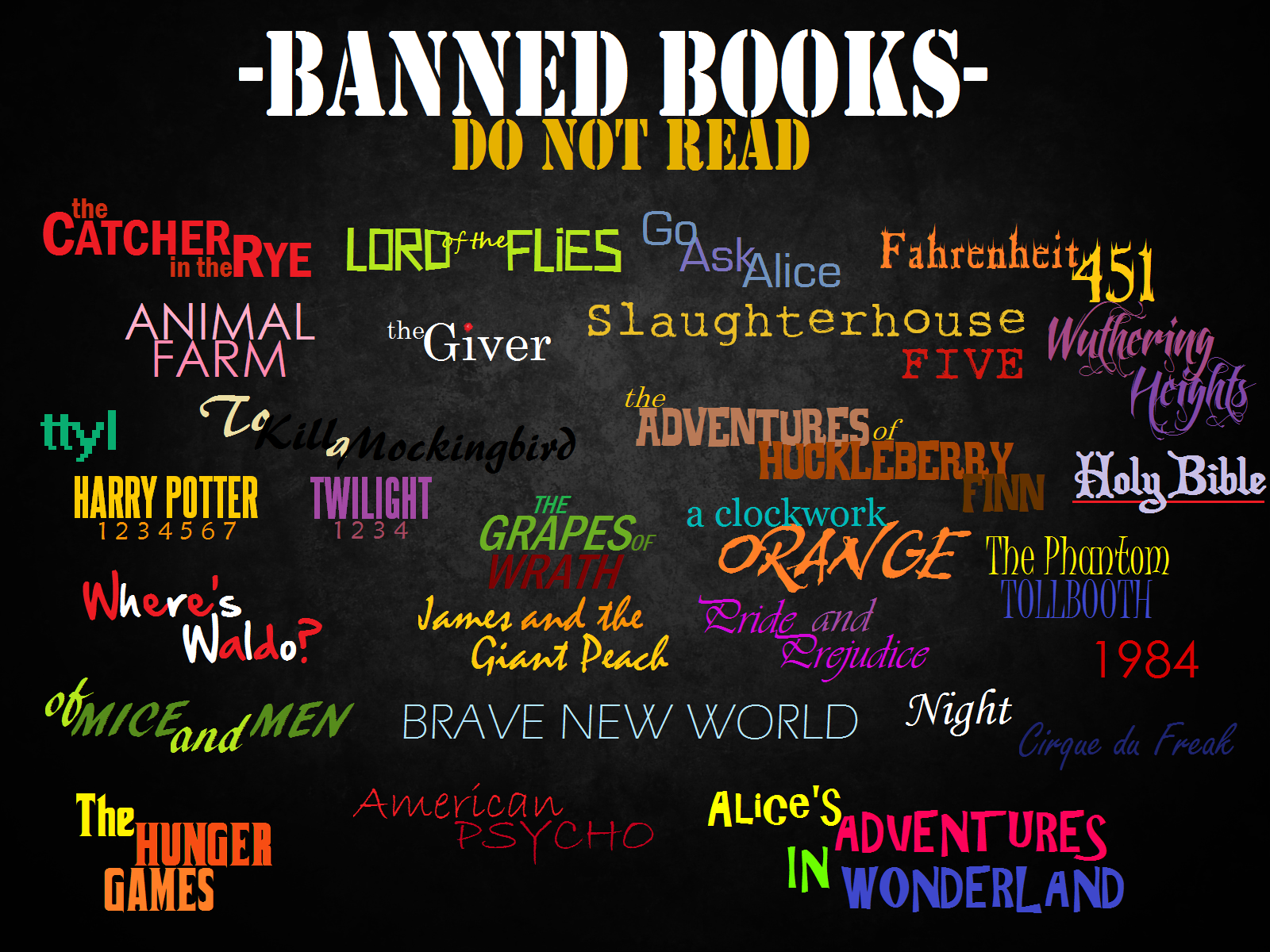
“If all printers were determined not to print anything till they were sure it would offend nobody, there would be very little printed.” ― Benjamin Franklin
The 2014 Rose Bowl Parade included a float “Love Is the Best Protection,” sponsored by the AIDS Healthcare Foundation. The reasoning behind the inclusion of the float, according to Ged Kenslea, Foundation President, is, “by showing the dream of lesbians and gay men fulfilled, the float is perfect with this year’s Rose Parade theme of ‘Dreams Come True.’” (as cited in Breitbart) The decision to include the float drew a mixed response. One impassioned response comes from a woman who was deeply offended. Angela Wingenroth offered the following comment:
“We don’t care what the states say about it — God is clear that this isn’t right and I will NOT have this SHOVED DOWN MY CHILDREN’S THROATS!! The intolerance is theirs. They will not accept peoples’ objections to their lifestyle — you HAVE to accept that it’s not just ok, but GOOD or you’re a bigot! If they want to get ‘married,’ that’s their choice, but my kids don’t need to see it.” (as cited in American Power)
I expect this is what she was told to think by her pastor and various anti-gay commentators about the fact that gay people are being granted full civil rights in US society. Still, I wonder who, if anyone, called this woman a bigot for feeling this way. Continue reading
“You have not converted a man because you have silenced him.” ― John Morley, On Compromise
There has been a great deal of heated discussion recently concerning an organization called GLAAD. GLAAD was founded in New York City in 1985 “… to protest against what it saw as the New York Post’s defamatory and sensationalized AIDS coverage, GLAAD put pressure on media organizations to end what it saw as homophobic reporting.” (Wikipedia) In 2012 GLAAD founded the Commentator Accountability Project (CAP). GLAAD maintains the purpose of CAP is to give a public airing of what various anti-gay commentators are saying and have said when they are not speaking through the mainstream media. Critics in the United States, generally those anti-gay commentators singled out in CAP and their supporters, accuse GLAAD of trying to impose censorship, that is, to stifle 1st Amendment guarantees of freedom of expression and freedom of religion. As a gay man, the anti-gay commentary GLAAD brings to light concerns me. I agree it needs to be challenged. However, censorship is an issue that resonates with me also, as I am a librarian and as such have a mandate to uphold intellectual freedom and freedom of expression. Continue reading
Political correctness does not legislate tolerance; it only organizes hatred. — Jacques Barzun
Claude Hamilton Gresham, Jr. (June 21, 1922 – February 18, 2008), better known as Grits Gresham, was an avid sportsman and naturalist and a first-rate outdoor writer and broadcaster. I have many of his books in my library collection and his videos on duck and goose hunting. I have a great many books on hunting in my library collection from many different authors. Still, in my opinion, his book on waterfowl hunting, The Complete Wildfowler, is the finest ever written on the subject. He was from rural South Carolina and highly educated with a bachelor of science and master of science degrees, with a specialty in forestry and wildlife management, from Louisiana State University in Baton Rouge. He made his home in Louisiana and is remembered by Robert J. Barham, the Secretary of the Louisiana Department of Wildlife and Fisheries and a former Republican member of the Louisiana State Senate who recalled, “as a child, I got to meet him and be around him. He was just so easy to be around. Grits was nothing like the television celebrities of today. People were drawn to him. He made them feel at ease … he made me feel at ease, and I was just a child. … There will never be another like him.” (as cited in Wikipedia) Continue reading
A person’s sexuality is so much more than one word “gay.” No one refers to anyone as just “hetero” because that doesn’t say anything. Sexual identity is broader than a label. — Gus Van Sant
Recently the question came to mind as to why so many religious folk and social conservatives hold such a prurient fixation on what they imagine goes on in other people’s bedrooms. Sex is a part of every conjugal relationship: gay and straight. Sex is natural, a part of living and to enjoy. Sodomy laws, as they were called, were repealed in Canada in 1969. Then Minister of Justice Pierre Elliott Trudeau famously declaring in 1967, “there’s no place for the state in the bedrooms of the nation.” (CBC Digital Archives) Sodomy laws were repealed across the United States as of 2003 when U.S. Supreme Court in a 6-3 decision in Lawrence v. Texas Justice Anthony Kennedy, writing for the majority, ruled that the state could not single out gay people for harassment and discriminatory treatment simply “because of ‘moral disapproval’ of homosexuality. He wrote of ‘respect’ for same-sex couples and warned that ‘the state cannot demean their existence,’ describing same-sex relationships as a ‘personal bond’ involving much more than just sex. Kennedy also wrote that reducing same-sex couples to ‘sex partners,’ as anti-gay organizations often do, is offensive in the same way that describing a husband and wife as nothing more than sex partners would be offensive.” (National Gay and Lesbian Task Force) Continue reading
“Capitalism itself is not to be condemned. And surely it is not vicious of its very nature, but it has been vitiated.” — Pope Pius XI (1857-1939)
Pope Francis continues to raise eyebrows with his public pronouncements, the most recent coming from the publication of his apostolic exhortation Evangelii Gaudium, in which he criticizes “an economy of exclusion and inequality.” (Evangellii Gaudium) In news reports discussing the publication of Evangelli Gaudium, it is said Pope Francis calls “unfettered capitalism tyranny and urges rich to share wealth.” (Guardian) This led to mixed responses, which is not at all surprising. President Obama cited a portion of the document–seemingly in agreement with Pope Francis–in a speech on inequality in US society, observing “some of you may have seen just last week the pope himself spoke about this at eloquent length. How can it be, he wrote, that it’s not a news item when an elderly homeless person dies of exposure, but it is news when the stock market loses two points. But this increasing inequality is most pronounced in our country. And it challenges the very essence of who we are as a people.” (as cited in SALON) A far less temperate response was delivered by the conservative pundit, Rush Limbaugh, who retorted, “This is the president citing the pope, his new best friend, because the pope is ripping America, the pope [is] ripping capitalism… and Obama’s having an orgasm. Jeremiah Wright is beside himself. Jeremiah Wright thought he was Obama’s preacher, now [the] pope somehow has co-opted Obama.” (as cited in SALON) Continue reading
Much of what is called Christianity has more to do with disguising the ego behind the screen of religion and culture than any real movement toward a God beyond the small self, and a new self in God. — Richard Rohr.
Some years ago while I ordered lunch at a restaurant in the food court at the University Centre, at the university where I work, I asked the young man serving me if he and his family celebrated the Day of the Dead. I had gotten to know him a little in snippets of conversation we had during times he served me, and I learned he was from Mexico. He replied that they did not as this was a Catholic custom, adding, in referring to himself and his family, “we’re Christian.” I was startled by the remark, though it was not the first time I was confronted with this point of view. The first time I remember being confronted by someone with this attitude toward Roman Catholicism was when I was in my first year at university. I was introduced to people from different Christian denominations on campus and at a meet and greet I was speaking to a man who asked to which church I was a member. When I told him I was a Roman Catholic, he retorted “I used to be Catholic, but now I am a Christian.” Later during my years at university, I was given a book by an acquaintance who was forever trying to get me to join his Church, the title escapes me, but it was the account of a Pentecostal Christian and the subtitle was a young Catholic encounters Christ. Continue reading
Turks were a great nation even before they adopted Islam. This religion did not help the Arabs, Iranians, Egyptians and others to unite with Turks to form a nation. Conversely, it weakened the Turks’ national relations; it numbed Turkish national feelings and enthusiasm. This was natural, because Mohammedanism was based on Arab nationalism above all nationalities. — Mustafa Kemal Atatürk (1881–1938)
The Hagia Sophia has become the focal point in Turkish society’s current struggle between secularists and Islamists. The Republic of Turkey was founded in 1923 as a secular, parliamentary democracy with a president as head of state. In 1935, the Hagia Sophia was converted into a museum and opened to the public by the Turkish government led by Mustafa Kemal Atatürk (1881-1938). It became a major tourist attraction in Istanbul. It was turned into a museum, presumably, to reconcile the troubled history between Christianity and Islam with the realities of Turkey’s modern, secular state. The Hagia Sophia was the seat of Orthodox Christianity, the Patriarch of Constantinople, for several centuries (537–1204), a Roman Catholic cathedral from (1204–1261) and back to the Orthodox Church (1261–1453) until the conquest of the city by the Turks. It served as the first of several Imperial Mosques for the Ottoman Empire from 1453-1931. In the present, the drive to restore the Hagia Sophia as a mosque gained momentum. In 2013, Turkish Deputy Prime Minister Bulent Arinc, expressing this desire, said: “We currently stand next to the Hagia Sophia Mosque… we are looking at a sad Hagia Sophia, but hopefully we will see it smiling again soon.” (as cited in Ansa med) On July 10, 2020, President Erdogan signed a decree, ordering the restoration of the Hagia Sophia as a mosque. Continue reading