Tag Archives: books

Waste no more time arguing what a good man should be. Be one. – Marcus Aurelius

The Cambridge Dictionary defines masculinity as “the characteristics that are traditionally thought to be typical of or suitable for men.” (Cambridge Dictionary) The Collins Dictionary elaborates on the definition of masculinity, stating, “There are many positive qualities that have historically been defined as either masculine (leadership, strength, courage) or feminine (nurturing, compassion, caring). In reality, people are individuals with a unique combination of attributes.” (Collins Dictionary) Fair enough, it is possible for men and women to have both masculine and feminine qualities, or you can be a masculine woman or a feminine man. Either way, it is fine. Personally, I think people who know me would say I blend masculine and feminine qualities. Although the Canadian Army did not think I had the qualities of leadership they wanted, in civilian life, I have exercised leadership, strength, and courage numerous times in emergencies. I have given emergency first aid to strangers at car accident scenes, to a man who suffered a grand mal seizure, and put out a fire that broke out in my house—a candle ignited a curtain that a stray gust of wind blew into the flame. By the time I retrieved the fire extinguisher, the flames had consumed the curtains in the front window of the house and were spreading across the ceiling. By the time the fire department arrived, the fire was out. The firefighters told me I had done a good job putting out the fire, and the insurance company was happy with me, because, as a friend said, “You saved them a piss pot full of money.” Interestingly, it was my military service where I learned to keep my cool in a crisis, to exercise leadership, to give emergency first aid, and to fight fires. In those situations, when I took the lead, those around me followed, and the crisis was brought to a successful conclusion. People who know me also tell me I have the gift of wisdom. They tell me I always know what to say when they are stressed or hurting. I offer more than banalities and platitudes in a difficult situation. They refer to this as an innate gentleness I possess. Yes, it puzzles them that I am a keen hunter. How can someone so gentle make the choice to go hunting and kill game birds and animals?
 
I am reminded of the “unique combination of attributes” from a documentary on hunting I watched many years ago. The film is called “In the Blood.” The film, made in 1989 by George Butler, documents the safari that descendants of Theodore Roosevelt retraced—the one he took with his son Kermit in 1909. The film provides insight into hunting in general and African big-game hunting in particular. The safari was led by a professional hunter, Robin Hurt, a man’s man and dedicated conservationist. In one segment, Butler’s thirteen-year-old son is taken on a hunt for a cape buffalo. Robin Hurt guided the boy on the hunt across the savanna and wetlands as they closed in on a herd of cape buffalo. When a buffalo was selected, the boy placed two shots into the animal, killing it cleanly. As he walked up to the carcass, tears welled up in his eyes, and he tried to fight them back. Robin Hurt, the great white hunter, seeing this, told the boy, “Don’t hold back. Let them flow; it’s a natural reaction.” Yes, I know how the boy felt. When you make the choice to kill a game animal or bird, the natural reaction is a feeling of triumph and sorrow. Hurt understood that and told the boy there was nothing shameful or unmanly in his reaction.
 
I am a keen hunter, but I am an actor, too. I have performed roles on stage and screen. Acting requires the ability to connect with your emotions and express them genuinely. It is challenging for me as I am not overly emotional. I do not frighten easily, and have the restraint to keep stupid people from baiting me. I tend to be stoic in my expression of grief, though there are notable exceptions. My maternal grandmother died two weeks after my thirtieth birthday. I had a close relationship with her. My family was surprised at how composed I was. I wrote and delivered the eulogy at her funeral. It was not until two years passed that I finally shed a few tears for her in the cathedral in Lyon, France. On the other hand, when I held my first dog, Christie, as she was euthanized, I cried harder than ever before in my life. For years, following Christie’s death, on the anniversary of her passing, I could not hold back my tears. I loved my grandmother and my dog, Christie, dearly, and I can not explain how I remained so calm and reserved when my grandmother died, and how I went to pieces when I lost Christie. I think my friends are correct. I am a “unique combination of attributes.” As I go through life, I apply these attributes the best I can. I am a man, and I have nothing to be ashamed of about my blend of masculine and feminine qualities.
 
Posted by Geoffrey
 

I also survived circumcision, a barbaric practice designed to remind you as early as possible that your genitals are not your own. — George Carlin

*

I learned what male genital cutting was in high school in health class. The teacher handed out mimeographed copies of pages from a textbook that had crude illustrations. He did this by mistake and hurriedly told us to ignore them, but the cat was out of the bag. Once I knew what it was, I began to think about it. I finally understood why other boys I knew over the years, particularly when I lived in England in the late 1960s with my family, looked different. A couple of years later, while one of my aunts visited, a news story came on the television about male genital cutting. She spoke up about how it could not be done to her firstborn son at birth because of complications following his birth, and that they never saw the need for it later. She had a second son years later, and he was left intact. I remember how pained my father looked when she related that to us. My mother was absent from the conversation, leaving the impression that she was behind it for my brother and me. As I grew older, I came to deeply resent what was done to me.

Continue reading

“If all printers were determined not to print anything till they were sure it would offend nobody, there would be very little printed.” ― Benjamin Franklin

censorshipdo-not-read

The 2014 Rose Bowl Parade included a float “Love Is the Best Protection,” sponsored by the AIDS Healthcare Foundation. The reasoning behind the inclusion of the float, according to Ged Kenslea, Foundation President, is, “by showing the dream of lesbians and gay men fulfilled, the float is perfect with this year’s Rose Parade theme of ‘Dreams Come True.’” (as cited in Breitbart) The decision to include the float drew a mixed response. One impassioned response comes from a woman who was deeply offended. Angela Wingenroth offered the following comment:

“We don’t care what the states say about it — God is clear that this isn’t right and I will NOT have this SHOVED DOWN MY CHILDREN’S THROATS!! The intolerance is theirs. They will not accept peoples’ objections to their lifestyle — you HAVE to accept that it’s not just ok, but GOOD or you’re a bigot! If they want to get ‘married,’ that’s their choice, but my kids don’t need to see it.” (as cited in American Power)

I expect this is what she was told to think by her pastor and various anti-gay commentators about the fact that gay people are being granted full civil rights in US society. Still, I wonder who, if anyone, called this woman a bigot for feeling this way. Continue reading

Morality is simply the attitude we adopt towards people whom we personally dislike.–Oscar Wilde (1854-1900)

ClosetPhoto-By-Salon1

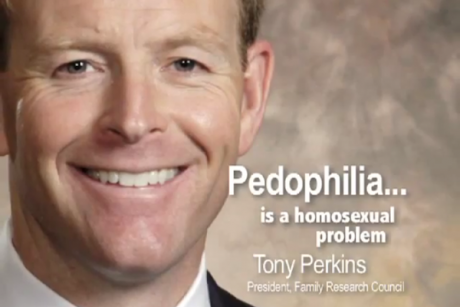
While attitudes toward gay people have changed a great deal for the better in my lifetime, prejudice and stereotypes remain. There is one stereotype in particular that kept me from coming out until later in life: that of the gay man as a predator from whom children must be protected. I am told I am good in my interaction with children and young people. I am gentle and soft-spoken and very easy going, and children generally like me. Because of this, it was suggested that I consider a career in teaching by one of my mentors at Queen’s University. I was reluctant to go into teaching because of this stereotype. I was confronted with this stereotype and the prejudice against gay men as teachers in 1986, the year I graduated from Queen’s. The Chairman of the Frontenac County Board of Education, in commenting on the amendment to the Ontario Human Rights Code which added sexual orientation to the list of prohibited grounds of discrimination, was dismayed that he no longer had any legal grounds to refuse to hire a teacher if he knew he was dealing with an “obvious faggot.” Continue reading

Jack Miner

IMG_0608

The newest addition to our library collection is a copy of Jack Miner on Current Topics (first published in 1929). Mika found a copy in the Ex Libris book store at the Ottawa Public Library and thoughtfully purchased it, knowing I would like it. Jack Miner (1865-1944), born in Ohio, but settled in Canada in 1878, was a deeply religious man and pioneering conservationist. Miner was not a trained biologist, he had no formal education and was illiterate until he was in his thirties. He was Christian and subscribed to a literal interpretation of Scripture, believing “God put birds and animals here for man’s use and for man to control.” He founded a bird sanctuary on his farm in 1904, which exists to this day, and contributed to the effort to determine the migratory paths of wild ducks and geese in live trapping and banding them. He manufactured his own hand-stamped aluminum bands adding with his address Bible passages: “Keep yourselves in the love of God—Jude 1-21” and “With God all things are possible—Mark 10-27”. Bands recovered from birds after they were shot by hunters indicated where the birds had traveled.

In this book he discusses the Migratory Bird Treaty Act of 1918 (MBTA) which was signed between the United States and Great Britain (acting on behalf of the Dominion of Canada), which effectively ended market hunting, but allows for the hunting of game species for private consumption. He puts forward his case for the conservation of wildlife resources through education and wise use. He includes two chapters detailing his admiration for the Canada goose, proposing it be designated as Canada’s national bird. That he was not a trained biologist shows through in the chapter in which he shares his dislike of crows, referring to them as “cannibals” and “murderers.” He trapped and killed them in droves, believing he was protecting more “desirable” species of birds and mammals. In keeping with his religious beliefs he tended to anthropomorphize wildlife in ascribing human morality to animal behaviour, noting, for example, that Canada geese mate for life and never seeing a pair divorce.

He is remembered for banding wild ducks and geese, having banded over 50,000 wild ducks and 40,000 Canada geese. His efforts in banding waterfowl popularized the procedure leading to its standardization and is still in use as a tool for wildlife biologists today. After his death, the Government of Canada enacted the National Wildlife Week Act to be observed the week of Jack Miner’s birth, April 10 each year. He was a simple and pious man whose passion for migratory birds inspired him to help lay the foundation of the modern conservation movement and for those who love the natural world he is worth remembering.

Posted by Geoffrey and Mika

Freedom to Read Week 2013

ftr_2011_header

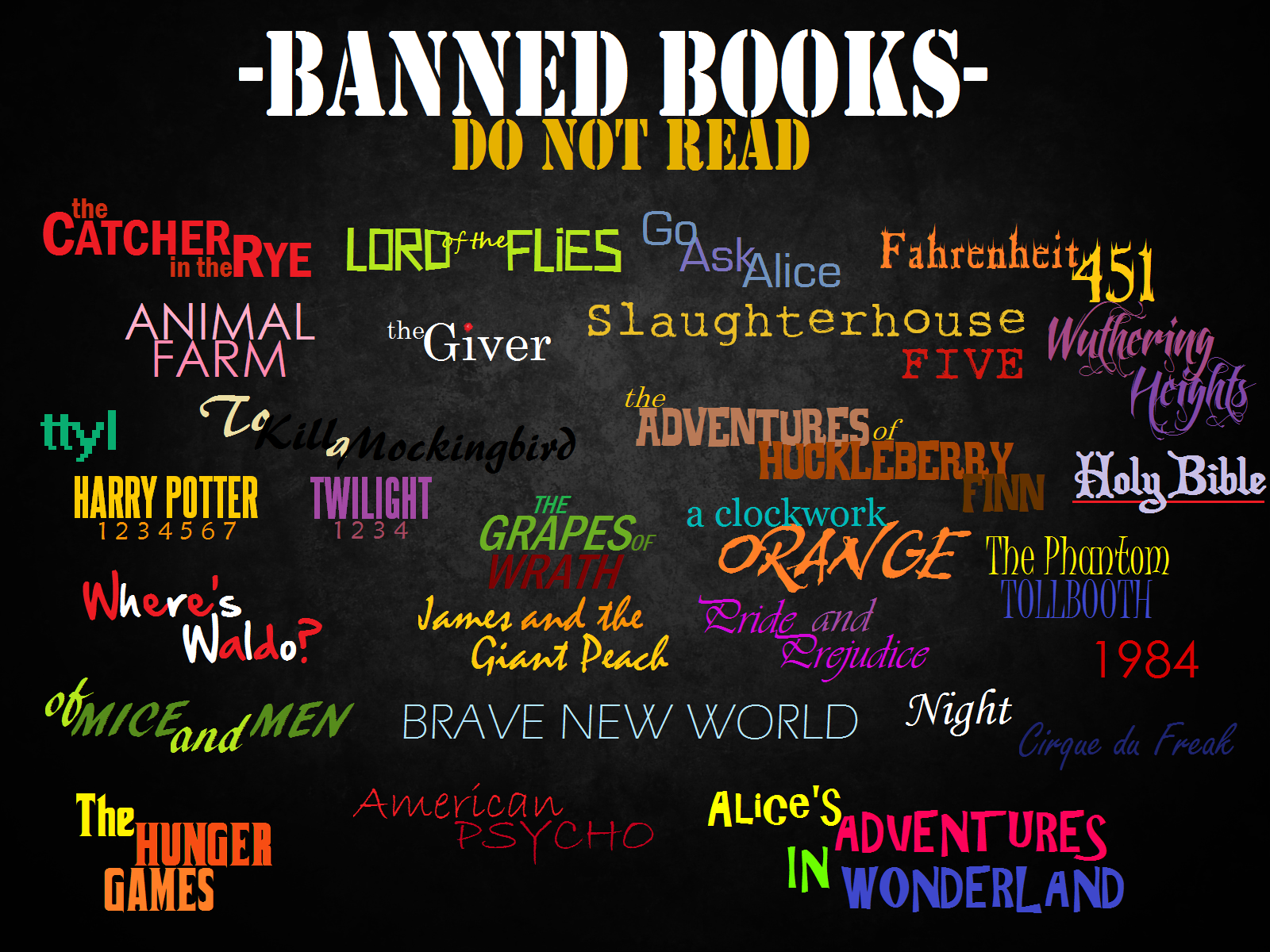
Today, Sunday February 24, 2013 kicks off Freedom to Read Week in Canada (February 24 – March 2, 2013). As such, it is apropos to say a few words about censorship in Canada. Geoffrey is a librarian; Mika is a bibliophile. Between them they have a personal library collection of approximately 5000 volumes. Having the freedom to read is is something to cherish and not take lightly. Section 2.(b) of the Canadian Charter of Rights and Freedoms lists as “Fundamental Freedoms” guarantees “freedom of thought, belief, opinion and expression, including freedom of the press and other media of communication.” In spite of these guarantees in law, the reality is in Canada, a society founded on the principles of pluralism and liberalism, efforts to censor in the form of book challenges are all too common. Public libraries and school libraries are where most book challenges take place. For  more information on Freedom to Read Week in Canada 2013, check out this website: www.freedomtoread.ca. By all means enjoy your freedom to read and never take this freedom for granted.

Posted by Geoffrey and Mika