I had a similar experience to the one dramatized in the video. It was in the late spring, early summer of 1980. I had graduated from high school and eagerly looked forward to enrolling at Queen’s University in the Fall. I served as a Reservist in the Canadian Army in an artillery regiment in Ottawa and made friends with another young man I met in the unit. We became fast friends. I made friends with that man and others in my regiment. Still, I was ribbed, called the “Regimental Fag” in the banter among the ranks. When I came to the Christmas Party in 1979 with a young woman for my date, I was asked, “So, you like girls?” We spent time alone together at his mother’s house. We sat on the living room floor and listened to Beatles records on the stereo. I remember my overwhelming desire for him; I wanted to throw my arms around him and kiss him. I did not understand why I felt that way, which was horrifying. I dared not try it as that would have gone badly for me (assuming he was not gay or did not return my feelings). Had I been singled out as a homosexual in 1980, it would have meant dismissal from the Service. I would likely have lost my friends and become the butt of salacious gossip.
Continue readingTag Archives: Canadian Army
The whole aim of practical politics is to keep the populace alarmed (and hence clamorous to be led to safety) by an endless series of hobgoblins, most of them imaginary. ― H.L. Mencken


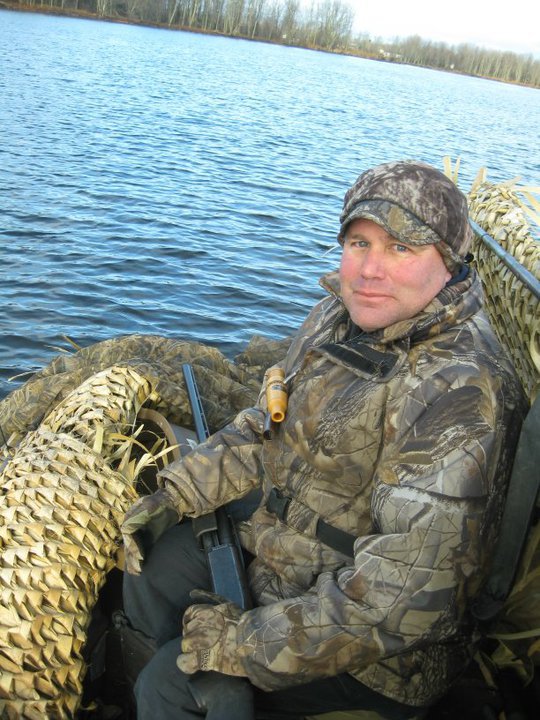
Geoffrey out duck hunting.
The words “gun lobby” and “gun nut” are slurs invented by prohibitionists–people opposed to gun ownership and hunting–to besmirch the character of gun owners and hunters. I heard the term “gun nut” used on American television sitcoms like “All in the Family” as early as the 1970s. I shrugged it off at the time as inconsequential. I had no reason to believe as a boy that there was anything wrong with gun ownership and hunting. I remember how other children brought things like duck wings for show and tell in kindergarten and primary school. Wings taken from the wild ducks that their older brothers and fathers shot while out hunting. Other children proudly told the class about their fathers, who had returned from successful big game hunts. My dad and my uncle enjoyed hunting cottontail and jackrabbits when I was a boy. It was not until late in 1989, following the mass shooting at the engineering school at the University of Montreal that I first heard mention of the “gun lobby” used as a pejorative term in public parlance. It came as an unwelcome surprise. Continue reading
Nothing we’re going to do is going to fundamentally alter or eliminate the possibility of another mass shooting… ― Joe Biden
How often am I confronted with the assertion that “a gun is for killing?” Invariably this assertion is used by prohibitionists in debates and discussions over gun ownership. It is intended to end the debate or discussion in putting those who argue in favour of gun ownership on the defensive. The expectation is you will have to reply with “yeah, but…” This expectation is nonsensical, of course; it is a common fallacy, the argument from ignorance. Those who put forth the assertion “a gun is for killing” insist it must be true as it has yet to be proven false. Is this assertion true? Are guns for killing? If this question demands a yes or no answer, then the answer is no, guns are not for killing. In short, a gun is a device that fires a single projectile or with a shotgun, many smaller sub-projectiles, or one large projectile. However, the answer to that question is not that simple; it requires a more nuanced response. Continue reading
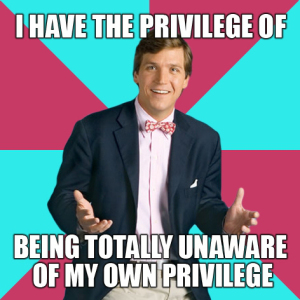
Apologies for the White Privilege. I can’t help it. ― T.J. Bowes
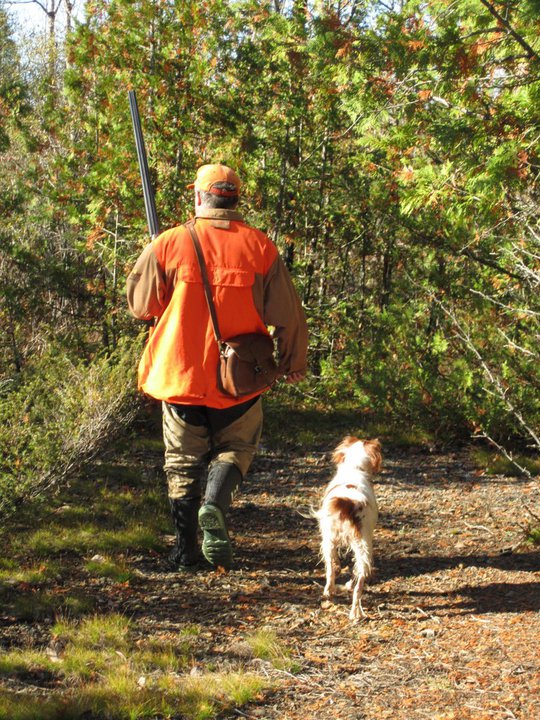
It is Christmas morning and I am just in from a morning dog run with my friend and hunting buddy, Jason Quinn, his dog Nos and my dog Hera. As I was driving home, I started thinking about a concept I see used quite liberally in discussions over the blogosphere, namely, white privilege. The term, white privilege, is defined as follows:
the set of societal privileges that white people benefit from beyond those commonly experienced by people of color in the same social, political, or economic spaces (nation, community, workplace, income, etc.). The term denotes both obvious and less obvious unspoken advantages that white individuals may not recognize they have, which distinguishes it from overt bias or prejudice […] It can be compared and/or combined with the concept of male privilege. (Wikipedia)
As a white man from a family with solid working class roots, I can honestly say I never stopped to think about the fact that I have a white skin or that in having a white skin somehow endows with me with privileges that are denied those with a different skin colour. Continue reading