Tag Archives: feminine

Accept the things to which fate binds you, and love the people with whom fate brings you together, but do so with all your heart. — Marcus Aurelius

A recurring theme in ancient Greek mythology is that you cannot outrun your fate. I think about that idea when I look back on my life and how, throughout it, people assumed that I was a homosexual. In grade school, a woman who lived across the street from my family was hired by my parents to prepare lunch for my siblings and me when we came home from school. I recall how she said that I would end up a confirmed bachelor. A confirmed bachelor was code for a homosexual historically. In middle school, I had a fleeting romance with a girl. When my seventh-grade teacher learned of our liaison, she expressed surprise; she never imagined me being interested in girls. In high school, I asked my brother if he would sound out a girl I fancied to see if she was interested in me. He reported that when the girl realized what he was up to, she retorted, “He’s a fairy!” When I joined the Canadian Army as a Reservist at eighteen, I entered the classroom one day at the Armoury and found a caricature of me as a pink bunny drawn on the blackboard captioned with anti-gay slurs. To their credit, the other recruits told me it was intended as a joke–that they liked me. Still, I wondered why people thought I was a homosexual.

Continue reading
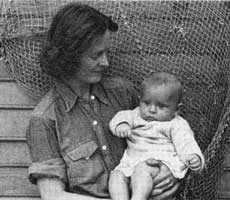
A hallucination is a fact, not an error; what is erroneous is a judgment based upon it. — Bertrand Russell

Fran_alanjpgGender-Gap

Gender neutrality or gender-neutralism or the gender neutrality movement is a topic that keeps cropping up in discussions across the blogosphere. These terms describe “the idea that policies, language, and other social institutions should avoid distinguishing roles according to people’s sex or gender, to avoid discrimination arising from the impression that there are social roles for which one gender is more suited than the other.” (Wikipedia) At face value, this looks quite reasonable. Historically, the division of labour in the Western world was based on sex. Men worked outside the home and were mobilized in times of war to fight; whereas, women worked in the home and acted as a reserve labour force when the men were away fighting in wartime. In the present, men and women work alongside one another in the labour force and the military. Sex or gender-based segregation is mostly a thing of the past, but for a very long time, it was a reality. Some occupations and past-times were denied to women because they were deemed unsuitable for women. Continue reading