Tag Archives: queer community

In the acronym LGBTQ+, “queer” is one of the multiple meanings for the Q. But that general acceptability does not erase queer’s treacherous and hateful history. — A. Pallas Gutierrez

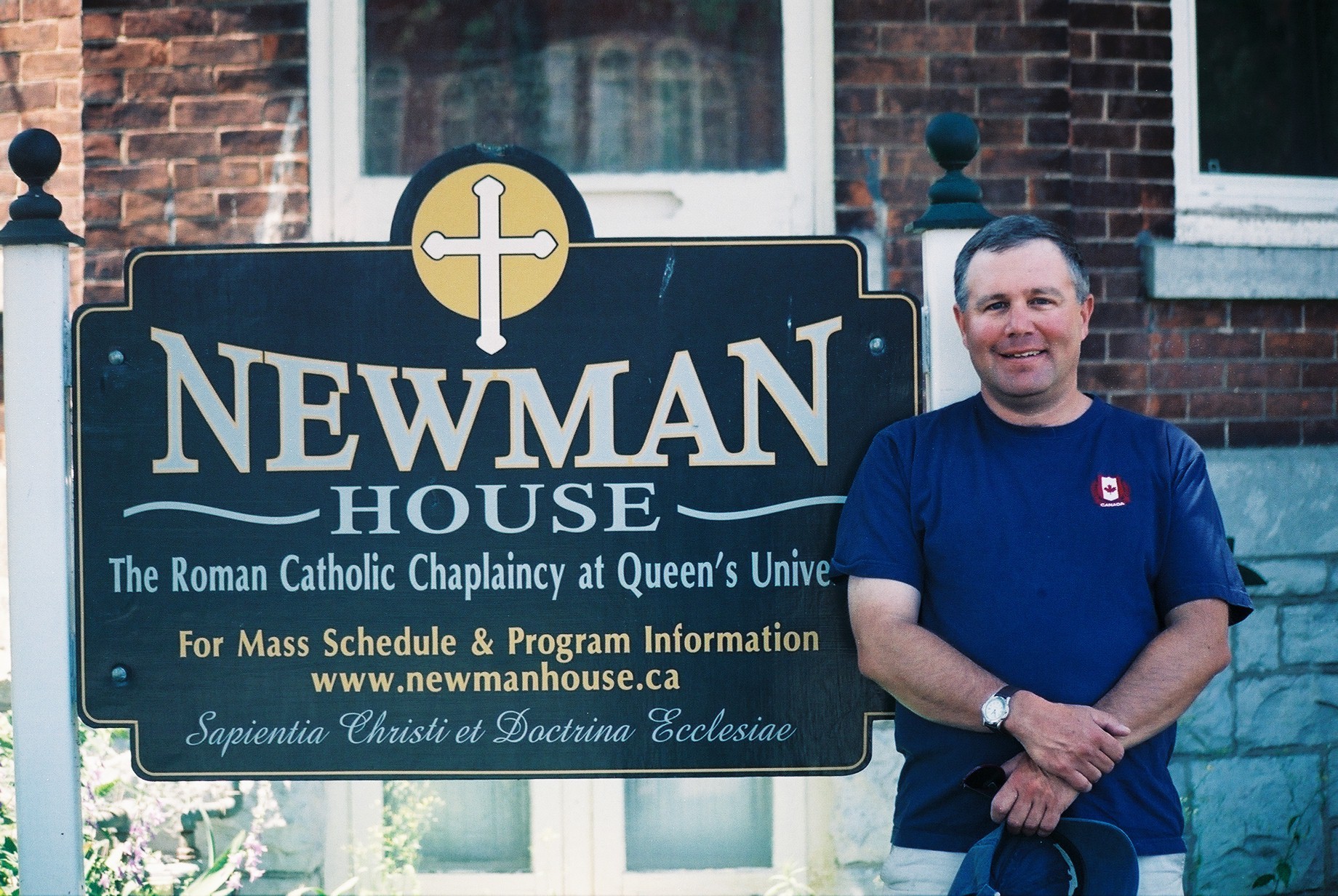
I remember submitting an essay for grading in a course on the sociology of religion I took at Queen’s University in 1983. When the essay was returned to me with the grade and the professor’s comments, he noted that I used the terms Catholic and Christian interchangeably. He pointed out that while Catholics are Christians, so are Protestants. By using the terms Catholic and Christian interchangeably, I blurred the distinction between the two and risked giving the reader the impression that Protestants were somehow not Christians. Naturally, I understand that there are several denominations and sects in Christendom that profess different beliefs concerning Christian doctrine. However, I took the professor’s point that a little clarity goes a long way. What prompted the memory of my essay and the comment is how I noticed that so many people use the terms gay and queer interchangeably. I see this in news articles and discussions on online forums. Occasionally, someone refers to me as queer or a member of the queer community. I politely correct them, telling them that I am gay, not queer, and no, I am not a member of the queer community. I ask that they respectfully not refer to me as a queer, as I do not like it. The term is a slur, a derogatory term used historically to describe a gay man. It is like calling a black man a coon or a Jewish man a Hebe. Yes, I know that there is a countercultural constituency that claimed to have “reclaimed” the term. They are free to call themselves what they want, but it is objectionable when they use the terms gay and queer interchangeably when referring to gay men. In short, a gay man is a male homosexual, a man who experiences same-sex romantic and sexual attraction. Gay men are represented in all races and ethnicities. They are individuals, and the only thing they have in common is their sex and orientation.

Sadly, countercultural thinking in gay rights activism emerged in 1990 with the introduction of Queer theory; this is an ideological position, as Renee Janiak notes, the Queer theory holds:

To be queer means, “fighting about social injustice issues all the time, due to the structure of sexual order that is still deeply embedded in society” (Warner: 1993). Queer people are not assigned into a specific group or category, which would be comparable with any other type of grouping such as “class” or “race” (Warner: 1993). Queer people have made a change with how they identify themselves, they went from “gay” to “queer”. The self- identification change is due to that fact that “queer” represents the struggle of not wanting to fit into the systems of being “normal”. Queer theory has allowed for new political gender identities (Butler: 1990). (Queer Theory)

By 2016, Noah Michaelson, editorial director of HuffPost Gay Voices, rebranded the blog as HuffPost Queer Voices. In doing so, he claimed, “We, like many others before us, have chosen to reclaim ‘queer’ and to rename the section HuffPost Queer Voices because we believe that word is the most inclusive and empowering one available to us to speak to and about the community — and because we are inspired by all of the profound possibilities it holds for self-discovery, self-realization and self-affirmation,” […]. “We also revere its emphasis on intersectionality, which aids in creating, building and sustaining community while striving to bring about the liberation of all marginalized people, queer or not.” (Advocate) He added, “For a lot of people, intersectionality is difficult,” […]. “I think that a lot of groups who are marginalized or disenfranchised have their sights set on trying to bring about liberation for that particular group. It’s only been recently that people understand that most oppressions are all tied together. We’re not going to really get very far if we’re just trying to work in our own lane. We actually have to be working with each other because at the end of the day we’re all trying to get the same thing, I hope. And that is liberation for all marginalized people and for all people.” (Advocate)

Queer or 2SLGBTQQIA+ replaced gay and lesbian, meaning gay and lesbian people not wanting to fit in “existing social institutions,” defined by the queer theory as “heteronormativity.” Queer activists strive to organize a community composed of “the more socially conscious” gays and lesbians “to provide leadership to the whole mass of social variants” in developing a parallel “queer culture.” Yes, they are free to promote this narrative and pursue their desired goal. That said, in reality, gay remains gay, a demographic, not a community, and increasingly, many gay men, myself included, have actively rejected that narrative. When I mention in passing that I am gay, I typically mention my husband, Mika, with whom I have been for twenty-seven years. We are a conventional gay couple who are not at odds with heterosexuality or “heteronormativity.” Others understand that we are gay, male homosexuals, in a loving and committed relationship. We are assuredly not queer; what does that even mean? What we think of the “marginalized and disenfranchised” has nothing to do with your sex, race, orientation, or anything else. When it comes to the queer community, we ask that they stay in their own lane and kindly stop using the terms gay and queer interchangeably in referring to gay men. Yes, a little clarity goes a long way.

Posted by Geoffrey
Love him and let him love you. Do you think anything else under heaven really matters? — James Baldwin

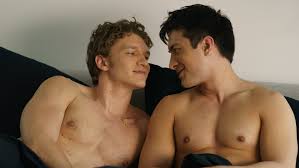
Connor Storrie and Hudson Williams as Ilya Rozanov and Shane Hollander.

I noticed the sensation generated by the release of the series Heated Rivalry on Crave. It piqued my interest. I subscribed to Crave and settled in to watch the first episode of the series. Based on the first episode of the series, I expected the rest to be decidedly underwhelming. Thankfully, I found the following episodes much improved. I get what the storyline is about; at least I think so. The story is about two young men, one from Canada — his name is Shane Hollander — and the other from Russia — his name is Ilya Rozanov — who are rising stars in elite-level Junior Hockey and fierce competitors. They go on to become professional hockey players and captains of their respective teams. Each one has issues with his family and feels the pressures of navigating the byzantine world of professional hockey. Their story progresses through several years; along the way, they found they had a mutual sexual attraction. That further complicated things for them.

Continue reading

I am the Love that Dare not Speak its Name. ― Alfred B. Douglas

This self-portrait, taken in Havelock, New Brunswick, shows the simplicity of the intimacy shared by Leonard Olive Keith (1891-1950) and Joseph Austin “Cub” Coates (1899-1965), who lived and loved in the first half of the 20th century. They were two men in love in Canada when male homosexuality was a crime in Canadian law, and public prejudice against male homosexuality was openly expressed. It was as simple as it is in the present. Some men are romantically and sexually attracted to men. It is a natural expression of human sexual attraction and behaviour. To those who knew and loved them, they were Len and Cub, a homosexual couple. To those who reviled male homosexuals, they were beneath contempt. They were what we call normal gays in the 21st century. Len was a harness racing driver who opened a garage after serving as an engineer in the Canadian Army in World War I. Cub was a mechanic who served as an engineer in the Canadian Army in World War I and volunteered for service in the Canadian Army in World War II. They were ordinary men who had a sense of duty, served their King and country as volunteers in the Great War, and found love and companionship in each other’s company. Despite their discretion, suspicion over their relationship in Havelock drove them apart in the 1920s. Len moved to the United States, where he lived out his days. Cub married in 1940. That fate was not unusual for gay men in Canada in the 20th century.

Continue reading

The fact remains; chauvinism is prevailing. — Emma Bonino

I lurk on the Facebook page of a Canadian queer activist. I never knew he existed until he appeared unexpectedly on my news feed. I am a liberal-minded man; I believe in liberalism, pluralism, and equality in law and opportunity instead of collectivism and diversity, equity and inclusion. I don’t like what he says, and I find his attitude and behaviour contemptible. He makes me think of my fieldwork when I studied the sociology of religion and religious studies at Queen’s University in the 1980s. I interacted with various Christian faith communities, Orthodox, Roman Catholic, and Protestants. I met many people, some of whom were the worst hypocrites. The man in question is the archetypal example of a religious hypocrite. His smug self-righteousness is insufferable. He reminds me of Jerry Falwell’s unctuous self-righteousness; he is unbearable. What is worse is his bigotry. He does not listen to his critics. He dismisses them as anti-queer chauvinists and haters, promptly blocking them. If push came to shove, he would happily try to cancel them.

Continue reading

Being gay is like being left-handed. Some people are, most people aren’t and nobody really knows why. It’s not right or wrong, it’s just the way things are. — Unknown

I watched a documentary in the 1990s. It was about the investigation into the molestation and murder of a prepubescent boy in England in the 1970s. It was in the 1970s, so suspicion immediately fell on gay men. The police opened an investigation and right away approached known homosexuals and entered gay bars, asking men to come to the station for questioning. The men were photographed, and detailed notes were taken of the interviews. At one point, a gay man was accused by another of the crime. Once the accused realized that he was under suspicion, he told the detectives interviewing him that he was saying nothing without his solicitor present. It turned out that the accusation was wrongful and levelled against him by another man who had a grudge. Eventually, the culprit was found and confessed when presented with evidence against him. He was not a gay man and had no previous suspicion of sexual interference with boys. He said that the boy struggled during and after the assault and that he had not meant to kill him. The man was convicted of the crimes of manslaughter and sexually assaulting the boy. He was imprisoned for his crimes. With the case closed, the police destroyed the evidence they collected in their investigation: the photos and notes from the interviews of the gay men.

Continue reading