Tag Archives: queer

You can’t just look at someone and guess their sexuality. There’s no point in assuming that every gay man has just one personality type. — Cameron Monaghan

I had a similar experience to the one dramatized in the video. It was in the late spring, early summer of 1980. I had graduated from high school and eagerly looked forward to enrolling at Queen’s University in the Fall. I served as a Reservist in the Canadian Army in an artillery regiment in Ottawa and made friends with another young man I met in the unit. We became fast friends. I made friends with that man and others in my regiment. Still, I was ribbed, called the “Regimental Fag” in the banter among the ranks. When I came to the Christmas Party in 1979 with a young woman for my date, I was asked, “So, you like girls?” We spent time alone together at his mother’s house. We sat on the living room floor and listened to Beatles records on the stereo. I remember my overwhelming desire for him; I wanted to throw my arms around him and kiss him. I did not understand why I felt that way, which was horrifying. I dared not try it as that would have gone badly for me (assuming he was not gay or did not return my feelings). Had I been singled out as a homosexual in 1980, it would have meant dismissal from the Service. I would likely have lost my friends and become the butt of salacious gossip. 

Continue reading

Time makes us sentimental. Perhaps, in the end, it is because of the time that we suffer. — André Aciman

This is what a gay high school boy looked like in 1979.

I like gay romance in print and on film. The positive portrayal of romance and intimacy between two men or high school boys is lovely. Gay youth and men exist and have the same need for love and companionship as the heterosexual majority. Especially given that in Western society, intimacy between men was criminalized for a long time–it was considered “gross indecency” and punishable by imprisonment. Beyond that, public prejudice was prevalent throughout the 20th century. I remember it well. Recently, I met up with a man I knew in high school. We had not seen each other since graduation in 1980. We met through a mutual friend and ex of mine. I had no idea that my high school buddy was gay. We are both in our sixties and retired. I am happily partnered, and he is single. It was good to see him again.

Continue reading

The whole aim of practical politics is to keep the populace alarmed (and hence clamorous to be led to safety) by an endless series of hobgoblins, most of them imaginary. ― H.L. Mencken

gladtobegay-badge-2

Goldeneye

Geoffrey out duck hunting.

The words “gun lobby” and “gun nut” are slurs invented by prohibitionists–people opposed to gun ownership and hunting–to besmirch the character of gun owners and hunters. I heard the term “gun nut” used on American television sitcoms like “All in the Family” as early as the 1970s. I shrugged it off at the time as inconsequential. I had no reason to believe as a boy that there was anything wrong with gun ownership and hunting. I remember how other children brought things like duck wings for show and tell in kindergarten and primary school. Wings taken from the wild ducks that their older brothers and fathers shot while out hunting. Other children proudly told the class about their fathers, who had returned from successful big game hunts. My dad and my uncle enjoyed hunting cottontail and jackrabbits when I was a boy. It was not until late in 1989, following the mass shooting at the engineering school at the University of Montreal that I first heard mention of the “gun lobby” used as a pejorative term in public parlance. It came as an unwelcome surprise. Continue reading

The counterculture is always repackaged and made into a product. It’s part of America. — Jim Jarmusch

queer-theory-6-638

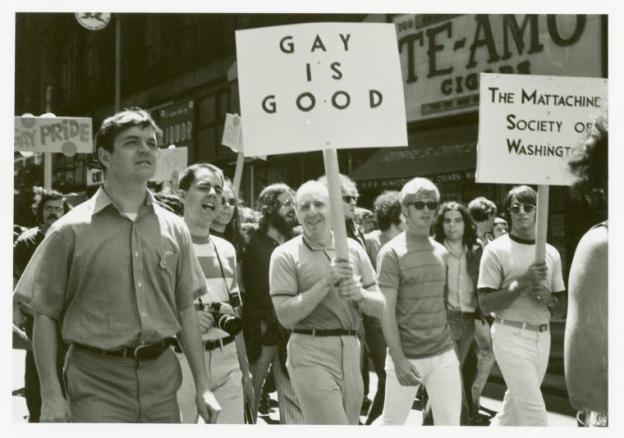
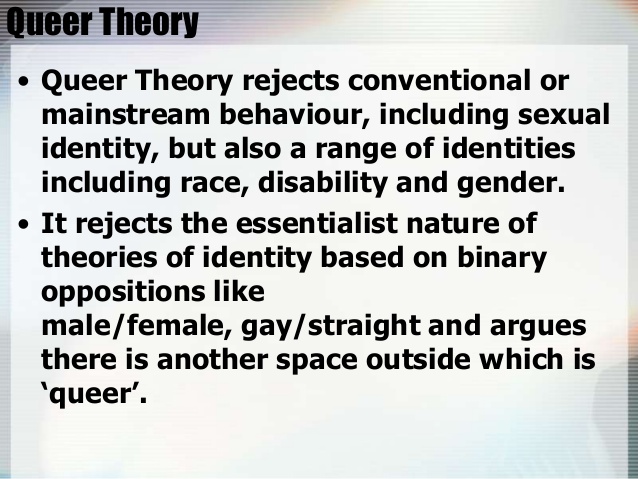
The history of the gay rights movement in the United States is fascinating. Is it a civil rights movement or is it a social justice movement? Is gay a demographic or is gay a community? Are gay rights the drive for civil rights, that gay people be at liberty, as individuals, to participate in society, openly, and free from persecution? Is it a social justice movement, the gay community driven by a countercultural constituency, intent on separating itself from mainstream culture? The answer to these questions is the gay rights movement in the United States is a combination of the two perspectives. To date, the successes of the gay rights movement in the United States are laudable. The repeal of laws that criminalized homosexual sex is a significant gain. Gay people live openly and are free to marry. True, elements of anti-gay prejudice linger, mainly from the ranks of the religious and socially conservative; moreover, there is only a patchwork of laws in place across the 50 states that prohibit discrimination in employment on the grounds of sexual orientation. However, I think these are the least of the worries for the gay rights movement in the United States. While both perspectives, civil rights and social justice, contributed to the success of the gay rights movement; what most concerns me about the current state of the gay rights movement in the United States is the influence of a decidedly countercultural constituency of U.S. society on the gay rights movement. In my opinion, this only undermines the successes of the gay rights movement in the United States and hinders its progress as a civil rights movement. Continue reading