Category Archives: Current Events

When I joined the military it was illegal to be homosexual, then it became optional, and now it’s legal. I’m getting out before the Democrats make it mandatory. — Sgt. Harry Berres, USMC

A gay Marine greets his husband upon his return from a deployment.

The Netflix series “Boots” is not “woke garbage,” as the United States Department of Defence alleged. No, while it is fiction, it is good storytelling. I admit, when I saw the trailer and the still images, a part of me rolled my eyes. I suspected it might be a cheesy rom-com featuring queeny ephebes prancing through the United States Marine Corps boot camp. On the contrary, the protagonist, Cameron Cope, is a gay seventeen-year-old high school graduate who chose military service, specifically the Marines, because his good friend had enlisted, and he wanted a change. The story is set in 1990, when male homosexuality was grounds for refusal in enlistment and grounds for discharge. He was reminded of that upon arrival at Parris Island, where a sign at the entrance for induction listed reasons for disqualification that included homosexuality. He kept his homosexuality to himself, though those around him suspected that he was gay.

The U.S. Department of Defense was clear when it issued the following regulation to clarify its stand in 1981:

(DOD Directive 1332.14 (Enlisted Administrative Separations), January 1981)

Homosexuality is incompatible with military service. The presence in the military environment of persons who engage in homosexual conduct or who, by their statements, demonstrate a propensity to engage in homosexual conduct, seriously impairs the accomplishment of the military mission. The presence of such members adversely affects the ability of the armed forces to maintain discipline, good order, and morale; to foster mutual trust and confidence among service members; to ensure the integrity of the system of rank and command; to facilitate assignment and worldwide deployment of service members who frequently must live and work in close conditions affording minimal privacy; to recruit and retain members of the armed forces; to maintain the public acceptability of military service; and to prevent breaches of security.

Under this regulation, persons having homosexual proclivities were deemed unfit for military service and either refused induction into military service or quietly mustered out with either a general, undesirable or dishonorable discharge if found out after having been inducted. The consequences of the three types of discharge varied in degree of severity. Still, in each, the individual was ineligible for veterans’ benefits and could face discrimination in employment in civilian life. That was the reality in 1990. The Don’t Ask, Don’t Tell policy in the United States Military was not enacted until 1993. So, serving in the U.S. Military in 1990 as a gay man meant you had to conceal the truth about yourself on pain of serious consequences.

As the story unfolded, it was revealed that one of the drill instructors, Staff Sergeant Sullivan, a seasoned Marine with a distinguished service record and a recipient of the Silver Star, was a gay man. Despite his impeccable record, he came under investigation when a man, a Major in the Marine Corps, with whom he had a romance, was outed and dismissed from the service. Despite the support of his commanding officer and enlisted colleagues, he chose to nearly beat a man to death in a bar fight, knowing it would result in a dishonorable discharge from the service. In his estimation, a conviction of aggravated assault of a civilian was preferable to being outed and dismissed in disgrace as a homosexual. The tragedy in his case was that had he held on another three years, he could have continued his career in the Marines—the U.S. Department of Defense is correct in pointing out that in 2025, gay men are free to serve openly. The Don’t Ask, Don’t Tell policy and the general ban on gays serving in the military were lifted in 2011. “Boots,” however, is set in 1990, when gay men did not have the option of serving with discretion, let alone openly. So, no, “Boots” is not “woke garbage,” it is well-written and superbly acted by the stellar cast. I highly recommend watching the series.

Posted by Geoffrey

We don’t rise to the level of our expectations, we fall to the level of our training. — Archilocus

I was a gunner in the 30th Field Artillery Regiment in 1980.

Watching the Netflix series “Boots” resonated with me. It brought back memories of my military service as a Reservist in the Canadian Army. I joined the Canadian Army as a recruit in the 30th Field Artillery Regiment in Ottawa, Ontario, late in 1978, at seventeen–a few weeks before my eighteenth birthday. Unlike the characters in “Boots,” I was not a professional soldier, and neither did I experience boot camp. I served on weeknights and weekends, and with the Regular Force during the summer months. I had the opportunity to serve with the Regular Force on the UN Peacekeeping deployments or with the Regular Force in Europe for extended periods, but chose not to. I was a closeted gay youth serving in the Canadian Army when male homosexuality was grounds for dismissal from the service. I overheard once an NCO mention the dismissal of a man from the service because he was caught “butt fucking” another man. Like the protagonist in “Boots,” Cameron Cope, I chose military service because I wanted a change and hoped to form a more positive view of myself. My father was ex-military and hated the Army. He tried to talk me out of it. Interestingly, my high school music teacher, a veteran, also told me I was not suited for military service.

Continue reading

So, I’m a big Second Amendment fan but I think most politicians are cowards when it comes to defending why we have a Second Amendment. — Charlie Kirk

Sighting in my Tikka T3 in .243.

The murder weapon used in the killing of Charlie Kirk was a Mauser bolt-action rifle in 30-06 with a scope, a make and model of hunting rifle commonly used in North America. I have several left-hand bolt-action rifles topped with scopes in my collection in various calibres. I use them for hunting small game, varmints and big game. I occasionally visit the rifle range to ensure the rifles are sighted in before hunting. I am a good shot. When you choose to kill a game animal, you want to place the bullet in its vital area to ensure a quick, humane death. The suspect in the killing of Charlie Kirk, I will not mention his name, allegedly shot Mr. Kirk in the neck from a distance of two hundred yards. I have no idea of the suspect’s history with guns or whether he was a good shot. Regardless, he succeeded in mortally wounding Charlie Kirk with either a well-placed or a lucky shot. Of course, that is reprehensible. When a hunting rifle is used in a homicide, inevitably, some people blame the rifle, guns and gun owners in general. There is an expectation that I should rethink being a gun owner and hunter because someone used a hunting gun to commit murder.

Continue reading

Reason obeys itself, and ignorance submits to whatever is dictated to it. — Thomas Paine

Those of us across the world who are working to end the involuntary genital cutting of boys are at an impasse. We have demonstrated beyond any doubt that intact genitals are as nature intended and debunked the claims that the male prepuce was a vestigial piece of skin that served no purpose. Despite that, cowardly politicians insist their hands are tied because they cannot breach the rights to religious liberty and parental autonomy over their children’s bodies. At least not when boys are at issue. They had no trouble enacting prohibitions on all forms of genital alteration on girls, no matter how minimal, despite the religious sensibilities and autonomy of parents to raise their daughters how they saw fit. Western nations lead an international effort through the United Nations to end female genital mutilation. When Iceland, a European country with a population of 340,000 people, moved to update its legislation in 2018, prohibiting involuntary genital cutting of girls to include boys, the United States intervened. The US House of Representatives Foreign Affairs Committee, in a letter sent to the Embassy of Iceland, Congressmen Ed Royce, the Republican chairman of the committee, and Eliot Engel, its top Democrat, wrote: “While Jewish and Muslim populations in Iceland may be small, your country’s ban could be exploited by those who stoke xenophobia [read anti-Muslim prejudice] and anti-Semitism in countries with more diverse populations.[…] As a partner nation, we urge your government to stop this intolerant bill from advancing any further.” (Times of Israel.) The Amendment to the legislation did not pass.
 
The thing to remember, also, is that in Iceland and the rest of Europe, the majority of the population does not cut the genitals of boys and girls involuntarily–which might make people think that a ban is moot. Still, one wonders why the ban on cutting girls is not viewed as something that “could be exploited by those who stoke xenophobia” [read anti-Muslim attitudes] in countries with more diverse populations.” Somehow, that only applies if you make the ban on involuntary genital cutting universal by including boys, and that is irrational. Despite these hurdles, the effort to protect boys continues — no one said it was easy. There is an interesting development in the recent controversy over “gender-affirming care” for minors. The issues of religious liberty and parental autonomy are back at the fore in the dispute over the ethics and legality of subjecting children to surgeries and drug therapies that result in the chemical and surgical castration of children whose parents believe they were of the opposite sex into which they were born. The Supreme Court of the United States ruled that a Tennessee law that prohibits gender-affirming care for minors is constitutional. The challenge to the law was based on the 14th Amendment, with arguments that the ban was discriminatory based on sex and violated the laws and the rights of parents to make medical decisions for their children, following their beliefs. The court did not consider the latter arguments in reaching its decision.
 
Given this development, one wonders how scurvy politicians will justify the involuntary genital cutting of boys based on the superstitions and wants of their parents. Why is it not tolerable to alter a girl’s private parts or allow parents to authorize sex changes on their children regardless of their beliefs, but it is bearable to allow radical and irreversible alterations to a boy’s genitals for no other reason than someone else wants it? Why is the notion that boys have rights, particularly to the integrity and security of their person, so contentious? I am cautiously optimistic that the Supreme Court ruling that upheld a ban on gender-affirming care for minors will cause renewed attention to the ethical and legal issues of the involuntary genital cutting of boys. I hope that the Icelandic parliament will reintroduce its legislation to protect boys and girls alike from involuntary genital cutting and that other Western jurisdictions will follow suit. This invidious state of affairs has gone on too long.
 
Posted by Geoffrey

The sad truth is that most evil is done by people who never make up their minds to be good or evil. — Hanna Arendt

Hannah Arendt developed the concept of the banality of evil: “Evil comes from a failure to think. It defies thought for as soon as thought tries to engage itself with evil and examine the premises and principles from which it originates, it is frustrated because it finds nothing there. That is the banality of evil.” I am reminded of this when I note the dismay of Intactivists when Facebook posts pop up where a newborn boy is subject to involuntary genital cutting for any reason or no reason. I also note the angry reactions of the parents who do not care for the criticism or condemnation for doing this to their newborn sons. Yes, there is no shortage of people who see nothing wrong with it and will tell you to mind your own business. That and they retort, “Don’t choose it for your son if that’s how you feel!” I watch with interest as Eric Clopper, Attorney at Law and Founder & President of Intact Global, mounts a constitutional challenge in Oregon for the protection of boys from involuntary genital cutting. I stand with him and hope for the best as he and his team of lawyers proceed with the challenge. The challenge is based on the constitutional guarantee of legal equal protection. As the involuntary genital cutting of girls is prohibited in US law (in several states, not federally), the reasoning is that boys deserve equal protection. Though I am neither a lawyer nor a legal scholar, as a well-informed layman, I expect the challenge will be an uphill battle.

Continue reading

There’s this illusion that homosexuals have sex and heterosexuals fall in love. That’s completely untrue. Everybody wants to be loved. — Boy George

I recall when I was in university in 1982. I enrolled in a film studies class, and one of the films we watched was Pagan Rhapsody. There is a scene in the film where two men play a sex scene. Though the scene was as vanilla as possible–there was kissing and a little friendly groping (nothing graphic)–the student audience’s vocal expressions of disgust were notable. In 2024, male homosexuality was generally accepted as a natural expression of human intimacy and treated with sensitivity in film and television. Netflix series such as Young Royals and Heartstopper feature a gay romance and intimacy between high school boys in a way that leaves something to the viewers’ imagination. Both series are immensely popular with younger viewers. Things have changed since the screening of Pagan Rhapsody in 1982. Still, when it comes to public perceptions of intimacy between gay men, there are a lot of people who have an unsavoury fixation on what they imagine goes on when two men are intimate. I get expressions of disgust in the comments on blog posts I write on gay rights advocacy, where people say things like, “There’s nothing more disgusting than two men fucking each other in the ass,” and “Cocksucking is not a men’s issue.” I mean, that is beyond the pale.

Continue reading

Those who forget the past are condemned to repeat it. — George Santayana

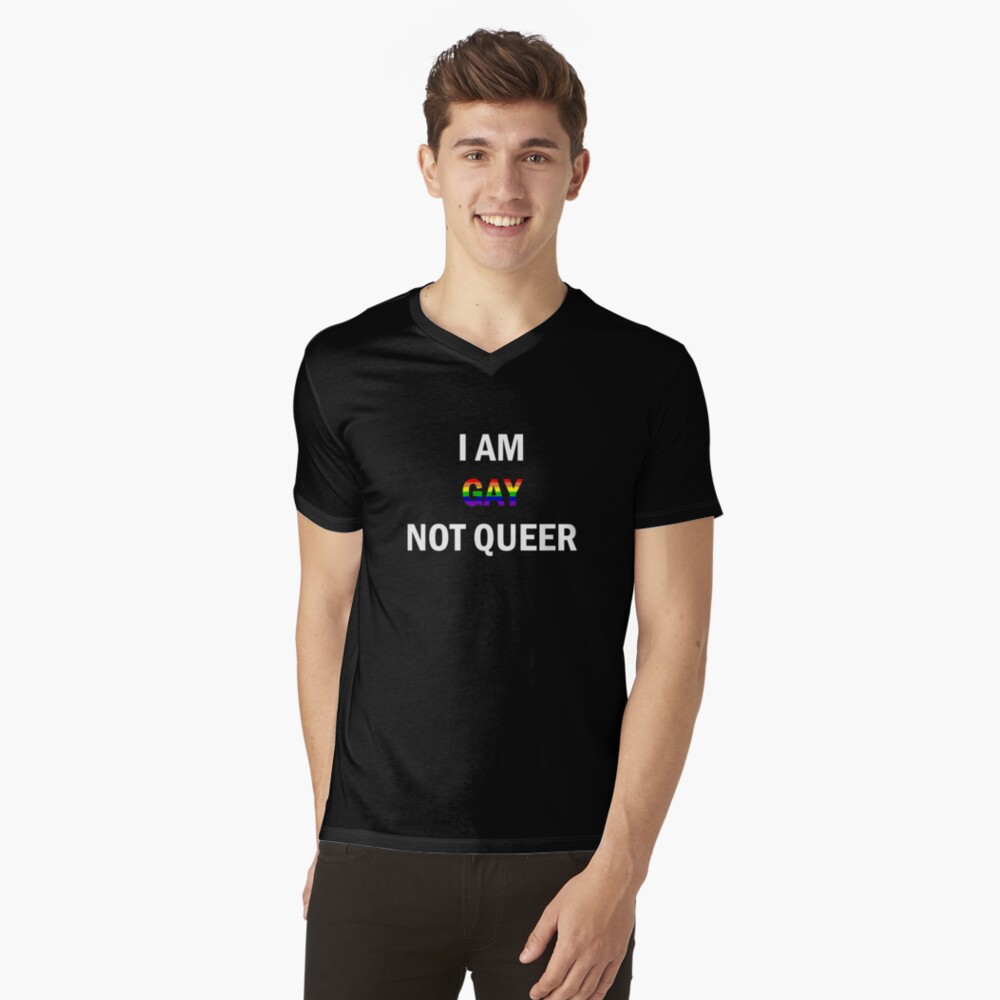
I am watching a Spanish Netflix series called Merli: Sapere Aude, and it is excellent. It is a dramedy, and the plot revolves around the protagonist, a young man named Pol Rubio, played by a fine young Spanish actor named Carlos Cuevas. Pol is a young man in his first year of studies in philosophy at a university in Barcelona. He has a bisexual orientation, and though he favours men, he does have dalliances with women occasionally. Pol is an anti-hero; while he generally strives to do good, he betrays a friend and his father when it serves his interests. He learns in the first episode of season two that he is HIV+. Pol is devastated by the news, despite the doctor’s assurance that the virus can be managed with treatment. He starts the regimen of taking the medication and tries to carry on. In a subsequent episode, Pol converses with a former co-worker who likely exposed him to the virus. His friend lost his job when the employer learned he was HIV+. The friend reminds Pol that people will feel sorry for you when you get cancer, but when you get HIV, you are viewed as a “dirty faggot.” Pol also converses with his employer, a mature gay man living with HIV. The employer lived through the AIDS crisis of the 1980s and 1990s and saw many gay men succumb to the disease. He recounted an incident where a friend was beaten to death for being queer. I bristled when I heard “queer” used to refer to a gay man, but I realized in the context of the anecdote that it was the attackers who called him a queer as they beat him to death. Queer is a slur, the last thing many gay men heard as they were beaten to death by gangs of thugs.

Continue reading

Nature made a mistake, which I have corrected. – Christine Jorgensen

For years, I have tried to comprehend the feminist claim that gender identity and expression are a men’s rights issue. Finally, I got a little clarity listening to a radical feminist, a former member of the British Labour Party, discuss the issue of trans-identified men’s participation in women’s sports. She said something to the effect that “women’s sports matter more than men’s feelings.” I get it. Radical feminists made trans-identified men’s participation in women’s sports the focal point of their opposition to gender ideology. In doing so, they overlook the fact that it was pro-feminist governments, the Obama Administration in the United States, and the Liberal Government in Canada led by Justin Trudeau, that made gender identity and expression prohibited grounds of discrimination. It was based on Titles VII and IX in the Civil Rights Act of 1964 in the United States–provisions in the legislation that addressed women’s equality. In Canada, Trudeau openly and proudly proclaimed that he was a feminist and wanted everyone to convert. The Trudeau government amended the Canadian Human Rights Act with the passage of Bill C-16 to include gender identity and expression as prohibited grounds of discrimination. Continue reading

I consider promiscuity immoral. Not because sex is evil, but because sex is too good and too important. — Ayn Rand

In the summer of 1987, I lived with my boyfriend Fabio in a two-bedroom apartment in Kingston, Ontario. We met as students at Queen’s University and secretly carried on our love affair before moving in together. We became boyfriends during the burgeoning AIDS crisis. One evening, we sat in bed and watched a panel discussion held by one of the American News Networks–I cannot remember which one. What struck me was the inflammatory opening remark made by a conservative Congressman, whose name I do not remember, who asserted that “perversion and promiscuity” were to blame for the AIDS crisis. That sentiment was shared through the 1980s. I remember the stand-up comic Sam Kinison, who screamed in one of his routines that AIDS became an epidemic “because a few fags fuck some monkeys; they got tired of their own assholes.” Jerry Falwell claimed it was God’s judgement on homosexuals and blamed the spread of the disease into the innocent heterosexual population on bisexual men. Yes, AIDS was seen as a gay plague. Fabio and I, like countless gay men in the 1980s, were concerned. There was uncertainty about how easily the virus was transmitted. Before the dawn of the AIDS crisis, our biggest concern as students in the 1980s was the risk of an unwanted pregnancy or getting herpes.

Continue reading

The fact remains; chauvinism is prevailing. — Emma Bonino

I lurk on the Facebook page of a Canadian queer activist. I never knew he existed until he appeared unexpectedly on my news feed. I am a liberal-minded man; I believe in liberalism, pluralism, and equality in law and opportunity instead of collectivism and diversity, equity and inclusion. I don’t like what he says, and I find his attitude and behaviour contemptible. He makes me think of my fieldwork when I studied the sociology of religion and religious studies at Queen’s University in the 1980s. I interacted with various Christian faith communities, Orthodox, Roman Catholic, and Protestants. I met many people, some of whom were the worst hypocrites. The man in question is the archetypal example of a religious hypocrite. His smug self-righteousness is insufferable. He reminds me of Jerry Falwell’s unctuous self-righteousness; he is unbearable. What is worse is his bigotry. He does not listen to his critics. He dismisses them as anti-queer chauvinists and haters, promptly blocking them. If push came to shove, he would happily try to cancel them.

Continue reading