Tag Archives: AIDS

A sound discretion is not so much indicated by never making a mistake as by never repeating it. — Christian Nestell Bovee

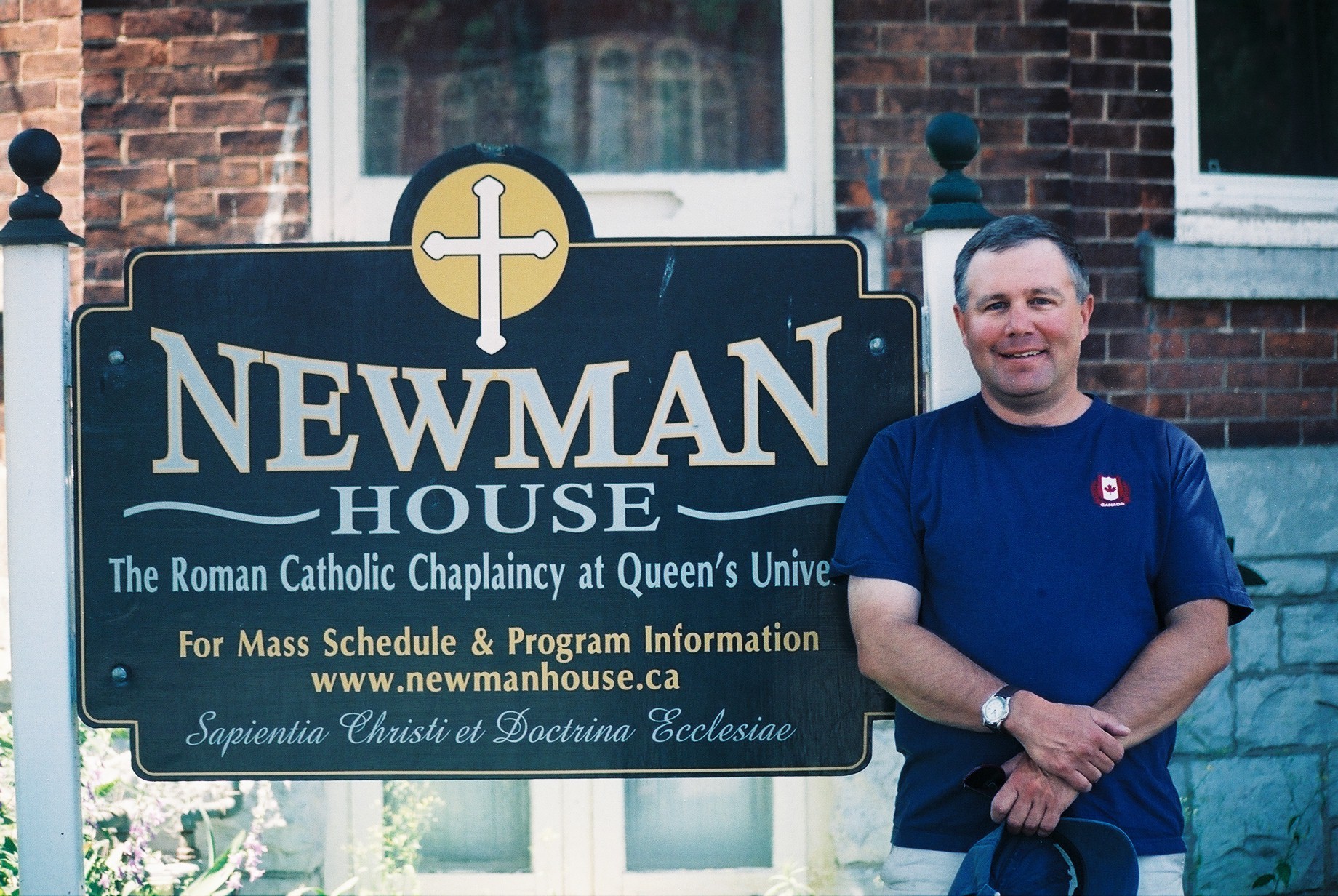
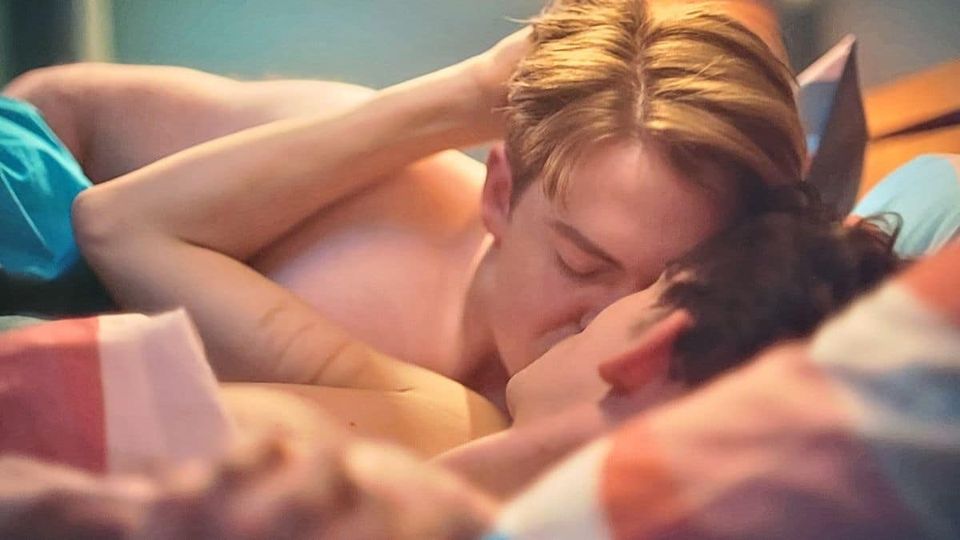
Life for gay youth in the Heartstopper universe is generally reasonable. The protagonists, Nick Nelson and Charlie Spring—Nick is bisexual, and Charlie is gay—find each other and become boyfriends despite elements of antigay prejudice that linger. They initially feel the need for discretion in their relationship. Naturally, they yearn for privacy also. The scene where Nick’s mum walked in on them as they got close and personal in Nick’s room illustrated the point. It made me think of what life was like for me as a young gay man in the 1980s. I was a student at Queen’s University in Kingston, Ontario, Canada, in the first half of the 1980s. It was the height of the AIDS crisis, and gay men were the most affected. There was a moral panic; people did not know for sure how HIV was transmitted and feared exposure to the virus. It was seen as a gay plague, something that gay men brought on themselves for their unprincipled ways. Trust me, it was not a good time to be a gay man. Discretion was necessary because the consequences would be dire if you were outed.
Continue reading

Those who forget the past are condemned to repeat it. — George Santayana

I am watching a Spanish Netflix series called Merli: Sapere Aude, and it is excellent. It is a dramedy, and the plot revolves around the protagonist, a young man named Pol Rubio, played by a fine young Spanish actor named Carlos Cuevas. Pol is a young man in his first year of studies in philosophy at a university in Barcelona. He has a bisexual orientation, and though he favours men, he does have dalliances with women occasionally. Pol is an anti-hero; while he generally strives to do good, he betrays a friend and his father when it serves his interests. He learns in the first episode of season two that he is HIV+. Pol is devastated by the news, despite the doctor’s assurance that the virus can be managed with treatment. He starts the regimen of taking the medication and tries to carry on. In a subsequent episode, Pol converses with a former co-worker who likely exposed him to the virus. His friend lost his job when the employer learned he was HIV+. The friend reminds Pol that people will feel sorry for you when you get cancer, but when you get HIV, you are viewed as a “dirty faggot.” Pol also converses with his employer, a mature gay man living with HIV. The employer lived through the AIDS crisis of the 1980s and 1990s and saw many gay men succumb to the disease. He recounted an incident where a friend was beaten to death for being queer. I bristled when I heard “queer” used to refer to a gay man, but I realized in the context of the anecdote that it was the attackers who called him a queer as they beat him to death. Queer is a slur, the last thing many gay men heard as they were beaten to death by gangs of thugs.

Continue reading

I consider promiscuity immoral. Not because sex is evil, but because sex is too good and too important. — Ayn Rand

In the summer of 1987, I lived with my boyfriend Fabio in a two-bedroom apartment in Kingston, Ontario. We met as students at Queen’s University and secretly carried on our love affair before moving in together. We became boyfriends during the burgeoning AIDS crisis. One evening, we sat in bed and watched a panel discussion held by one of the American News Networks–I cannot remember which one. What struck me was the inflammatory opening remark made by a conservative Congressman, whose name I do not remember, who asserted that “perversion and promiscuity” were to blame for the AIDS crisis. That sentiment was shared through the 1980s. I remember the stand-up comic Sam Kinison, who screamed in one of his routines that AIDS became an epidemic “because a few fags fuck some monkeys; they got tired of their own assholes.” Jerry Falwell claimed it was God’s judgement on homosexuals and blamed the spread of the disease into the innocent heterosexual population on bisexual men. Yes, AIDS was seen as a gay plague. Fabio and I, like countless gay men in the 1980s, were concerned. There was uncertainty about how easily the virus was transmitted. Before the dawn of the AIDS crisis, our biggest concern as students in the 1980s was the risk of an unwanted pregnancy or getting herpes.

Continue reading

Gay men don’t have much in common with lesbians. — Douglas Murray

The thing to remember is that gay is a demographic, not a coherent community. I am a gay man, a free thinker and a skeptic. I am proudly Anglo-Saxon; both sides of my family came from the British Isles, my father’s family from England and my mother’s from Ireland. Short of taking a DNA test, it is anyone’s guess what blend of ethnicities may be in my ancestry. However, that is neither here nor there. The fact remains that I am a middle-aged, gay white man. That said, those characteristics are irrelevant. Above all else, I am an individual. I am the man I am today because of my childhood and adolescence circumstances. I grew up in Canada in the latter half of the 20th century. I remember the Centennial celebrations in 1967 on Canada’s 100th birthday. I learned to take pride in my heritage, and the freedoms and opportunities afforded me as a Canadian. Still, growing up gay in my generation had its challenges. Continue reading

The whole aim of practical politics is to keep the populace alarmed (and hence clamorous to be led to safety) by an endless series of hobgoblins, most of them imaginary. ― H.L. Mencken

gladtobegay-badge-2

Goldeneye

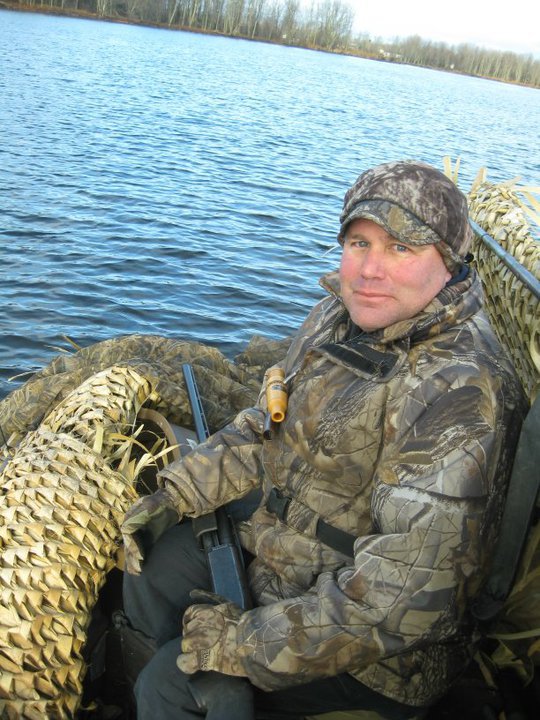
Geoffrey out duck hunting.

The words “gun lobby” and “gun nut” are slurs invented by prohibitionists–people opposed to gun ownership and hunting–to besmirch the character of gun owners and hunters. I heard the term “gun nut” used on American television sitcoms like “All in the Family” as early as the 1970s. I shrugged it off at the time as inconsequential. I had no reason to believe as a boy that there was anything wrong with gun ownership and hunting. I remember how other children brought things like duck wings for show and tell in kindergarten and primary school. Wings taken from the wild ducks that their older brothers and fathers shot while out hunting. Other children proudly told the class about their fathers, who had returned from successful big game hunts. My dad and my uncle enjoyed hunting cottontail and jackrabbits when I was a boy. It was not until late in 1989, following the mass shooting at the engineering school at the University of Montreal that I first heard mention of the “gun lobby” used as a pejorative term in public parlance. It came as an unwelcome surprise. Continue reading

I think gay men are more masculine than straight men. Because, guess what? They love other men! — Sir Ian McKellen

gladtobegay-badge-2go

I came across an article featuring an interview with Angela Davis Fegan, an artist and LGBTQ activist, in which Fegan condemned the gay rights movement for what she views as its domination by white, straight-acting gay men. She cited the campaign for same-sex marriage rights with its prescient concern for the legal and financial status of same-sex couples to illustrate her complaint. She asserted, “the push for marriage was largely about granting real estate and tax benefit rights to straight-acting, white, gay men.” (as cited in POPSUGAR) I am a masculine, white, gay man and view the gay rights movement and the legalization of same-sex marriage in particular as a good thing for all same-sex couples regardless of their sex, race or ethnicity. Fegan is not alone in her condemnation of the gay rights movement for the alleged domination by “white, straight-acting gay men.” Amrou Al-Kadhi, a gay drag performer, is critical of “the glorification of Olympic Poster boy Tom Daley and Academy Award winner Dustin Lance’s relationship. While it is a sign of progress that a gay relationship is celebrated nation wide, it is done in a manner that is “digestible” for a PG audience — a straight-acting Disney-fied gay couple (both attractive, white, masculine), giving gay men a pretty unobtainable ideal of success.” (as cited in i-D Magazine). Still, by made me think about why I took up with the gay rights movement as a masculine, white, gay man beginning in 1989. Continue reading