Tag Archives: children

Reason obeys itself, and ignorance submits to whatever is dictated to it. — Thomas Paine

Those of us across the world who are working to end the involuntary genital cutting of boys are at an impasse. We have demonstrated beyond any doubt that intact genitals are as nature intended and debunked the claims that the male prepuce was a vestigial piece of skin that served no purpose. Despite that, cowardly politicians insist their hands are tied because they cannot breach the rights to religious liberty and parental autonomy over their children’s bodies. At least not when boys are at issue. They had no trouble enacting prohibitions on all forms of genital alteration on girls, no matter how minimal, despite the religious sensibilities and autonomy of parents to raise their daughters how they saw fit. Western nations lead an international effort through the United Nations to end female genital mutilation. When Iceland, a European country with a population of 340,000 people, moved to update its legislation in 2018, prohibiting involuntary genital cutting of girls to include boys, the United States intervened. The US House of Representatives Foreign Affairs Committee, in a letter sent to the Embassy of Iceland, Congressmen Ed Royce, the Republican chairman of the committee, and Eliot Engel, its top Democrat, wrote: “While Jewish and Muslim populations in Iceland may be small, your country’s ban could be exploited by those who stoke xenophobia [read anti-Muslim prejudice] and anti-Semitism in countries with more diverse populations.[…] As a partner nation, we urge your government to stop this intolerant bill from advancing any further.” (Times of Israel.) The Amendment to the legislation did not pass.
 
The thing to remember, also, is that in Iceland and the rest of Europe, the majority of the population does not cut the genitals of boys and girls involuntarily–which might make people think that a ban is moot. Still, one wonders why the ban on cutting girls is not viewed as something that “could be exploited by those who stoke xenophobia” [read anti-Muslim attitudes] in countries with more diverse populations.” Somehow, that only applies if you make the ban on involuntary genital cutting universal by including boys, and that is irrational. Despite these hurdles, the effort to protect boys continues — no one said it was easy. There is an interesting development in the recent controversy over “gender-affirming care” for minors. The issues of religious liberty and parental autonomy are back at the fore in the dispute over the ethics and legality of subjecting children to surgeries and drug therapies that result in the chemical and surgical castration of children whose parents believe they were of the opposite sex into which they were born. The Supreme Court of the United States ruled that a Tennessee law that prohibits gender-affirming care for minors is constitutional. The challenge to the law was based on the 14th Amendment, with arguments that the ban was discriminatory based on sex and violated the laws and the rights of parents to make medical decisions for their children, following their beliefs. The court did not consider the latter arguments in reaching its decision.
 
Given this development, one wonders how scurvy politicians will justify the involuntary genital cutting of boys based on the superstitions and wants of their parents. Why is it not tolerable to alter a girl’s private parts or allow parents to authorize sex changes on their children regardless of their beliefs, but it is bearable to allow radical and irreversible alterations to a boy’s genitals for no other reason than someone else wants it? Why is the notion that boys have rights, particularly to the integrity and security of their person, so contentious? I am cautiously optimistic that the Supreme Court ruling that upheld a ban on gender-affirming care for minors will cause renewed attention to the ethical and legal issues of the involuntary genital cutting of boys. I hope that the Icelandic parliament will reintroduce its legislation to protect boys and girls alike from involuntary genital cutting and that other Western jurisdictions will follow suit. This invidious state of affairs has gone on too long.
 
Posted by Geoffrey

To maintain a joyful family requires much from both the parents and the children. Each member of the family has to become, in a special way, the servant of the others. — Pope John Paul II

eltonDolce-Gabbana-Panorama

Stefano Gabbana & Domenico Dolce are two successful designers of luxury clothing for men and women who launched their fashion house in 1985 in Legnano, Italy. They are gay and were romantically linked as a couple from 1980 to 2008 before parting ways, but their business partnership prevails and they continue to prosper. Recently, in an interview for the Italian magazine Panorama, they expressed controversial opinions on gay parenting and reproductive technologies. In short they asserted: “we oppose gay adoptions. The only family is the traditional one,” and “no chemical offsprings and rented uterus: life has a natural flow, there are things that should not be changed.” Stefano Gabbana added, “the family is not a fad. In it there is a supernatural sense of belonging.” (as cited in the National Post) This was not the first time they expressed this point of view. In an interview with an Italian newspaper in 2006, Stefano Gabbana stated: “I am opposed to the idea of a child growing up with two gay parents […] A child needs a mother and a father. I could not imagine my childhood without my mother. I also believe that it is cruel to take a baby away from its mother.” (as cited in Pink News) Their public condemnation of gay parenting came as a surprise to many as they are gay and were a couple for several years. Interestingly, in expressing their opinions on gay parenting and reproductive technologies they reflect the official position of the Catholic Church on these issues. These are serious issues and bear examination in greater detail as the rights and happiness of gay parents and their children are at stake. Continue reading

“Every man has a right to utter what he thinks truth, and every other man has a right to knock him down for it. Martyrdom is the test.”–Samuel Johnson (1709-1784)

Polish_Righteous_Józef_and_Wiktoria_Ulmaglorification-of-martyrs

Martyrdom is a concept with which I have been familiar since I was very young. From my Roman Catholic background growing up I remember reading accounts of the lives of saints, many of whom were martyred in the most grisly fashions imaginable. In the summer of 1969 my family, myself, my three siblings, our mother and father and my mother’s parents toured Europe, traveling in a Volkswagen van. Among the sights we saw were a number of art galleries where I viewed a great many works of art depicting the martyrdom of various saints. The martyrdom of Saint Sebastian is one of the more memorable depictions I recall, but it was the depiction of one event in particular from the Bible that really made an impression on me: that of the Massacre of the Innocents. From the first time I heard that story read to me I was troubled by it. I struggled to understand why God would allow such an atrocity. In one version of the story, written for children, I remember reading that we should find solace  in that the mothers of the slain baby boys would have found comfort had they known their murdered sons were the first Christian martyrs. This raised a question for me I have pondered over the years: can children be martyrs? Continue reading

Morality is simply the attitude we adopt towards people whom we personally dislike.–Oscar Wilde (1854-1900)

ClosetPhoto-By-Salon1

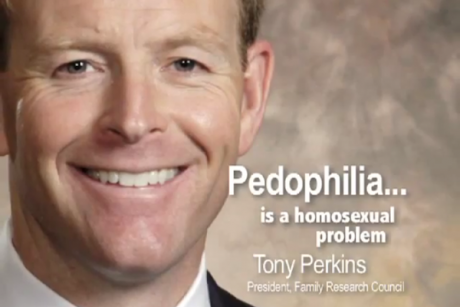
While attitudes toward gay people have changed a great deal for the better in my lifetime, prejudice and stereotypes remain. There is one stereotype in particular that kept me from coming out until later in life: that of the gay man as a predator from whom children must be protected. I am told I am good in my interaction with children and young people. I am gentle and soft-spoken and very easy going, and children generally like me. Because of this, it was suggested that I consider a career in teaching by one of my mentors at Queen’s University. I was reluctant to go into teaching because of this stereotype. I was confronted with this stereotype and the prejudice against gay men as teachers in 1986, the year I graduated from Queen’s. The Chairman of the Frontenac County Board of Education, in commenting on the amendment to the Ontario Human Rights Code which added sexual orientation to the list of prohibited grounds of discrimination, was dismayed that he no longer had any legal grounds to refuse to hire a teacher if he knew he was dealing with an “obvious faggot.” Continue reading