Tag Archives: doctrine

For every complex problem there is an answer that is clear, simple, and wrong. — H. L. Mencken

The Liberal Party of Canada, the governing Party in 2016, rewrote the Canadian Human Rights Act to include gender identity and expression as prohibited grounds of discrimination. It was puzzling at the time, as they could not define gender identity conclusively. The Canadian Human Rights Act defines gender identity as follows:

Gender identity is each person’s internal and individual experience of gender. It is their sense of being a woman, a man, both, neither, or anywhere along the gender spectrum. A person’s gender identity may be the same as or different from the gender typically associated with their sex assigned at birth. For some persons, their gender identity is different from the gender typically associated with their sex assigned at birth; this is often described as transgender or simply trans. Gender identity is fundamentally different from a person’s sexual orientation. (Canadian Human Rights Act)

Basically, it is an individual’s belief in something that cannot be observed or measured. It is a subjective sense of self, based on irrational ideas; it can be anything you want or nothing at all. That is entirely up to the individual. That in itself is fine. Canadian law guarantees the right to freedom of belief and conscience—as it should. That being the case, belief in gender identity was guaranteed in existing law. Also, existing Canadian law prohibits discrimination based on religion. The thing to remember is that while you are free to believe in gender identity, you are also free not to. From what I surmise, belief in gender identity asserts that we have gendered souls which can be either male, female, or anything in between. Hence, people who are sure of their sex, male or female, are called “cisgender,” as their gender identity and sex align. “Transgender” people are those whose sex and gender identity do not align; they sometimes say that they were born in the wrong body. Again, that is a matter of personal belief and conviction, and no one is stopping anyone from holding these beliefs. Jordan Peterson warned at the time the Liberal government revised the Canadian Human Rights Act to include gender identity and expression, that it would result in compelled speech. His concerns were dismissed, mockingly. Unfortunately, state institutions like the public service, military, police, and schools have been compelled to adopt the belief in gender identity as dogma. Yes, the Party, the Liberal Party of Canada, decreed that in Canada, 2+2=5, in that gender identity is grounded in reality because they say so. Not only that, but anyone who dissents is a heretic whose rejection of the doctrine must be singled out and sanctioned. In short, Canadians are expected to bend the knee to this particular belief system, which runs contrary to Canadian law, notably the Canadian Charter of Rights and Freedoms. I do not understand why the Liberal Party of Canada is so determined to overlay this doctrine of gender identity on Canadians. It is as if they want to impose a new state religion. In doing so, they sowed division among Canadians, resulting in bitter conflict. It is as if the Party declared in fact and established in law that not only do angels exist, but how many angels can fit on the head of a pin, so that the public can quarrel over how many angels do fit on the head of a pin or if angels even exist.

I look at things logically, and the law of non-contradiction, a fundamental law of logic, states that contradictory propositions cannot both be true at the same time and in the same sense. The Liberal Party of Canada decided that it is possible to be male and female at the same time and in the same sense. We saw an example of how this played out in the recent mass shooting in Tumbler Ridge, British Columbia, where the RCMP and the state-funded news media insisted that the suspect was female despite having been born male. Of course, to most people viewing the news reports from the RCMP spokesman, who initially used the term “gunperson” and female in referring to the suspect, when it was quickly revealed that he was an 18-year-old male who had decided to identify as female four years prior. They insisted on referring to him as “she/her” in their statements. The police and court records will show that he was a she, despite the reality that he was male, because in existing Canadian law, whether an individual is male or female is determined by self-identification, and frankly, that is absurd. No, the reality is that 2+2=4, and sex is observable, measurable, and immutable. In this instance, eight people, two adults and six children, died, and twenty-seven were injured, some critically. The RCMP and the state-funded media feel compelled to walk on eggshells so as not to “misgender” the suspect who died at the scene for fear of being condemned for heresy against doctrine. Their priority should be enforcing the law and reporting on current events objectively, without being compelled to adhere to the tenets of any particular belief system, and without looking ridiculous in the process.

Posted by Geoffrey
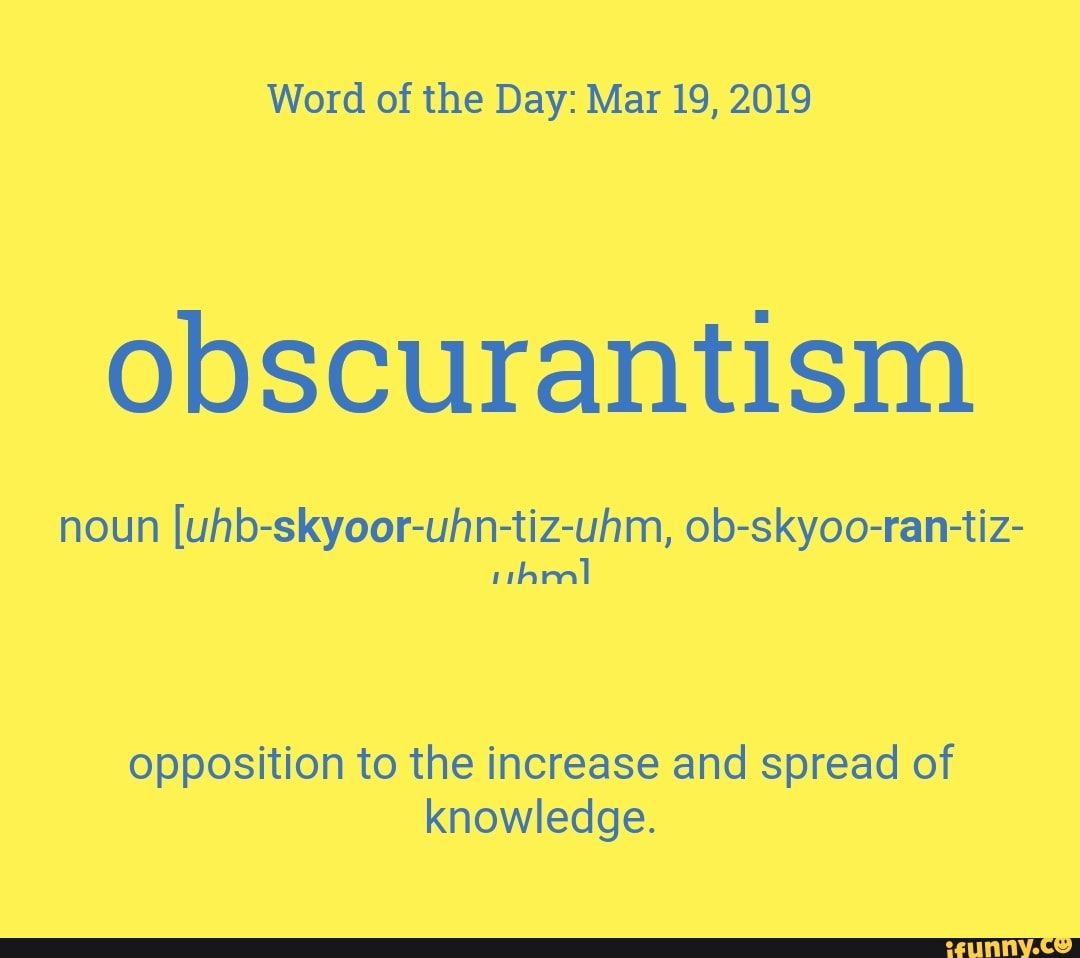
Those who know that they are profound strive for clarity. Those who would like to seem profound to the crowd strive for obscurity. ― Friedrich Nietzsche,  The Gay Science

Listening to a true believer in gender identity and gender expression explain why they believe reminds me of when I was a pious Roman Catholic. I am sure I sounded much the same to non-believers when I explained why I had taken the leap of faith to practice Roman Catholicism. I accepted the theological arguments, the authority of Scripture, and the Apostolic Tradition that compose Roman Catholicism. I attended mass daily, said my prayers, and tried to do good and avoid doing evil. I regularly examined my conscience and tried to turn away from sin. It was reasonable to me at the time. Though I tried to be true to my faith, lingering doubt remained. Eventually, I realized that I could not continue as it was hypocritical of me. I stopped going to mass. I no longer believe in the claims of Christianity.

Continue reading

“After all, what’s a life, anyway? We’re born, we live a little while, we die.” ― E.B. White, Charlotte’s Web

66506_483152090378_1731430_nJuno1

In memory of my beloved Juno (May 21, 2008 – August 15, 2012)

“Each of us owes God a death.” So I heard Gwynne Dyer proclaim in an episode of his television series War. Death is a reality; it comes for us all. When I was a small boy I did not understand the reality of death. I remember, I must have been three years old and seeing my grandmother with some old baby clothes and toys she said were my aunt Lonny’s. My impression in seeing this was to imagine that people must grow up, then grow back down to being babies again. I asked my mother if this was so and she corrected me, telling me no, people grow, then they grow old and die. She added that nobody wants to die, but everyone has to. I did not really understand what it meant to die and did not give it much thought until I was a little older, maybe five years old when I asked my mother and father “what happens when you die?” They told me “your spirit goes up,” presumably to heaven. I still did not understand and was a little frightened by the prospect, but decided that must be a long way off so I would not worry about it. Continue reading

“The law of humanity ought to be composed of the past, the present, and the future, that we bear within us; whoever possesses but one of these terms, has but a fragment of the law of the moral world.” — Edgar Quinet (1803-1875)

ujquote4lateran3

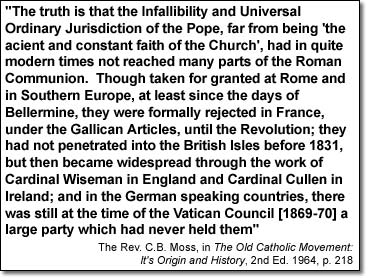
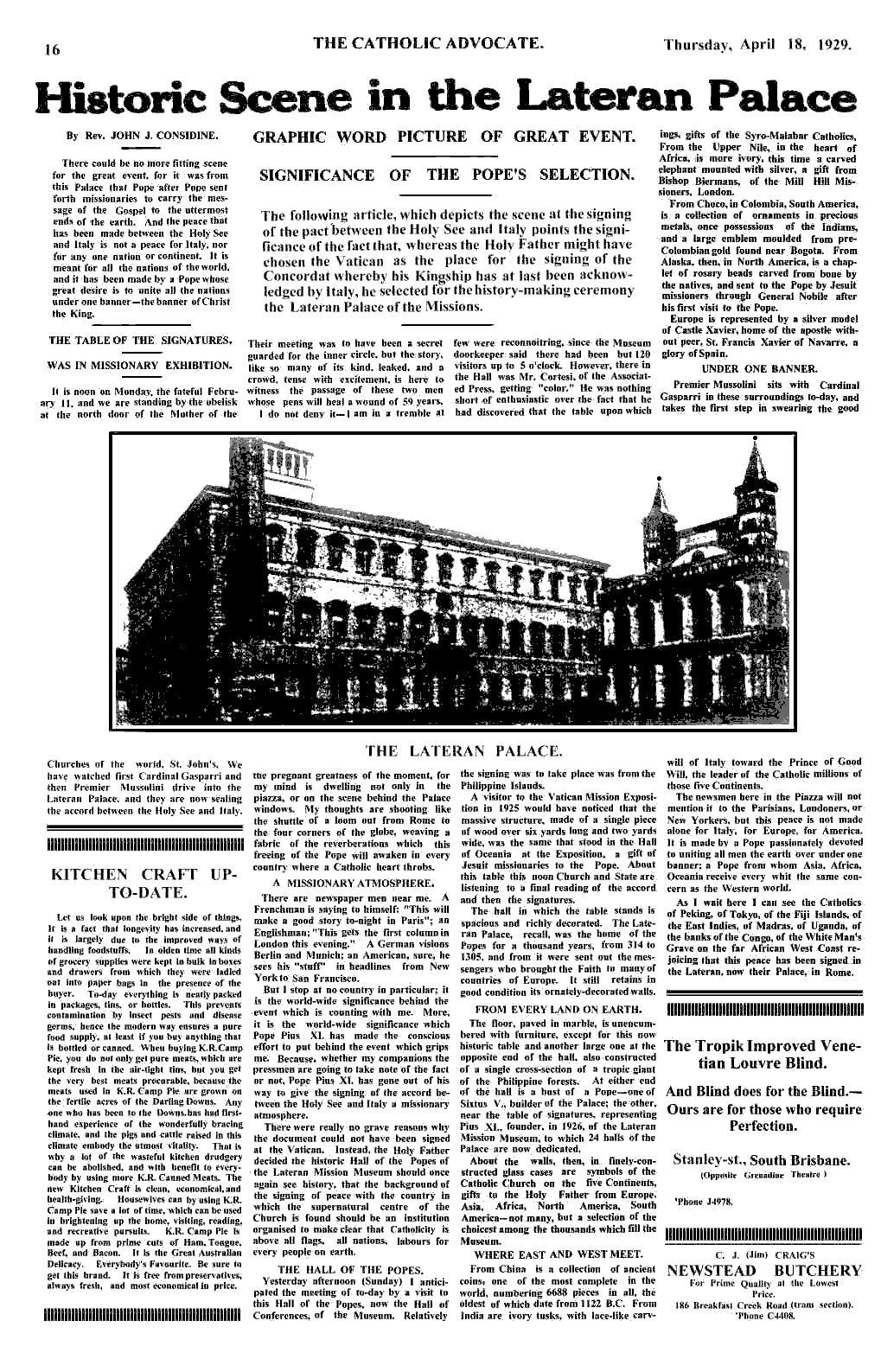
The papacy was in a very precarious position when Pope Pius IX convened the First Vatican Council on June 29, 1868. The drive for Italian unification was underway, with a revolution in 1848 that led to the exile of Pius IX in the castle of Gaeta in the Kingdom of the Two Sicilies from November 24, 1848, until his return to Rome in April 1850. The revolutionaries declared the Roman Republic comprised of the Papal States and in accordance with the ideals of the Enlightenment religious liberty and tolerance was enshrined in the new constitution by article 7 of the Principi fondamentali. Prior to this development only Christianity and Judaism were allowed by law to be practiced in the Papal States. The independence of the pope as head of the Catholic Church was guaranteed by article 8 of the Principi fondamentali. While providing constitutional guarantees of religious liberty and papal authority over the Catholic Church, the framers of the Constitution of the Italian Republic curtailed the temporal authority of the Pope which was referred to as an “historical lie, a political imposture, and a religious immorality” by a reform-minded priest, Abbé Arduini. (as cited in Wikipedia) However, by June 1849 the Roman Republic was overthrown by French military intervention and Pius IX restored in office, returning to Rome and reclaiming governance of the Papal States. Continue reading

Keep passing the open windows. — John Irving, The Hotel New Hampshire

motherBobby-Griffith-at-19-prayers-for-bobby-4727579-305-448

“Keep passing the open windows” is the phrase that comes from the John Irving novel The Hotel New Hampshire, published in 1981. It is a catchphrase among the Berry family, the characters whose story is told in the book. It is drawn from a story that the Berry parents tell their children about a street performer called “The King of Mice.” He committed suicide by jumping from a window. “Keep passing the open windows” is the family’s way of telling each other to carry on when the going gets tough. I read the novel in 1983 and saw the feature film version released in 1984. This catchphrase and the sentiment behind it has remained with me over the years, and I have applied it in my own life in “passing the open windows.” However, I understand that while it is easy to tell someone troubled, having a hard time coping with life, joys, and sorrows, to “keep passing the open windows,” promising them things will get better, sadly, not all stories have a happy ending. Continue reading

I desire not to keep my place in this government an hour longer than I may preserve England in its just rights, and may protect the people of God in such a just liberty of their consciences… — Oliver Cromwell (1599-1658)

8RainerCromwellLL

How often have I heard it said that it is the precepts of Christianity that are the foundation of Western civilization? When confronted with this claim, my typical response is to roll my eyes and think, “that old chestnut.” This is particularly the case when the claim is framed so egregiously by the likes of Glenn Beck, who stated, in referring to origins of the United States, “it is God’s finger that wrote the Declaration of Independence and the Constitution. This is God’s country; these are God’s rights. I have no idea what he wants us to do with them, other than protect them, and stand with Him.” (As cited in Tony’s Curricublog) While it is easy to dismiss such claims as stuff and nonsense, it is worth considering the role of religious belief in the growth and development of Western civilization, its transition from the primacy of Christian doctrine in public life to the rise of liberal democracy and the rule of law in the secular nation-state, though not in the way many religious folks, such as Glenn Beck, imagine it to be. Continue reading