Tag Archives: gay men

In the acronym LGBTQ+, “queer” is one of the multiple meanings for the Q. But that general acceptability does not erase queer’s treacherous and hateful history. — A. Pallas Gutierrez

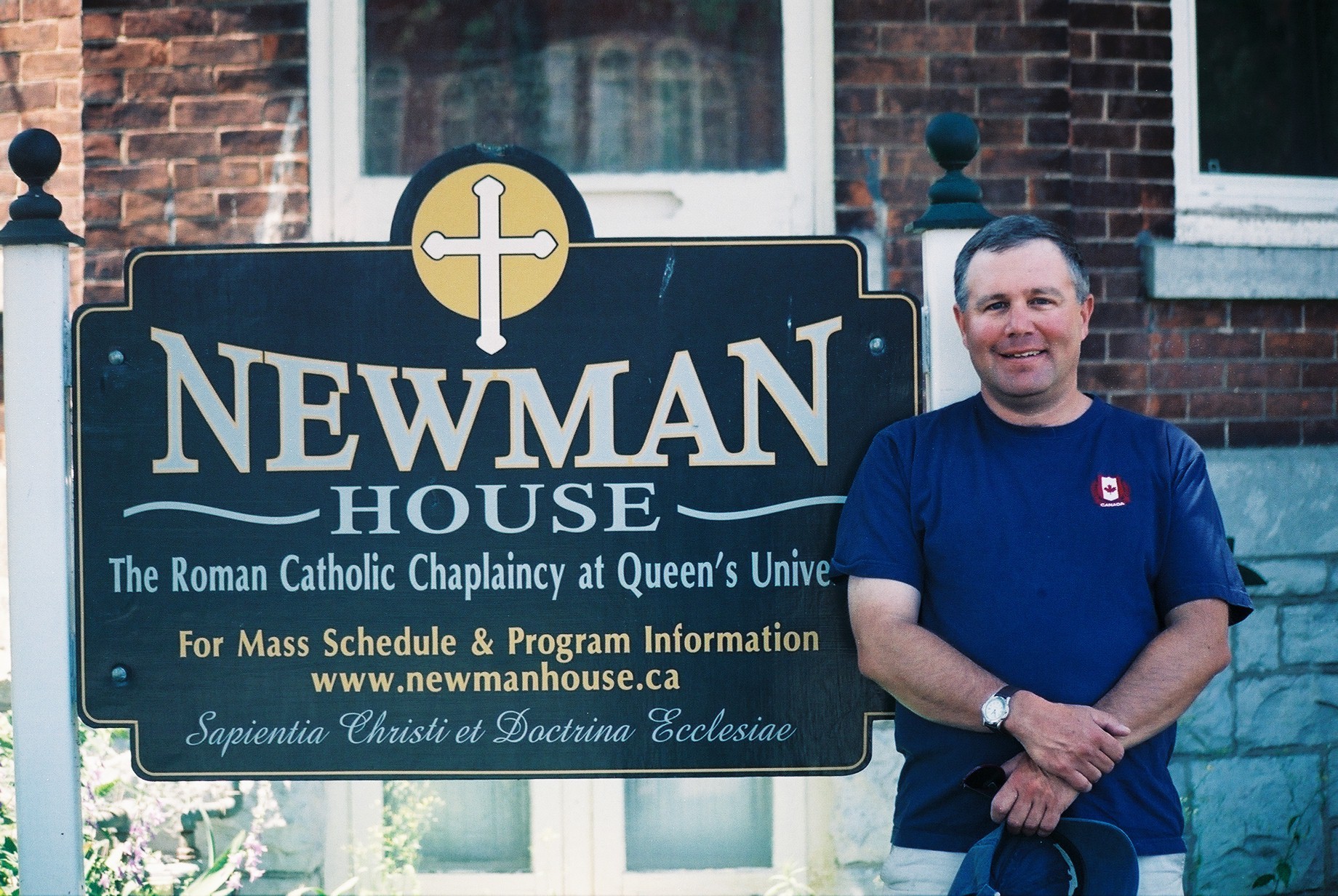
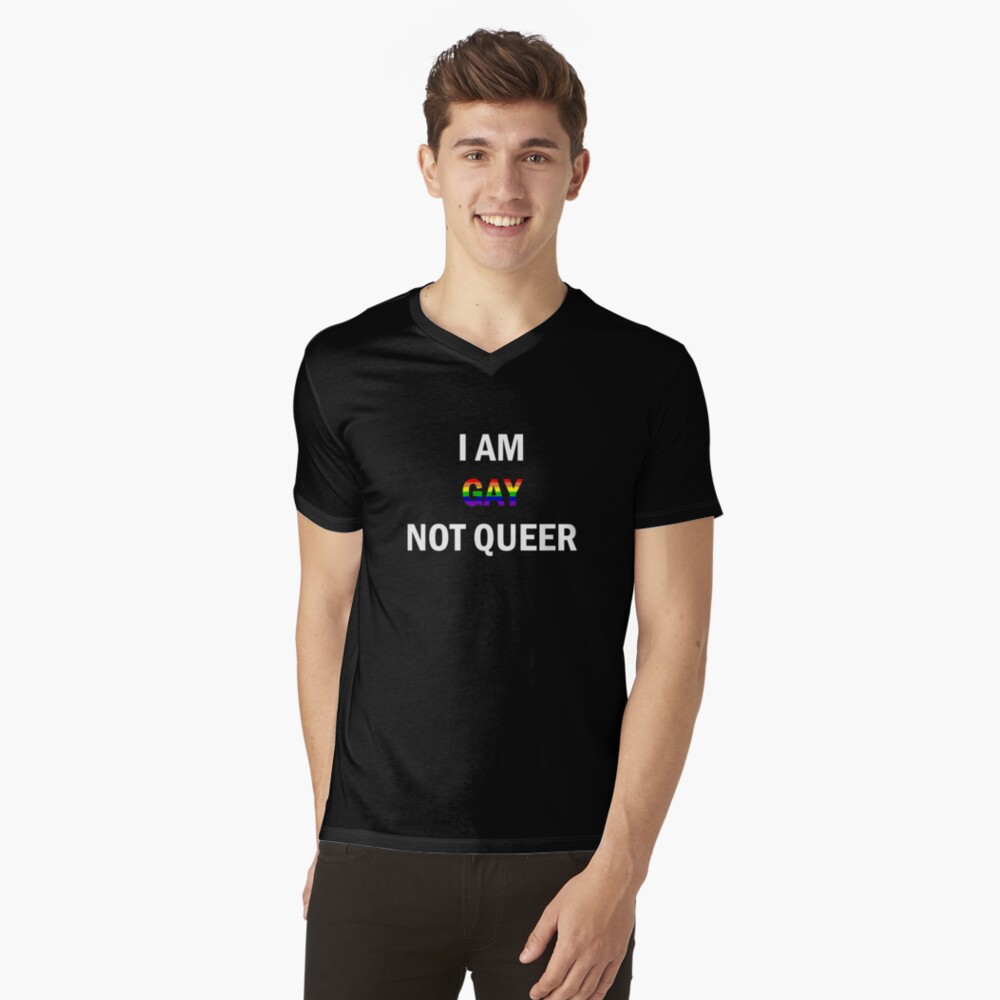
I remember submitting an essay for grading in a course on the sociology of religion I took at Queen’s University in 1983. When the essay was returned to me with the grade and the professor’s comments, he noted that I used the terms Catholic and Christian interchangeably. He pointed out that while Catholics are Christians, so are Protestants. By using the terms Catholic and Christian interchangeably, I blurred the distinction between the two and risked giving the reader the impression that Protestants were somehow not Christians. Naturally, I understand that there are several denominations and sects in Christendom that profess different beliefs concerning Christian doctrine. However, I took the professor’s point that a little clarity goes a long way. What prompted the memory of my essay and the comment is how I noticed that so many people use the terms gay and queer interchangeably. I see this in news articles and discussions on online forums. Occasionally, someone refers to me as queer or a member of the queer community. I politely correct them, telling them that I am gay, not queer, and no, I am not a member of the queer community. I ask that they respectfully not refer to me as a queer, as I do not like it. The term is a slur, a derogatory term used historically to describe a gay man. It is like calling a black man a coon or a Jewish man a Hebe. Yes, I know that there is a countercultural constituency that claimed to have “reclaimed” the term. They are free to call themselves what they want, but it is objectionable when they use the terms gay and queer interchangeably when referring to gay men. In short, a gay man is a male homosexual, a man who experiences same-sex romantic and sexual attraction. Gay men are represented in all races and ethnicities. They are individuals, and the only thing they have in common is their sex and orientation.

Sadly, countercultural thinking in gay rights activism emerged in 1990 with the introduction of Queer theory; this is an ideological position, as Renee Janiak notes, the Queer theory holds:

To be queer means, “fighting about social injustice issues all the time, due to the structure of sexual order that is still deeply embedded in society” (Warner: 1993). Queer people are not assigned into a specific group or category, which would be comparable with any other type of grouping such as “class” or “race” (Warner: 1993). Queer people have made a change with how they identify themselves, they went from “gay” to “queer”. The self- identification change is due to that fact that “queer” represents the struggle of not wanting to fit into the systems of being “normal”. Queer theory has allowed for new political gender identities (Butler: 1990). (Queer Theory)

By 2016, Noah Michaelson, editorial director of HuffPost Gay Voices, rebranded the blog as HuffPost Queer Voices. In doing so, he claimed, “We, like many others before us, have chosen to reclaim ‘queer’ and to rename the section HuffPost Queer Voices because we believe that word is the most inclusive and empowering one available to us to speak to and about the community — and because we are inspired by all of the profound possibilities it holds for self-discovery, self-realization and self-affirmation,” […]. “We also revere its emphasis on intersectionality, which aids in creating, building and sustaining community while striving to bring about the liberation of all marginalized people, queer or not.” (Advocate) He added, “For a lot of people, intersectionality is difficult,” […]. “I think that a lot of groups who are marginalized or disenfranchised have their sights set on trying to bring about liberation for that particular group. It’s only been recently that people understand that most oppressions are all tied together. We’re not going to really get very far if we’re just trying to work in our own lane. We actually have to be working with each other because at the end of the day we’re all trying to get the same thing, I hope. And that is liberation for all marginalized people and for all people.” (Advocate)

Queer or 2SLGBTQQIA+ replaced gay and lesbian, meaning gay and lesbian people not wanting to fit in “existing social institutions,” defined by the queer theory as “heteronormativity.” Queer activists strive to organize a community composed of “the more socially conscious” gays and lesbians “to provide leadership to the whole mass of social variants” in developing a parallel “queer culture.” Yes, they are free to promote this narrative and pursue their desired goal. That said, in reality, gay remains gay, a demographic, not a community, and increasingly, many gay men, myself included, have actively rejected that narrative. When I mention in passing that I am gay, I typically mention my husband, Mika, with whom I have been for twenty-seven years. We are a conventional gay couple who are not at odds with heterosexuality or “heteronormativity.” Others understand that we are gay, male homosexuals, in a loving and committed relationship. We are assuredly not queer; what does that even mean? What we think of the “marginalized and disenfranchised” has nothing to do with your sex, race, orientation, or anything else. When it comes to the queer community, we ask that they stay in their own lane and kindly stop using the terms gay and queer interchangeably in referring to gay men. Yes, a little clarity goes a long way.

Posted by Geoffrey

I was raised in a household where being gay was like, the most normal thing. My brother is gay, all of my best friends are gay. When my brother came out of the closet, it wasn’t a big deal for my family. — Ariana Grande

Gay men have long been seen as a novelty, a standard deviation in the demographic where most of humanity is heterosexual. Attitudes toward male homosexuality varied throughout history. In Antiquity, for the Etruscans, Greeks, and Romans, it was a part of life. They understood that people were sexual, so same-sex liaisons were common and depicted in their artwork. With the development of the Abrahamic faiths, Judaism, Christianity, and Islam, male homosexuality was viewed in a critical light. Eventually, it was condemned in the Abrahamic faiths and in the wider society. Gay men lived and died through centuries where, at best, they were tolerated, sometimes, and at worst, persecuted and imprisoned. By the eighteenth century in England, the argument was advanced by the British philosopher, Jeremy Bentham, for the decriminalisation of homosexual behaviour between consenting adults in private, in his essay Offences Against Oneself. He wrote the essay around 1785, but it was published posthumously in 1931. Bentham thought homosexuality, as Jeffrey Weeks notes, “an ‘imaginary offence’ dependent on changing concepts of taste and morality.” (Wolfenden and beyond: the remaking of homosexual history) Bentham thought through the issue and reasoned:

To what class of offences shall we refer these irregularities of the venereal appetite which are stiled [sic] unnatural? When hidden from the public eye there could be no colour for placing them any where else: could they find a place any where it would be here. I have been tormenting myself for years to find if possible a sufficient ground for treating them with the severity with which they are treated at this time of day by all European nations: but upon the principle utility I can find none. (Offences Against Oneself)

However, in England and Wales, the passage of the Criminal Law Amendment Act 1885 (48 & 49 Vict. c.69) included Section 11, in particular the clause known as the Labouchere Amendment, which applied to male homosexuality. In short, the clause provided for a term of imprisonment “not exceeding two years”, with or without hard labour, for any man found guilty of “gross indecency” with another male, whether “in public or in private”.  The Labouchere Amendment was enforced sparingly and selectively. However, the consequences of arrest and conviction could be devastating. John Gielgud very nearly saw his career as an actor come to an abrupt end in 1953 when a scandal arose over his arrest for ‘persistently importuning male persons for immoral purposes’ (he was caught trying to pick up a man in a public washroom). He was fined £10, and news of the arrest reached the press, causing him a most personal humiliation and the refusal of a visa to travel to the United States with his company to perform Shakespeare’s The Tempest. Gielgud was fortunate that the theatre-going public forgave his momentary indiscretion, and he continued his acting career both in the United Kingdom and the United States. Also, in 1953, the Home Secretary, David Maxwell Fyffe, referred to male homosexuality as a “plague over England,” and vowed to wipe it out. The Labouchere Amendment was repealed in English law in 1967—interestingly, a backbench Conservative Member of Parliament, Margaret Thatcher, broke ranks with the party to vote for its repeal. Since the decriminalisation of male homosexuality in England and Wales in 1967, many countries followed. It was decriminalised in Canada in 1969.
 
Now, in the twenty-first century, male homosexuality is seen by most as inconsequential. It is a natural expression of human sexuality. True, gay men remain a minority, but are free to take their place in society and live openly. Gay men marry and have families. They are represented in all occupations, and take part in a plurality of pastimes like anyone else. Unfortunately, for some, gay men remain a novelty. The series, Heated Rivalry, released by Crave, a Canadian streaming service, has become a worldwide hit with viewers. The series is based on novels by Rachel Reid, a Canadian author. I do not begrudge her success or the television series’s success, but what concerns me is that the story is pure fantasy. Yes, it is good writing and acting, absolutely, only it made me think of a quotation by Maria Von Trapp. When she saw the first production of The Sound of Music, she said, “That’s a nice story, but it’s not my story.” The story of two professional hockey players, one bisexual and the other gay, came from the imagination of a heterosexual woman. I am not saying there is anything wrong with that. Hardly, she is free to write stories about any characters she chooses. Though they say, “Art imitates life,” sometimes, particularly in romance novels, the lives of the characters are idealised beyond belief. The reality is that there is nothing novel about gay men living in the twenty-first century in most Western jurisdictions. There is no need to fashion romantic fantasies about how you imagine gay men live, how they feel, and what they think. The truth is, we are like everybody else, despite being a minority. There are plenty of openly gay professional athletes, including Jason Collins (an NBA player), Robbie Rogers (an NFL player), Tom Daley (a diver for the British Olympic team), Gus Kenworthy (a skier for the U.S. Olympic team), and Carl Nassib (an NFL player). I do not know much about the personal lives of these men, except for Tom Daley, whose private life is on the public record. Daley is married to his husband, Dustin Lance Black, and has two sons. They lead a conventional life like any other married couple. So, why are people so agog over a fantasy television series that treats the ordinary lives of gay men as something new and unusual?
 
Posted by Geoffrey
 

When I joined the military it was illegal to be homosexual, then it became optional, and now it’s legal. I’m getting out before the Democrats make it mandatory. — Sgt. Harry Berres, USMC

A gay Marine greets his husband upon his return from a deployment.

The Netflix series “Boots” is not “woke garbage,” as the United States Department of Defence alleged. No, while it is fiction, it is good storytelling. I admit, when I saw the trailer and the still images, a part of me rolled my eyes. I suspected it might be a cheesy rom-com featuring queeny ephebes prancing through the United States Marine Corps boot camp. On the contrary, the protagonist, Cameron Cope, is a gay seventeen-year-old high school graduate who chose military service, specifically the Marines, because his good friend had enlisted, and he wanted a change. The story is set in 1990, when male homosexuality was grounds for refusal in enlistment and grounds for discharge. He was reminded of that upon arrival at Parris Island, where a sign at the entrance for induction listed reasons for disqualification that included homosexuality. He kept his homosexuality to himself, though those around him suspected that he was gay.

The U.S. Department of Defense was clear when it issued the following regulation to clarify its stand in 1981:

(DOD Directive 1332.14 (Enlisted Administrative Separations), January 1981)

Homosexuality is incompatible with military service. The presence in the military environment of persons who engage in homosexual conduct or who, by their statements, demonstrate a propensity to engage in homosexual conduct, seriously impairs the accomplishment of the military mission. The presence of such members adversely affects the ability of the armed forces to maintain discipline, good order, and morale; to foster mutual trust and confidence among service members; to ensure the integrity of the system of rank and command; to facilitate assignment and worldwide deployment of service members who frequently must live and work in close conditions affording minimal privacy; to recruit and retain members of the armed forces; to maintain the public acceptability of military service; and to prevent breaches of security.

Under this regulation, persons having homosexual proclivities were deemed unfit for military service and either refused induction into military service or quietly mustered out with either a general, undesirable or dishonorable discharge if found out after having been inducted. The consequences of the three types of discharge varied in degree of severity. Still, in each, the individual was ineligible for veterans’ benefits and could face discrimination in employment in civilian life. That was the reality in 1990. The Don’t Ask, Don’t Tell policy in the United States Military was not enacted until 1993. So, serving in the U.S. Military in 1990 as a gay man meant you had to conceal the truth about yourself on pain of serious consequences.

As the story unfolded, it was revealed that one of the drill instructors, Staff Sergeant Sullivan, a seasoned Marine with a distinguished service record and a recipient of the Silver Star, was a gay man. Despite his impeccable record, he came under investigation when a man, a Major in the Marine Corps, with whom he had a romance, was outed and dismissed from the service. Despite the support of his commanding officer and enlisted colleagues, he chose to nearly beat a man to death in a bar fight, knowing it would result in a dishonorable discharge from the service. In his estimation, a conviction of aggravated assault of a civilian was preferable to being outed and dismissed in disgrace as a homosexual. The tragedy in his case was that had he held on another three years, he could have continued his career in the Marines—the U.S. Department of Defense is correct in pointing out that in 2025, gay men are free to serve openly. The Don’t Ask, Don’t Tell policy and the general ban on gays serving in the military were lifted in 2011. “Boots,” however, is set in 1990, when gay men did not have the option of serving with discretion, let alone openly. So, no, “Boots” is not “woke garbage,” it is well-written and superbly acted by the stellar cast. I highly recommend watching the series.

Posted by Geoffrey

It is a great plague to be too handsome a man. — Plautus

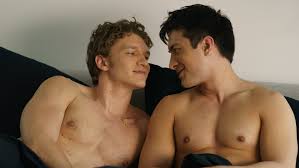
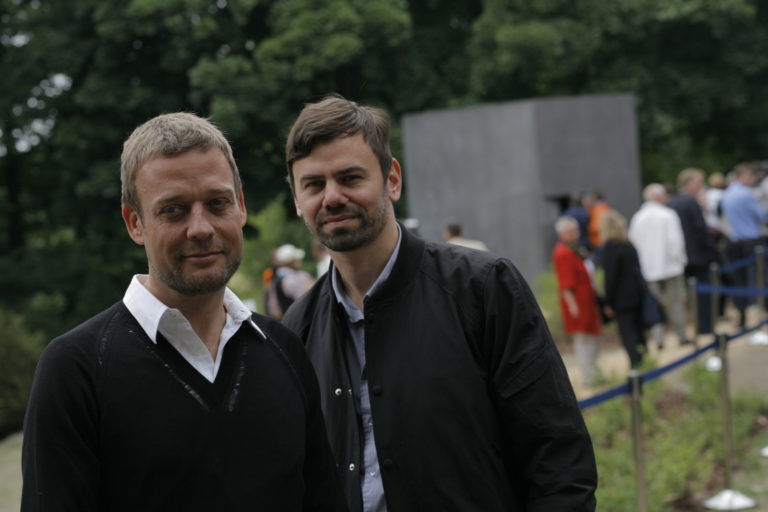
When I first viewed the photo, the portrait of the two young men struck me. Initially, I could not quite place why, but then it dawned on me. In the summer of 1980, I was a reservist in the Canadian Army. I served in the 30th Field Artillery Regiment based in Ottawa. It was the summer following my graduation from high school and before my enrollment at Queen’s University in Kingston. I went to Canadian Forces Base Petawawa to work as a driver in a transportation company through July and August. I worked with young men from other regiments who were posted there, too–we were in our late teens and early twenties.

Continue reading

I am the Love that Dare not Speak its Name. ― Alfred B. Douglas

This self-portrait, taken in Havelock, New Brunswick, shows the simplicity of the intimacy shared by Leonard Olive Keith (1891-1950) and Joseph Austin “Cub” Coates (1899-1965), who lived and loved in the first half of the 20th century. They were two men in love in Canada when male homosexuality was a crime in Canadian law, and public prejudice against male homosexuality was openly expressed. It was as simple as it is in the present. Some men are romantically and sexually attracted to men. It is a natural expression of human sexual attraction and behaviour. To those who knew and loved them, they were Len and Cub, a homosexual couple. To those who reviled male homosexuals, they were beneath contempt. They were what we call normal gays in the 21st century. Len was a harness racing driver who opened a garage after serving as an engineer in the Canadian Army in World War I. Cub was a mechanic who served as an engineer in the Canadian Army in World War I and volunteered for service in the Canadian Army in World War II. They were ordinary men who had a sense of duty, served their King and country as volunteers in the Great War, and found love and companionship in each other’s company. Despite their discretion, suspicion over their relationship in Havelock drove them apart in the 1920s. Len moved to the United States, where he lived out his days. Cub married in 1940. That fate was not unusual for gay men in Canada in the 20th century.

Continue reading

Those who forget the past are condemned to repeat it. — George Santayana

I am watching a Spanish Netflix series called Merli: Sapere Aude, and it is excellent. It is a dramedy, and the plot revolves around the protagonist, a young man named Pol Rubio, played by a fine young Spanish actor named Carlos Cuevas. Pol is a young man in his first year of studies in philosophy at a university in Barcelona. He has a bisexual orientation, and though he favours men, he does have dalliances with women occasionally. Pol is an anti-hero; while he generally strives to do good, he betrays a friend and his father when it serves his interests. He learns in the first episode of season two that he is HIV+. Pol is devastated by the news, despite the doctor’s assurance that the virus can be managed with treatment. He starts the regimen of taking the medication and tries to carry on. In a subsequent episode, Pol converses with a former co-worker who likely exposed him to the virus. His friend lost his job when the employer learned he was HIV+. The friend reminds Pol that people will feel sorry for you when you get cancer, but when you get HIV, you are viewed as a “dirty faggot.” Pol also converses with his employer, a mature gay man living with HIV. The employer lived through the AIDS crisis of the 1980s and 1990s and saw many gay men succumb to the disease. He recounted an incident where a friend was beaten to death for being queer. I bristled when I heard “queer” used to refer to a gay man, but I realized in the context of the anecdote that it was the attackers who called him a queer as they beat him to death. Queer is a slur, the last thing many gay men heard as they were beaten to death by gangs of thugs.

Continue reading

I consider promiscuity immoral. Not because sex is evil, but because sex is too good and too important. — Ayn Rand

In the summer of 1987, I lived with my boyfriend Fabio in a two-bedroom apartment in Kingston, Ontario. We met as students at Queen’s University and secretly carried on our love affair before moving in together. We became boyfriends during the burgeoning AIDS crisis. One evening, we sat in bed and watched a panel discussion held by one of the American News Networks–I cannot remember which one. What struck me was the inflammatory opening remark made by a conservative Congressman, whose name I do not remember, who asserted that “perversion and promiscuity” were to blame for the AIDS crisis. That sentiment was shared through the 1980s. I remember the stand-up comic Sam Kinison, who screamed in one of his routines that AIDS became an epidemic “because a few fags fuck some monkeys; they got tired of their own assholes.” Jerry Falwell claimed it was God’s judgement on homosexuals and blamed the spread of the disease into the innocent heterosexual population on bisexual men. Yes, AIDS was seen as a gay plague. Fabio and I, like countless gay men in the 1980s, were concerned. There was uncertainty about how easily the virus was transmitted. Before the dawn of the AIDS crisis, our biggest concern as students in the 1980s was the risk of an unwanted pregnancy or getting herpes.

Continue reading

The fact remains; chauvinism is prevailing. — Emma Bonino

I lurk on the Facebook page of a Canadian queer activist. I never knew he existed until he appeared unexpectedly on my news feed. I am a liberal-minded man; I believe in liberalism, pluralism, and equality in law and opportunity instead of collectivism and diversity, equity and inclusion. I don’t like what he says, and I find his attitude and behaviour contemptible. He makes me think of my fieldwork when I studied the sociology of religion and religious studies at Queen’s University in the 1980s. I interacted with various Christian faith communities, Orthodox, Roman Catholic, and Protestants. I met many people, some of whom were the worst hypocrites. The man in question is the archetypal example of a religious hypocrite. His smug self-righteousness is insufferable. He reminds me of Jerry Falwell’s unctuous self-righteousness; he is unbearable. What is worse is his bigotry. He does not listen to his critics. He dismisses them as anti-queer chauvinists and haters, promptly blocking them. If push came to shove, he would happily try to cancel them.

Continue reading

Gentlemen, you may include me out. — Samuel Goldwyn

I declined an audition recently. The audition call was for an actor to play a senior gay man, a closeted gay man married to a lesbian who had children and grandchildren. They enthusiastically come out late in life, embracing their “queerness” in all its grotesque flamboyance. The role is a lead for a series of ten episodes. I am okay with playing a gay man on screen, provided I can play him straight. By that, I mean playing a man who is gay. I am uncomfortable playing a gay man as a caricature, even in jest. That resembles a black actor playing a minstrel show role in jest. Mainly as I am on record for criticism of queer culture, I think that queer culture is demeaning and detrimental to the well-being and happiness of gay men and boys. I said in the note explaining my decision to drop the audition that the role was outside my character type. My character type is the mature father figure. As an older gay man, I do not want to risk being typecast as an older, flamboyant homosexual. 

Continue reading

I would say that I’m a feminist theorist before I’m a queer theorist or a gay and lesbian theorist. — Judith Butler

The quotation by Judy Rebick at the start of the Wikipedia article on lesbian feminism prompted me, in part, to discuss the detrimental effect of the infiltration of feminism on the gay rights movement. “According to Judy Rebick, a leading Canadian journalist and feminist activist, lesbians were and always have been “the heart of the women’s movement,” while their issues were “invisible” in the same movement.” (Cited in Wikipedia) Rebick is an American ex-pat who lives in Toronto. I could write at great length about her impropriety, but I digress. What I remember about Rebick is what she said in an interview in 1990 regarding feminism. She said, in short, that feminism was dominated and too focused on the interests of middle-class heterosexual white women. It needed to be more inclusive, broaden its scope to include lesbians and non-white women, and take up the cause of gay rights. When I heard that, I was aghast. “Whoa there, Medusa,” I thought, “stay in your own lane! No one asked for your help. Gay men are doing just fine in standing up for their civil rights.” Continue reading