Tag Archives: queens university

It is a great plague to be too handsome a man. — Plautus

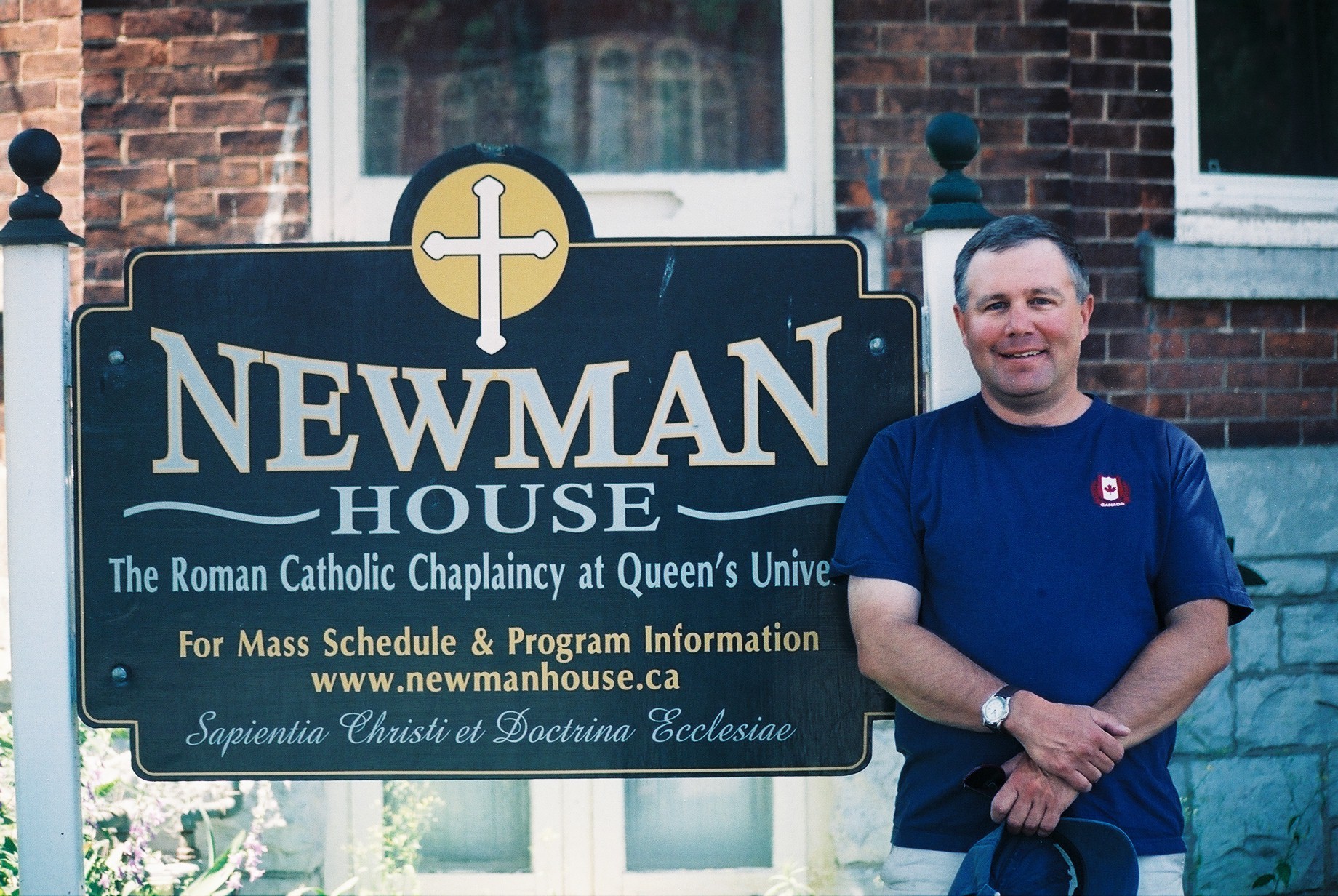
When I first viewed the photo, the portrait of the two young men struck me. Initially, I could not quite place why, but then it dawned on me. In the summer of 1980, I was a reservist in the Canadian Army. I served in the 30th Field Artillery Regiment based in Ottawa. It was the summer following my graduation from high school and before my enrollment at Queen’s University in Kingston. I went to Canadian Forces Base Petawawa to work as a driver in a transportation company through July and August. I worked with young men from other regiments who were posted there, too–we were in our late teens and early twenties.

Continue reading

A sound discretion is not so much indicated by never making a mistake as by never repeating it. — Christian Nestell Bovee

Life for gay youth in the Heartstopper universe is generally reasonable. The protagonists, Nick Nelson and Charlie Spring—Nick is bisexual, and Charlie is gay—find each other and become boyfriends despite elements of antigay prejudice that linger. They initially feel the need for discretion in their relationship. Naturally, they yearn for privacy also. The scene where Nick’s mum walked in on them as they got close and personal in Nick’s room illustrated the point. It made me think of what life was like for me as a young gay man in the 1980s. I was a student at Queen’s University in Kingston, Ontario, Canada, in the first half of the 1980s. It was the height of the AIDS crisis, and gay men were the most affected. There was a moral panic; people did not know for sure how HIV was transmitted and feared exposure to the virus. It was seen as a gay plague, something that gay men brought on themselves for their unprincipled ways. Trust me, it was not a good time to be a gay man. Discretion was necessary because the consequences would be dire if you were outed.

Continue reading

I consider promiscuity immoral. Not because sex is evil, but because sex is too good and too important. — Ayn Rand

In the summer of 1987, I lived with my boyfriend Fabio in a two-bedroom apartment in Kingston, Ontario. We met as students at Queen’s University and secretly carried on our love affair before moving in together. We became boyfriends during the burgeoning AIDS crisis. One evening, we sat in bed and watched a panel discussion held by one of the American News Networks–I cannot remember which one. What struck me was the inflammatory opening remark made by a conservative Congressman, whose name I do not remember, who asserted that “perversion and promiscuity” were to blame for the AIDS crisis. That sentiment was shared through the 1980s. I remember the stand-up comic Sam Kinison, who screamed in one of his routines that AIDS became an epidemic “because a few fags fuck some monkeys; they got tired of their own assholes.” Jerry Falwell claimed it was God’s judgement on homosexuals and blamed the spread of the disease into the innocent heterosexual population on bisexual men. Yes, AIDS was seen as a gay plague. Fabio and I, like countless gay men in the 1980s, were concerned. There was uncertainty about how easily the virus was transmitted. Before the dawn of the AIDS crisis, our biggest concern as students in the 1980s was the risk of an unwanted pregnancy or getting herpes.

Continue reading

Be yourself; everyone else is taken. — Oscar Wilde

A portrait of me at twenty-seven.

I hesitated on whether I was a homosexual or not through the 1980s. I experienced same-sex attraction, but the pressure to conform, to be heterosexual was pronounced. I was in university from the early to mid-1980s, and plenty of young women were around me. I dated a few and had sex with two, but nothing developed between us. Eventually, I had a short-lived love affair with another man, Mike, a fellow student. It ended badly, but undaunted, I continued dating men until I met a man, Fabio, and we moved into a two-bedroom apartment together. Yes, we had to keep up appearances to rent an apartment. As far as our landlords knew, we were two students sharing a flat. We lived together for a year and parted following our graduation. He became a flight attendant with Air Canada, and I went to graduate school. We maintained our relationship for several months this way until he left me for another man. The breakup was hard for me, and I decided that I would try to be heterosexual.

I met and befriended a handsome young man my age at work. Pierre and I spent a lot of time together. We went to nightclubs looking to meet women. One night, we met two young women, one of whom was quite drunk. Pierre and the drunken young lady hit it off. Her friend and chaperone and I had a pleasant conversation. At the night’s end, I offered the ladies a ride home with Pierre and me. They accepted. On the drive to their apartment building, Pierre and his date made out in the back seat. It made me jealous, and I drew her friend’s attention out of pettiness. She put a stop to it. Later, at Pierre’s flat, I stayed at his place often after these late nights out; as I settled into bed in his spare room, I reached out impulsively and touched his hand. He was startled and sat up abruptly and then retired to his room. I got the message, and we never mentioned the incident.

Still, I remember the morning we went for breakfast when he grinned shyly and told me he had something to say. My heart leapt as I imagined he would confess that he was gay and had feelings for me. Instead, he told me that he had his first sex with a woman the night before–oh, the disappointment. Thus, the moral of this anecdote is that whether you are a homosexual or heterosexual man, you can expect a bumpy ride in your affairs of the heart. But above all else, you should remain true to yourself. Deception is never the best policy, least of all in matters of the heart.

Posted by Geoffrey

The fact remains; chauvinism is prevailing. — Emma Bonino

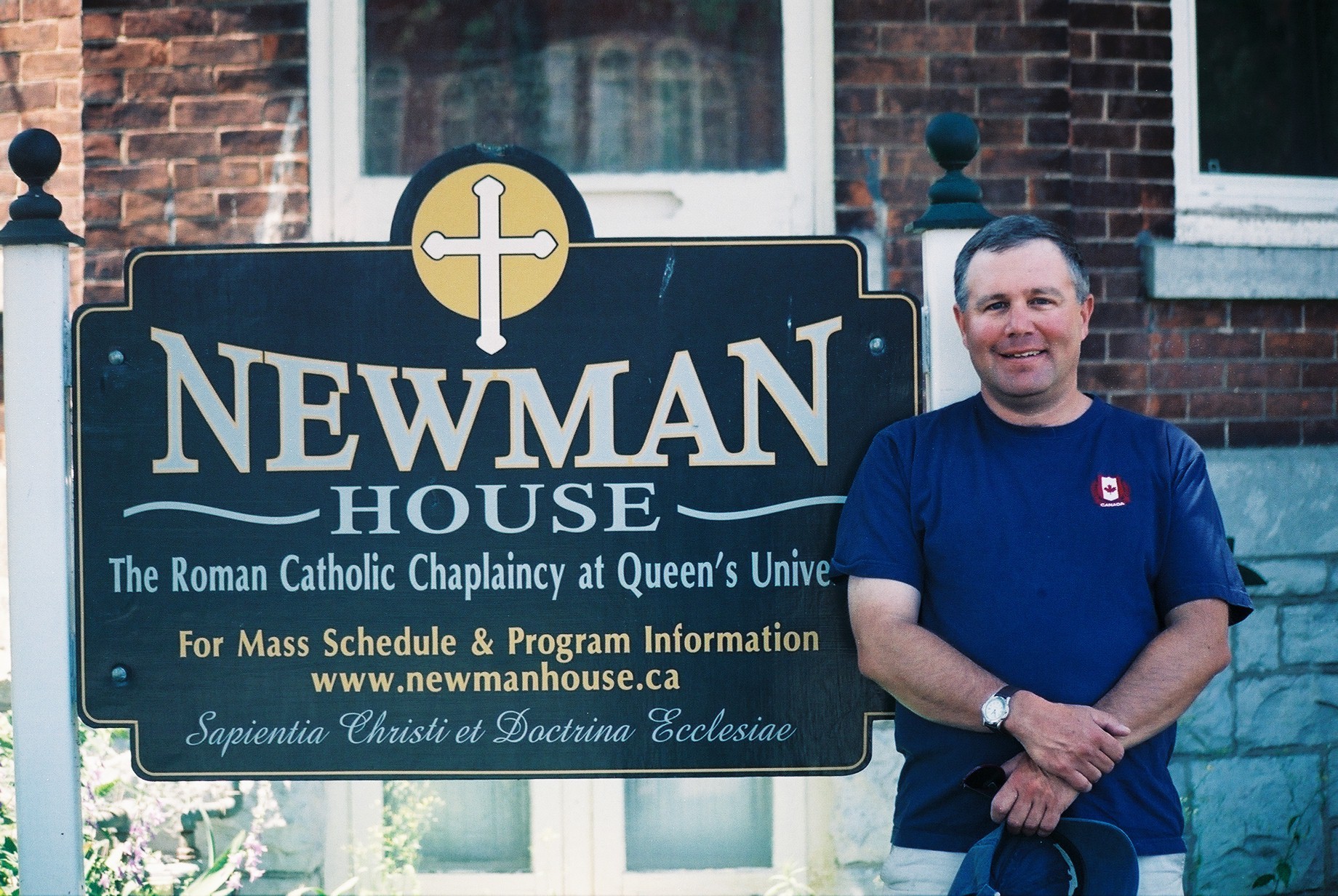
I lurk on the Facebook page of a Canadian queer activist. I never knew he existed until he appeared unexpectedly on my news feed. I am a liberal-minded man; I believe in liberalism, pluralism, and equality in law and opportunity instead of collectivism and diversity, equity and inclusion. I don’t like what he says, and I find his attitude and behaviour contemptible. He makes me think of my fieldwork when I studied the sociology of religion and religious studies at Queen’s University in the 1980s. I interacted with various Christian faith communities, Orthodox, Roman Catholic, and Protestants. I met many people, some of whom were the worst hypocrites. The man in question is the archetypal example of a religious hypocrite. His smug self-righteousness is insufferable. He reminds me of Jerry Falwell’s unctuous self-righteousness; he is unbearable. What is worse is his bigotry. He does not listen to his critics. He dismisses them as anti-queer chauvinists and haters, promptly blocking them. If push came to shove, he would happily try to cancel them.

Continue reading

Gay men don’t have much in common with lesbians. — Douglas Murray

The thing to remember is that gay is a demographic, not a coherent community. I am a gay man, a free thinker and a skeptic. I am proudly Anglo-Saxon; both sides of my family came from the British Isles, my father’s family from England and my mother’s from Ireland. Short of taking a DNA test, it is anyone’s guess what blend of ethnicities may be in my ancestry. However, that is neither here nor there. The fact remains that I am a middle-aged, gay white man. That said, those characteristics are irrelevant. Above all else, I am an individual. I am the man I am today because of my childhood and adolescence circumstances. I grew up in Canada in the latter half of the 20th century. I remember the Centennial celebrations in 1967 on Canada’s 100th birthday. I learned to take pride in my heritage, and the freedoms and opportunities afforded me as a Canadian. Still, growing up gay in my generation had its challenges. Continue reading

You can’t just look at someone and guess their sexuality. There’s no point in assuming that every gay man has just one personality type. — Cameron Monaghan

I had a similar experience to the one dramatized in the video. It was in the late spring, early summer of 1980. I had graduated from high school and eagerly looked forward to enrolling at Queen’s University in the Fall. I served as a Reservist in the Canadian Army in an artillery regiment in Ottawa and made friends with another young man I met in the unit. We became fast friends. I made friends with that man and others in my regiment. Still, I was ribbed, called the “Regimental Fag” in the banter among the ranks. When I came to the Christmas Party in 1979 with a young woman for my date, I was asked, “So, you like girls?” We spent time alone together at his mother’s house. We sat on the living room floor and listened to Beatles records on the stereo. I remember my overwhelming desire for him; I wanted to throw my arms around him and kiss him. I did not understand why I felt that way, which was horrifying. I dared not try it as that would have gone badly for me (assuming he was not gay or did not return my feelings). Had I been singled out as a homosexual in 1980, it would have meant dismissal from the Service. I would likely have lost my friends and become the butt of salacious gossip. 

Continue reading

“Nothing is more deceitful,” said Darcy, “than the appearance of humility. It is often only carelessness of opinion, and sometimes an indirect boast.” ― Jane Austen, Pride and Prejudice

Jacinda

Jacinda Ardern, Prime Minister of New Zealand, posing with Justin Trudeau, Prime Minister of Canada and Sadiq Khan, Lord Mayor of London.


I remember in 1968, my mother enrolled me in a class at the Holy Family parish in Kingston, Ontario. The class was to prepare me for my First Communion. I was seven years old, and in the class, I received my first lessons from the Roman Catholic Church in its perceived need that I learn humility. I have fleeting memories of the classes–on the whole, I think I enjoyed attending them. After our lesson, we got to play games like hide and seek. One night we got to watch That Darn Cat. The experience that lingers in my memory was delivered by the young woman who taught the course. She told us that Jesus, as a boy did not talk back to his parents and teachers; neither did he fight with other children. I think the children in the class took this lesson to heart. The experience was not unreasonable in and of itself–Christianity, Roman Catholic, Orthodox and Protestant, teaches that we should try to be like Jesus. Knowing that I talked back to my parents on occasion and got into scraps with my siblings left me feeling a little abashed–so I did my best to follow the example set by the boy Jesus. I learned at that early age that I am not perfect–that despite it, I should strive to do good and avoid doing evil. At the time, I did not appreciate that it was easy for the boy, Jesus, as He was Divine, unlike the rest of the children in the class and me. Continue reading

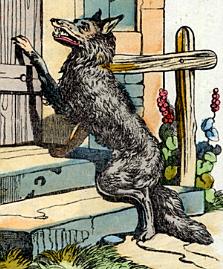
The wolf is always at the door, reprise.

wolfatthedoorwheel_of_fortune_british_museum_424x560

The wheel of fortune has turned, and as the Covid 19 pandemic spreads, Mika and I watch the chaos unfold around us. The pandemic is bad enough in its own right–just as the flu takes a terrible toll every year–the Covid 19 virus will take a dreadful toll before it runs its course. So far, we are making the best of staying home–we are naturally reclusive, we keep to ourselves at the best of times. It is unlikely that we will be exposed to the deadly virus. We are working from home–Mika works for the federal government at Statistics Canada, and I work in the MacOdrum Library at Carleton University. For the time being, we are drawing our salary and benefits–we accept that we are fortunate. Beyond that, our house is paid for, and we are out of debt and Mika informed me that we have enough in savings to sustain us for a while should one or both of us get laid off.

What concerns us the most is the economic upheaval that will result from the quarantine currently in place. We are among those fortunate enough to have our jobs and full salaries still–for the time being. We are in a comfortable position because of a blend of our efforts and good fortune. Both Mika and I experienced hardship in our lives. I did not land my full-time job at Carleton University until I turned thirty-nine. In the years before I started working at Carleton, I went through tough times. I struggled to get by on temp work and contract jobs–often in return for bum’s wages. I experienced long bouts of unemployment and went on social assistance when I was between jobs. I underwent personal bankruptcy over the Canada Student Loans I had no hope of repaying. Trust me, I tried to repay them, but given my spotted employment record in my thirties, the situation was hopeless. I never gave up. I applied myself during bouts of unemployment, working voluntarily in libraries to keep up my skills as a librarian.

Mika is hearing impaired. He has partial hearing only in his right ear. He was born this way and grew up with this disability. It did not stop him from excelling in school. He went to Queen’s University on an academic scholarship, where he studied mathematics and computer science. He works for Statistics Canada as a programmer. Yes, he applied himself to overcome his disability and had the good fortune to land a full-time job with the federal government shortly after he graduated from Queen’s in 1996. Mika is savvy at financial management too. It is his skill at managing money that ensured our prosperity as a couple. It is his skill and discipline in financial management–he is no spendthrift–that will get us through the crisis.

In our isolation, we have not lost track of the gravity of the situation. On a personal level, we have friends who fear that the loss of employment could lead to the loss of their home. Mika and I increased the wages for an acquaintance we employ to clean our house. We offered him a hand up, and he happily accepted. He was laid off from his day job and is waiting for his Employment Insurance benefits to kick in. Yes, the federal government instituted a guaranteed income for workers–seventy-five percent of their wages and salaries–and bailouts for small business owners who are forced to close for the duration of the crisis. It is like we are passengers on the RMS Titanic. The ship is sinking, and though there are not enough boats for all the passengers, the federal government has at least thrown out a lifeline to offer as many people as possible a chance to survive.

Mika and I are fortunate. We have each other and lots for which to be thankful. We kept the wolf from the door throughout our lives through a combination of our efforts and good fortune. It is distressing to think that the Covid 19 pandemic and the economic crisis it spawned could spell a drastic reversal of fortune for us. However, as I wrote in an essay I published last year: “The wolf is always at the door and you never know what fortune will bring but rather than despairing I accept I am still among the living and intend to live my life to the fullest.” Mika and I will keep our friends and families in our thoughts as we weather the storm. We hope that the current crisis is resolved with as little hardship as possible to everyone across the world.

Posted by Geoffrey and Mika


When a man does a queer thing, or two queer things, there may be a meaning to it, but when everything he does is queer, then you begin to wonder. ― Arthur Conan Doyle, The Case-Book of Sherlock Holmes

dictionary

002 (5)

Geoffrey and Mika in their library.

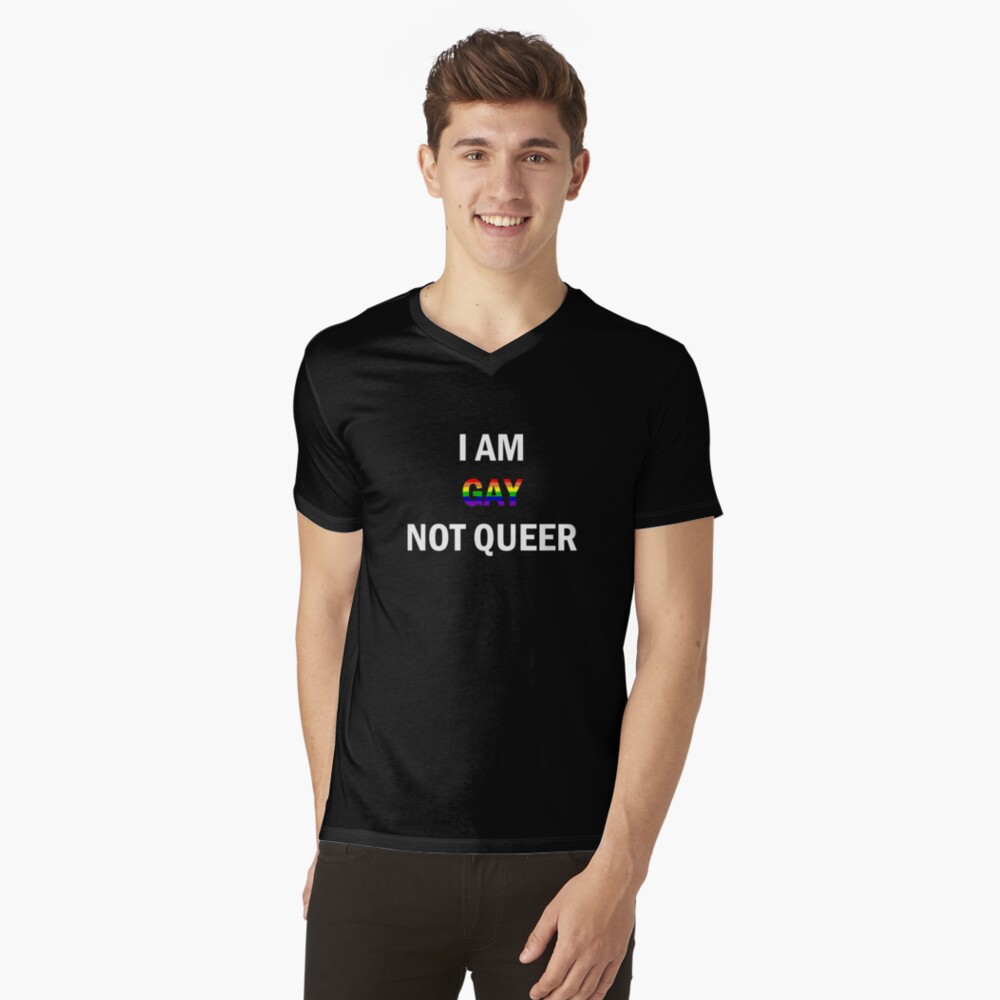
I cancelled my subscription to what was formerly Huff Post Gay Voices when the editorial director Noah Michelson changed the title to Huff Post Queer Voices earlier this year. Michelson justifies substituting “queer” in place of “gay” on the grounds the “word is the most inclusive and empowering one available to us to speak to and about the community.” (Noah Michelson as cited in OUT) The thinking behind it is people who are gay, lesbian, bisexual, transsexual, etc. form a “community,” that is they share a collective group identity. Following this train of thought, Michelson asserts “‘queer’ functions as an umbrella term that includes not only the lesbians, gays, bisexuals and transgender people of ‘LGBT,’ but also those whose identities fall in between, outside of or stretch beyond those categories, including genderqueer people, intersex people, asexual people, pansexual people, polyamorous people and those questioning their sexuality or gender, to name just a few.” (Noah Michelson as cited in OUT) I get that “queer” is used by some as a blanket term for gay, lesbian, bisexual, transsexual, etc., but I heartily disagree with and refute of this point of view. Continue reading