The Supreme Court of the United States (SCOTUS) handed down rulings this week concerning marriage equality in law for same sex couples at the federal and state levels. The Defense of Marriage Act (DOMA), the law which prohibited the federal government from recognizing same sex marriages, was declared unconstitutional and the court refused to hear the appeal of Proposition 8 in California, the ballot measure that changed the California Constitution to add a new section 7.5 to Article I, which reads: “Only marriage between a man and a woman is valid or recognized in California.” Proposition 8 was declared unconstitutional by a lower court, the Ninth Circuit Court of Appeals, in 2012 and the government of California chose not to defend the law on its appeal to SCOTUS. Consequently, a majority of the Justices refused to hear the appeal on the grounds the appellants did not have the constitutional authority, or legal standing, to defend the law in higher courts after the state refused to appeal its loss at trial. These rulings are the latest in an interesting history of legal battles over the definition of marriage in the United States.
Continue reading
Category Archives: History
The caliphate is the sign of Islamic unity, and the manifestation of the connection between the Islamic peoples, and an Islamic symbol which the Muslims are obligated to think about, and to be concerned with its issue — Imam Hasan al-Banna
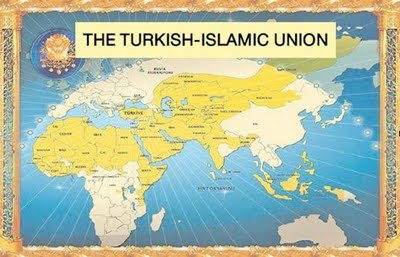
In previous essays I discussed the topic of religion and state in the Western world, notably the role of Christianity, Catholic and Protestant, in the development of Western civilization. For centuries the Catholic Church had authority in temporal affairs and collected taxes in much of Europe. Following the Reformation in the 16th century there were instances where Protestant Churches had authority in temporal affairs. Geneva under the rule of John Calvin (1509-1564), the founder of Calvinism, was governed according to the Ecclesiastical Ordinances which were administered by the Consistory. The Enlightenment in the 18th century introduced new thinking in the natural rights of man and the place of religion in society. Enlightenment thinkers valued religious liberty, but also favoured a strict separation between religion and the state. By the end of the 18th century there were the American and French Revolutions which introduced constitutional law and separation of church and state. In the 19th century the last vestiges of church authority in temporal affairs were swept away with capture of Rome and the Papal States in the drive to unify Italy as a nation. Constitutional guarantees of religious liberty and separation of religion and state make religious pluralism an integral part of Western societies in the present, while Christianity remains the dominant faith, people are free to practice any religion they wish or none at all. How does the history and development of the Islamic world then compare to that of the Western world? Continue reading
“The law of humanity ought to be composed of the past, the present, and the future, that we bear within us; whoever possesses but one of these terms, has but a fragment of the law of the moral world.” — Edgar Quinet (1803-1875)
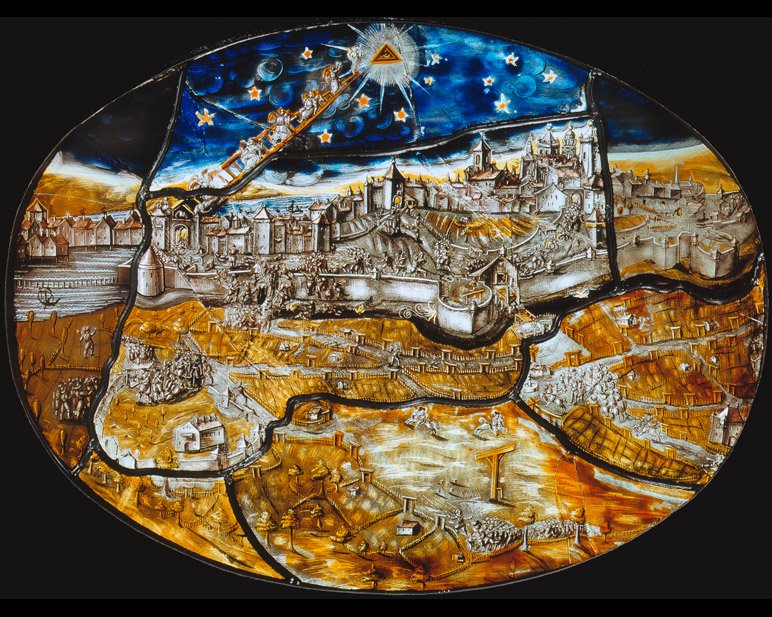
The papacy was in a very precarious position when Pope Pius IX convened the First Vatican Council on June 29, 1868. The drive for Italian unification was underway, with a revolution in 1848 that led to the exile of Pius IX in the castle of Gaeta in the Kingdom of the Two Sicilies from November 24, 1848, until his return to Rome in April 1850. The revolutionaries declared the Roman Republic comprised of the Papal States and in accordance with the ideals of the Enlightenment religious liberty and tolerance was enshrined in the new constitution by article 7 of the Principi fondamentali. Prior to this development only Christianity and Judaism were allowed by law to be practiced in the Papal States. The independence of the pope as head of the Catholic Church was guaranteed by article 8 of the Principi fondamentali. While providing constitutional guarantees of religious liberty and papal authority over the Catholic Church, the framers of the Constitution of the Italian Republic curtailed the temporal authority of the Pope which was referred to as an “historical lie, a political imposture, and a religious immorality” by a reform-minded priest, Abbé Arduini. (as cited in Wikipedia) However, by June 1849 the Roman Republic was overthrown by French military intervention and Pius IX restored in office, returning to Rome and reclaiming governance of the Papal States. Continue reading
I desire not to keep my place in this government an hour longer than I may preserve England in its just rights, and may protect the people of God in such a just liberty of their consciences… — Oliver Cromwell (1599-1658)
How often have I heard it said that it is the precepts of Christianity that are the foundation of Western civilization? When confronted with this claim, my typical response is to roll my eyes and think, “that old chestnut.” This is particularly the case when the claim is framed so egregiously by the likes of Glenn Beck, who stated, in referring to origins of the United States, “it is God’s finger that wrote the Declaration of Independence and the Constitution. This is God’s country; these are God’s rights. I have no idea what he wants us to do with them, other than protect them, and stand with Him.” (As cited in Tony’s Curricublog) While it is easy to dismiss such claims as stuff and nonsense, it is worth considering the role of religious belief in the growth and development of Western civilization, its transition from the primacy of Christian doctrine in public life to the rise of liberal democracy and the rule of law in the secular nation-state, though not in the way many religious folks, such as Glenn Beck, imagine it to be. Continue reading
Sapientia et Doctrina Stabilitas = Wisdom and knowledge shall be the stability of thy times–Queen’s University Motto
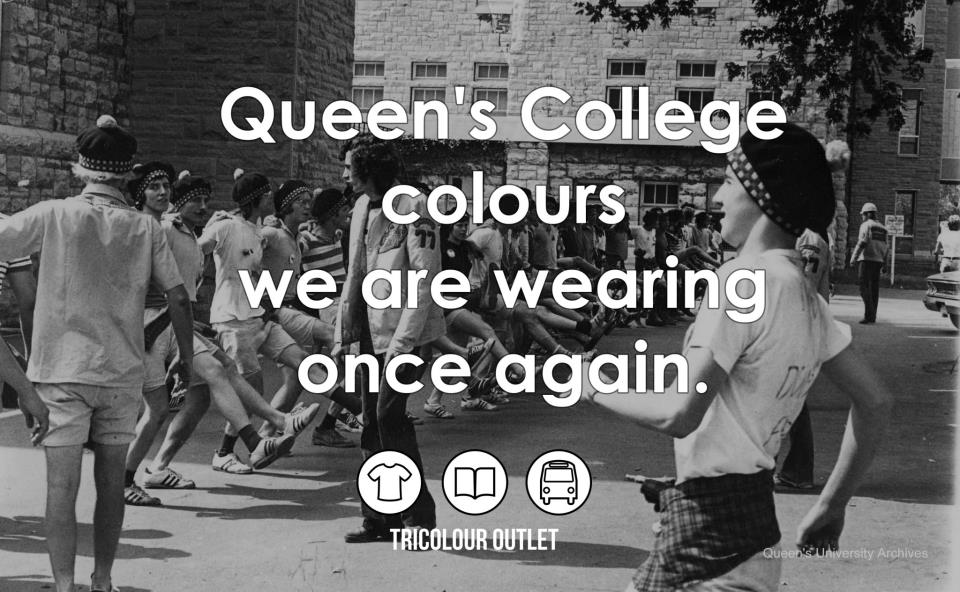
Mika and I are Queen’s grads. I graduated in 1986 with a B.A. in sociology. Mika graduated in 1996 with a B.Sc. in mathematics and computer science. The years I spent at Queen’s were a lot of fun for the most part. Political correctness was yet to take hold. Frosh week, was a drunken and ribald festival in which we were expected to use vulgarity liberally. I remember suffering quite a culture shock when my mother and father left me on campus. I have never cared for vulgarity personally and until I met with my Gael group later that day I was on the brink of calling and asking them to take me home. Once I was settled into my Gael group, no. 9–our group chant was “Number Nine is doing fine, the rest of you are fucking swine”–I began to feel better and joined in the ribald fun that continued for the rest of the week. Early into my first year at Queen’s, some students organized a game they called “Kill.” The game consisted of players who had completed an entry form giving their address on campus or in the student ghetto. Players were given an information sheet indicating where their victim might be found and to make a kill you used a toy pistol that fired plastic projectiles. To authenticate the kill there had to be a 2-3 witnesses who were acquainted with the victim. I made my first kill before I was gunned down outside my drama class. When you were killed, you gave the information form of the victim you were stalking to your assassin and the game continued. Somehow, in the current climate across college and university campuses, I do not think this game is played anymore. Continue reading
When truth is stranger than fiction
Molasses, what comes to mind when you hear someone mention molasses? “Slow as molasses in January” is an idiom, sometimes shortened to “slow as molasses” as its viscosity makes it pour slowly from a container. However, on January 15, 1919 in Boston, Massachusetts this idiom did not apply. A molasses tank measuring 50 ft tall, 90 ft in diameter and containing as much as 2,300,000 US gallons ruptured unleashing a flood of molasses between 8 and 15 ft high, moving at 35 mph, and exerting a pressure of 2 ton/ft². You may think this is an urban legend, but it really happened. That such a thing could happen seems absurd to the point of being comical, except 21 people lost their lives in the flood along with horses, dogs and other animals. Approximately 150 people were injured. Stephen Puleo documents this disaster in Dark tide: the great Boston molasses flood of 1919. Puleo describes the scene in the aftermath of the flood:
Molasses, waist deep, covered the street and swirled and bubbled about the wreckage. Here and there struggled a form — whether it was animal or human being was impossible to tell. Only an upheaval, a thrashing about in the sticky mass, showed where any life was… Horses died like so many flies on sticky fly-paper. The more they struggled, the deeper in the mess they were ensnared. Human beings — men and women — suffered likewise.
Portions of a residential neighbourhood adjacent to the ruptured molasses tank were flattened or damaged in the flood. Following the cleanup an inquiry into the disaster found poor construction, negligence in maintaining safety standards and higher than normal temperatures for January led to the disaster. The owners of the molasses tank, United States Industrial Alcohol Company (USIA), were found liable for the disaster and paid out $600,000 in out-of-court settlements. Today a small plaque stands as a monument to the incident, quite probably the most unusual thing to happen in the history of Boston.
Posted by Geoffrey
Pride and prejudice
In Canadian law, enshrined in the Constitution Act and in federal statutes, Northwest Territories Act, the Yukon Act and the Nunavut Act, what is known as separate school boards are allowed to operate along side the public school boards. The law allows for separate school boards to accommodate members of the Christian faith, either Catholic or Protestant, where their numbers make them a minority–this right does not apply to faiths outside Christianity–in the provinces of Alberta, Ontario and Saskatchewan and in the Northwest Territories, Yukon and Nunavut. In practice, most separate school boards serve Catholic populations. Both public and separate school boards are funded by provincial an territorial governments respectively and are subject to legislation governing curriculum. While there are separate, that is Catholic, school boards in these provinces and territories, they operate under the auspices of the provincial or territorial civil authority. The Catholic Church does not have a constitutional, legal, or proprietary interest in the separate school boards. In recent history there is an ongoing controversy over Catholic teachings on homosexuality and their place in the separate school curriculum in the Province of Ontario. Continue reading
Franky and Johnny
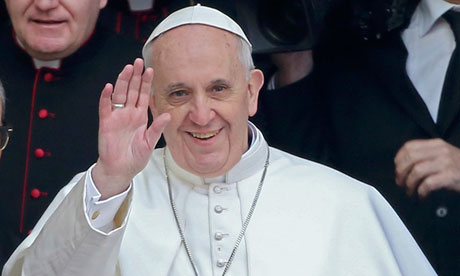
The election of Jorge Mario Bergoglio as Pope Francis I on March 13, 2013, strikes me as impressive in that he makes me think of one of his predecessors, Angelo Giuseppe Roncalli (1881-1963), who became Pope John XXIII (1958-1963). Like Pope John, he comes across as a humble and personable man. In choosing his regnal name, Pope John commented, “I choose John … a name sweet to us because it is the name of our father, dear to me because it is the name of the humble parish church where I was baptized, the solemn name of numberless cathedrals scattered throughout the world, including our own basilica [St. John Lateran]. Twenty-two Johns of indisputable legitimacy have [been Pope], and almost all had a brief pontificate. We have preferred to hide the smallness of our name behind this magnificent succession of Roman Popes.” (As cited in Wikipedia) As for Pope Francis, his choice of regnal name is inspired by Saint Francis of Assisi whom he admires as “the man of poverty, the man of peace, the man who loves and protects creation. These days we don’t have a very good relationship with creation, do we?” he said. “He is the man who gives us this spirit of peace, the poor man.” (As cited in Wikipedia)
If one of those bottles should happen to fall…
I have a passion for the study of history and for music. I love learning about the past and listening to music from across the ages. Occasionally the two passions become congruent as is the case of the opera by Francis Poulenc (1899-1963), “Dialogues des carmélites” (Dialogues of the Carmelites), composed in 1956. The opera is a fictionalized account of an order of Carmelite nuns who were executed during the Reign of Terror in the French Revolution and are remembered as the Martyrs of Compiègne. Continue reading
Coffee: that “Muslim drink”
Coffee, a hot beverage brewed from the ground beans of the Coffea plant, is a beverage I relish. I take two mugfuls of black coffee every morning, savouring the flavour as I sip it from my mug. The consumption of coffee is a pleasure so many people enjoy every day across the world. Coffee drinking originated in the Arab world in the 15th century and remains integral to Arab culture. Coffee was introduced to Europe in the 16th century by Venetian merchants who had trade relations with North Africa, Egypt and the Middle East. Coffee was approved as a Christian beverage by Pope Clement VIII (1536-1605) in 1600, having been frowned upon by some Christians as a “Muslim drink.” Kudos to His Holiness Pope Clement for doing so, as this delectable beverage and its consumption would play a role in transforming European society from the remnants of the social order of the Middle Ages to modernity. Continue reading