Category Archives: Law and Legislation

Sentence first, verdict afterwards. — Lewis Carroll

Jacinda

Jacinda Ardern, Prime Minister of New Zealand, poses with Justin Trudeau, Prime Minister of Canada and Sadiq Khan, Lord Mayor of London.

“Sentence first, verdict afterwards,” is the unreasonable demand issued by the Queen at the trial in the novel Alice in Wonderland by Lewis Carroll. What brings this quotation to mind is the absurdity of the emotional and knee jerk response to the terror attack in Christchurch, New Zealand by Prime Minister Jacinda Ardern. Her mawkish virtue signalling and condescension towards Muslims is truly cringe-worthy. I can only surmise this is a desperate effort to appease Islamists. It is a despairing ploy on her part to ward off a retaliatory attack on New Zealand by Islamists. If Jacinda Ardern thinks putting on a Muslim veil, encouraging New Zealanders to do the same, broadcasting the Islamic call to prayer over the airwaves, and having an Islamic prayer recited in parliament is going to impress Islamists, she is delusional. New Zealand had better brace itself for retribution from Islamists for the 50 Muslim citizens killed in Christchurch.

If this situation were not bad enough, Jacinda Ardern, moved ahead with a hastily crafted plan to prohibit specific makes and models of semi-automatic guns currently owned by New Zealanders. She justifies this decision in pointing to the dead and wounded in the Christchurch terror attack. This decision is emotionally driven, poorly thought out–there is zero public consultation. Sure, it is very popular with supporters of gun prohibition, both in New Zealand and across the world, but what does she expect to accomplish with this course of action? The people gunned down in the mosques in Christchurch were helpless against the attacker. It took New Zealand police 36 minutes to arrive on the scene. The fact that the attacker used semi-automatic rifles in the attack is incidental. The attacker in the shooting spree at the École Polytechnique at the Université de Montréal in 1989–in which 14 women were murdered–used a semi-automatic rifle. As the Report of the Coroner’s Investigation into the shooting at the École Polytechnique concluded: “with the unlimited ammunition and time that [the shooter–name redacted by the author] had available to him, he would probably have been able to achieve similar results even with a conventional hunting weapon, which itself is readily accessible.” (Report of Coroner’s Investigation)

There has not been an investigation into the attack on the mosques in Christchurch and the background of the perpetrator. Therefore, there is no rational basis on which to proceed with the prohibition of specified makes and models of semi-automatic guns as a response to this atrocity. Just as in Alice in Wonderland, Jacinta Ardern demands “sentence first, verdict afterwards.” Her maudlin virtue signalling and knee jerk jump to implement gun prohibition shows how weak and emotionally driven she is as Prime Minister. It does not inspire confidence. I hope the police and intelligence services in New Zealand are actively preparing for the likelihood of Islamist retaliation. It is sure to come. Beyond that, New Zealand’s gun owners are preparing for a fight with their government over the hasty decision to advance the prohibition of specific makes and models of semi-automatic guns. The dispute between New Zealand’s gun owners and their government only diverts attention from the threat of terrorism and ensures that New Zealanders are as helpless as the men, women and children gunned down in the mosques in Christchurch given the risk of future terror attacks.

I hope New Zealanders pull together and calmly and rationally take stock of their situation and work toward developing practical measures to ensure the peace and security of every individual and community in their society.

Posted by Geoffrey

The counterculture is always repackaged and made into a product. It’s part of America. — Jim Jarmusch

queer-theory-6-638

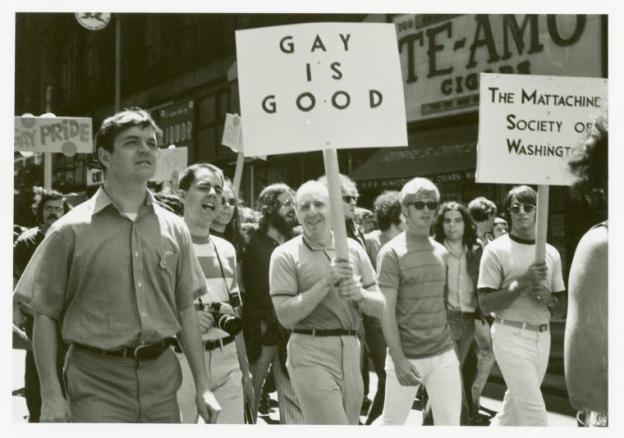
The history of the gay rights movement in the United States is fascinating. Is it a civil rights movement or is it a social justice movement? Is gay a demographic or is gay a community? Are gay rights the drive for civil rights, that gay people be at liberty, as individuals, to participate in society, openly, and free from persecution? Is it a social justice movement, the gay community driven by a countercultural constituency, intent on separating itself from mainstream culture? The answer to these questions is the gay rights movement in the United States is a combination of the two perspectives. To date, the successes of the gay rights movement in the United States are laudable. The repeal of laws that criminalized homosexual sex is a significant gain. Gay people live openly and are free to marry. True, elements of anti-gay prejudice linger, mainly from the ranks of the religious and socially conservative; moreover, there is only a patchwork of laws in place across the 50 states that prohibit discrimination in employment on the grounds of sexual orientation. However, I think these are the least of the worries for the gay rights movement in the United States. While both perspectives, civil rights and social justice, contributed to the success of the gay rights movement; what most concerns me about the current state of the gay rights movement in the United States is the influence of a decidedly countercultural constituency of U.S. society on the gay rights movement. In my opinion, this only undermines the successes of the gay rights movement in the United States and hinders its progress as a civil rights movement. Continue reading

Prejudice is a burden that confuses the past, threatens the future and renders the present inaccessible. — Maya Angelou

hisbrotherlovebubba

Prejudice is defined as “an unfair and unreasonable opinion or feeling, especially when formed without enough thought or knowledge.” (Cambridge Dictionary) I experience prejudice as both a gay man and gun owner. You may be familiar with the crude caricature of a gay man: that of a limp-wristed, effeminate man who speaks with a lisp and has an incessant compulsion for sex. You may also be acquainted with the cartoonish stereotype of gun owners as lower class white men who are uncouth and certain to tell you the only way you will take his gun from him is “from my cold, dead hands.” Certainly, these are the extreme ends of these particular prejudices. There are occasions in my life when people directed anti-gay slurs at me and to a lesser extent snide remarks about my supposed lack of virility and questionable mental health for being a gun owner. Still, the prejudice I face as a gay man and gun owner that really concerns me is far more indistinct than loutish people who call me “queer” or “gun nut” because they just do not know any better. Continue reading

Opposition brings concord. Out of discord comes the fairest harmony. — Heraclitus

maxresdefaulteris__goddess_of_strife__discord_and_chaos__smite__by_mitchumhody-d8ky9dqGrowing up I really enjoyed reading books of fairy tales, folklore, legends and myths. I especially enjoyed the books of ancient Greek myths I found at school. These were adaptations of the stories suitable for children, not the original texts in translation, of course. Of these stories, the one featuring Eris, the goddess of strife and discord, and the apple of discord was a favourite. In short, in the story the apple of discord is a golden apple with the inscription “for the fairest” the goddess Eris threw among the gods. Just who among the gods was fairest was open to question and led to disagreement between the goddesses Athena, Hera and Aphrodite over who among them was the fairest. What started as petty bickering between the three goddesses over this question ultimately brought about the Trojan War. The moral of the story as Timothy and Susan B. Gall note in The Lincoln library of Greek & Roman mythology refers to “the core, kernel, or crux of an argument, or a small matter that could lead to a bigger dispute.” (as cited in Wikipedia) What made me think of this story in the present is the discord generated by Motion 103 Systemic racism and religious discrimination, introduced in parliament on December 5, 2016 by the backbench Liberal MP from Mississauga Iqra Khalid and passed on March 23, 2017. Continue reading

If we cannot have moral feelings against homosexuality, can we have it against murder? Can we have it against other things? — Antonin Scalia

chechnyao-RUSSIA-ANTI-GAY-facebook

Disturbing reports are cropping up on various news sites concerning a pogrom against gay men in Chechnya carried out under the auspices of the Chechen government. Initial reports from Russian newspaper Novaya Gazeta claimed scores of men under suspicion of being gay were detained by Chechen authorities and three reported killed. Details are sketchy, and the Chechen government denied these reports calling them “absolute lies and disinformation.” (as cited in the Guardian) As yet it is hard to know what is going on, but as Ekaterina Sokirianskaia, Russia project director for the International Crisis Group, noted:

I have heard about it happening in Grozny [the Chechen capital], outside Grozny, and among people of very different ages and professions. […] The extreme taboo nature of the subject meant that much of the information was arriving second or third hand, and as yet there are no fully verifiable cases. […] It’s next to impossible to get information from the victims or their families, but the number of signals I’m receiving from different people makes it hard not to believe detentions and violence are indeed happening. (as cited in the Guardian)

For me, these reports coming from Chechnya come as a troubling reminder that despite the gains of gay rights movements in the Western World, notably the decriminalization and destigmatization of male homosexuality, gay men remain a population reviled by various cultural and religious elements in societies across the world. Continue reading

We can always call them Bulgarians. — Samuel Goldwyn (Attributed)

Plamen

Dining with my friend Plamen at a restaurant in Sofia.

sofia pride-960x600

“We can always call them Bulgarians,” is a quotation attributed by Wilella Waldorf to “Samuel Goldwyn or somebody” in the New York Post, September 17, 1937. (as cited in The origin of “Bulgarian” as a euphemism for sexual minorities.) The euphemism was used in American cinema and theatre when referring to gay and lesbian characters on screen and stage starting in the first half of the 20th century. What made me think of this is my recent trip to Bulgaria. I left Ottawa, bound for Bulgaria, on July 14 and returned on July 25. I met up with my friend Plamen in Sofia, the capital city of Bulgaria, and embarked on a whirlwind tour with him as my guide and interpreter. We had a great time. Bulgaria has a rich history and culture going back to antiquity, and today Bulgaria is a peaceful and prosperous society. During the tour, we did not visit any gay bars or clubs in Bulgaria as it was not on the itinerary; still, in the back of my mind, I wondered what life is like for gay people in Bulgaria. Do gay people live openly in Bulgarian society, or do they remain closeted and if so, why? Continue reading

When a man does a queer thing, or two queer things, there may be a meaning to it, but when everything he does is queer, then you begin to wonder. ― Arthur Conan Doyle, The Case-Book of Sherlock Holmes

dictionary

002 (5)

Geoffrey and Mika in their library.

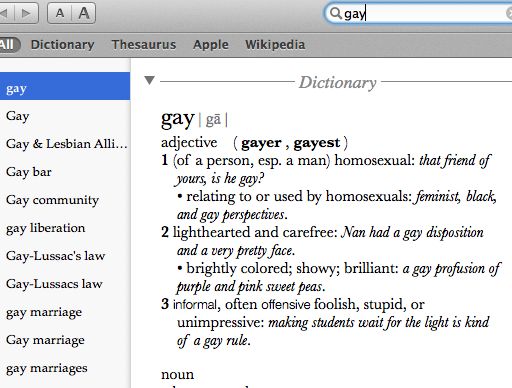
I cancelled my subscription to what was formerly Huff Post Gay Voices when the editorial director Noah Michelson changed the title to Huff Post Queer Voices earlier this year. Michelson justifies substituting “queer” in place of “gay” on the grounds the “word is the most inclusive and empowering one available to us to speak to and about the community.” (Noah Michelson as cited in OUT) The thinking behind it is people who are gay, lesbian, bisexual, transsexual, etc. form a “community,” that is they share a collective group identity. Following this train of thought, Michelson asserts “‘queer’ functions as an umbrella term that includes not only the lesbians, gays, bisexuals and transgender people of ‘LGBT,’ but also those whose identities fall in between, outside of or stretch beyond those categories, including genderqueer people, intersex people, asexual people, pansexual people, polyamorous people and those questioning their sexuality or gender, to name just a few.” (Noah Michelson as cited in OUT) I get that “queer” is used by some as a blanket term for gay, lesbian, bisexual, transsexual, etc., but I heartily disagree with and refute of this point of view. Continue reading

Today, the degradation of the inner life is symbolized by the fact that the only place sacred from interruption is the private toilet. — Lewis Mumford

unisex

boys

Using the toilet is a basic human need. Everyone needs to relieve themselves and defecate; these are natural bodily functions. As small children, going to the bathroom is typically a shameless affair. It is not unusual to do your business under the care and supervision of a parent or caregiver at home and in public washrooms. I remember accompanying my mother into public women’s washrooms as a small boy when I had to go. As we grow older, using the bathroom becomes a more private affair. People generally prefer to respond to the call of nature without an audience. This preference was brought home to me the time while serving in the Canadian Army I found myself and my regiment taking part in an exercise at a National Guard camp in Grayling, Michigan. In 1979 at least, the U.S. Army did not concern itself with privacy in the washroom facilities for the lower ranks. The urinal was an open trough, and the “shitters” were in a row in plain view. Pooping in plain sight of your comrades took a little getting used to. Fortunately, with existing etiquette concerning public washrooms, one is generally assured a modicum of privacy. Also, public washrooms are designated for men and women separately. This has long been the norm and quite reasonable, so how did public washroom etiquette become such a hot button issue in recent history? Continue reading

I think we must suspect that his ‘conversion’ was largely imaginary. […] Fine feelings, new insights, greater interest in ‘religion’ mean nothing unless they make our behaviour better. — C.S. Lewis

ambitionhypocrite-quotes-1

There is a great deal of discussion about Kim Davis, the clerk for Rowan County, Kentucky, jailed by U.S. District Court Judge David Bunning who found her in contempt of court on September 3, 2015. She defied the court order to issue marriage licenses as required in her capacity as County Clerk. Davis refuses to issue marriage licenses in protest of the Supreme Court of the United States ruling in Obergefell v. Hodges on June 26, 2015 that made same-sex marriage lawful across the United States. She justifies her refusal to issue marriage licenses on the grounds of her religious objection to same-sex marriage.  As she stated: “to issue a marriage license which conflicts with God’s definition of marriage, with my name affixed to the certificate, would violate my conscience.” (New York Times) The question here is whether her refusal to issue marriage licenses is genuinely a matter of faith and conscientious objection to same-sex marriage or, as many of her critics allege, simply a cynical ploy on her part to draw attention to herself and feather her own nest in the process. Is this nothing more than religious hypocrisy on her part? Continue reading

It is an infantile superstition of the human spirit that virginity would be thought a virtue and not the barrier that separates ignorance from knowledge. — Voltaire

brothersChastity-is-a-crown-of-triumph

“Virginity is like a balloon; one prick and it’s all over.” So went the punchline of a joke I remember from my high school days in the latter half of the 1970s. At the time virginity was primarily associated with the virtue of teenage girls and young, unmarried women; it was something they were expected to safeguard until marriage. It was an issue for adolescent boys and young bachelors too but in a different way. For a boy during adolescence and a young man, generally, he wanted to give up his virginity very much, and before marriage if possible. The sexual revolution was in full swing at the time. The period between the 1960s through the 1980s saw the legalization of abortion and birth control, the decriminalization of gay sex and gradual acceptance of people engaging in sex outside of marriage.  Nevertheless, I remember a degree of discomfort experienced by some of my classmates in grade ten health class when the sex education portion of the curriculum was presented. Despite the liberalized attitudes toward sex that emerged in the West during the sexual revolution, the age one chooses to give up their virginity (if at all) and to who remains a delicate issue. Continue reading