Reason obeys itself, and ignorance submits to whatever is dictated to it. — Thomas Paine


I learned what male genital cutting was in high school in health class. The teacher handed out mimeographed copies of pages from a textbook that had crude illustrations. He did this by mistake and hurriedly told us to ignore them, but the cat was out of the bag. Once I knew what it was, I began to think about it. I finally understood why other boys I knew over the years, particularly when I lived in England in the late 1960s with my family, looked different. A couple of years later, while one of my aunts visited, a news story came on the television about male genital cutting. She spoke up about how it could not be done to her firstborn son at birth because of complications following his birth, and that they never saw the need for it later. She had a second son years later, and he was left intact. I remember how pained my father looked when she related that to us. My mother was absent from the conversation, leaving the impression that she was behind it for my brother and me. As I grew older, I came to deeply resent what was done to me.


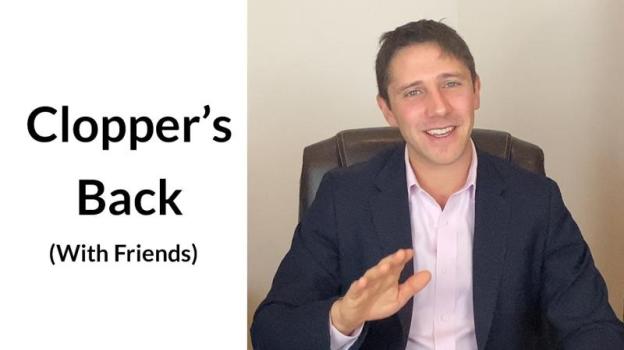
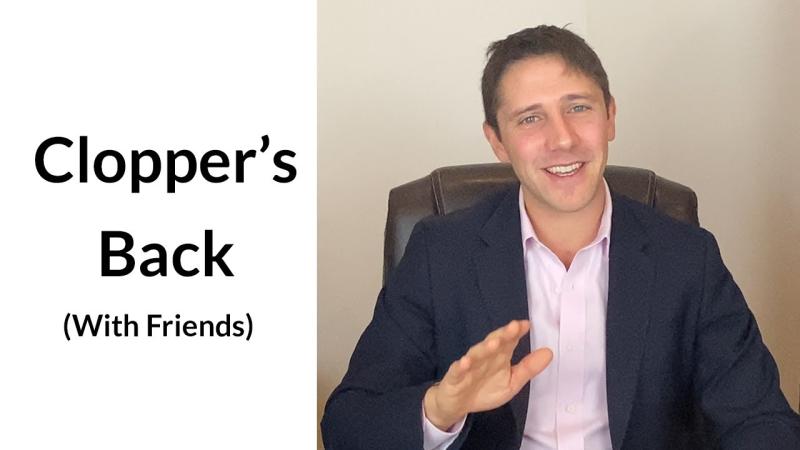
Hannah Arendt developed the concept of the banality of evil: “Evil comes from a failure to think. It defies thought for as soon as thought tries to engage itself with evil and examine the premises and principles from which it originates, it is frustrated because it finds nothing there. That is the banality of evil.” I am reminded of this when I note the dismay of Intactivists when Facebook posts pop up where a newborn boy is subject to involuntary genital cutting for any reason or no reason. I also note the angry reactions of the parents who do not care for the criticism or condemnation for doing this to their newborn sons. Yes, there is no shortage of people who see nothing wrong with it and will tell you to mind your own business. That and they retort, “Don’t choose it for your son if that’s how you feel!” I watch with interest as Eric Clopper, Attorney at Law and Founder & President of Intact Global, mounts a constitutional challenge in Oregon for the protection of boys from involuntary genital cutting. I stand with him and hope for the best as he and his team of lawyers proceed with the challenge. The challenge is based on the constitutional guarantee of legal equal protection. As the involuntary genital cutting of girls is prohibited in US law (in several states, not federally), the reasoning is that boys deserve equal protection. Though I am neither a lawyer nor a legal scholar, as a well-informed layman, I expect the challenge will be an uphill battle.

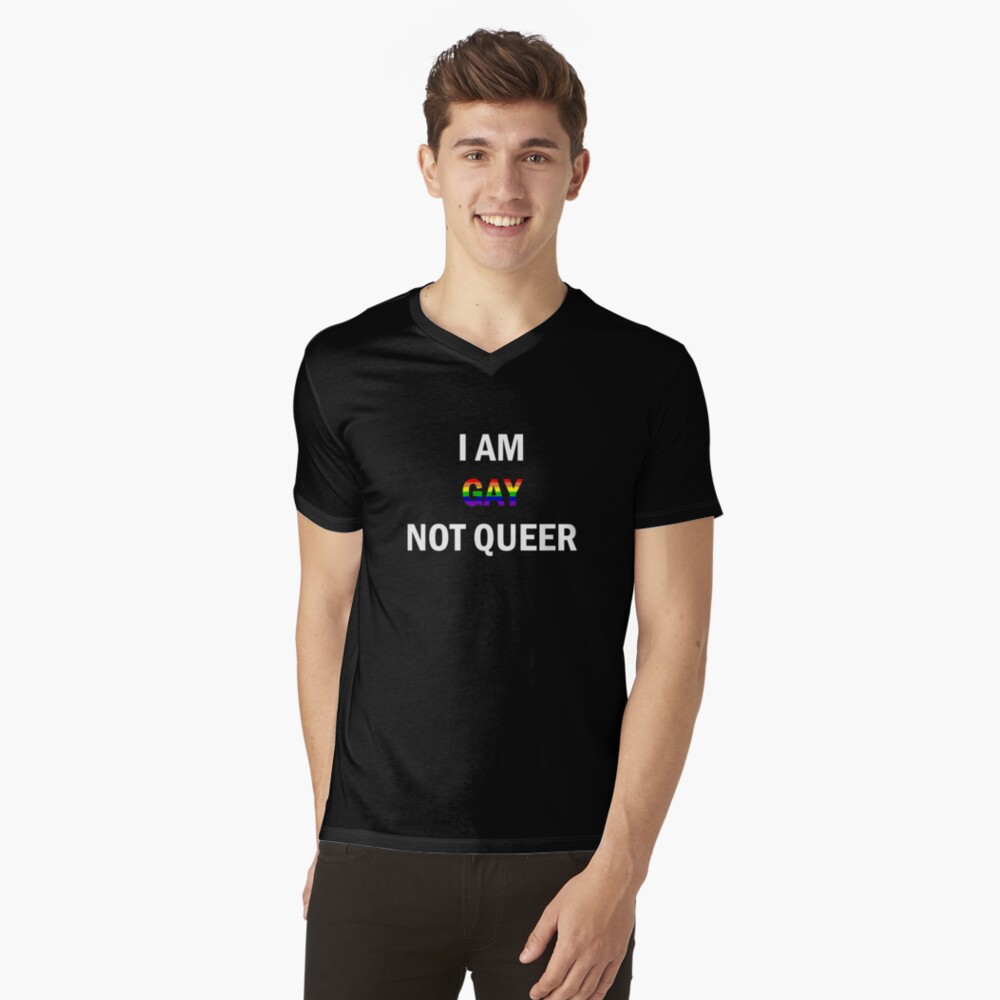
I am watching a Spanish Netflix series called Merli: Sapere Aude, and it is excellent. It is a dramedy, and the plot revolves around the protagonist, a young man named Pol Rubio, played by a fine young Spanish actor named Carlos Cuevas. Pol is a young man in his first year of studies in philosophy at a university in Barcelona. He has a bisexual orientation, and though he favours men, he does have dalliances with women occasionally. Pol is an anti-hero; while he generally strives to do good, he betrays a friend and his father when it serves his interests. He learns in the first episode of season two that he is HIV+. Pol is devastated by the news, despite the doctor’s assurance that the virus can be managed with treatment. He starts the regimen of taking the medication and tries to carry on. In a subsequent episode, Pol converses with a former co-worker who likely exposed him to the virus. His friend lost his job when the employer learned he was HIV+. The friend reminds Pol that people will feel sorry for you when you get cancer, but when you get HIV, you are viewed as a “dirty faggot.” Pol also converses with his employer, a mature gay man living with HIV. The employer lived through the AIDS crisis of the 1980s and 1990s and saw many gay men succumb to the disease. He recounted an incident where a friend was beaten to death for being queer. I bristled when I heard “queer” used to refer to a gay man, but I realized in the context of the anecdote that it was the attackers who called him a queer as they beat him to death. Queer is a slur, the last thing many gay men heard as they were beaten to death by gangs of thugs.
Continue reading
For years, I have tried to comprehend the feminist claim that gender identity and expression are a men’s rights issue. Finally, I got a little clarity listening to a radical feminist, a former member of the British Labour Party, discuss the issue of trans-identified men’s participation in women’s sports. She said something to the effect that “women’s sports matter more than men’s feelings.” I get it. Radical feminists made trans-identified men’s participation in women’s sports the focal point of their opposition to gender ideology. In doing so, they overlook the fact that it was pro-feminist governments, the Obama Administration in the United States, and the Liberal Government in Canada led by Justin Trudeau, that made gender identity and expression prohibited grounds of discrimination. It was based on Titles VII and IX in the Civil Rights Act of 1964 in the United States–provisions in the legislation that addressed women’s equality. In Canada, Trudeau openly and proudly proclaimed that he was a feminist and wanted everyone to convert. The Trudeau government amended the Canadian Human Rights Act with the passage of Bill C-16 to include gender identity and expression as prohibited grounds of discrimination. Continue reading

The Ottawa Public Library is on board with International Pride Month in 2024, which is fine. Public libraries have a mandate to promote literacy, and librarians have a mandate to uphold intellectual freedom, freedom of expression, and freedom to read. Among the activities at the Ottawa Public Library is facilitating a Q&A and book signing for a transgender author named Kai Cheng Thom. The description of the event promises attendees, “This highly engaged, practically focused presentation will leave you with: 1) A simple but powerful psychological framework for understanding love and resilience as a practice, 2) 3 simple tools that you can use to resolve conflict and engage in meaningful conversations with people who may hold bigoted or prejudiced beliefs, 3) A visualization practice for self-care and personal development.” (Ottawa Public Library)

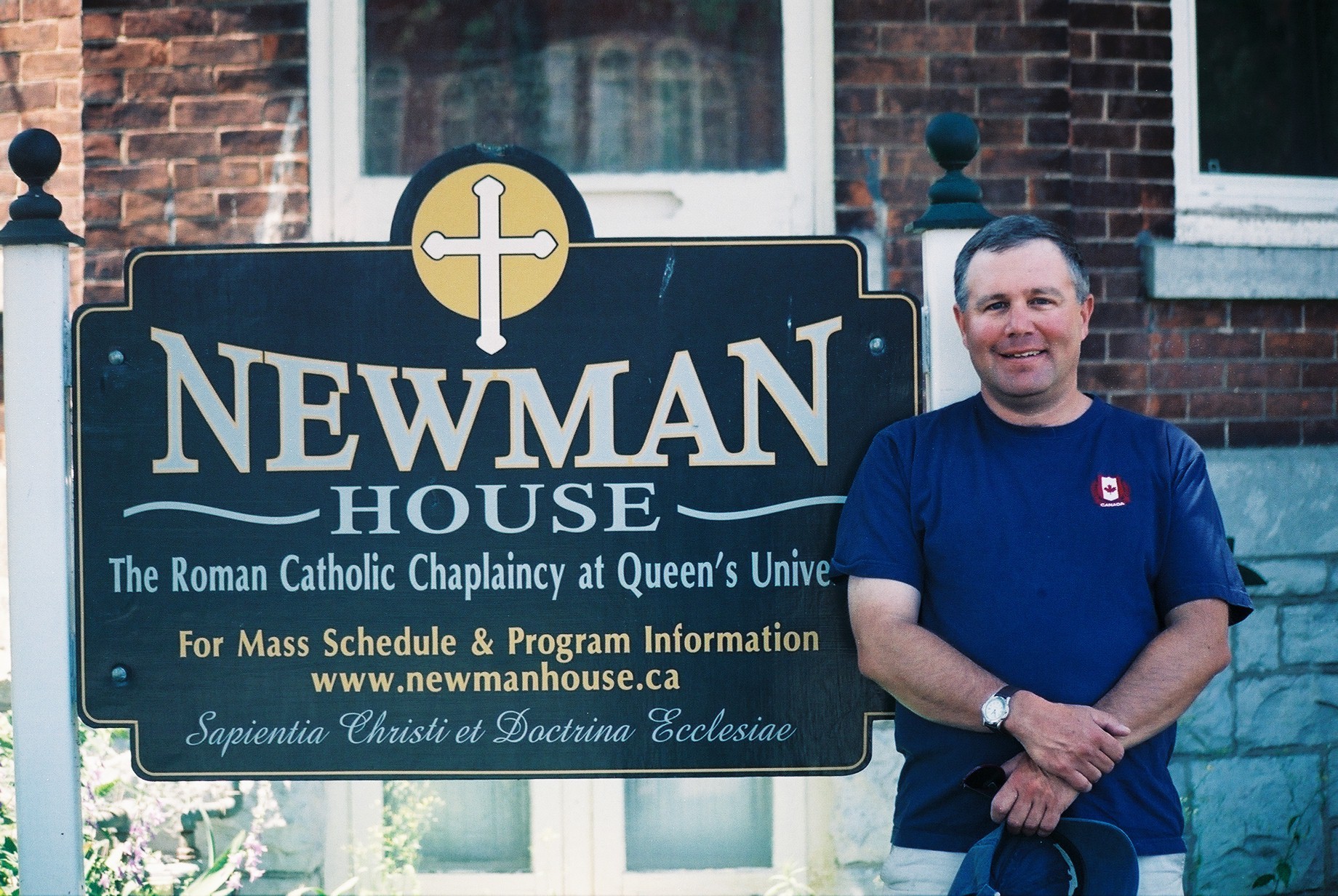
I lurk on the Facebook page of a Canadian queer activist. I never knew he existed until he appeared unexpectedly on my news feed. I am a liberal-minded man; I believe in liberalism, pluralism, and equality in law and opportunity instead of collectivism and diversity, equity and inclusion. I don’t like what he says, and I find his attitude and behaviour contemptible. He makes me think of my fieldwork when I studied the sociology of religion and religious studies at Queen’s University in the 1980s. I interacted with various Christian faith communities, Orthodox, Roman Catholic, and Protestants. I met many people, some of whom were the worst hypocrites. The man in question is the archetypal example of a religious hypocrite. His smug self-righteousness is insufferable. He reminds me of Jerry Falwell’s unctuous self-righteousness; he is unbearable. What is worse is his bigotry. He does not listen to his critics. He dismisses them as anti-queer chauvinists and haters, promptly blocking them. If push came to shove, he would happily try to cancel them.
Continue reading
I watched a documentary in the 1990s. It was about the investigation into the molestation and murder of a prepubescent boy in England in the 1970s. It was in the 1970s, so suspicion immediately fell on gay men. The police opened an investigation and right away approached known homosexuals and entered gay bars, asking men to come to the station for questioning. The men were photographed, and detailed notes were taken of the interviews. At one point, a gay man was accused by another of the crime. Once the accused realized that he was under suspicion, he told the detectives interviewing him that he was saying nothing without his solicitor present. It turned out that the accusation was wrongful and levelled against him by another man who had a grudge. Eventually, the culprit was found and confessed when presented with evidence against him. He was not a gay man and had no previous suspicion of sexual interference with boys. He said that the boy struggled during and after the assault and that he had not meant to kill him. The man was convicted of the crimes of manslaughter and sexually assaulting the boy. He was imprisoned for his crimes. With the case closed, the police destroyed the evidence they collected in their investigation: the photos and notes from the interviews of the gay men.
Continue reading
The thing to remember is that gay is a demographic, not a coherent community. I am a gay man, a free thinker and a skeptic. I am proudly Anglo-Saxon; both sides of my family came from the British Isles, my father’s family from England and my mother’s from Ireland. Short of taking a DNA test, it is anyone’s guess what blend of ethnicities may be in my ancestry. However, that is neither here nor there. The fact remains that I am a middle-aged, gay white man. That said, those characteristics are irrelevant. Above all else, I am an individual. I am the man I am today because of my childhood and adolescence circumstances. I grew up in Canada in the latter half of the 20th century. I remember the Centennial celebrations in 1967 on Canada’s 100th birthday. I learned to take pride in my heritage, and the freedoms and opportunities afforded me as a Canadian. Still, growing up gay in my generation had its challenges. Continue reading

Despite Rowling’s proposition being a non sequitur, she is correct that “woman is not an idea in a man’s head.” The majority of men, rational men at least, know that the definition of a woman is an adult human female. The definition of a woman she refers to in her topsy-turvy proposition is that of feminists who subscribe to queer theory and their half-baked metaphysics that spawned gender identity and expression. The belief that people have gendered souls is a feminist invention made into a sacred cow by the Woke with their triune doctrine of Equity, Diversity and Inclusion (more aptly known as Division, Iniquity and Exclusion). Yes, it was queer feminists such as Judith Butler and barbara findlay (she insists on spelling her name without capital letters) who fashioned gender identity and expression.
Continue reading