Category Archives: Philosophy

Nature made a mistake, which I have corrected. – Christine Jorgensen

For years, I have tried to comprehend the feminist claim that gender identity and expression are a men’s rights issue. Finally, I got a little clarity listening to a radical feminist, a former member of the British Labour Party, discuss the issue of trans-identified men’s participation in women’s sports. She said something to the effect that “women’s sports matter more than men’s feelings.” I get it. Radical feminists made trans-identified men’s participation in women’s sports the focal point of their opposition to gender ideology. In doing so, they overlook the fact that it was pro-feminist governments, the Obama Administration in the United States, and the Liberal Government in Canada led by Justin Trudeau, that made gender identity and expression prohibited grounds of discrimination. It was based on Titles VII and IX in the Civil Rights Act of 1964 in the United States–provisions in the legislation that addressed women’s equality. In Canada, Trudeau openly and proudly proclaimed that he was a feminist and wanted everyone to convert. The Trudeau government amended the Canadian Human Rights Act with the passage of Bill C-16 to include gender identity and expression as prohibited grounds of discrimination. Continue reading

Double standards do not diminish the reality of the truth. — T. Allen

The Ottawa Public Library is on board with International Pride Month in 2024, which is fine. Public libraries have a mandate to promote literacy, and librarians have a mandate to uphold intellectual freedom, freedom of expression, and freedom to read. Among the activities at the Ottawa Public Library is facilitating a Q&A and book signing for a transgender author named Kai Cheng Thom. The description of the event promises attendees, “This highly engaged, practically focused presentation will leave you with: 1) A simple but powerful psychological framework for understanding love and resilience as a practice, 2) 3 simple tools that you can use to resolve conflict and engage in meaningful conversations with people who may hold bigoted or prejudiced beliefs, 3) A visualization practice for self-care and personal development.” (Ottawa Public Library)

Continue reading

The fact remains; chauvinism is prevailing. — Emma Bonino

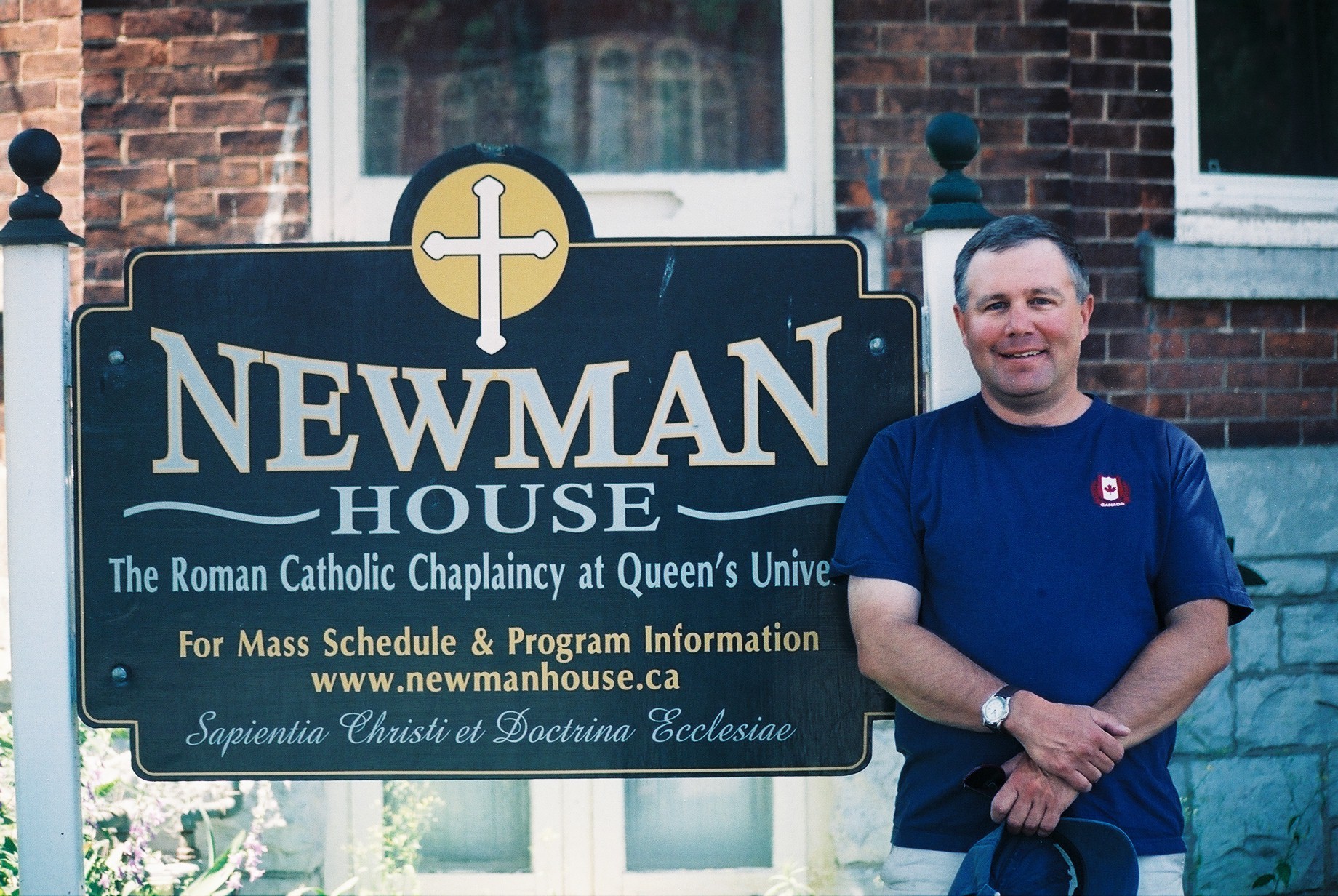
I lurk on the Facebook page of a Canadian queer activist. I never knew he existed until he appeared unexpectedly on my news feed. I am a liberal-minded man; I believe in liberalism, pluralism, and equality in law and opportunity instead of collectivism and diversity, equity and inclusion. I don’t like what he says, and I find his attitude and behaviour contemptible. He makes me think of my fieldwork when I studied the sociology of religion and religious studies at Queen’s University in the 1980s. I interacted with various Christian faith communities, Orthodox, Roman Catholic, and Protestants. I met many people, some of whom were the worst hypocrites. The man in question is the archetypal example of a religious hypocrite. His smug self-righteousness is insufferable. He reminds me of Jerry Falwell’s unctuous self-righteousness; he is unbearable. What is worse is his bigotry. He does not listen to his critics. He dismisses them as anti-queer chauvinists and haters, promptly blocking them. If push came to shove, he would happily try to cancel them.

Continue reading

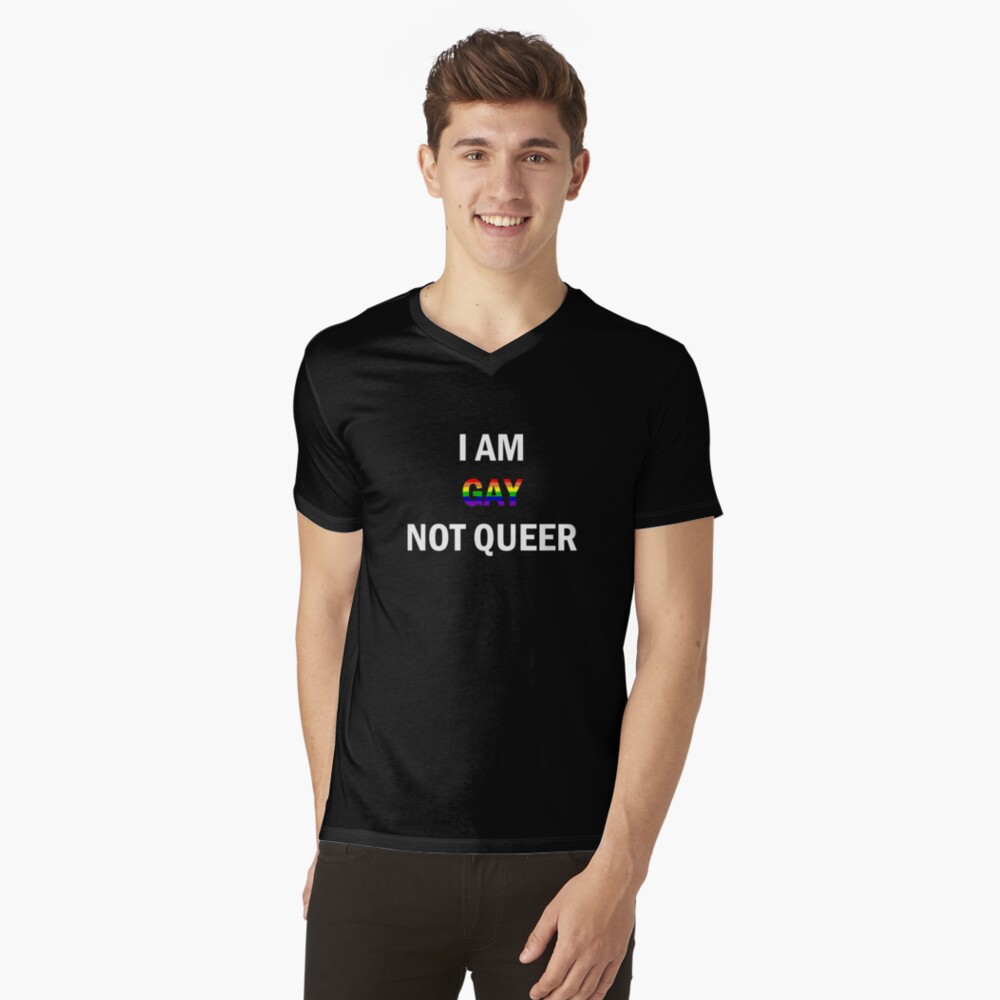
Being gay is like being left-handed. Some people are, most people aren’t and nobody really knows why. It’s not right or wrong, it’s just the way things are. — Unknown

I watched a documentary in the 1990s. It was about the investigation into the molestation and murder of a prepubescent boy in England in the 1970s. It was in the 1970s, so suspicion immediately fell on gay men. The police opened an investigation and right away approached known homosexuals and entered gay bars, asking men to come to the station for questioning. The men were photographed, and detailed notes were taken of the interviews. At one point, a gay man was accused by another of the crime. Once the accused realized that he was under suspicion, he told the detectives interviewing him that he was saying nothing without his solicitor present. It turned out that the accusation was wrongful and levelled against him by another man who had a grudge. Eventually, the culprit was found and confessed when presented with evidence against him. He was not a gay man and had no previous suspicion of sexual interference with boys. He said that the boy struggled during and after the assault and that he had not meant to kill him. The man was convicted of the crimes of manslaughter and sexually assaulting the boy. He was imprisoned for his crimes. With the case closed, the police destroyed the evidence they collected in their investigation: the photos and notes from the interviews of the gay men.

Continue reading

Gay men don’t have much in common with lesbians. — Douglas Murray

The thing to remember is that gay is a demographic, not a coherent community. I am a gay man, a free thinker and a skeptic. I am proudly Anglo-Saxon; both sides of my family came from the British Isles, my father’s family from England and my mother’s from Ireland. Short of taking a DNA test, it is anyone’s guess what blend of ethnicities may be in my ancestry. However, that is neither here nor there. The fact remains that I am a middle-aged, gay white man. That said, those characteristics are irrelevant. Above all else, I am an individual. I am the man I am today because of my childhood and adolescence circumstances. I grew up in Canada in the latter half of the 20th century. I remember the Centennial celebrations in 1967 on Canada’s 100th birthday. I learned to take pride in my heritage, and the freedoms and opportunities afforded me as a Canadian. Still, growing up gay in my generation had its challenges. Continue reading

‘Woman’ is not an idea in a man’s head. — J. K. Rowling

Despite Rowling’s proposition being a non sequitur, she is correct that “woman is not an idea in a man’s head.” The majority of men, rational men at least, know that the definition of a woman is an adult human female. The definition of a woman she refers to in her topsy-turvy proposition is that of feminists who subscribe to queer theory and their half-baked metaphysics that spawned gender identity and expression. The belief that people have gendered souls is a feminist invention made into a sacred cow by the Woke with their triune doctrine of Equity, Diversity and Inclusion (more aptly known as Division, Iniquity and Exclusion). Yes, it was queer feminists such as Judith Butler and barbara findlay (she insists on spelling her name without capital letters) who fashioned gender identity and expression. 

Continue reading

Accept the things to which fate binds you, and love the people with whom fate brings you together, but do so with all your heart. — Marcus Aurelius

A recurring theme in ancient Greek mythology is that you cannot outrun your fate. I think about that idea when I look back on my life and how, throughout it, people assumed that I was a homosexual. In grade school, a woman who lived across the street from my family was hired by my parents to prepare lunch for my siblings and me when we came home from school. I recall how she said that I would end up a confirmed bachelor. A confirmed bachelor was code for a homosexual historically. In middle school, I had a fleeting romance with a girl. When my seventh-grade teacher learned of our liaison, she expressed surprise; she never imagined me being interested in girls. In high school, I asked my brother if he would sound out a girl I fancied to see if she was interested in me. He reported that when the girl realized what he was up to, she retorted, “He’s a fairy!” When I joined the Canadian Army as a Reservist at eighteen, I entered the classroom one day at the Armoury and found a caricature of me as a pink bunny drawn on the blackboard captioned with anti-gay slurs. To their credit, the other recruits told me it was intended as a joke–that they liked me. Still, I wondered why people thought I was a homosexual.

Continue reading

Those who know that they are profound strive for clarity. Those who would like to seem profound to the crowd strive for obscurity. ― Friedrich Nietzsche,  The Gay Science

Listening to a true believer in gender identity and gender expression explain why they believe reminds me of when I was a pious Roman Catholic. I am sure I sounded much the same to non-believers when I explained why I had taken the leap of faith to practice Roman Catholicism. I accepted the theological arguments, the authority of Scripture, and the Apostolic Tradition that compose Roman Catholicism. I attended mass daily, said my prayers, and tried to do good and avoid doing evil. I regularly examined my conscience and tried to turn away from sin. It was reasonable to me at the time. Though I tried to be true to my faith, lingering doubt remained. Eventually, I realized that I could not continue as it was hypocritical of me. I stopped going to mass. I no longer believe in the claims of Christianity.

Continue reading

I would say that I’m a feminist theorist before I’m a queer theorist or a gay and lesbian theorist. — Judith Butler

The quotation by Judy Rebick at the start of the Wikipedia article on lesbian feminism prompted me, in part, to discuss the detrimental effect of the infiltration of feminism on the gay rights movement. “According to Judy Rebick, a leading Canadian journalist and feminist activist, lesbians were and always have been “the heart of the women’s movement,” while their issues were “invisible” in the same movement.” (Cited in Wikipedia) Rebick is an American ex-pat who lives in Toronto. I could write at great length about her impropriety, but I digress. What I remember about Rebick is what she said in an interview in 1990 regarding feminism. She said, in short, that feminism was dominated and too focused on the interests of middle-class heterosexual white women. It needed to be more inclusive, broaden its scope to include lesbians and non-white women, and take up the cause of gay rights. When I heard that, I was aghast. “Whoa there, Medusa,” I thought, “stay in your own lane! No one asked for your help. Gay men are doing just fine in standing up for their civil rights.” Continue reading

“Nothing is more deceitful,” said Darcy, “than the appearance of humility. It is often only carelessness of opinion, and sometimes an indirect boast.” ― Jane Austen, Pride and Prejudice

Jacinda

Jacinda Ardern, Prime Minister of New Zealand, posing with Justin Trudeau, Prime Minister of Canada and Sadiq Khan, Lord Mayor of London.


I remember in 1968, my mother enrolled me in a class at the Holy Family parish in Kingston, Ontario. The class was to prepare me for my First Communion. I was seven years old, and in the class, I received my first lessons from the Roman Catholic Church in its perceived need that I learn humility. I have fleeting memories of the classes–on the whole, I think I enjoyed attending them. After our lesson, we got to play games like hide and seek. One night we got to watch That Darn Cat. The experience that lingers in my memory was delivered by the young woman who taught the course. She told us that Jesus, as a boy did not talk back to his parents and teachers; neither did he fight with other children. I think the children in the class took this lesson to heart. The experience was not unreasonable in and of itself–Christianity, Roman Catholic, Orthodox and Protestant, teaches that we should try to be like Jesus. Knowing that I talked back to my parents on occasion and got into scraps with my siblings left me feeling a little abashed–so I did my best to follow the example set by the boy Jesus. I learned at that early age that I am not perfect–that despite it, I should strive to do good and avoid doing evil. At the time, I did not appreciate that it was easy for the boy, Jesus, as He was Divine, unlike the rest of the children in the class and me. Continue reading