Category Archives: Religion

Blog posts on religion and its influence in public life.

Being gay is like being left-handed. Some people are, most people aren’t and nobody really knows why. It’s not right or wrong, it’s just the way things are. — Unknown

I watched a documentary in the 1990s. It was about the investigation into the molestation and murder of a prepubescent boy in England in the 1970s. It was in the 1970s, so suspicion immediately fell on gay men. The police opened an investigation and right away approached known homosexuals and entered gay bars, asking men to come to the station for questioning. The men were photographed, and detailed notes were taken of the interviews. At one point, a gay man was accused by another of the crime. Once the accused realized that he was under suspicion, he told the detectives interviewing him that he was saying nothing without his solicitor present. It turned out that the accusation was wrongful and levelled against him by another man who had a grudge. Eventually, the culprit was found and confessed when presented with evidence against him. He was not a gay man and had no previous suspicion of sexual interference with boys. He said that the boy struggled during and after the assault and that he had not meant to kill him. The man was convicted of the crimes of manslaughter and sexually assaulting the boy. He was imprisoned for his crimes. With the case closed, the police destroyed the evidence they collected in their investigation: the photos and notes from the interviews of the gay men.

Continue reading

Gay men don’t have much in common with lesbians. — Douglas Murray

The thing to remember is that gay is a demographic, not a coherent community. I am a gay man, a free thinker and a skeptic. I am proudly Anglo-Saxon; both sides of my family came from the British Isles, my father’s family from England and my mother’s from Ireland. Short of taking a DNA test, it is anyone’s guess what blend of ethnicities may be in my ancestry. However, that is neither here nor there. The fact remains that I am a middle-aged, gay white man. That said, those characteristics are irrelevant. Above all else, I am an individual. I am the man I am today because of my childhood and adolescence circumstances. I grew up in Canada in the latter half of the 20th century. I remember the Centennial celebrations in 1967 on Canada’s 100th birthday. I learned to take pride in my heritage, and the freedoms and opportunities afforded me as a Canadian. Still, growing up gay in my generation had its challenges. Continue reading

Accept the things to which fate binds you, and love the people with whom fate brings you together, but do so with all your heart. — Marcus Aurelius

A recurring theme in ancient Greek mythology is that you cannot outrun your fate. I think about that idea when I look back on my life and how, throughout it, people assumed that I was a homosexual. In grade school, a woman who lived across the street from my family was hired by my parents to prepare lunch for my siblings and me when we came home from school. I recall how she said that I would end up a confirmed bachelor. A confirmed bachelor was code for a homosexual historically. In middle school, I had a fleeting romance with a girl. When my seventh-grade teacher learned of our liaison, she expressed surprise; she never imagined me being interested in girls. In high school, I asked my brother if he would sound out a girl I fancied to see if she was interested in me. He reported that when the girl realized what he was up to, she retorted, “He’s a fairy!” When I joined the Canadian Army as a Reservist at eighteen, I entered the classroom one day at the Armoury and found a caricature of me as a pink bunny drawn on the blackboard captioned with anti-gay slurs. To their credit, the other recruits told me it was intended as a joke–that they liked me. Still, I wondered why people thought I was a homosexual.

Continue reading

Those who know that they are profound strive for clarity. Those who would like to seem profound to the crowd strive for obscurity. ― Friedrich Nietzsche,  The Gay Science

Listening to a true believer in gender identity and gender expression explain why they believe reminds me of when I was a pious Roman Catholic. I am sure I sounded much the same to non-believers when I explained why I had taken the leap of faith to practice Roman Catholicism. I accepted the theological arguments, the authority of Scripture, and the Apostolic Tradition that compose Roman Catholicism. I attended mass daily, said my prayers, and tried to do good and avoid doing evil. I regularly examined my conscience and tried to turn away from sin. It was reasonable to me at the time. Though I tried to be true to my faith, lingering doubt remained. Eventually, I realized that I could not continue as it was hypocritical of me. I stopped going to mass. I no longer believe in the claims of Christianity.

Continue reading

People have gone down this spiral of cancel culture and the idea that everything is offensive. — Bianca Del Rio

Jason and I are good friends and hunting buddies.

Here is a photo of my friend and hunting buddy Jason and me. Jason is a family man and a man’s man; he is happily married and has a six-year-old daughter. Not long after we became hunting buddies some years ago, I told him I am gay. His response was, “and that will affect our hunting how?” Since then, our friendship and hunting partnership flourished. It was under Jason’s guidance I took up whitetail deer hunting. Hitherto, I was first and foremost a gamebird hunter. Upon taking up deer hunting with Jason as my mentor, I took four deer to date, starting in the 2012 season with a nice doe, a nine-point buck in 2016, a spike horn buck in 2017, and an eight-point buck in 2020. As a result, I have a presence online as a gay hunter. I publish a blog, Geoffrey’s Hunting Diary, subtitled “memoirs of a gay huntsman.” In addition, I have a YouTube channel called The Gay Huntsman. Those who view my videos and read my blog posts find the emphasis on hunting and not that I am gay. Yes, Jason gets it; my sexual orientation is irrelevant–it has no bearing on our shared passion for hunting and our friendship. Continue reading

Panic is a sudden desertion of us, and a going over to the enemy of our imagination. — Christian Nestell Bovee

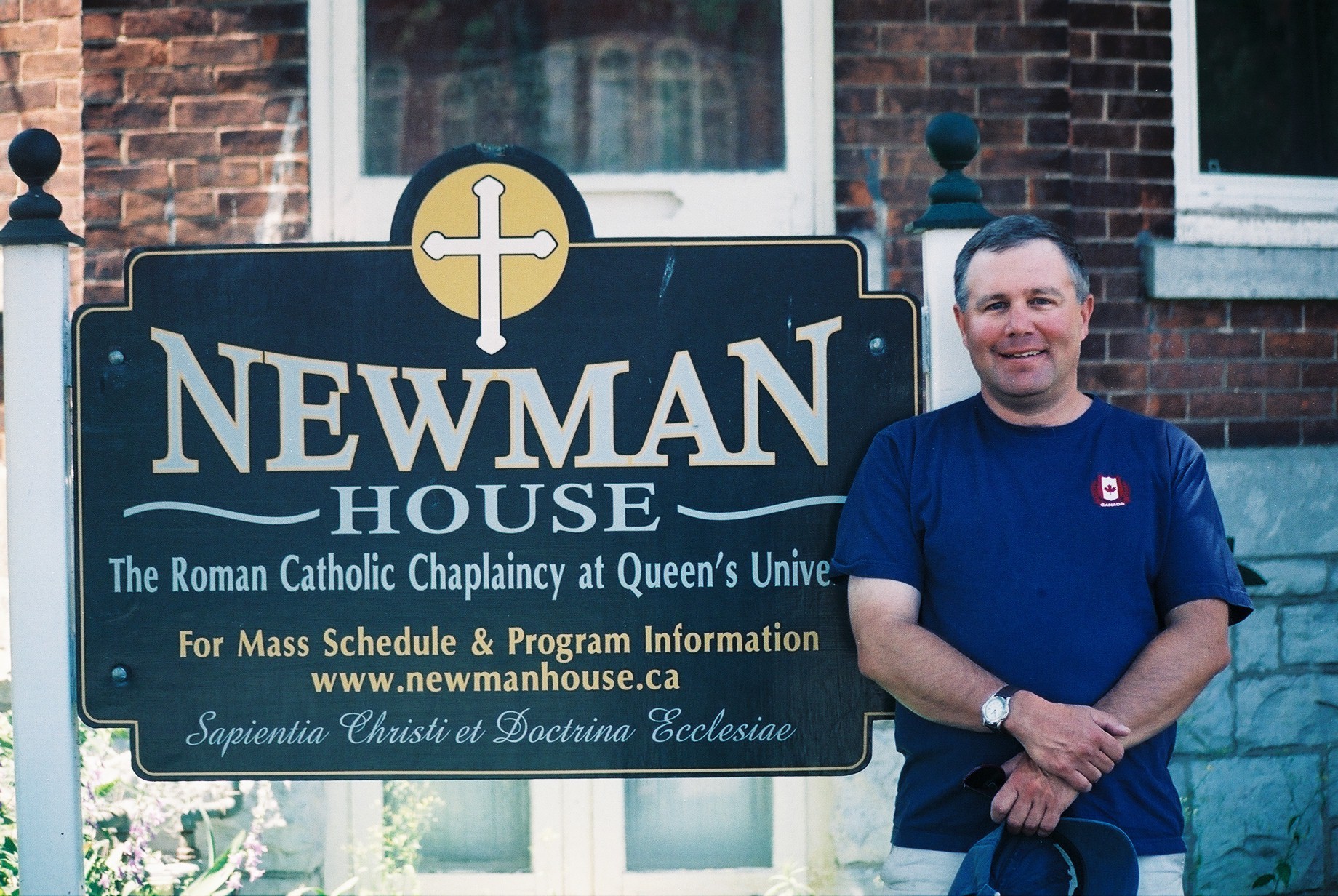
Though I always knew I was gay, it was not until the spring of 1989 that I accepted the reality. It was after a weekend visit with my friend and confessor, Father Basil Zion, a Russian Orthodox priest on the faculty of Religious Studies at Queen’s University, my alma mater. It was Father Basil who convinced me I should be true to myself. With newfound confidence, I took my first tentative steps out of the closet. I did not declare my homosexuality to the world at large. I made my first visit to the GO Centre, the gay community centre in Ottawa at the time. I started reading the local gay newspaper. Things were off to a good start, but my confidence took a hit when I read an article in the newspaper on a murder trial in Texas that sent a chill down my spine. In December 1988, Richard Lee Bednarski, an 18-year-old college student, was convicted of the murder of two gay men, Tommy Lee Trimble, 34, and Lloyd Griffin, 27. Berdanski was sentenced to thirty years in prison for his crime. It looked as though justice was seen to be done at face value–even though his crime merited a life sentence. However, in handing down his judgement, District Judge Jack Hampton openly expressed his disdain for the victims as they were gay.
 
In Hampton’s view, the fact that the victims were gay made it a lesser degree of murder. That and their killer was a good boy, a college student with no criminal record–it was only his first murder after all. He reached his conclusion despite the evidence that “he (Bednarski) and a group of North Mesquite High School students drove to Dallas’ Oak Lawn area to harass homosexuals the night of May 15.” The motive for his crime was the harassment of gay men. (AP News) As Hampton mused following the trial,
 
″These two guys that got killed wouldn’t have been killed if they hadn’t been cruising the streets picking up teen-age boys. […] I don’t much care for queers cruising the streets picking up teen-age boys […] I’ve got a teen-age boy. […] These homosexuals, by running around on weekends picking up teen-age boys, they’re asking for trouble. […] They really are.” (AP News)
 
The news report was a grim reminder that many still view gay men as predators who target adolescent boys for sex. As I said in previous posts, growing up gay, the onus on gay men my age was to prove to the broader society we are not perverts. Yes, the stigma of being a gay man lingered well into the 1980s. In fact, in 1980, when I served as a Reservist in the Canadian Army, I remember a fellow Reservist who spoke openly about going with friends to “roll the faggots” at Majors Hill Park in Ottawa. Also, in the spring and summer of 1989, several men were murdered in Ottawa. Their attackers killed them because they thought they were gay. At least one of the murdered men was not gay, not that it matters. The police investigated the murders, and charges were laid against the assailants who went to prison.
 
Looking back, I was not comfortable accepting my homosexuality as living with the stigma of being a gay man remained a heavy burden. Over time, however, through the hard work of brave gay individuals and the gay rights and human rights groups who supported them, gay men threw off the stigma. Life is good for gay men these days, but they should not forget their troubled history. As free and equal citizens, we must focus on our issues as gay men and not allow our movement to become diluted with causes, notably feminism and transgenderism, that have no bearing on our history and the present. As we exercise our right to life, liberty and the pursuit of happiness, certainly we can sympathize with those around us but not at the expense of our interest in the consolidation of the gains of the gay rights movement.
 
Posted by Geoffrey

“Nothing is more deceitful,” said Darcy, “than the appearance of humility. It is often only carelessness of opinion, and sometimes an indirect boast.” ― Jane Austen, Pride and Prejudice

Jacinda

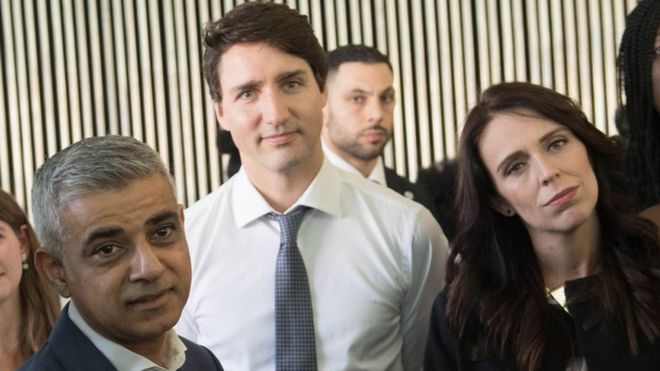
Jacinda Ardern, Prime Minister of New Zealand, posing with Justin Trudeau, Prime Minister of Canada and Sadiq Khan, Lord Mayor of London.


I remember in 1968, my mother enrolled me in a class at the Holy Family parish in Kingston, Ontario. The class was to prepare me for my First Communion. I was seven years old, and in the class, I received my first lessons from the Roman Catholic Church in its perceived need that I learn humility. I have fleeting memories of the classes–on the whole, I think I enjoyed attending them. After our lesson, we got to play games like hide and seek. One night we got to watch That Darn Cat. The experience that lingers in my memory was delivered by the young woman who taught the course. She told us that Jesus, as a boy did not talk back to his parents and teachers; neither did he fight with other children. I think the children in the class took this lesson to heart. The experience was not unreasonable in and of itself–Christianity, Roman Catholic, Orthodox and Protestant, teaches that we should try to be like Jesus. Knowing that I talked back to my parents on occasion and got into scraps with my siblings left me feeling a little abashed–so I did my best to follow the example set by the boy Jesus. I learned at that early age that I am not perfect–that despite it, I should strive to do good and avoid doing evil. At the time, I did not appreciate that it was easy for the boy, Jesus, as He was Divine, unlike the rest of the children in the class and me. Continue reading

What matters most is not ‘what’ you are, but ‘who’ you are. ― DaShanne Stokes


Blackface diptych

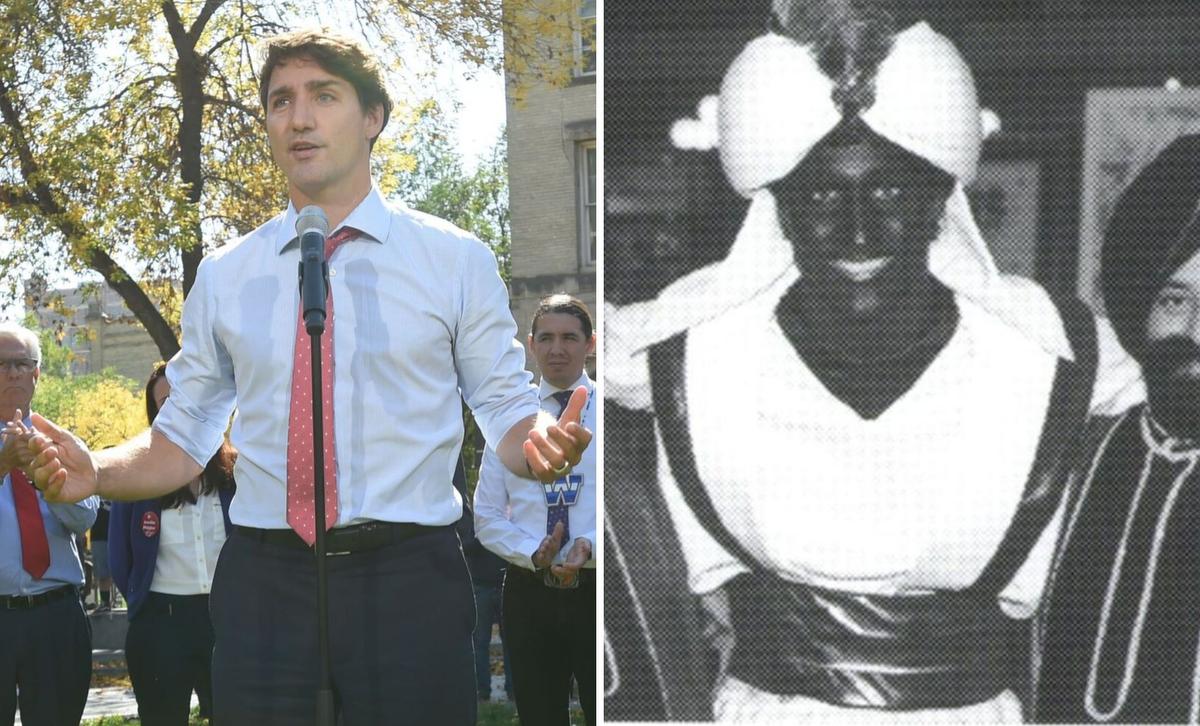
The Right Honourable Prime Minister of Canada Justin Trudeau.


A general election is scheduled for Canadians on October 21st. The governing Liberal Party with Justin Trudeau as its frontman seeks re-election. I think it likely the Trudeau Liberals will win re-election, and if so, this is bad news for Canadians. Since taking office in 2015, the Liberal government with the prancing popinjay that is Justin Trudeau consistently sowed division among Canadians. The Liberal government promoted its globalist agenda in pitting Canadians against one another via the imposition of identity politics on Canadians. Yes, the Liberals, with Justin Trudeau as their spokesman, pushed the belief that group identity matters more than individuality and the content of character in each of us as individuals. In doing so, the Liberal government instilled division rather than unity among Canadians since taking office in 2015. In 2019, Canadians are set against each other according to superficial differences such as race, ethnicity, religious affiliation, sex, sexual orientation and the like. Not only that but the Liberal government set a standard of political correctness to which not even the sanctimonious Justin Trudeau can adhere. Continue reading

I am a Canadian. — John Diefenbaker

Diefenbakercitizenship

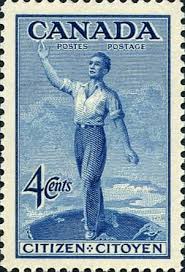
“I am a Canadian,” is the opening phrase in a notable quotation from the Right Honourable John Diefenbaker (1895-1979) 13th Prime Minister of Canada serving from June 21, 1957, to April 22, 1963. The entire quote reads as follows:

“I am Canadian, a free Canadian, free to speak without fear, free to worship God in my own way, free to stand for what I think right, free to oppose what I believe wrong, free to choose those who govern my country. This heritage of freedom I pledge to uphold for myself and all mankind.” (John Diefenbaker, House of Commons Debates, 1 July 1960)

Yes, John Diefenbaker was a proud Canadian–not only that he was a proud Canadian nationalist. As Prime Minister, Diefenbaker advanced the cause of Canadian nationalism. He envisioned:

One Canada, one Canada, where Canadians will have preserved to them the control of their own economic and political destiny. Sir John A. Macdonald gave his life to this party [Conservative]. He opened the West. He saw Canada from east to west. I see a new Canada – a Canada of the North! (John Diefenbaker, Winnipeg Manitoba, 12 February 1958)

Diefenbaker lived during the first century of Canada’s existence. He witnessed the development by which Canada gained independence from Britain. Until 1931, with the passage of the Statute of Westminster, the British government managed Canada’s international affairs. Diefenbaker saw Canada fight in two world wars and Canadians suffer through the Great Depression. He proudly saw the passage of the Canadian Citizenship Act in 1947. Canadians have much to be proud of in their history.

While Diefenbaker saw all that is good in Canada and being Canadian, he did not overlook the problematic moments in Canadian history. Canadian society was not without issues of unjust discrimination and prejudice. Diefenbaker observed:

From my earliest days, I knew the meaning of discrimination. Many Canadians were virtually second-hand citizens because of their names and racial origin. Indeed, it seemed until the end of World War II that the only first-class Canadians were either of English or French descent. As a youth, l determined to devote myself to assuring that all Canadians, whatever their racial origin, were equal and declared myself to be a sworn enemy of discrimination. (John Diefenbaker, Nowlan Lecture, 6)

Diefenbaker knew of the head tax charged on Chinese immigrants. The head tax, enacted in 1885, remained in effect until 1923. Chinese immigrants to Canada were charged (at its worst) $500 for admission to Canada as landed immigrants. From 1923 to 1947 Chinese immigration to Canada was banned. He knew of the internment of Japanese-Canadians in World War II. He was well aware of the Catholic-Protestant divide in Christendom that existed well into the 20th-century in Canada. I remember my mother telling me that my father had to convert to Roman Catholicism to marry her in 1960. My father’s family is Anglican. It is hard to believe such tribal divisions existed in Canada historically, but it is the reality.

Diefenbaker envisioned Canada as a nation organized according to the values of liberalism and pluralism. In shaping his vision of Canadian society, Diefenbaker was inspired, in part, by the passage of the Universal Declaration of Human Rights in 1948. The Universal Declaration of Human Rights was a Canadian-led effort. John Humphrey, a professor of law at McGill University, became director of the United Nations Division on Human Rights in 1946. Humphrey produced the first draft of the declaration. When Diefenbaker became Prime Minister in 1957, he set out to enact a piece of legislation–following up the passage of the Universal Declaration of Human rights–called the Canadian Bill of Rights. In addressing the historical issues of unjust discrimination and prejudice in Canada’s history, the Canadian Bill of Rights asserts in part:

 It is hereby recognized and declared that in Canada there have existed and shall continue to exist without discrimination by reason of race, national origin, colour, religion or sex, the following human rights and fundamental freedoms, namely,

  • (a) the right of the individual to life, liberty, security of the person and enjoyment of property, and the right not to be deprived thereof except by due process of law;

  • (b) the right of the individual to equality before the law and the protection of the law;

  • (c) freedom of religion;

  • (d) freedom of speech;

  • (e) freedom of assembly and association; and

  • (f) freedom of the press.

The Canadian Bill of Rights was superseded by the passage of the Constitution Act in 1982 with the entrenched Canadian Charter of Rights and Freedoms.

To his credit, John Diefenbaker laid the groundwork for our national identity as Canadians. Despite what so many people think currently, nationalism is not a dirty word. As I grew up the values of liberalism and pluralism–the proposition on which Canadian identity is built–that John Diefenbaker advocated were instilled in me. I remember the Centennial celebrations in 1967 fondly; the swell of national pride Canadians felt in celebrating Canada’s first 100 years as a nation. I am proudly Canadian. I am not ashamed of my European heritage–my ancestry goes back to the British Isles. In keeping with Diefenbaker’s vision, I view the people with whom I interact as individuals and judge them according to the content of their character. I reject the notion that expressing Canadian nationalism is racist, that it is a declaration of white supremacy. No, Canada is not a “post-national state.” Canadians are well within their rights to stand up for their national interest, and Canadian law guarantees them their right to speak up and do so.

I hope Canadians will not lose sight of the fact that Canada is a great place to live and Canadian citizenship is worth fighting for. Yes, John Diefenbaker got it right when he advanced the cause of Canadian nationalism and Canadians would do well to remember as they face the challenges of life in the 21st-century.

Posted by Geoffrey


Sentence first, verdict afterwards. — Lewis Carroll

Jacinda

Jacinda Ardern, Prime Minister of New Zealand, poses with Justin Trudeau, Prime Minister of Canada and Sadiq Khan, Lord Mayor of London.

“Sentence first, verdict afterwards,” is the unreasonable demand issued by the Queen at the trial in the novel Alice in Wonderland by Lewis Carroll. What brings this quotation to mind is the absurdity of the emotional and knee jerk response to the terror attack in Christchurch, New Zealand by Prime Minister Jacinda Ardern. Her mawkish virtue signalling and condescension towards Muslims is truly cringe-worthy. I can only surmise this is a desperate effort to appease Islamists. It is a despairing ploy on her part to ward off a retaliatory attack on New Zealand by Islamists. If Jacinda Ardern thinks putting on a Muslim veil, encouraging New Zealanders to do the same, broadcasting the Islamic call to prayer over the airwaves, and having an Islamic prayer recited in parliament is going to impress Islamists, she is delusional. New Zealand had better brace itself for retribution from Islamists for the 50 Muslim citizens killed in Christchurch.

If this situation were not bad enough, Jacinda Ardern, moved ahead with a hastily crafted plan to prohibit specific makes and models of semi-automatic guns currently owned by New Zealanders. She justifies this decision in pointing to the dead and wounded in the Christchurch terror attack. This decision is emotionally driven, poorly thought out–there is zero public consultation. Sure, it is very popular with supporters of gun prohibition, both in New Zealand and across the world, but what does she expect to accomplish with this course of action? The people gunned down in the mosques in Christchurch were helpless against the attacker. It took New Zealand police 36 minutes to arrive on the scene. The fact that the attacker used semi-automatic rifles in the attack is incidental. The attacker in the shooting spree at the École Polytechnique at the Université de Montréal in 1989–in which 14 women were murdered–used a semi-automatic rifle. As the Report of the Coroner’s Investigation into the shooting at the École Polytechnique concluded: “with the unlimited ammunition and time that [the shooter–name redacted by the author] had available to him, he would probably have been able to achieve similar results even with a conventional hunting weapon, which itself is readily accessible.” (Report of Coroner’s Investigation)

There has not been an investigation into the attack on the mosques in Christchurch and the background of the perpetrator. Therefore, there is no rational basis on which to proceed with the prohibition of specified makes and models of semi-automatic guns as a response to this atrocity. Just as in Alice in Wonderland, Jacinta Ardern demands “sentence first, verdict afterwards.” Her maudlin virtue signalling and knee jerk jump to implement gun prohibition shows how weak and emotionally driven she is as Prime Minister. It does not inspire confidence. I hope the police and intelligence services in New Zealand are actively preparing for the likelihood of Islamist retaliation. It is sure to come. Beyond that, New Zealand’s gun owners are preparing for a fight with their government over the hasty decision to advance the prohibition of specific makes and models of semi-automatic guns. The dispute between New Zealand’s gun owners and their government only diverts attention from the threat of terrorism and ensures that New Zealanders are as helpless as the men, women and children gunned down in the mosques in Christchurch given the risk of future terror attacks.

I hope New Zealanders pull together and calmly and rationally take stock of their situation and work toward developing practical measures to ensure the peace and security of every individual and community in their society.

Posted by Geoffrey