Growing up I really enjoyed reading books of fairy tales, folklore, legends and myths. I especially enjoyed the books of ancient Greek myths I found at school. These were adaptations of the stories suitable for children, not the original texts in translation, of course. Of these stories, the one featuring Eris, the goddess of strife and discord, and the apple of discord was a favourite. In short, in the story the apple of discord is a golden apple with the inscription “for the fairest” the goddess Eris threw among the gods. Just who among the gods was fairest was open to question and led to disagreement between the goddesses Athena, Hera and Aphrodite over who among them was the fairest. What started as petty bickering between the three goddesses over this question ultimately brought about the Trojan War. The moral of the story as Timothy and Susan B. Gall note in The Lincoln library of Greek & Roman mythology refers to “the core, kernel, or crux of an argument, or a small matter that could lead to a bigger dispute.” (as cited in Wikipedia) What made me think of this story in the present is the discord generated by Motion 103 Systemic racism and religious discrimination, introduced in parliament on December 5, 2016 by the backbench Liberal MP from Mississauga Iqra Khalid and passed on March 23, 2017. Continue reading
Category Archives: Religion
The poet’s expression of joy conceals his despair at not having found the reality of joy. — Max Jacob


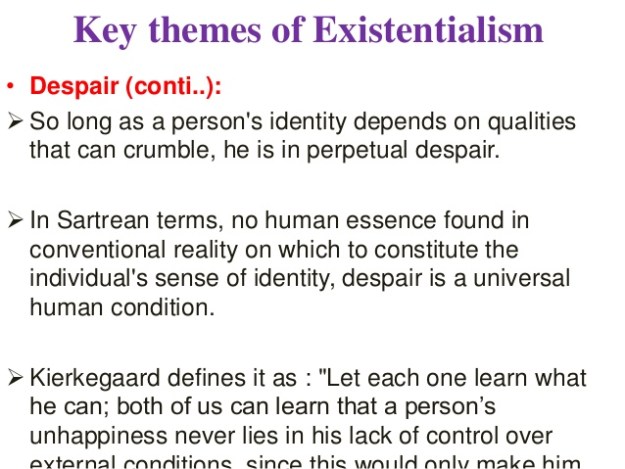
When the news broke on July 20, 2017, of the death by suicide of Chester Bennington, lead singer of the band Linkin Park, my immediate thought was “surely this is another hoax, like the bogus announcements over the internet of the deaths of Clint Eastwood and William H. Macy.” Sadly, it is true. Chester Bennington took his own life at the age of forty-one; this came as a horrible shock to his family, friends, bandmates and millions of adoring fans. He was in the prime of life, at the top of his game as a professional performer, between tours with his band in promoting their new album One More Light. It seemed he had everything to live for, yet he decided to end his life–this is, undoubtedly, hard for many to understand and who are left wondering why. I can only surmise that despite the fame and success he enjoyed in life, despair got him better, and he decided he could not go on living. Despair is part of being human and how human beings cope with it or not varies according to the individual. Continue reading
There is no odor so bad as that which arises from goodness tainted. — Henry David Thoreau


“Do you think religion inherently good?” This was a rhetorical question posed to the class when I was a student at Queen’s University in 1986. The class was in a course in the history of Christianity. The question was posed by Professor William P. Zion who was on the faculty of the department of religious studies and the Queen’s Theological College. He was also a Russian Orthodox Priest, Father Basil. We were young students who never stopped to think about this. Professor Zion answered the question for us, telling us, “no, religion is not inherently good.” He cited the fact that historically Christians gathered to watch people burned at the stake as a witness to their faith. Professor Zion had a bit of fun with the class in posing this question, but what made me recall this memory is the fact that the majority of humanity practices some kind of religion. I appreciate and understand the appeal of religion for people. I was a pious Roman Catholic myself for several years. Interestingly, it was Father Basil who supported and encouraged me to accept my gayness and continue practicing my faith. I concur with Professor Zion in that I do not think religion is inherently good. This puts me in a bind at times as I interact with people of various faiths, who view their faith as inherently good, right and desirable, both personally and informally in my daily life. Continue reading
I think we must suspect that his ‘conversion’ was largely imaginary. […] Fine feelings, new insights, greater interest in ‘religion’ mean nothing unless they make our behaviour better. — C.S. Lewis
There is a great deal of discussion about Kim Davis, the clerk for Rowan County, Kentucky, jailed by U.S. District Court Judge David Bunning who found her in contempt of court on September 3, 2015. She defied the court order to issue marriage licenses as required in her capacity as County Clerk. Davis refuses to issue marriage licenses in protest of the Supreme Court of the United States ruling in Obergefell v. Hodges on June 26, 2015 that made same-sex marriage lawful across the United States. She justifies her refusal to issue marriage licenses on the grounds of her religious objection to same-sex marriage. As she stated: “to issue a marriage license which conflicts with God’s definition of marriage, with my name affixed to the certificate, would violate my conscience.” (New York Times) The question here is whether her refusal to issue marriage licenses is genuinely a matter of faith and conscientious objection to same-sex marriage or, as many of her critics allege, simply a cynical ploy on her part to draw attention to herself and feather her own nest in the process. Is this nothing more than religious hypocrisy on her part? Continue reading
It is an infantile superstition of the human spirit that virginity would be thought a virtue and not the barrier that separates ignorance from knowledge. — Voltaire
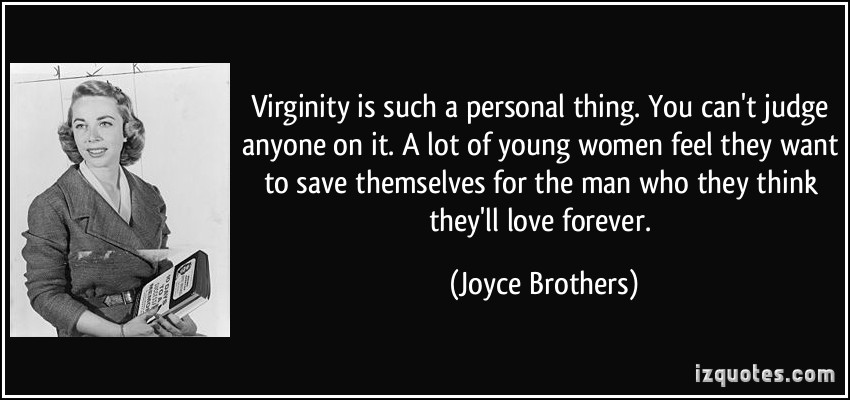
“Virginity is like a balloon; one prick and it’s all over.” So went the punchline of a joke I remember from my high school days in the latter half of the 1970s. At the time virginity was primarily associated with the virtue of teenage girls and young, unmarried women; it was something they were expected to safeguard until marriage. It was an issue for adolescent boys and young bachelors too but in a different way. For a boy during adolescence and a young man, generally, he wanted to give up his virginity very much, and before marriage if possible. The sexual revolution was in full swing at the time. The period between the 1960s through the 1980s saw the legalization of abortion and birth control, the decriminalization of gay sex and gradual acceptance of people engaging in sex outside of marriage. Nevertheless, I remember a degree of discomfort experienced by some of my classmates in grade ten health class when the sex education portion of the curriculum was presented. Despite the liberalized attitudes toward sex that emerged in the West during the sexual revolution, the age one chooses to give up their virginity (if at all) and to who remains a delicate issue. Continue reading
The Christian does no harm even to his foe. — Tertullian
In Christianity what is the appropriate response to aggression backed by force? There are, of course, the simple precepts found in the gospels to “turn the other cheek” and “love your enemies and pray for those who persecute you,” but does this necessarily rule out the use of force to deter such an act of aggression? On August 18, 2014, Pope Francis addressed this question in commenting on attacks perpetrated by ISIS against ethnic and religious minorities in Syria and Iraq. He endorsed the prospect of a United Nations intervention, noting:
In these cases, where there is an unjust aggression, I can only say that it is licit to stop the unjust aggressor […] I underscore the verb ‘stop.’ I’m not saying ‘bomb’ or ‘make war,’ just ‘stop.’ And the means that can be used to stop them must be evaluated. […] After World War II, the idea of the United Nations came about: It’s there that you must discuss, ‘Is there an unjust aggression? It seems so. How should we stop it?’ Just this. Nothing more.”(Business Insider)
The Vatican’s ambassador to the United Nations in Geneva, Archbishop Silvano Tomasi, clarified the Pope’s comment, stating, “Maybe military action is necessary at this moment.” (Business Insider) Is this standpoint consistent with Christian teachings?
If a couple of gay guys want to throw the gayest, most fabulous wedding of all time, the only way it should offend you is if you weren’t invited. ― Orlando Winters
“No shirt, no shoes, no service,” how often do I find a sign with these words posted when I approach the entrance to a restaurant or shop. There are hotels, bed & breakfasts, resorts and housing developments that refuse to allow children. I remember in 1968 my mother and father were asked by owners to leave their bed & breakfast in Cheltenham, England because other guests did not like that there were children on the premises. I remember back in 1987 when I was a student at Wilfrid Laurier University trying to find a place to live in Kitchener-Waterloo. It was a very tight market for student housing and for one of the ads I answered was told curtly by the voice on the telephone “we only take girls.” In 1989 back in Ottawa as I browsed ads in the newspaper for shared accommodation, I noticed more than a few that included the phrase “straight only.” People discriminate against others in the marketplace for various reasons, and in many cases, such as those listed above, it is lawful to do so, while in others it is not. The question is what is the appropriate response if you find yourself confronted with a situation when you think you are the butt of either unjust or unlawful discrimination. Continue reading
Society may no longer define marriage in the only way marriage has ever been defined in the annals of recorded history. Many societies allowed polygamy, many allowed child marriages, some allowed marriage within families; but none, in thousands of years, defined marriage as the union of people of the same sex. — Dennis Prager
Polygamy is a broad term and when applied to human society refers to plural marriage which means having more than one spouse. Facets of this term include polygyny which refers to a form of plural marriage in which a man is allowed to have more than one wife. Polyandry describes the form of plural marriage in which a women has more than one husband. Polyamory is a form of plural marriage where a family consists of multiple husbands and wives at the same time. These kinds of marriages existed historically in human societies and continue in some societies in the present. However, in the Western world monogamous marriage (between one man and one woman) became the norm and was enshrined in law with the rise of the Roman Empire and the ascendance of Christianity as the dominant faith. In the current controversy over same sex marriage raging across the U.S. critics and opponents of same sex marriage often refer to polygamy as a reason to deny marriage rights to same sex couples. The common assertion is that if monogamous marriage is redefined to allow same sex couples to marry, then people who want to enter into polygamous marriages will demand the right to to so pointing to the fact that same sex couples are free to marry. Is there any merit to this claim? Continue reading
Indiana wants me, Lord, I can’t go back there. — R. Dean Taylor
Indiana is a state situated in the mid-western United States and is well-known across the rest of the United States and much of the world for the Indianapolis 500-Mile Race, one of the most prestigious motor sports races in the world. This week, however, Indiana finds itself in the spotlight because of the passage of SB 101 the Religious Freedom Restoration Act into law. Governor Mike Pence signed the bill into law on March 26, 2015, and the law went into effect on July 1, 2015. The legislation is necessary, as supporters of the bill such as Eric Miller of Advance America asserted because, “it is vitally important to protect religious freedom in Indiana […] to help protect churches, Christian businesses, and individuals from those who want to punish them because of their Biblical beliefs!” (Victory at the State House) Those in opposition to the legislation such as Democratic Party Senate Minority Leader Tim Lanane fear the legislation allows for discrimination on religious grounds. As Senator Lanane stated, it is “extremely disappointing that Governor Pence endorses this out-of-touch, discriminatory legislation. Not only is this law unnecessary, it, unfortunately, has already portrayed our state as intolerant, unfriendly, and backwards; things which I believe most Hoosiers reject.” (as cited in the Indy Star) Governor Pence disagrees, stating “this bill is not about discrimination and if I thought it legalized discrimination I would have vetoed it.” (as cited in the Indy Star) Is religious freedom threatened in Indiana and does this legislation intended to safeguard religious freedom allow for legal discrimination on religious grounds? These questions merit further discussion. Continue reading
To maintain a joyful family requires much from both the parents and the children. Each member of the family has to become, in a special way, the servant of the others. — Pope John Paul II
Stefano Gabbana & Domenico Dolce are two successful designers of luxury clothing for men and women who launched their fashion house in 1985 in Legnano, Italy. They are gay and were romantically linked as a couple from 1980 to 2008 before parting ways, but their business partnership prevails and they continue to prosper. Recently, in an interview for the Italian magazine Panorama, they expressed controversial opinions on gay parenting and reproductive technologies. In short they asserted: “we oppose gay adoptions. The only family is the traditional one,” and “no chemical offsprings and rented uterus: life has a natural flow, there are things that should not be changed.” Stefano Gabbana added, “the family is not a fad. In it there is a supernatural sense of belonging.” (as cited in the National Post) This was not the first time they expressed this point of view. In an interview with an Italian newspaper in 2006, Stefano Gabbana stated: “I am opposed to the idea of a child growing up with two gay parents […] A child needs a mother and a father. I could not imagine my childhood without my mother. I also believe that it is cruel to take a baby away from its mother.” (as cited in Pink News) Their public condemnation of gay parenting came as a surprise to many as they are gay and were a couple for several years. Interestingly, in expressing their opinions on gay parenting and reproductive technologies they reflect the official position of the Catholic Church on these issues. These are serious issues and bear examination in greater detail as the rights and happiness of gay parents and their children are at stake. Continue reading