
Lady cardinal with a male courting her nearby.
Photographed and posted by Geoffrey

Lady cardinal with a male courting her nearby.
Photographed and posted by Geoffrey
Footage of Hera on her daily run in early March 2013. She is a plucky little dog, going for a run almost daily over the winter months. We stayed home only on days when the temperature dipped to -30 C and below. On this occasion we run into my hunting buddy Jason and his dog Nos.
Video produced and published by Geoffrey

Drake mallard getting ready for the spring nesting season 2013. He found his mate in the wintering grounds and followed her north to the marsh where she was hatched. This process ensures the gene pool is spread across the northern breeding grounds. He is not a particularly devoted husband and father. When his mate finishes laying her eggs and begins incubation, he happily takes his leave.
Photographed and posted by Geoffrey

Hen mallard getting ready for the spring nesting season 2013. She will need lots of protein to get ready for egg laying, feeding on invertebrates that fill the ponds and puddles formed from melting snow.
Photographed and posted by Geoffrey


Is it more comfortable for gay actors to play straight characters or for heterosexual actors to play gay roles? As an actor myself, this question crossed my mind. I took training in acting techniques at the Ottawa Theatre School, in workshops with professional theatre companies and with an acting coach. I appeared in many amateur stage productions over the years. The three actors in the photographs above are known for playing gay and heterosexual characters in British television series. Russell Tovey, the man seen embracing the woman, is famous for playing heterosexual characters in Being Human and Him & Her. He is gay. James Sutton, the young man wearing the green and a cream striped pullover, and Guy Burnet, seated next to him, became widely known for their portrayal as gay characters in a relationship in the British soap opera Hollyoaks. Both of these men are heterosexual. Having seen their respective performances, I am duly impressed. They are fine actors. They were able to successfully inhabit their characters, gay and heterosexual, giving a believable portrayal; still, I wonder, is it easier for a gay actor to play straight or for a straight actor to play gay? Continue reading

I have a passion for the study of history and for music. I love learning about the past and listening to music from across the ages. Occasionally the two passions become congruent as is the case of the opera by Francis Poulenc (1899-1963), “Dialogues des carmélites” (Dialogues of the Carmelites), composed in 1956. The opera is a fictionalized account of an order of Carmelite nuns who were executed during the Reign of Terror in the French Revolution and are remembered as the Martyrs of Compiègne. Continue reading

Coffee, a hot beverage brewed from the ground beans of the Coffea plant, is a beverage I relish. I take two mugfuls of black coffee every morning, savouring the flavour as I sip it from my mug. The consumption of coffee is a pleasure so many people enjoy every day across the world. Coffee drinking originated in the Arab world in the 15th century and remains integral to Arab culture. Coffee was introduced to Europe in the 16th century by Venetian merchants who had trade relations with North Africa, Egypt and the Middle East. Coffee was approved as a Christian beverage by Pope Clement VIII (1536-1605) in 1600, having been frowned upon by some Christians as a “Muslim drink.” Kudos to His Holiness Pope Clement for doing so, as this delectable beverage and its consumption would play a role in transforming European society from the remnants of the social order of the Middle Ages to modernity. Continue reading

Today, Sunday February 24, 2013 kicks off Freedom to Read Week in Canada (February 24 – March 2, 2013). As such, it is apropos to say a few words about censorship in Canada. Geoffrey is a librarian; Mika is a bibliophile. Between them they have a personal library collection of approximately 5000 volumes. Having the freedom to read is is something to cherish and not take lightly. Section 2.(b) of the Canadian Charter of Rights and Freedoms lists as “Fundamental Freedoms” guarantees “freedom of thought, belief, opinion and expression, including freedom of the press and other media of communication.” In spite of these guarantees in law, the reality is in Canada, a society founded on the principles of pluralism and liberalism, efforts to censor in the form of book challenges are all too common. Public libraries and school libraries are where most book challenges take place. For more information on Freedom to Read Week in Canada 2013, check out this website: www.freedomtoread.ca. By all means enjoy your freedom to read and never take this freedom for granted.
Posted by Geoffrey and Mika


Freedom of conscience is a cornerstone of Western Civilization. However, history demonstrates that freedom of conscience often carries a high price. The quotation listed as the title of this post is attributed to Martin Luther (1483-1546), who is said to have spoken these words at the Diet of Worms on April 18, 1521. What he really said is as follows:
Unless I am convinced by Scripture and plain reason – I do not accept the authority of the popes and councils, for they have contradicted each other – my conscience is captive to the Word of God. I cannot and will not recant anything for to go against conscience is neither right nor safe. God help me. Amen.
His protest against abuses in the Church, particularly the sale of indulgences, brought him to make this declaration, written down in his “95 Theses” in 1517. Before his appearance at the Diet of Worms, his “95 Theses” was forwarded to Rome, where several sentences, upon examination, were condemned as heretical. After ignoring a warning from Pope Leo X, Luther was excommunicated on January 3, 1521. Excommunication in 16th-century Europe meant proscription. You were made an outlaw; that is, you no longer had the protection of the law; it was forbidden for anyone to offer you food and shelter, and you could be killed on sight without consequence. As it was the responsibility of civil authority to enforce the law, Luther was offered the chance to recant at the Diet of Worms, which was the general assembly of the estates of the Holy Roman Empire with Emperor Charles V presiding. He refused, putting his life on the line in doing so. He was offered protection from Prince Frederick III, Elector of Saxony, and continued his efforts, which led to the Protestant Reformation.
Continue reading
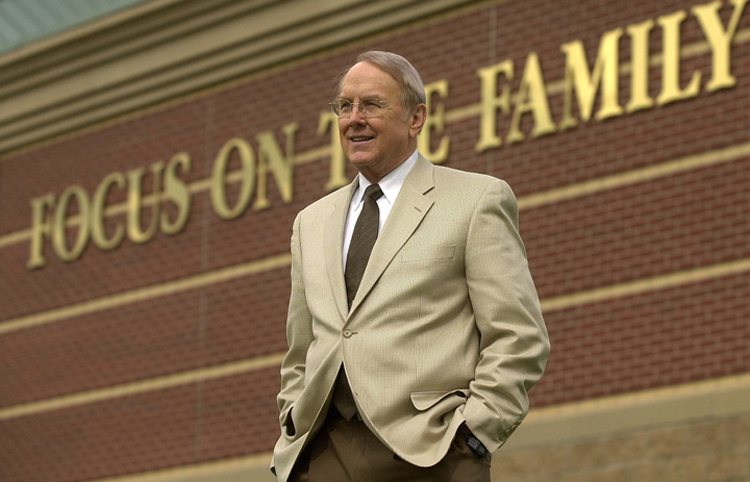

The term “homosexual agenda,” is a trope commonly used by social conservatives, particularly those from religious constituencies in referring to efforts by gay people who want tolerance, if not acceptance for who they are, their relationships and families. The term was invented by the Family Research Council in 1992, an Evangelical Protestant group and lobbying organization established in the United States in 1981 by James Dobson. Interestingly, Dobson is a licensed psychologist in the state of California. He has academic credentials, a doctorate in child development from the University of Southern California and held the position of Associate Clinical Professor of Pediatrics at the University of Southern California School of Medicine 14 years. In addition, he served for 17 years on the staff of the Children’s Hospital of Los Angeles in the Division of Child Development and Medical Genetics. Dobson is intelligent, but remains a minor figure in academic circles. He is better known for his business acumen and influence as a conservative lobbyist. Continue reading

