To prop up the Canadian Firearms Act imposed on Canadian gun owners by the Liberal government of Prime Minister Jean Chretien, Anne McLellan was appointed as the Minister of Justice in 1997 (a post she held until 2002). In propping up the Canadian Firearms Act, the Ministry of Justice came up with the slogan Aiming for Safety for the promotion of the Canadian Firearms Program, a component of the Canadian Firearms Act. I remember all this at the time, and then as now, when I review the transcriptions of Anne McLellan’s public pronouncements on creating a “culture of safety and responsibility around the ownership and use of guns,” I still register shock and disbelief. Is she that obtuse? How does making gun ownership a crime, enabling bureaucrats to prohibit makes and models of firearm arbitrarily and demanding that hunters and sport shooters register themselves and their property with the state do anything for safety and responsibility around the ownership and use of guns? In short, it does nothing of the kind; Aiming for Safety is nothing more than a euphemism for gun prohibition.
Tag Archives: current-events
We are living at a time when creeds and ideologies vary and clash. But the gospel of human sympathy is universal and eternal. — Samuel Hopkins Adams
Is religious liberty under threat in the United States? This is an interesting question and bears examination. The controversy over the passage of SB 1062 in Arizona and the decision by the Governor, Jan Brewer, to veto the legislation has many people insisting their religious liberty is threatened and determined to stiffen their resistance to this perceived threat. Regarding religious liberty in US society, the National Council of the Churches of Christ in the USA, in 1944 (then Federal Council of Churches of Christ), formed the following definition:
Religious liberty shall be interpreted to include freedom to worship according to conscience and to bring up children in the faith of their parents; freedom for the individual to change his religion; freedom to preach, educate, publish and carry on missionary activities; and freedom to organize with others, and to acquire and hold property, for these purposes. (as cited in Wikipedia)
At present, these are fundamental freedoms guaranteed in US law. Is there any reason to believe they are at risk? Continue reading
Piety is not a goal but a means to attain through the purest peace of mind the highest culture. — Johann Wolfgang von Goethe (1749-1832)
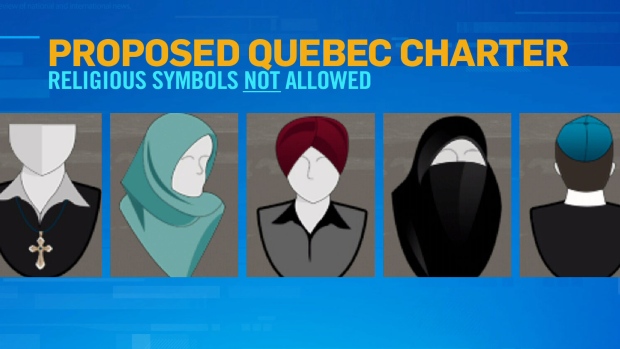
Years ago, I remembered while discussing theology with a group of friends, one in the group referred to himself as a pious atheist. I was taken aback by his comment as piety and atheism were not terms I associated with one another. Piety is most commonly associated with religious beliefs and practices. Since then, I gave this notion a great deal of thought: is secular piety a possibility? This question is worth considering in that how one expresses their piety in an increasingly secular society has become a contentious issue of late; as is evidenced by the controversy surrounding the proposed Quebec Charter of Values (Charte de la laïcité or Charte des valeurs québécoises). The stated aim of the charter is to ensure there is a clear separation of religion and state and that public employees have religious neutrality. What this means is wearing ostentatious religious symbols or garb on the job will be prohibited. Continue reading
I think Islam is in a sense, in crisis. It needs to question and re-question itself. — Azar Nafisi
Criticism of religion is a tender subject. Criticism of Islam, in particular, is especially so as is evidenced by the court battle that threatened to take shape between the National Council of Canadian Muslims (NCCM), Prime Minister Stephen Harper and Jason MacDonald (spokesman for Prime Minister Harper). The NCCM filed a notice of libel in the Ontario Superior Court of Justice over remarks made by Jason MacDonald in dismissing their objection to the inclusion of Rabbi Daniel Korobkin of the Beth Avraham Yosef Synagogue in Toronto as part of the delegation that accompanied Prime Minister Harper on a visit to Israel in January 2014. MacDonald dismissed their objection stating “we will not take seriously criticism from an organization with documented ties to terrorist organization such as Hamas.” (as cited in CTV News) The NCCM objected to the inclusion of Rabbi Korobkin in the delegation accompanying Prime Minister Harper because he hosted speaking engagements featuring Robert Spencer and Pamela Geller, two noted critics of Islam, in September 2013. Continue reading
I believe the fear of the rope, as it is generally called among certain classes, is a very great deterrent. — Rayner Goddard, Baron Goddard (10 April 1877 – 29 May 1971)
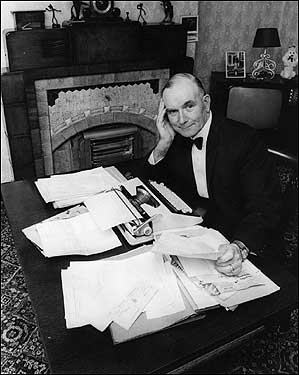
Mika and I are celebrating our fifteenth year together this month, August 2013. In all these years as a couple, we have never gone away together for a holiday. At long last, we are taking a holiday next month, a trip to England for two weeks. This will be Mika’s first visit to England. I lived in England from 1968-1970. I remember upon learning I would be travelling to England with my family imagining England was a land with castles where kings and queens resided and frequently ordered that people’s heads be chopped off. While this was true in the past, it happily was no longer the case by the late 1960s. In fact, capital punishment was no longer in use when I arrived in England with my family. Still, this is one facet of English history and law I find fascinating: the application of capital punishment. Judicial hanging was by far the most common form of execution in English history, although the cruel punishments of hanging, drawing and quartering, burning at the stake and beheading were practiced for centuries also. By the 20th century judicial hanging was the only method of execution (outside of the military where one could be shot at dawn) employed and the English had perfected its practice applying it liberally in executing people convicted of murder and high treason. Continue reading
You don’t have to be straight to be in the military; you just have to be able to shoot straight. — Barry Goldwater (1909-1998)
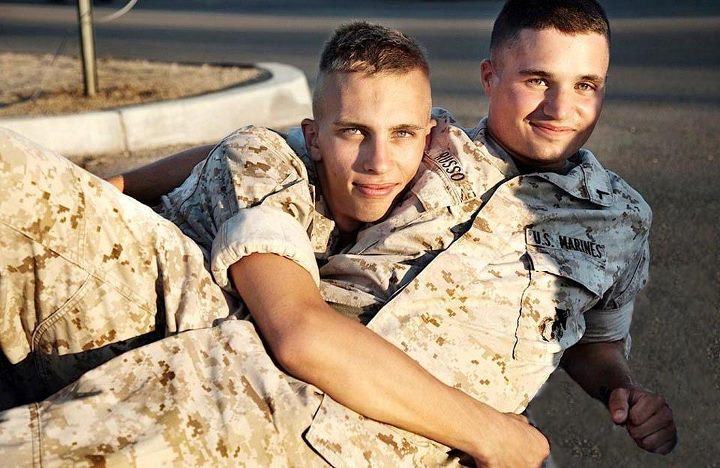
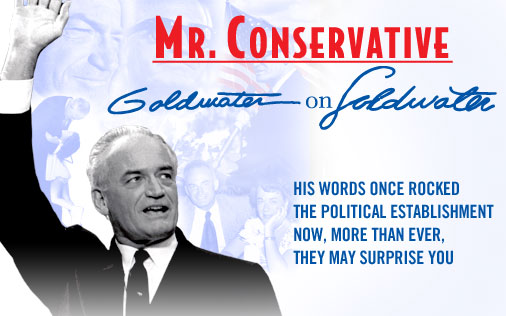
The repeal of the Defense of Marriage Act (DOMA) in the United States is great news for gay couples who are employed by the federal government, particularly those who are serving in the US military. Interestingly, the ban on gays serving in the US military was lifted before the repeal of DOMA, and the effort to lift this ban was supported by what you might think was an unlikely advocate: none other than Barry Goldwater (1909-1998). Goldwater was a staunch conservative, an anti-communist politician whose career in federal politics began in 1952 as a Senator for the State of Arizona and presidential candidate for the Republican Party in 1964, continuing until his retirement in 1987. He was forthright and transparent in his thoughts concerning gay rights in US society and gays serving in the US military, and not in the way you may be thinking. Concerning gays serving in the military, he stated, “everyone knows that gays have served honorably in the military since at least the time of Julius Caesar. They’ll still be serving long after we’re all dead and buried. That should not surprise anyone.” He added:
The conservative movement, to which I subscribe, has as one of its basic tenets the belief that government should stay out of people’s private lives. Government governs best when it governs least – and stays out of the impossible task of legislating morality. But legislating someone’s version of morality is exactly what we do by perpetuating discrimination against gays. (Lifting ban on gays in military should be conservative cause)
I believe that the tendency to classify all persons who oppose [this type of relationship] as ‘prejudiced’ is in itself a prejudice,” a psychologist said. “Nothing of any significance is gained by such a marriage. — Loving v. Virginia
The Supreme Court of the United States (SCOTUS) handed down rulings this week concerning marriage equality in law for same sex couples at the federal and state levels. The Defense of Marriage Act (DOMA), the law which prohibited the federal government from recognizing same sex marriages, was declared unconstitutional and the court refused to hear the appeal of Proposition 8 in California, the ballot measure that changed the California Constitution to add a new section 7.5 to Article I, which reads: “Only marriage between a man and a woman is valid or recognized in California.” Proposition 8 was declared unconstitutional by a lower court, the Ninth Circuit Court of Appeals, in 2012 and the government of California chose not to defend the law on its appeal to SCOTUS. Consequently, a majority of the Justices refused to hear the appeal on the grounds the appellants did not have the constitutional authority, or legal standing, to defend the law in higher courts after the state refused to appeal its loss at trial. These rulings are the latest in an interesting history of legal battles over the definition of marriage in the United States.
Continue reading
If God had wanted me otherwise, He would have created me otherwise. — Johann von Goethe (1749-1832)
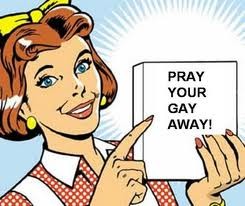
Recruitment is defined among other things as “the action of finding new people to join an organization or support a cause.” (Oxford Dictionaries) It is so common to come across the claim that gays recruit others into being gay, that you choose to be gay, that someone lured your into this “lifestyle.” Speaking on behalf of myself, I can say that no one recruited me into being gay. Same-sex attraction manifests itself naturally in me. It is who I am. During my formative years in the latter half of the 1970s, the only impression I had of homosexuality was not good. Aside from a steady stream of disparaging, anti-gay jokes, remarks and slurs commonly in use at the time), there were a series of news reports about police raids on bathhouses in Toronto, culminating in Operation Soap in 1981. The impression of the “gay lifestyle” presented to me came up short if it was intended to win me as a recruit. I have written about my experience in how I came to accept that I am gay in previous posts, see Tap, Tap, Tap…, for example. It was a long and challenging process that dragged on over several years. I tried desperately to ignore, suppress, will even pray away the feelings of same-sex attraction. For a long time, I really wanted the gayness to go away. Continue reading
Once again, there will be a chorus screaming “special rights” when the subject of gay bashing being punished as a hate crime arises. But near as anybody can tell, the opportunity to be threatened, humiliated and to live in fear of being beaten to death is the only “special right” our culture bestows on homosexuals. — Diane Carman
Is gay bashing a hate crime? Does it merit prosecution and punishment as a hate crime? The murder of Matthew Shepard, a 21-year-old student at the University of Wyoming, in 1998 ignited the debate over these questions when it was alleged his assailants, Aaron McKinney and Russell Henderson, targeted him because he was gay. In the course of the court proceedings against Aaron McKinney in November 1999, Prosecutor Calvin Rerucha stated:
The two had led Shepard to believe they were gay. Matthew, believing they wanted to discuss the politics and struggle of the gay movement, followed McKinney and Henderson into their truck. After getting in the truck, Henderson said “McKinney pulled out a gun and told Matthew Shepard to give him his wallet.” McKinney said “Guess what. We’re not gay. And you’re gonna get jacked.” When Matthew refused, McKinney hit him with the gun. With Henderson behind the wheel, they drove more than a mile outside Laramie, as Matthew begged for his life, McKinney struck him while Henderson laughed. “He (McKinney) told me to get a rope out of the truck,” Henderson said. According to Henderson, McKinney allegedly tied Shepard’s beaten body to a wooden split-rail post fence, robbed him of his wallet and patent leather shoes, continued to beat him and then left him to die for over 18 hours bleed profusely in near freezing temperatures “with only the constant Wyoming wind as his companion.” (as cited in Matthew Shepard)
His assailants pistol-whipped him so severely that he suffered fractures to the back of his head and in front of his right ear. He experienced severe brainstem damage, which affected his body’s ability to regulate heart rate, body temperature, and other vital functions. There were also about a dozen minor lacerations around his head, face, and neck. His injuries were too severe for doctors to operate. He never regained consciousness, succumbing to his injuries at 12:53 a.m. on October 12, 1998, at Poudre Valley Hospital in Fort Collins, Colorado.
I remember being horrified when hearing news reports of Matthew Shepard’s murder. Aaron McKinney and Russell Henderson were tried separately on charges of kidnapping and murder, convicted on both counts and handed life sentences for both crimes to be served consecutively. They will die in prison. In the aftermath of their son’s murder, Dennis and Judy Shepard established the Matthew Shepard Foundation. Its stated aim is “… to honour Matthew in a manner that was appropriate to his dreams, beliefs, and aspirations, the Foundation seeks to “Replace Hate with Understanding, Compassion, & Acceptance” through its varied educational, outreach and, advocacy programs and by continuing to tell Matthew’s story.” Also, Judy Shepard joined in the campaign for the inclusion of sexual orientation in hate crimes laws in the United States. It was a tough fight, but she prevailed when, on October 28, 2009, President Obama signed the Matthew Shepard Act into law.
Opposition to the campaign for the inclusion of sexual orientation in hate crimes laws in the United States was tenacious. It came from the ranks of religious and social conservative interests such as James Dobson, founder of Focus on the Family. Dobson holds the belief that homosexuality is either a lifestyle choice or a mental disorder that afflicts a minuscule percentage of the population. Therefore, gay people are not a legitimate minority, and to include sexual orientation in hate crimes laws gives gay people “special rights.” These “special rights,” according to James Dobson, include:
universal acceptance of the gay lifestyle, discrediting of scriptures that condemn homosexuality, muzzling of the clergy and Christian media, granting of special privileges and rights in the law, overturning laws prohibiting pedophilia, indoctrinating children and future generations through public education, and securing all the legal benefits of marriage for any two or more people who claim to have homosexual tendencies.
That James Dobson and like-minded people hold such egregious thoughts and beliefs about homosexuality is disappointing to me personally and not very helpful for gay people from families who subscribe to these beliefs. Still, I find satisfaction that US society is moving forward despite this opposition. Attitudes toward gay people are changing in the United States, with the opinion of the majority favouring acceptance, as polls listed by the American Enterprise Institute in March 2013 indicate. Earlier this month (May 2013), the states of Delaware, Minnesota and Rhode Island enacted legislation that gives same-sex couples the right to marry, joining the states of Connecticut, Iowa, Maine, Maryland, Massachusetts, New Hampshire, New York, Vermont and Washington, plus the District of Columbia that allow same-sex marriage. The Supreme Court of the United States (SCOTUS) is expected to hand down a judgement in June (2013) on the legality of the 1996 Defense of Marriage Act, which defines marriage as a union between a male and a female for federal purposes and California’s Proposition 8, a 2008 voter initiative that narrowly overturned the state’s Supreme Court ruling that granted gays and lesbians the right to marry. It is anyone’s guess as to how the SCOTUS will rule on these cases, but whatever the outcome, the movement toward marriage equality will move forward.
While this is all very encouraging, there was an incident in New York City where a gay couple, Nick Porto and Kevin Atkins, were attacked and beaten in broad daylight on May 5, 2013. The beating took place in plain view of passersby and serves as a sobering reminder there are still elements of US society who think it just fine to harass and assault gay people or people they perceive to be gay. The New York City Police Department is investigating the crime and searching for the assailants and has released surveillance photos of one of the men suspected to have taken part. Whether or not this proves to have been a hate crime is up to the courts to decide, but this incident brings home the reality to gay people that this remains a possibility wherever they choose to live. The fact that this attack took place in broad daylight in the middle of New York City in front of people who stood by and did nothing but photographs and videos of the attack is frightening. Still, I do not think there is any need for panic. I am confident that most people are duly horrified and disgusted with this crime and want to see that justice is served. I hope, also, that the wider heterosexual society will more fully appreciate the fact that gay people still face discrimination and, in extreme cases, outright hatred, which does, sometimes, manifest itself in gay bashing.
Posted by Geoffrey
Scripture, Tradition and Reformation
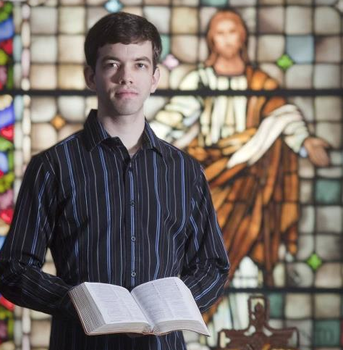
Recently, Mika and I attended a meeting of gay and lesbian Catholics. Several people of all ages were in attendance. We had a very interesting discussion and it was very nice meeting these people. Among those present was a young gay man, Jesse, who has faith in Christ and the Roman Catholic Church. Jesse, like so many gay people, just wants to find conjugal love and companionship with someone who happens to be the same sex. Jesse took the time to write a heartfelt letter to Pope Francis, explaining who he is, that he is gay, leading a very normal life, hoping to have married life with a man someday and asking for acceptance in the Church. He expressed some concern he might face excommunication for what he wrote, but we assured him this is not very likely. What he can realistically expect is a polite reply from the appropriate branch of the Vatican bureaucracy thanking him for his letter and reminding him that as Roman Catholic it is expected that he abstain from sex outside of marriage. That the Church does not accept same sex relationships at present leaves him in a bind.
Continue reading