Tag Archives: religion

Society may no longer define marriage in the only way marriage has ever been defined in the annals of recorded history. Many societies allowed polygamy, many allowed child marriages, some allowed marriage within families; but none, in thousands of years, defined marriage as the union of people of the same sex. — Dennis Prager

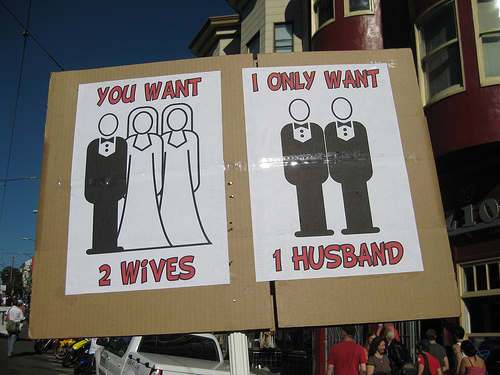
Polygamy-SCpolygamy-justification

Polygamy is a broad term and when applied to human society refers to plural marriage which means having more than one spouse. Facets of this term include polygyny which refers to a form of plural marriage in which a man is allowed to have more than one wife. Polyandry describes the form of plural marriage in which a women has more than one husband. Polyamory is a form of plural marriage where a family consists of multiple husbands and wives at the same time. These kinds of marriages existed historically in human societies and continue in some societies in the present. However, in the Western world monogamous marriage (between one man and one woman) became the norm and was enshrined in law with the rise of the Roman Empire and the ascendance of Christianity as the dominant faith. In the current controversy over same sex marriage raging across the U.S. critics and opponents of same sex marriage often refer to polygamy as a reason to deny marriage rights to same sex couples. The common assertion is that if monogamous marriage is redefined to allow same sex couples to marry, then people who want to enter into polygamous marriages will demand the right to to so pointing to the fact that same sex couples are free to marry. Is there any merit to this claim? Continue reading


Politics is just like show business. You have a hell of an opening, coast for a while, and then have a hell of a close. — Ronald Reagan

mcpherson_ormiston200-ab72c2b3f36c4abd5f445045134658a87b6914f9-s800-c15anitasarkeesian1

There’s no business like show business, least of all in the United States. Americans love celebrity, flamboyance, sensationalism and showmanship whether it is in the entertainment industry, politics, business, journalism or religion. I am reminded of this in looking at the careers of  Aimee Semple McPherson and Anita Sarkeesian, two women from Canada, who found fame and fortune in the United States by means of shameless self-promotion, partnership with men endowed with shrewd business acumen, and through a masterful use of electronic media to broadcast their simplified and sensationalized messages to a wide and receptive audience. How they differ is that Aimee Semple McPherson found fame as a prominent Pentecostal evangelist in the first half of the 20th century; whereas, Anita Sarkeesian thrives in the present, promoting herself as a “pop culture critic.” Sarkeesian’s message is aimed at people who subscribe to the temporal ideologies of feminism and social justice. Despite these differences, if you look closely at the career of Aimee Semple McPherson and compare it to that of Anita Sarkeesian you will notice there are striking similarities, particularly as to the question of the character of both Aimee Semple McPherson and Anita Sarkeesian. Continue reading

At 93, I never thought we would have to debate the definition of marriage — Billy Graham

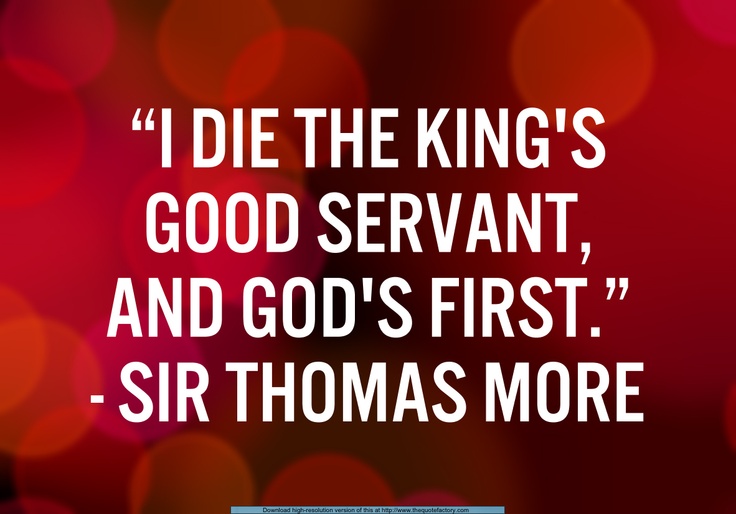
ThomasMoreCarolina

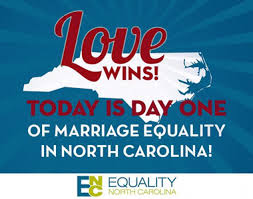
Religion and the definition of marriage remain intertwined in the present, just as in the past. Historically, disputes over the definition of marriage concerned marriage, divorce and remarriage. Dispute over these issues in the court of King Henry VIII of England in the 16th century caused upheaval in the Church and English society. Heads rolled, literally, in the process. In the present, there is an ongoing dispute over the definition of marriage or the redefinition of marriage to allow same sex couples to marry. As I view the movement for same sex marriage, defined as marriage equality, in the United States, North Carolina is a focal point. Amendment 1 to the state constitution, enacted in 2012 following a ballot measure, defined marriage as the union of one man to one woman. Amendment 1 was struck down on October 10, 2014 by U.S. District Court Judge Max O. Cogburn, Jr.  It is now lawful for same sex couples to marry in North Carolina, much to the dismay of opponents of marriage equality, including Charles L. Worley and Billy Graham, who object on religious grounds. Heads are rolling, though not literally, in North Carolina now that Amendment 1 is no longer in force. Continue reading

True Islam taught me that it takes all of the religious, political, economic, psychological, and racial ingredients, or characteristics, to make the Human Family and the Human Society complete. — Malcolm X

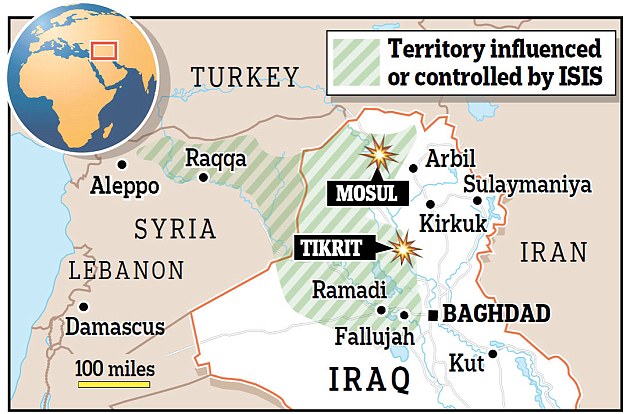
territory iraq graphic blast in tikrit PAPER ISIS CORRECTEDimages

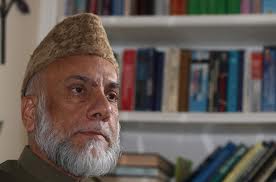
Imam  Syed Soharwardy is a respected Muslim cleric and scholar, chairman of the Al-Madinah Calgary Islamic Assembly and founder and president of the Islamic Supreme Council of Canada. His research interests in Islam consist of “Islamic beliefs, challenges for Muslims in the western world, conflicts within the Muslim community and interreligious conflict.” (Wikipedia) On August 22, 2014, Soharwardy drew attention to himself in announcing he was embarking on a 48 hour fast to protest the murder of James Foley, an American journalist, by the Islamic State of Iraq and Syria (ISIS) earlier in the week. In condemning the killing of James Foley, Soharwardy also made a bold statement declaring there is nothing Islamic in what ISIS represents, asserting:

I want to create awareness about the nature of their work — they are using Islam, they are quoting Qur’an, they look like Muslims, they pray like Muslims but they are not Muslim. They are deviant people, and they are doing exactly everything which goes against Islam. (CBC News Calgary)

In making this assertion, Soharwardy raises an interesting question. Do the actions of ISIS have nothing to do with Islam? Continue reading

The emphasis must be not on the right to abortion but on the right to privacy and reproductive control. — Ruth Bader Ginsburg

hobby-lobby_zps8425ff5a2RNS-HOBBY-LOBBY-SCOTUS

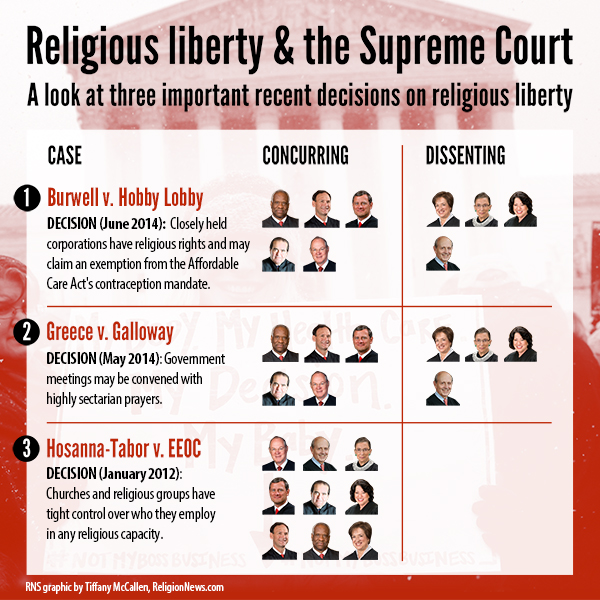
Controversy rages on in U. S. society over the issues of religious liberty and sexuality. The right to marry, the destigmatization of homosexuality and reproductive freedom are issues that, historically and in the present, conflict with deep-seated religious beliefs and traditions in U.S. society. While the U.S. Congress and State Legislatures addressed these issues, especially in passing legislation to guarantee religious liberty, disputes concerning religious freedom and sexuality more often are settled by the courts. In 1967 the Supreme Court of the United States (SCOTUS) ruled state bans on interracial marriage were unconstitutional in Loving v. Virginia. In 2013, SCOTUS struck down the Defense of Marriage Act (DOMA) and refused to hear the appeal of Proposition 8 in California. This removed legal barriers to same-sex marriage. Homosexuality was decriminalized in the U.S. in 2003 when SCOTUS ruled on Lawrence v. Texas. Most recently, the decision handed down by SCOTUS in Burwell v. Hobby Lobby is generating heated discussion in the media and blogosphere. In this instance, SCOTUS ruled on a dispute between the issues of religious liberty and reproductive rights. Continue reading

As long as teachers give tests, there will always be prayer in schools. — Unknown

9jMzRN92011-08-02_prayer-in-school

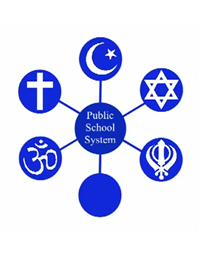
The issue of the practice of religion and religious education in Ontario schools has been a contentious issue throughout their history. The first Board of Education was established in Upper Canada (what became the Province of Ontario) in 1823. In 1824 the Board of Education was allotted funds to provide  for the “moral and religious instruction of the more indigent and remote settlements.” (The school system of Ontario) While Christianity was the dominant religion in Ontario in the 19th century there were sectarian divisions, notably those between Protestant and Roman Catholic, but there was also division between the various Protestant denominations, Anglican, Methodist, Presbyterian, for example. These divisions created strife and hard feelings regarding the provision of moral and religious instruction in Ontario schools. By the 1840s Egerton Ryerson (1803-1882), a Methodist clergyman and champion of public education, proposed “common schools” to educate children of all faiths. This was really quite forward thinking of Ryerson, but the divisions in Christendom at the time were so pronounced this was not possible. Continue reading

I do not feel obliged to believe that same God who endowed us with sense, reason, and intellect had intended for us to forgo their use. — Galileo Galilei

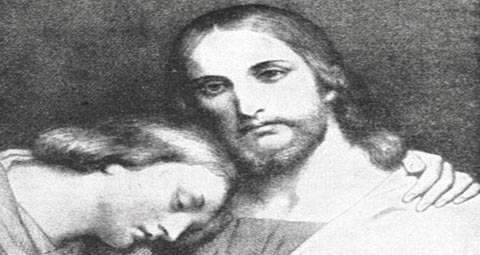
10-ST-JOHN-JESUSScreen-Shot-2014-05-10-at-8.42.11-PM-660x400

Continue reading

We are living at a time when creeds and ideologies vary and clash. But the gospel of human sympathy is universal and eternal. — Samuel Hopkins Adams

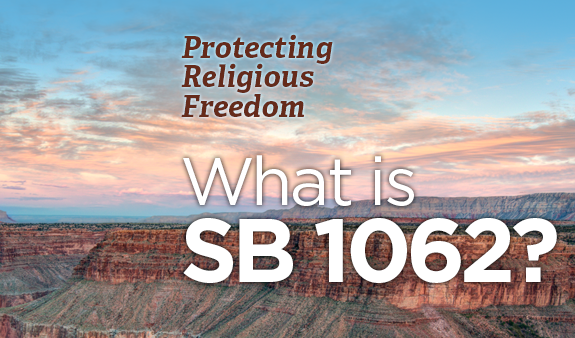
whatIsSB1062Hundreds_rally_against_SB1062_in_Flagsta_1360360000_3123610_ver1_0_640_480

Is religious liberty under threat in the United States? This is an interesting question and bears examination. The controversy over the passage of SB 1062 in Arizona and the decision by the Governor, Jan Brewer, to veto the legislation has many people insisting their religious liberty is threatened and determined to stiffen their resistance to this perceived threat. Regarding religious liberty in US society, the National Council of the Churches of Christ in the USA, in 1944 (then Federal Council of Churches of Christ), formed the following definition:

Religious liberty shall be interpreted to include freedom to worship according to conscience and to bring up children in the faith of their parents; freedom for the individual to change his religion; freedom to preach, educate, publish and carry on missionary activities; and freedom to organize with others, and to acquire and hold property, for these purposes. (as cited in Wikipedia)

At present, these are fundamental freedoms guaranteed in US law. Is there any reason to believe they are at risk? Continue reading

Piety is not a goal but a means to attain through the purest peace of mind the highest culture. — Johann Wolfgang von Goethe (1749-1832)

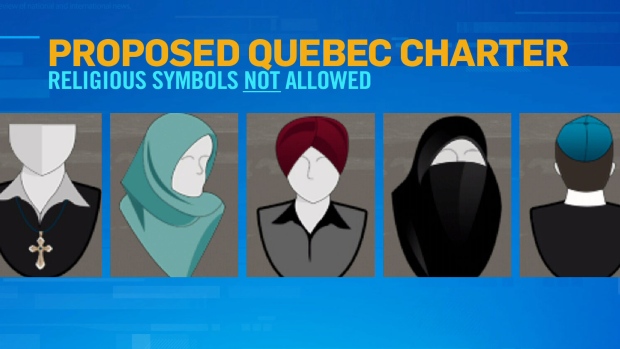
Quebecpiety

Years ago, I remembered while discussing theology with a group of friends, one in the group referred to himself as a pious atheist. I was taken aback by his comment as piety and atheism were not terms I associated with one another. Piety is most commonly associated with religious beliefs and practices. Since then, I gave this notion a great deal of thought: is secular piety a possibility? This question is worth considering in that how one expresses their piety in an increasingly secular society has become a contentious issue of late; as is evidenced by the controversy surrounding the proposed Quebec Charter of Values (Charte de la laïcité or Charte des valeurs québécoises). The stated aim of the charter is to ensure there is a clear separation of religion and state and that public employees have religious neutrality. What this means is wearing ostentatious religious symbols or garb on the job will be prohibited. Continue reading

I think Islam is in a sense, in crisis. It needs to question and re-question itself. — Azar Nafisi

shariaimagesCARN2W12

Criticism of religion is a tender subject. Criticism of Islam, in particular, is especially so as is evidenced by the court battle that threatened to take shape between the National Council of Canadian Muslims (NCCM), Prime Minister Stephen Harper and Jason MacDonald (spokesman for Prime Minister Harper). The NCCM filed a notice of libel in the Ontario Superior Court of Justice over remarks made by Jason MacDonald in dismissing their objection to the inclusion of Rabbi Daniel Korobkin of the Beth Avraham Yosef Synagogue in Toronto as part of the delegation that accompanied Prime Minister Harper on a visit to Israel in January 2014. MacDonald dismissed their objection stating “we will not take seriously criticism from an organization with documented ties to terrorist organization such as Hamas.” (as cited in CTV News) The NCCM objected to the inclusion of Rabbi Korobkin in the delegation accompanying Prime Minister Harper because he hosted speaking engagements featuring Robert Spencer and Pamela Geller, two noted critics of Islam, in September 2013. Continue reading