Reason obeys itself, and ignorance submits to whatever is dictated to it. — Thomas Paine


Hannah Arendt developed the concept of the banality of evil: “Evil comes from a failure to think. It defies thought for as soon as thought tries to engage itself with evil and examine the premises and principles from which it originates, it is frustrated because it finds nothing there. That is the banality of evil.” I am reminded of this when I note the dismay of Intactivists when Facebook posts pop up where a newborn boy is subject to involuntary genital cutting for any reason or no reason. I also note the angry reactions of the parents who do not care for the criticism or condemnation for doing this to their newborn sons. Yes, there is no shortage of people who see nothing wrong with it and will tell you to mind your own business. That and they retort, “Don’t choose it for your son if that’s how you feel!” I watch with interest as Eric Clopper, Attorney at Law and Founder & President of Intact Global, mounts a constitutional challenge in Oregon for the protection of boys from involuntary genital cutting. I stand with him and hope for the best as he and his team of lawyers proceed with the challenge. The challenge is based on the constitutional guarantee of legal equal protection. As the involuntary genital cutting of girls is prohibited in US law (in several states, not federally), the reasoning is that boys deserve equal protection. Though I am neither a lawyer nor a legal scholar, as a well-informed layman, I expect the challenge will be an uphill battle.

The Right Honourable Prime Minister of Canada Justin Trudeau.
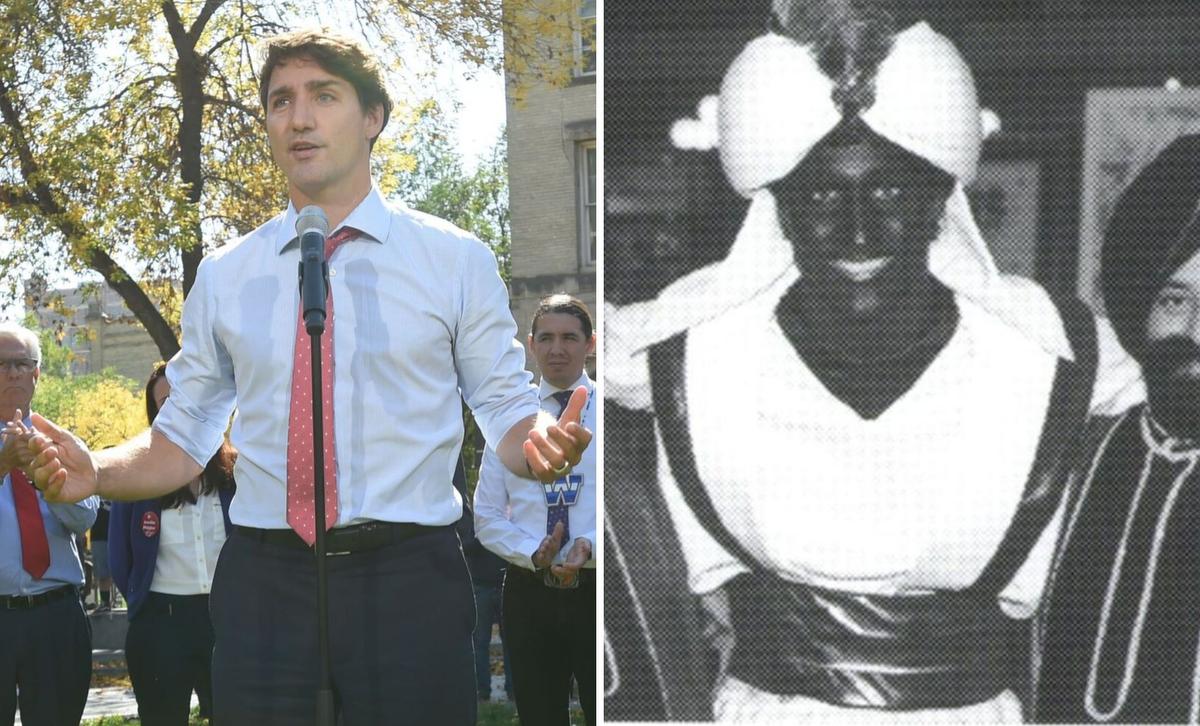
A general election is scheduled for Canadians on October 21st. The governing Liberal Party with Justin Trudeau as its frontman seeks re-election. I think it likely the Trudeau Liberals will win re-election, and if so, this is bad news for Canadians. Since taking office in 2015, the Liberal government with the prancing popinjay that is Justin Trudeau consistently sowed division among Canadians. The Liberal government promoted its globalist agenda in pitting Canadians against one another via the imposition of identity politics on Canadians. Yes, the Liberals, with Justin Trudeau as their spokesman, pushed the belief that group identity matters more than individuality and the content of character in each of us as individuals. In doing so, the Liberal government instilled division rather than unity among Canadians since taking office in 2015. In 2019, Canadians are set against each other according to superficial differences such as race, ethnicity, religious affiliation, sex, sexual orientation and the like. Not only that but the Liberal government set a standard of political correctness to which not even the sanctimonious Justin Trudeau can adhere. Continue reading
There is a great deal of discussion about Kim Davis, the clerk for Rowan County, Kentucky, jailed by U.S. District Court Judge David Bunning who found her in contempt of court on September 3, 2015. She defied the court order to issue marriage licenses as required in her capacity as County Clerk. Davis refuses to issue marriage licenses in protest of the Supreme Court of the United States ruling in Obergefell v. Hodges on June 26, 2015 that made same-sex marriage lawful across the United States. She justifies her refusal to issue marriage licenses on the grounds of her religious objection to same-sex marriage. As she stated: “to issue a marriage license which conflicts with God’s definition of marriage, with my name affixed to the certificate, would violate my conscience.” (New York Times) The question here is whether her refusal to issue marriage licenses is genuinely a matter of faith and conscientious objection to same-sex marriage or, as many of her critics allege, simply a cynical ploy on her part to draw attention to herself and feather her own nest in the process. Is this nothing more than religious hypocrisy on her part? Continue reading
“No shirt, no shoes, no service,” how often do I find a sign with these words posted when I approach the entrance to a restaurant or shop. There are hotels, bed & breakfasts, resorts and housing developments that refuse to allow children. I remember in 1968 my mother and father were asked by owners to leave their bed & breakfast in Cheltenham, England because other guests did not like that there were children on the premises. I remember back in 1987 when I was a student at Wilfrid Laurier University trying to find a place to live in Kitchener-Waterloo. It was a very tight market for student housing and for one of the ads I answered was told curtly by the voice on the telephone “we only take girls.” In 1989 back in Ottawa as I browsed ads in the newspaper for shared accommodation, I noticed more than a few that included the phrase “straight only.” People discriminate against others in the marketplace for various reasons, and in many cases, such as those listed above, it is lawful to do so, while in others it is not. The question is what is the appropriate response if you find yourself confronted with a situation when you think you are the butt of either unjust or unlawful discrimination. Continue reading
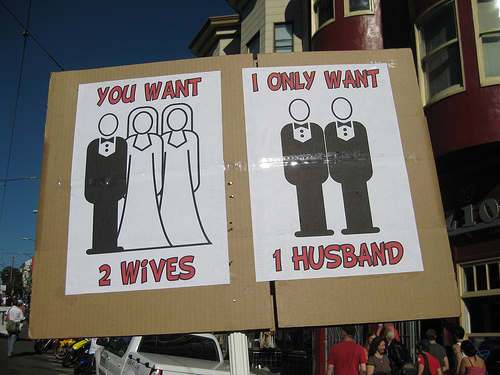
Polygamy is a broad term and when applied to human society refers to plural marriage which means having more than one spouse. Facets of this term include polygyny which refers to a form of plural marriage in which a man is allowed to have more than one wife. Polyandry describes the form of plural marriage in which a women has more than one husband. Polyamory is a form of plural marriage where a family consists of multiple husbands and wives at the same time. These kinds of marriages existed historically in human societies and continue in some societies in the present. However, in the Western world monogamous marriage (between one man and one woman) became the norm and was enshrined in law with the rise of the Roman Empire and the ascendance of Christianity as the dominant faith. In the current controversy over same sex marriage raging across the U.S. critics and opponents of same sex marriage often refer to polygamy as a reason to deny marriage rights to same sex couples. The common assertion is that if monogamous marriage is redefined to allow same sex couples to marry, then people who want to enter into polygamous marriages will demand the right to to so pointing to the fact that same sex couples are free to marry. Is there any merit to this claim? Continue reading
Indiana is a state situated in the mid-western United States and is well-known across the rest of the United States and much of the world for the Indianapolis 500-Mile Race, one of the most prestigious motor sports races in the world. This week, however, Indiana finds itself in the spotlight because of the passage of SB 101 the Religious Freedom Restoration Act into law. Governor Mike Pence signed the bill into law on March 26, 2015, and the law went into effect on July 1, 2015. The legislation is necessary, as supporters of the bill such as Eric Miller of Advance America asserted because, “it is vitally important to protect religious freedom in Indiana […] to help protect churches, Christian businesses, and individuals from those who want to punish them because of their Biblical beliefs!” (Victory at the State House) Those in opposition to the legislation such as Democratic Party Senate Minority Leader Tim Lanane fear the legislation allows for discrimination on religious grounds. As Senator Lanane stated, it is “extremely disappointing that Governor Pence endorses this out-of-touch, discriminatory legislation. Not only is this law unnecessary, it, unfortunately, has already portrayed our state as intolerant, unfriendly, and backwards; things which I believe most Hoosiers reject.” (as cited in the Indy Star) Governor Pence disagrees, stating “this bill is not about discrimination and if I thought it legalized discrimination I would have vetoed it.” (as cited in the Indy Star) Is religious freedom threatened in Indiana and does this legislation intended to safeguard religious freedom allow for legal discrimination on religious grounds? These questions merit further discussion. Continue reading
The issues of gay rights, religious liberty, and religion in Canada and the United States remain contentious. While the destigmatization of homosexuality is a welcome trend in Canada and the United States, it is by no means a fait accompli. Lawful discrimination on religious grounds against gay people remains an issue, notably in secondary and post-secondary education, as religious institutions operate and have sole proprietorship of their high schools, colleges and universities. The issue of lawful discrimination against gay people on religious grounds and opposition to it from the wider society is highlighted by recent events concerning Trinity Western University in Langley, British Columbia and Lutheran High North (a high school ) in Houston, Texas. Both schools have moral codes founded on their interpretation of Christianity that bar sexual activity outside marriage and between persons of the same sex. The schools stand firm in their opposition to homosexuality in the face of controversy and maintain they are within their rights to do so. In either case, presumably, a gay student is welcome to attend, provided they abide by the respective schools’ moral codes. It is legal in both Canada and the United States, but is it tolerable, and what is the appropriate response for those who take issue with these school policies? Continue reading
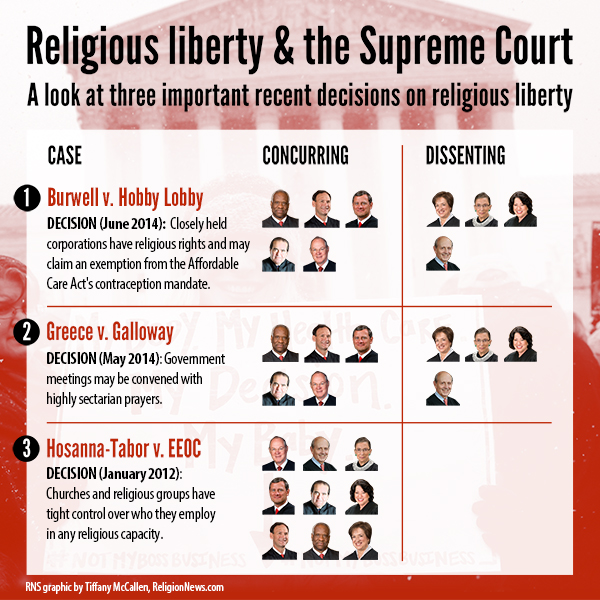
Controversy rages on in U. S. society over the issues of religious liberty and sexuality. The right to marry, the destigmatization of homosexuality and reproductive freedom are issues that, historically and in the present, conflict with deep-seated religious beliefs and traditions in U.S. society. While the U.S. Congress and State Legislatures addressed these issues, especially in passing legislation to guarantee religious liberty, disputes concerning religious freedom and sexuality more often are settled by the courts. In 1967 the Supreme Court of the United States (SCOTUS) ruled state bans on interracial marriage were unconstitutional in Loving v. Virginia. In 2013, SCOTUS struck down the Defense of Marriage Act (DOMA) and refused to hear the appeal of Proposition 8 in California. This removed legal barriers to same-sex marriage. Homosexuality was decriminalized in the U.S. in 2003 when SCOTUS ruled on Lawrence v. Texas. Most recently, the decision handed down by SCOTUS in Burwell v. Hobby Lobby is generating heated discussion in the media and blogosphere. In this instance, SCOTUS ruled on a dispute between the issues of religious liberty and reproductive rights. Continue reading
Is religious liberty under threat in the United States? This is an interesting question and bears examination. The controversy over the passage of SB 1062 in Arizona and the decision by the Governor, Jan Brewer, to veto the legislation has many people insisting their religious liberty is threatened and determined to stiffen their resistance to this perceived threat. Regarding religious liberty in US society, the National Council of the Churches of Christ in the USA, in 1944 (then Federal Council of Churches of Christ), formed the following definition:
Religious liberty shall be interpreted to include freedom to worship according to conscience and to bring up children in the faith of their parents; freedom for the individual to change his religion; freedom to preach, educate, publish and carry on missionary activities; and freedom to organize with others, and to acquire and hold property, for these purposes. (as cited in Wikipedia)
At present, these are fundamental freedoms guaranteed in US law. Is there any reason to believe they are at risk? Continue reading