Tag Archives: Roman Catholic

It is a great plague to be too handsome a man. — Plautus

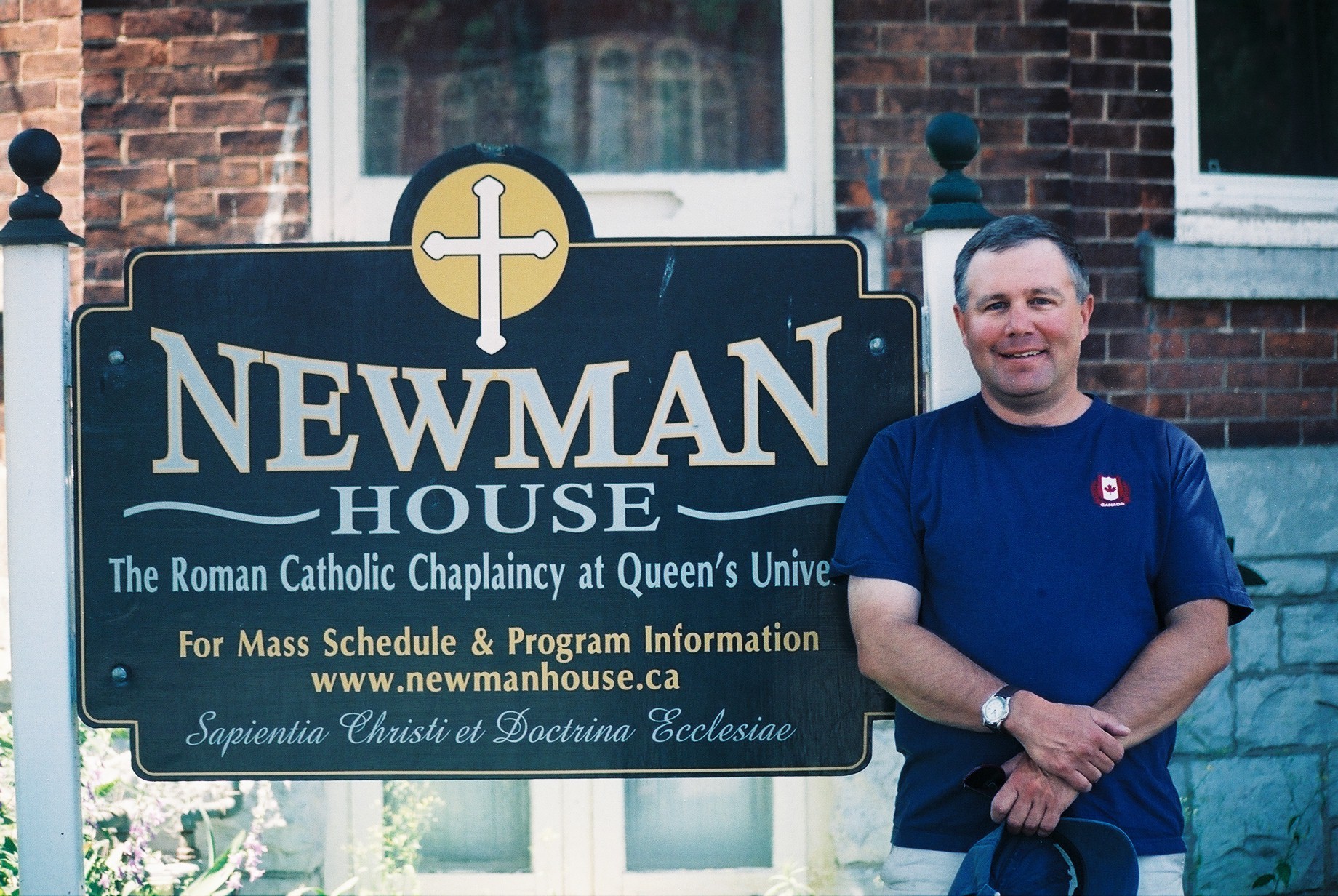
When I first viewed the photo, the portrait of the two young men struck me. Initially, I could not quite place why, but then it dawned on me. In the summer of 1980, I was a reservist in the Canadian Army. I served in the 30th Field Artillery Regiment based in Ottawa. It was the summer following my graduation from high school and before my enrollment at Queen’s University in Kingston. I went to Canadian Forces Base Petawawa to work as a driver in a transportation company through July and August. I worked with young men from other regiments who were posted there, too–we were in our late teens and early twenties.

Continue reading

People idealize or reminisce about their 20s, but nobody tells you beforehand that it’s hard and unglamorous and very often unpleasant. — Zosia Mamet

I like reminiscing, looking back on my life, and thinking of the people I knew as a boy and from my younger days in adolescence and manhood. Sadly, some of them have departed. Still, I think about those still alive and hope they are happy. I served as a reservist in the Canadian Army from 1978 to 1982, when I was in high school and university. I joined the 30th Field Artillery Regiment based in Ottawa. I trained in a group of private recruits under the supervision of a Bombardier who was a Carleton student. We had our differences and misunderstandings during my basic training. I spent almost every night and weekend on the defaulter’s parade. I served three years in the 30th Field and one year as an attached posting to the Princess of Wales Own Regiment (an infantry regiment) in Kingston, where I attended university. I transferred to the PWOR in 1982 and was promptly mustered out when the unit was downsized. I had a brief, undistinguished stint of military service in the Canadian Army, but I am proud that I served my Queen and country.

Continue reading

Those who know that they are profound strive for clarity. Those who would like to seem profound to the crowd strive for obscurity. ― Friedrich Nietzsche,  The Gay Science

Listening to a true believer in gender identity and gender expression explain why they believe reminds me of when I was a pious Roman Catholic. I am sure I sounded much the same to non-believers when I explained why I had taken the leap of faith to practice Roman Catholicism. I accepted the theological arguments, the authority of Scripture, and the Apostolic Tradition that compose Roman Catholicism. I attended mass daily, said my prayers, and tried to do good and avoid doing evil. I regularly examined my conscience and tried to turn away from sin. It was reasonable to me at the time. Though I tried to be true to my faith, lingering doubt remained. Eventually, I realized that I could not continue as it was hypocritical of me. I stopped going to mass. I no longer believe in the claims of Christianity.

Continue reading

“Nothing is more deceitful,” said Darcy, “than the appearance of humility. It is often only carelessness of opinion, and sometimes an indirect boast.” ― Jane Austen, Pride and Prejudice

Jacinda

Jacinda Ardern, Prime Minister of New Zealand, posing with Justin Trudeau, Prime Minister of Canada and Sadiq Khan, Lord Mayor of London.


I remember in 1968, my mother enrolled me in a class at the Holy Family parish in Kingston, Ontario. The class was to prepare me for my First Communion. I was seven years old, and in the class, I received my first lessons from the Roman Catholic Church in its perceived need that I learn humility. I have fleeting memories of the classes–on the whole, I think I enjoyed attending them. After our lesson, we got to play games like hide and seek. One night we got to watch That Darn Cat. The experience that lingers in my memory was delivered by the young woman who taught the course. She told us that Jesus, as a boy did not talk back to his parents and teachers; neither did he fight with other children. I think the children in the class took this lesson to heart. The experience was not unreasonable in and of itself–Christianity, Roman Catholic, Orthodox and Protestant, teaches that we should try to be like Jesus. Knowing that I talked back to my parents on occasion and got into scraps with my siblings left me feeling a little abashed–so I did my best to follow the example set by the boy Jesus. I learned at that early age that I am not perfect–that despite it, I should strive to do good and avoid doing evil. At the time, I did not appreciate that it was easy for the boy, Jesus, as He was Divine, unlike the rest of the children in the class and me. Continue reading

Piety is not a goal but a means to attain through the purest peace of mind the highest culture. — Johann Wolfgang von Goethe (1749-1832)

Quebecpiety

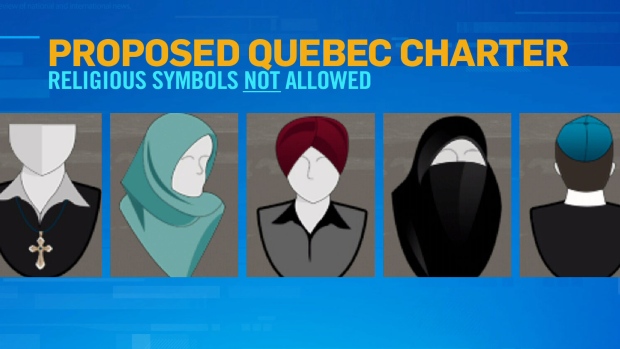
Years ago, I remembered while discussing theology with a group of friends, one in the group referred to himself as a pious atheist. I was taken aback by his comment as piety and atheism were not terms I associated with one another. Piety is most commonly associated with religious beliefs and practices. Since then, I gave this notion a great deal of thought: is secular piety a possibility? This question is worth considering in that how one expresses their piety in an increasingly secular society has become a contentious issue of late; as is evidenced by the controversy surrounding the proposed Quebec Charter of Values (Charte de la laïcité or Charte des valeurs québécoises). The stated aim of the charter is to ensure there is a clear separation of religion and state and that public employees have religious neutrality. What this means is wearing ostentatious religious symbols or garb on the job will be prohibited. Continue reading

Miracles, in the sense of phenomena we cannot explain, surround us on every hand: life itself is the miracle of miracles. — George Bernard Shaw

index1miracle2

A miracle is a form of religious experience, essentially an event without a rational explanation attributed to the divine. I first remember learning about miracles as a boy in grade school. Religious instruction, Christian, was part of the public school curriculum in Ontario in the mid-1960s when I started school. My first-grade teacher, Miss Boss, read bible stories to the class every morning before we started the day’s lessons. If memory serves, I was most impressed by the story of the loaves and fishes. A year later, at junior school in England, one of the teachers, Mrs. Checketts, told us the story of Jesus raising a girl from the dead. As Mrs. Checketts related the story to us, “He called to her spirit “Talitha koum!” (which means “Little girl, I say to you, get up!”) and she was returned to life.” Again, I was duly impressed, but as I grew older, I began to wonder about the veracity of these accounts and of miracles in general. I started to wonder, also, just how common it is for people to continue to believe in miracles and how a miracle is identified in the present. Continue reading

If a believer demands that I, as a nonbeliever, observe his taboos in the public domain, he is not asking for my respect, but for my submission. ― Flemming Rose

separatione342d3_ce5f6ee1b725db96bedda2be61c99425

Religion is part of the fabric of Canadian society; Canadians hold a plurality of beliefs. The most recent census data (from the 2001 census) show that Christianity remains the most widely held and practiced religion with Roman Catholics in the majority at 43.2 %. People of non-Christian faiths make up a tiny percentage of the population: Muslims 2.0 %, Jewish 1.1 %, Hindus 1.0 %, Sikhs 0.9 %, Buddhist 1.0 %. Freedom of belief and conscience is enshrined in Canadian law; it is guaranteed in the Charter of Rights and Freedoms in section 2 Fundamental Freedoms. That said, it is important to note that religion is a matter of private conscience. Canada is a secular nation-state. There is no state religion in Canada. Religious belief is something one chooses; no one is forcing you to adhere to a particular set of ideas and the rules of any specific religious institution. Issues are arising in the present over the accommodation of religious folk in the secular, public realm of Canadian society. Continue reading

Much of what is called Christianity has more to do with disguising the ego behind the screen of religion and culture than any real movement toward a God beyond the small self, and a new self in God. — Richard Rohr.

catholic_christian_wall_decalcatholic-or-christian

Some years ago while I ordered lunch at a restaurant in the food court at the University Centre, at the university where I work, I asked the young man serving me if he and his family celebrated the Day of the Dead. I had gotten to know him a little in snippets of conversation we had during times he served me, and I learned he was from Mexico. He replied that they did not as this was a Catholic custom, adding, in referring to himself and his family, “we’re Christian.” I was startled by the remark, though it was not the first time I was confronted with this point of view. The first time I remember being confronted by someone with this attitude toward Roman Catholicism was when I was in my first year at university. I was introduced to people from different Christian denominations on campus and at a meet and greet I was speaking to a man who asked to which church I was a member. When I told him I was a Roman Catholic, he retorted “I used to be Catholic, but now I am a Christian.” Later during my years at university, I was given a book by an acquaintance who was forever trying to get me to join his Church, the title escapes me, but it was the account of a Pentecostal Christian and the subtitle was a young Catholic encounters Christ. Continue reading

“Dignity is not negotiable. Dignity is the honor of the family.” — Vartan Gregorian

shame3shouldnt_real_family_values_value_all_families_tshirt-r9af494bc515f443588ea2190db93cf65_804gs_512

A good friend and hunting buddy of mine, Omer, is an observant Muslim whose family immigrated to Canada from Pakistan. Omer is an educated man as is the rest of his family. He is someone I have known several years and with whom I have enjoyed many in-depth discussions, learning about his faith and the culture in which he grew up before coming to Canada.  He tells me that family honour and shame are taken very seriously by some elements of Pakistani society. The phenomenon of honour killing is a reality for these elements of Pakistani society, particularly in the rural and tribal regions. Family honour is taken so seriously in this culture that if a family member (typically a girl or young woman) brings shame on the family the whole family suffers. They become untouchables; they are deemed unfit to associate with and most certainly are not welcome to marry into other families. The only way family honour can be restored in such a case is in killing the family member who brought the shame onto the family. This understanding of family honour is bound up in religion (Islam) and a culture in which men dominate. He certainly does not approve of this behaviour. He recognizes it as a problem that Pakistani society must address. Continue reading

“Every man has a right to utter what he thinks truth, and every other man has a right to knock him down for it. Martyrdom is the test.”–Samuel Johnson (1709-1784)

Polish_Righteous_Józef_and_Wiktoria_Ulmaglorification-of-martyrs

Martyrdom is a concept with which I have been familiar since I was very young. From my Roman Catholic background growing up I remember reading accounts of the lives of saints, many of whom were martyred in the most grisly fashions imaginable. In the summer of 1969 my family, myself, my three siblings, our mother and father and my mother’s parents toured Europe, traveling in a Volkswagen van. Among the sights we saw were a number of art galleries where I viewed a great many works of art depicting the martyrdom of various saints. The martyrdom of Saint Sebastian is one of the more memorable depictions I recall, but it was the depiction of one event in particular from the Bible that really made an impression on me: that of the Massacre of the Innocents. From the first time I heard that story read to me I was troubled by it. I struggled to understand why God would allow such an atrocity. In one version of the story, written for children, I remember reading that we should find solace  in that the mothers of the slain baby boys would have found comfort had they known their murdered sons were the first Christian martyrs. This raised a question for me I have pondered over the years: can children be martyrs? Continue reading