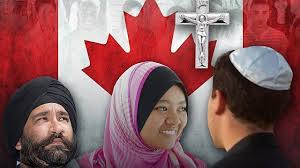
Religion is part of the fabric of Canadian society; Canadians hold a plurality of beliefs. The most recent census data (from the 2001 census) show that Christianity remains the most widely held and practiced religion with Roman Catholics in the majority at 43.2 %. People of non-Christian faiths make up a tiny percentage of the population: Muslims 2.0 %, Jewish 1.1 %, Hindus 1.0 %, Sikhs 0.9 %, Buddhist 1.0 %. Freedom of belief and conscience is enshrined in Canadian law; it is guaranteed in the Charter of Rights and Freedoms in section 2 Fundamental Freedoms. That said, it is important to note that religion is a matter of private conscience. Canada is a secular nation-state. There is no state religion in Canada. Religious belief is something one chooses; no one is forcing you to adhere to a particular set of ideas and the rules of any specific religious institution. Issues are arising in the present over the accommodation of religious folk in the secular, public realm of Canadian society. Continue reading
Category Archives: Law and Legislation
“If all printers were determined not to print anything till they were sure it would offend nobody, there would be very little printed.” ― Benjamin Franklin
The 2014 Rose Bowl Parade included a float “Love Is the Best Protection,” sponsored by the AIDS Healthcare Foundation. The reasoning behind the inclusion of the float, according to Ged Kenslea, Foundation President, is, “by showing the dream of lesbians and gay men fulfilled, the float is perfect with this year’s Rose Parade theme of ‘Dreams Come True.’” (as cited in Breitbart) The decision to include the float drew a mixed response. One impassioned response comes from a woman who was deeply offended. Angela Wingenroth offered the following comment:
“We don’t care what the states say about it — God is clear that this isn’t right and I will NOT have this SHOVED DOWN MY CHILDREN’S THROATS!! The intolerance is theirs. They will not accept peoples’ objections to their lifestyle — you HAVE to accept that it’s not just ok, but GOOD or you’re a bigot! If they want to get ‘married,’ that’s their choice, but my kids don’t need to see it.” (as cited in American Power)
I expect this is what she was told to think by her pastor and various anti-gay commentators about the fact that gay people are being granted full civil rights in US society. Still, I wonder who, if anyone, called this woman a bigot for feeling this way. Continue reading
“You have not converted a man because you have silenced him.” ― John Morley, On Compromise
There has been a great deal of heated discussion recently concerning an organization called GLAAD. GLAAD was founded in New York City in 1985 “… to protest against what it saw as the New York Post’s defamatory and sensationalized AIDS coverage, GLAAD put pressure on media organizations to end what it saw as homophobic reporting.” (Wikipedia) In 2012 GLAAD founded the Commentator Accountability Project (CAP). GLAAD maintains the purpose of CAP is to give a public airing of what various anti-gay commentators are saying and have said when they are not speaking through the mainstream media. Critics in the United States, generally those anti-gay commentators singled out in CAP and their supporters, accuse GLAAD of trying to impose censorship, that is, to stifle 1st Amendment guarantees of freedom of expression and freedom of religion. As a gay man, the anti-gay commentary GLAAD brings to light concerns me. I agree it needs to be challenged. However, censorship is an issue that resonates with me also, as I am a librarian and as such have a mandate to uphold intellectual freedom and freedom of expression. Continue reading
A person’s sexuality is so much more than one word “gay.” No one refers to anyone as just “hetero” because that doesn’t say anything. Sexual identity is broader than a label. — Gus Van Sant
Recently the question came to mind as to why so many religious folk and social conservatives hold such a prurient fixation on what they imagine goes on in other people’s bedrooms. Sex is a part of every conjugal relationship: gay and straight. Sex is natural, a part of living and to enjoy. Sodomy laws, as they were called, were repealed in Canada in 1969. Then Minister of Justice Pierre Elliott Trudeau famously declaring in 1967, “there’s no place for the state in the bedrooms of the nation.” (CBC Digital Archives) Sodomy laws were repealed across the United States as of 2003 when U.S. Supreme Court in a 6-3 decision in Lawrence v. Texas Justice Anthony Kennedy, writing for the majority, ruled that the state could not single out gay people for harassment and discriminatory treatment simply “because of ‘moral disapproval’ of homosexuality. He wrote of ‘respect’ for same-sex couples and warned that ‘the state cannot demean their existence,’ describing same-sex relationships as a ‘personal bond’ involving much more than just sex. Kennedy also wrote that reducing same-sex couples to ‘sex partners,’ as anti-gay organizations often do, is offensive in the same way that describing a husband and wife as nothing more than sex partners would be offensive.” (National Gay and Lesbian Task Force) Continue reading
Turks were a great nation even before they adopted Islam. This religion did not help the Arabs, Iranians, Egyptians and others to unite with Turks to form a nation. Conversely, it weakened the Turks’ national relations; it numbed Turkish national feelings and enthusiasm. This was natural, because Mohammedanism was based on Arab nationalism above all nationalities. — Mustafa Kemal Atatürk (1881–1938)
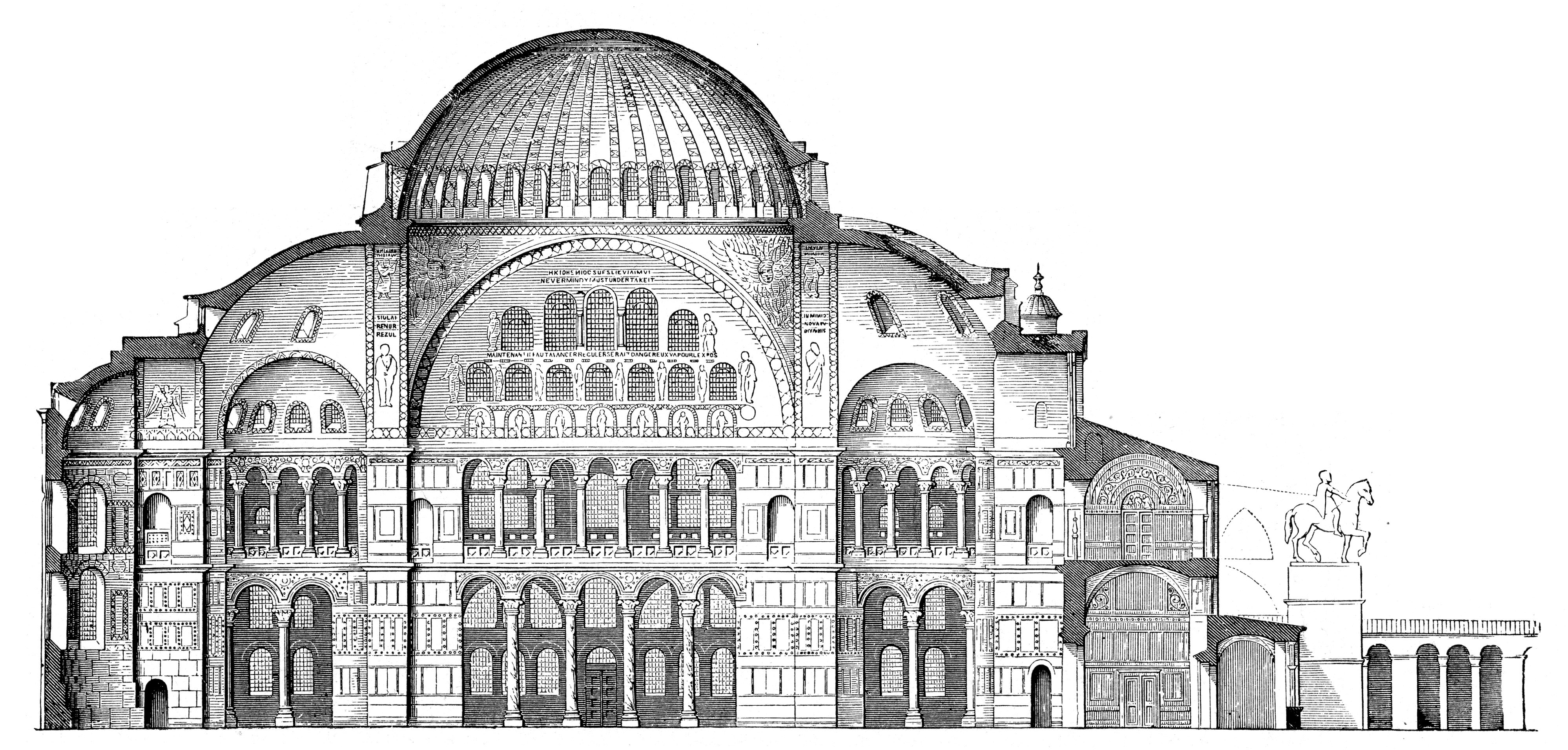
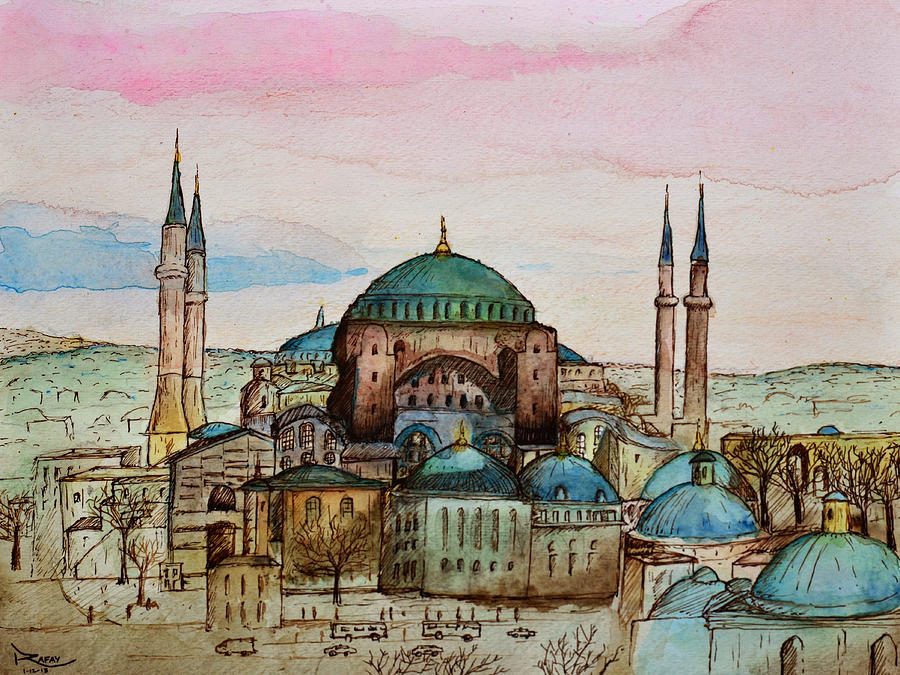
The Hagia Sophia has become the focal point in Turkish society’s current struggle between secularists and Islamists. The Republic of Turkey was founded in 1923 as a secular, parliamentary democracy with a president as head of state. In 1935, the Hagia Sophia was converted into a museum and opened to the public by the Turkish government led by Mustafa Kemal Atatürk (1881-1938). It became a major tourist attraction in Istanbul. It was turned into a museum, presumably, to reconcile the troubled history between Christianity and Islam with the realities of Turkey’s modern, secular state. The Hagia Sophia was the seat of Orthodox Christianity, the Patriarch of Constantinople, for several centuries (537–1204), a Roman Catholic cathedral from (1204–1261) and back to the Orthodox Church (1261–1453) until the conquest of the city by the Turks. It served as the first of several Imperial Mosques for the Ottoman Empire from 1453-1931. In the present, the drive to restore the Hagia Sophia as a mosque gained momentum. In 2013, Turkish Deputy Prime Minister Bulent Arinc, expressing this desire, said: “We currently stand next to the Hagia Sophia Mosque… we are looking at a sad Hagia Sophia, but hopefully we will see it smiling again soon.” (as cited in Ansa med) On July 10, 2020, President Erdogan signed a decree, ordering the restoration of the Hagia Sophia as a mosque. Continue reading
In the Universal Declaration of Human Rights (December 1948) in most solemn form, the dignity of a person is acknowledged to all human beings; and as a consequence there is proclaimed, as a fundamental right, the right of free movement in search for truth and in the attainment of moral good and of justice, and also the right to a dignified life. — Pope John XXIII, 1881-1963 Pacem in Terris, 1963
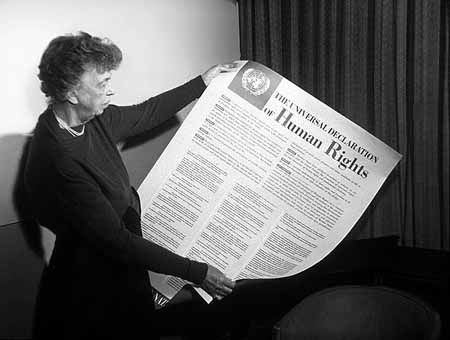
In essays published earlier on this blog the topic of religion in society, particularly the direction the Western world took in gradually establishing a clear separation of religion and state, relegating religion to the sphere of private conscience is discussed. The last remnants of Papal authority in temporal affairs ended with the signing of the Lateran Treaty between the Vatican and the Italian government in 1929. In the present, in the Western world, religious liberty is guaranteed in law and members of religious institutions are free to comment on moral and political issues just as anyone else. In the Islamic world, this distinction between religion and state never emerged, save for the Republic of Turkey which was founded as a secular state in 1923. The Ottoman Caliphate was abolished in 1924. The constitutional, civil and common law legal systems in effect across the Western world are rooted in the theory of natural rights, primarily as espoused by the men of the Enlightenment, such as John Locke and Thomas Paine. By contrast, across the Islamic world, the system of law, sharia, a religiously based moral and legal code applies. The differences in the legal systems and the place of religion in society between the Western world and the Islamic world are quite noticeable in comparing responses to the the Universal Declaration of Human Rights of 1948. Continue reading
“Dignity is not negotiable. Dignity is the honor of the family.” — Vartan Gregorian
A good friend and hunting buddy of mine, Omer, is an observant Muslim whose family immigrated to Canada from Pakistan. Omer is an educated man as is the rest of his family. He is someone I have known several years and with whom I have enjoyed many in-depth discussions, learning about his faith and the culture in which he grew up before coming to Canada. He tells me that family honour and shame are taken very seriously by some elements of Pakistani society. The phenomenon of honour killing is a reality for these elements of Pakistani society, particularly in the rural and tribal regions. Family honour is taken so seriously in this culture that if a family member (typically a girl or young woman) brings shame on the family the whole family suffers. They become untouchables; they are deemed unfit to associate with and most certainly are not welcome to marry into other families. The only way family honour can be restored in such a case is in killing the family member who brought the shame onto the family. This understanding of family honour is bound up in religion (Islam) and a culture in which men dominate. He certainly does not approve of this behaviour. He recognizes it as a problem that Pakistani society must address. Continue reading
We can only see a short distance ahead, but we can see plenty there that needs to be done. — Alan Turing (1912-1954)
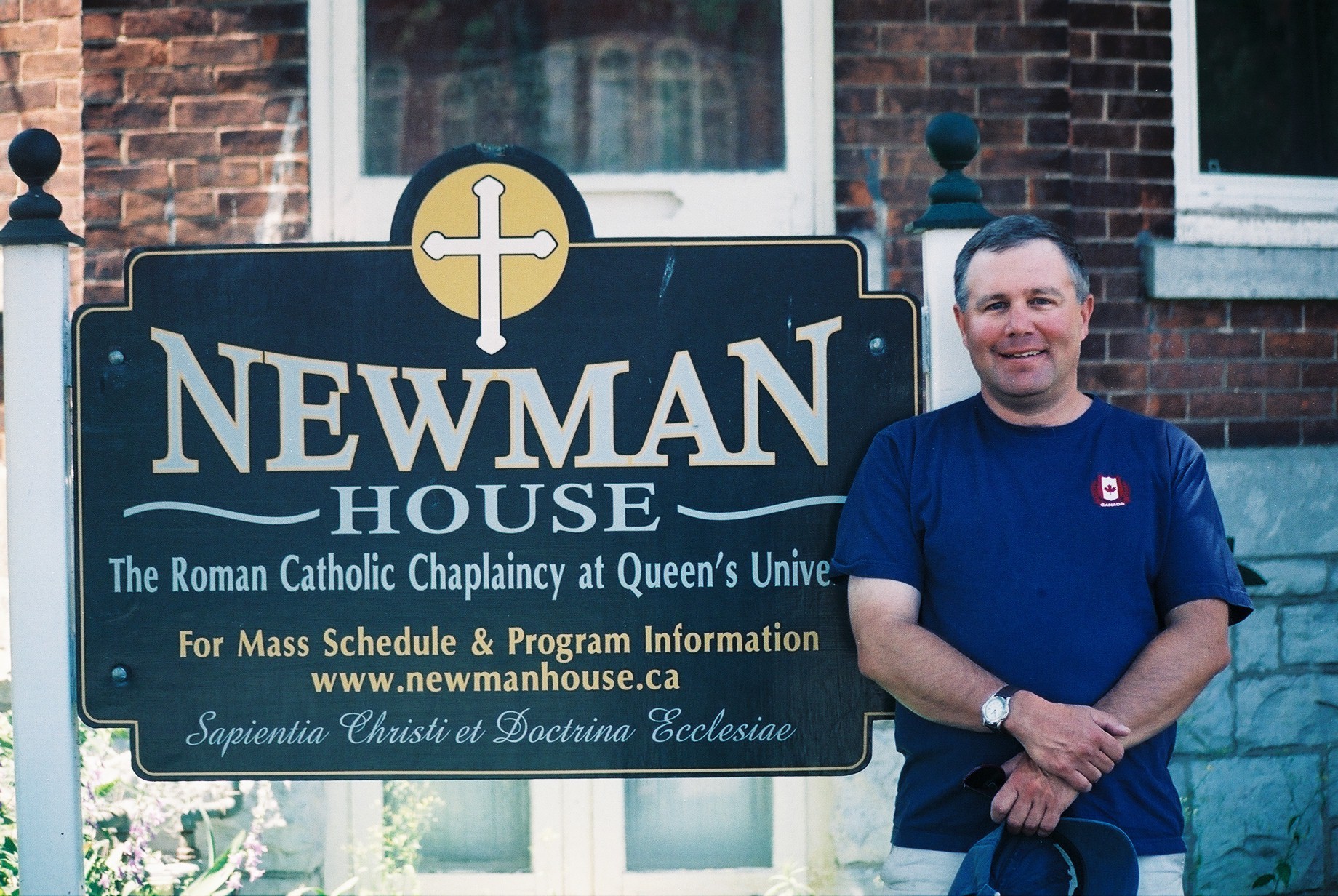
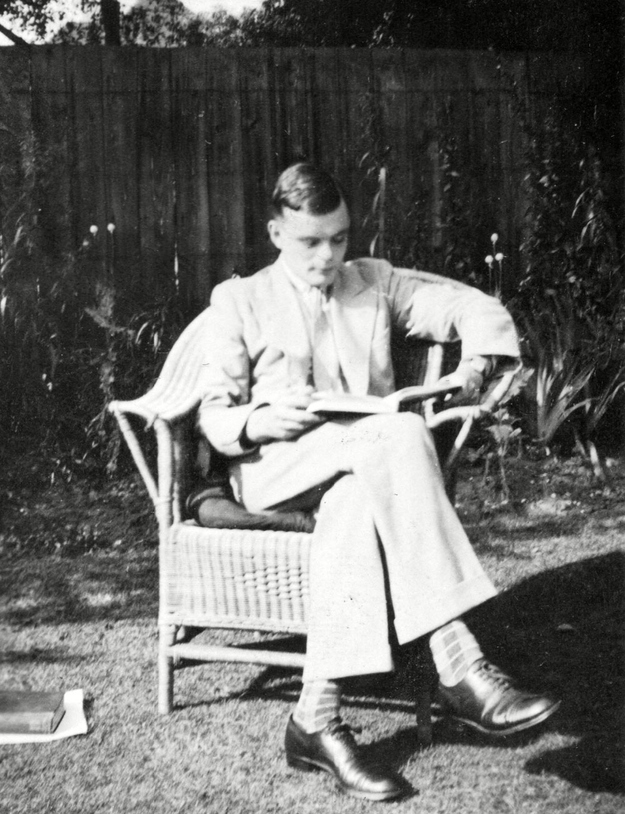
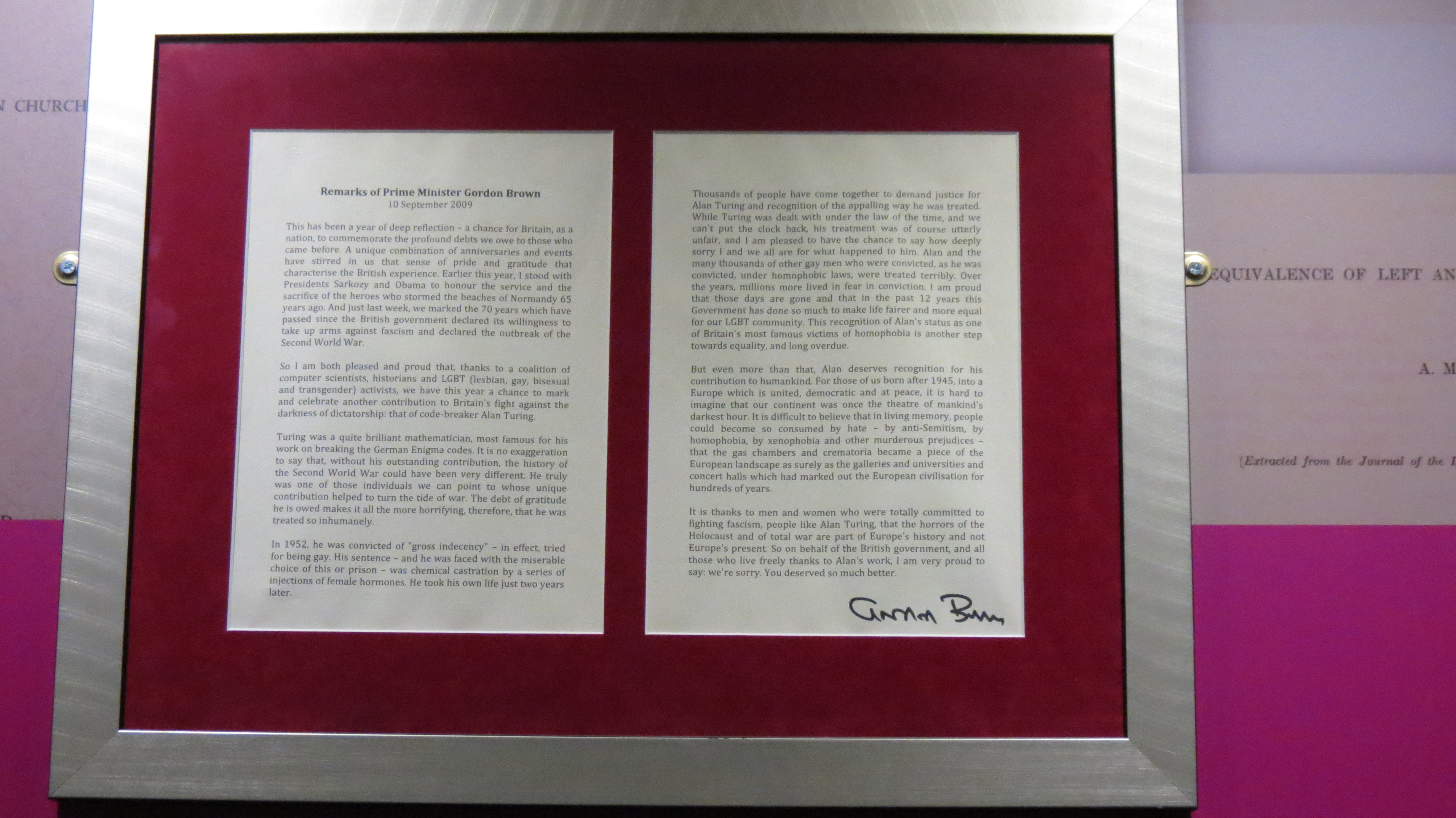
While Mika and I were enjoying our two weeks holiday in England last month among the sites we toured was Bletchley Park. This was especially of interest to Mika as he has a degree in computer science and mathematics from Queen’s University. Bletchley Park was the seat of British Intelligence, Government Code and Cypher School (GC&CS or GCCS, later renamed Government Communications Head Quarters GCHQ), during the Second World War where Axis radio transmissions were intercepted and decrypted. Those who worked there in the strictest secrecy and security made an invaluable contribution to the Allied war effort. Of those who worked at Bletchley Park during the Second World War was a mathematician and pioneering computer scientist named Alan Turing. It is held that “Turing’s brilliant ideas in solving codes, and developing computers to assist break them, may have saved more lives of military personnel in the course of the war than any other.” (Turing Biography) He is commemorated at Bletchley Park for his service to his King and country with a sculpture and a copy of the Letter of Apology from the British Government for the injustice he suffered following the war for having been identified as a “known homosexual,” an injustice that ruined his career, reputation, health and led to his suicide. Continue reading
Conservatives believe in the ties that bind us. Society is stronger when we make vows to each other and we support each other. I don’t support gay marriage in spite of being a conservative. I support gay marriage because I am a conservative. — David Cameron
Mika and I are supporters of the Conservative Party of Canada. While we support the government led by Prime Minister Harper, we do not have membership in the Conservative Party of Canada, nor do we donate money to the Party. Neither do we agree with every position taken by the Conservative government, and where instances of wrongdoing are exposed, we think those responsible should suffer the consequences. You may find it odd that a gay couple identifies as conservative, but we see ourselves moderate centre-right politically in our outlook and values. We value personal liberty, religious liberty (freedom of conscience), intellectual freedom, equality of opportunity and the pursuit of happiness. In our opinion, the Conservative Party of Canada, under the leadership of Prime Minister Stephen Harper, currently best represents these values. Continue reading
“Accumulating orthodoxy makes it harder year-by-year to be a Christian than it was in Jesus’ day.” ― Brian D. McLaren
When I started school, grade one to be precise, in Frontenac County in 1967 religious instruction was still part of the public school curriculum. While my family was Roman Catholic at the time, my mother and father were public school supporters. I recall every morning my teacher, Miss Boss, would read us a Bible story as part of our morning opening exercises. One of the first stories I remember she read to us was that of the parable of the Good Samaritan. At the time the nuances of the story were lost on me; it served as a basic moral lesson for me and my classmates that the Samaritan had done the right thing in helping the injured man, unlike the Priest and the Levite. Likewise so should we if confronted with a similar circumstance. It was not until many years later when I was a student at Queen’s University that I came to understand the story and the moral more fully. Continue reading