Category Archives: Secularism

The emphasis must be not on the right to abortion but on the right to privacy and reproductive control. — Ruth Bader Ginsburg

hobby-lobby_zps8425ff5a2RNS-HOBBY-LOBBY-SCOTUS

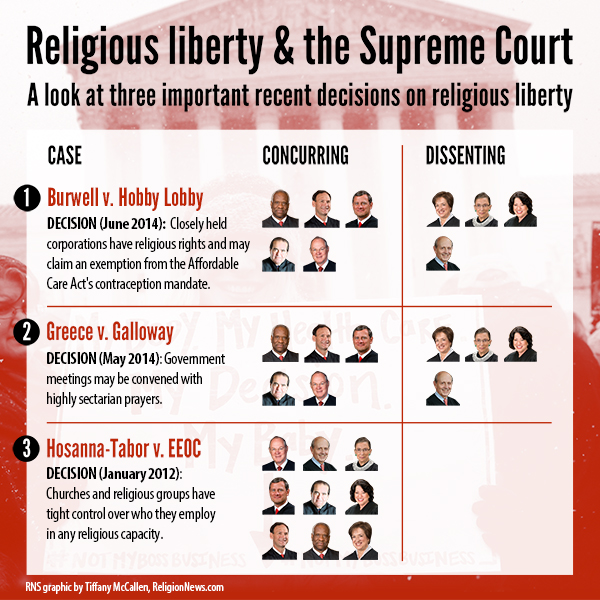
Controversy rages on in U. S. society over the issues of religious liberty and sexuality. The right to marry, the destigmatization of homosexuality and reproductive freedom are issues that, historically and in the present, conflict with deep-seated religious beliefs and traditions in U.S. society. While the U.S. Congress and State Legislatures addressed these issues, especially in passing legislation to guarantee religious liberty, disputes concerning religious freedom and sexuality more often are settled by the courts. In 1967 the Supreme Court of the United States (SCOTUS) ruled state bans on interracial marriage were unconstitutional in Loving v. Virginia. In 2013, SCOTUS struck down the Defense of Marriage Act (DOMA) and refused to hear the appeal of Proposition 8 in California. This removed legal barriers to same-sex marriage. Homosexuality was decriminalized in the U.S. in 2003 when SCOTUS ruled on Lawrence v. Texas. Most recently, the decision handed down by SCOTUS in Burwell v. Hobby Lobby is generating heated discussion in the media and blogosphere. In this instance, SCOTUS ruled on a dispute between the issues of religious liberty and reproductive rights. Continue reading
As long as teachers give tests, there will always be prayer in schools. — Unknown

9jMzRN92011-08-02_prayer-in-school

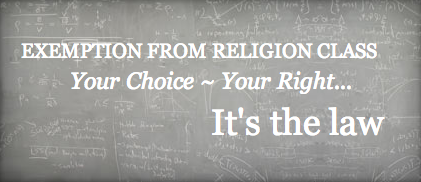
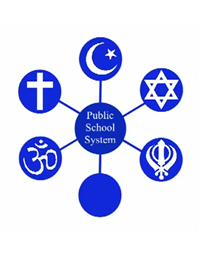
The issue of the practice of religion and religious education in Ontario schools has been a contentious issue throughout their history. The first Board of Education was established in Upper Canada (what became the Province of Ontario) in 1823. In 1824 the Board of Education was allotted funds to provide  for the “moral and religious instruction of the more indigent and remote settlements.” (The school system of Ontario) While Christianity was the dominant religion in Ontario in the 19th century there were sectarian divisions, notably those between Protestant and Roman Catholic, but there was also division between the various Protestant denominations, Anglican, Methodist, Presbyterian, for example. These divisions created strife and hard feelings regarding the provision of moral and religious instruction in Ontario schools. By the 1840s Egerton Ryerson (1803-1882), a Methodist clergyman and champion of public education, proposed “common schools” to educate children of all faiths. This was really quite forward thinking of Ryerson, but the divisions in Christendom at the time were so pronounced this was not possible. Continue reading

I do not feel obliged to believe that same God who endowed us with sense, reason, and intellect had intended for us to forgo their use. — Galileo Galilei

10-ST-JOHN-JESUSScreen-Shot-2014-05-10-at-8.42.11-PM-660x400

Continue reading

We are living at a time when creeds and ideologies vary and clash. But the gospel of human sympathy is universal and eternal. — Samuel Hopkins Adams

whatIsSB1062Hundreds_rally_against_SB1062_in_Flagsta_1360360000_3123610_ver1_0_640_480

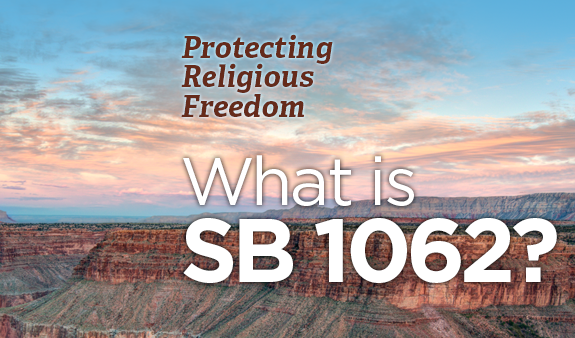
Is religious liberty under threat in the United States? This is an interesting question and bears examination. The controversy over the passage of SB 1062 in Arizona and the decision by the Governor, Jan Brewer, to veto the legislation has many people insisting their religious liberty is threatened and determined to stiffen their resistance to this perceived threat. Regarding religious liberty in US society, the National Council of the Churches of Christ in the USA, in 1944 (then Federal Council of Churches of Christ), formed the following definition:

Religious liberty shall be interpreted to include freedom to worship according to conscience and to bring up children in the faith of their parents; freedom for the individual to change his religion; freedom to preach, educate, publish and carry on missionary activities; and freedom to organize with others, and to acquire and hold property, for these purposes. (as cited in Wikipedia)

At present, these are fundamental freedoms guaranteed in US law. Is there any reason to believe they are at risk? Continue reading

The religion then of every man must be left to the conviction and conscience of every man; and it is the right of every man to exercise it as these may dictate. — James Madison

Arizonapict31

Mika and I have never travelled to the United States together. We have, individually, visited the United States on a number of occasions. Growing up I lived in Laurel, Maryland for several months in 1965 with my family. My father was serving in the Canadian Army at the time and was posted to Washington DC briefly. As a boy, Mika visited Yellowstone National Park in Wyoming with his family. I have been as far south in the United States as Florida; I took a holiday with my family during March break in 1977. I have been to New England and in 2012 had a very nice time visiting with a good friend and his family in Washington state. I have made periodic visits across the border into upstate New York on shopping trips. For our first trip together to the United States, Arizona is a state Mika and I are interested in visiting for a holiday. The appeal for us is to see the desert habitat, its hot, dry climate, the plants, like Sonora cactus, the wildlife, like road runners and javelinas and to get a taste of the culture of the Southwestern United States. Continue reading

Piety is not a goal but a means to attain through the purest peace of mind the highest culture. — Johann Wolfgang von Goethe (1749-1832)

Quebecpiety

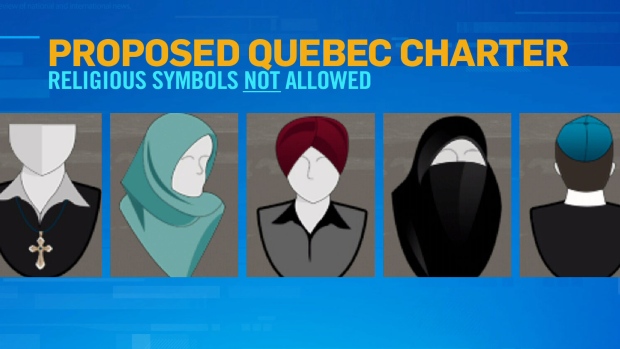
Years ago, I remembered while discussing theology with a group of friends, one in the group referred to himself as a pious atheist. I was taken aback by his comment as piety and atheism were not terms I associated with one another. Piety is most commonly associated with religious beliefs and practices. Since then, I gave this notion a great deal of thought: is secular piety a possibility? This question is worth considering in that how one expresses their piety in an increasingly secular society has become a contentious issue of late; as is evidenced by the controversy surrounding the proposed Quebec Charter of Values (Charte de la laïcité or Charte des valeurs québécoises). The stated aim of the charter is to ensure there is a clear separation of religion and state and that public employees have religious neutrality. What this means is wearing ostentatious religious symbols or garb on the job will be prohibited. Continue reading

I think Islam is in a sense, in crisis. It needs to question and re-question itself. — Azar Nafisi

shariaimagesCARN2W12

Criticism of religion is a tender subject. Criticism of Islam, in particular, is especially so as is evidenced by the court battle that threatened to take shape between the National Council of Canadian Muslims (NCCM), Prime Minister Stephen Harper and Jason MacDonald (spokesman for Prime Minister Harper). The NCCM filed a notice of libel in the Ontario Superior Court of Justice over remarks made by Jason MacDonald in dismissing their objection to the inclusion of Rabbi Daniel Korobkin of the Beth Avraham Yosef Synagogue in Toronto as part of the delegation that accompanied Prime Minister Harper on a visit to Israel in January 2014. MacDonald dismissed their objection stating “we will not take seriously criticism from an organization with documented ties to terrorist organization such as Hamas.” (as cited in CTV News) The NCCM objected to the inclusion of Rabbi Korobkin in the delegation accompanying Prime Minister Harper because he hosted speaking engagements featuring Robert Spencer and Pamela Geller, two noted critics of Islam, in September 2013. Continue reading

If a believer demands that I, as a nonbeliever, observe his taboos in the public domain, he is not asking for my respect, but for my submission. ― Flemming Rose

separatione342d3_ce5f6ee1b725db96bedda2be61c99425

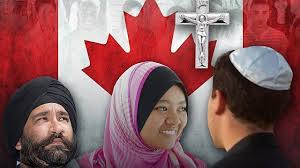
Religion is part of the fabric of Canadian society; Canadians hold a plurality of beliefs. The most recent census data (from the 2001 census) show that Christianity remains the most widely held and practiced religion with Roman Catholics in the majority at 43.2 %. People of non-Christian faiths make up a tiny percentage of the population: Muslims 2.0 %, Jewish 1.1 %, Hindus 1.0 %, Sikhs 0.9 %, Buddhist 1.0 %. Freedom of belief and conscience is enshrined in Canadian law; it is guaranteed in the Charter of Rights and Freedoms in section 2 Fundamental Freedoms. That said, it is important to note that religion is a matter of private conscience. Canada is a secular nation-state. There is no state religion in Canada. Religious belief is something one chooses; no one is forcing you to adhere to a particular set of ideas and the rules of any specific religious institution. Issues are arising in the present over the accommodation of religious folk in the secular, public realm of Canadian society. Continue reading

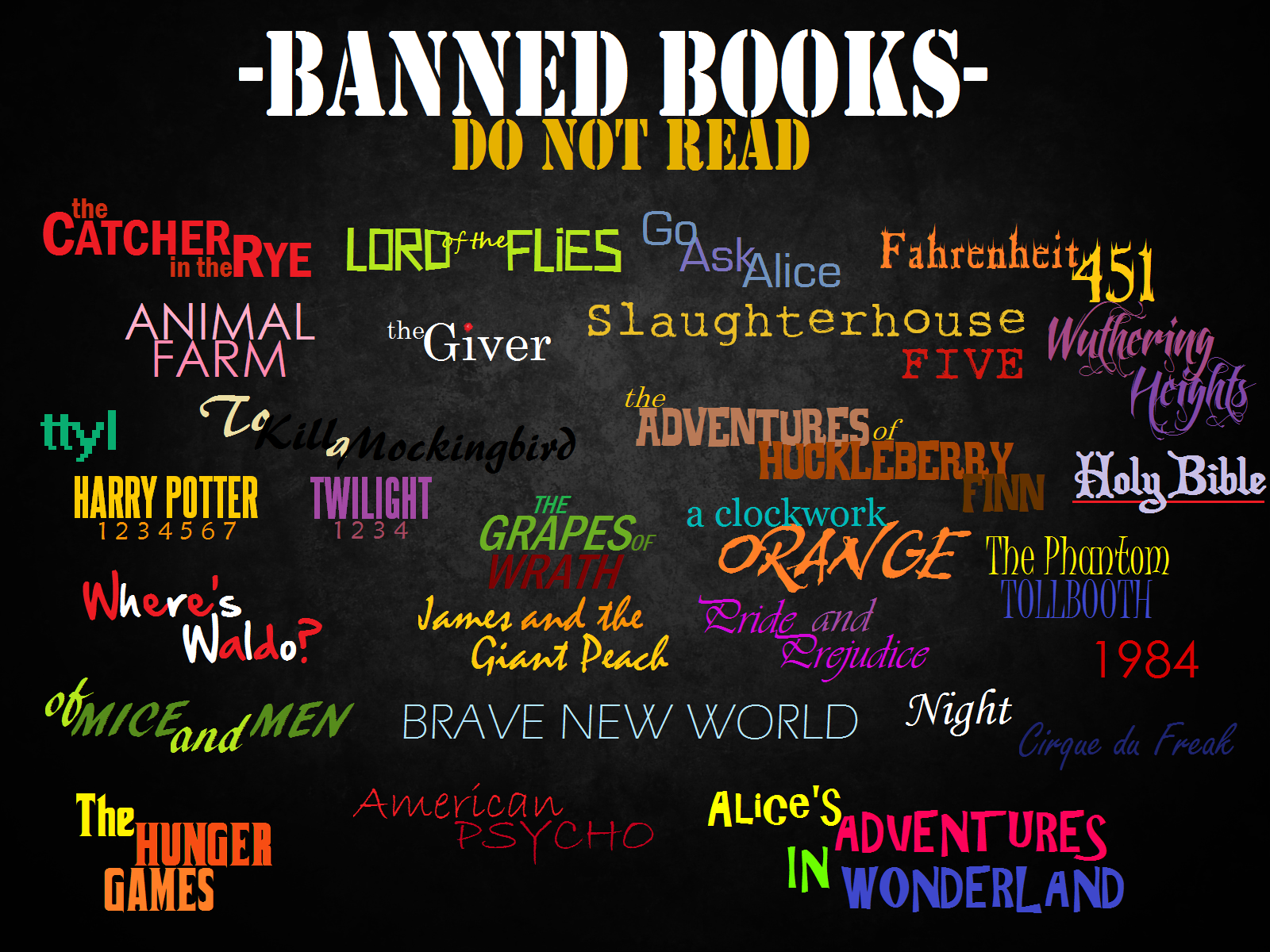
“If all printers were determined not to print anything till they were sure it would offend nobody, there would be very little printed.” ― Benjamin Franklin

censorshipdo-not-read

The 2014 Rose Bowl Parade included a float “Love Is the Best Protection,” sponsored by the AIDS Healthcare Foundation. The reasoning behind the inclusion of the float, according to Ged Kenslea, Foundation President, is, “by showing the dream of lesbians and gay men fulfilled, the float is perfect with this year’s Rose Parade theme of ‘Dreams Come True.’” (as cited in Breitbart) The decision to include the float drew a mixed response. One impassioned response comes from a woman who was deeply offended. Angela Wingenroth offered the following comment:

“We don’t care what the states say about it — God is clear that this isn’t right and I will NOT have this SHOVED DOWN MY CHILDREN’S THROATS!! The intolerance is theirs. They will not accept peoples’ objections to their lifestyle — you HAVE to accept that it’s not just ok, but GOOD or you’re a bigot! If they want to get ‘married,’ that’s their choice, but my kids don’t need to see it.” (as cited in American Power)

I expect this is what she was told to think by her pastor and various anti-gay commentators about the fact that gay people are being granted full civil rights in US society. Still, I wonder who, if anyone, called this woman a bigot for feeling this way. Continue reading

Turks were a great nation even before they adopted Islam. This religion did not help the Arabs, Iranians, Egyptians and others to unite with Turks to form a nation. Conversely, it weakened the Turks’ national relations; it numbed Turkish national feelings and enthusiasm. This was natural, because Mohammedanism was based on Arab nationalism above all nationalities. — Mustafa Kemal Atatürk (1881–1938)

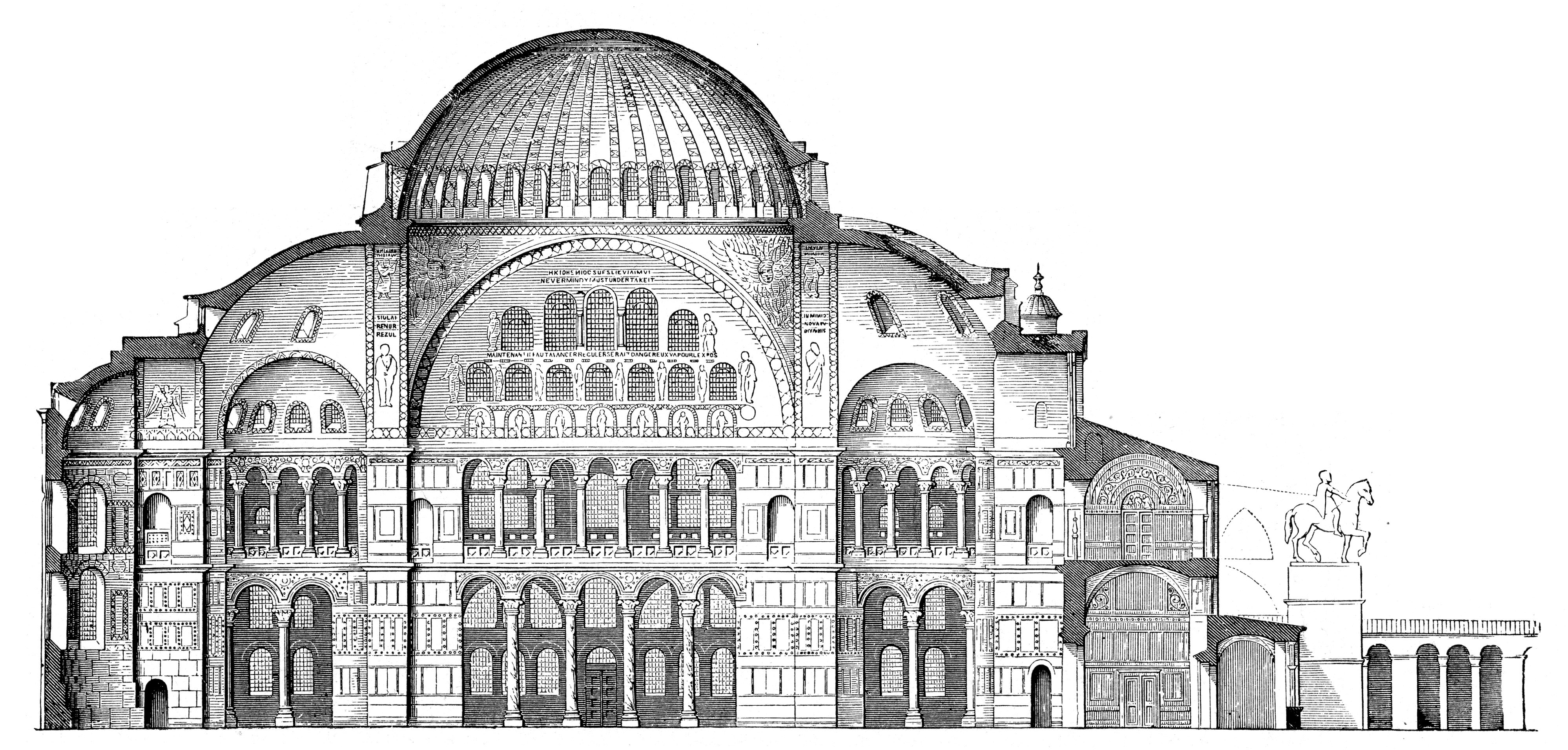
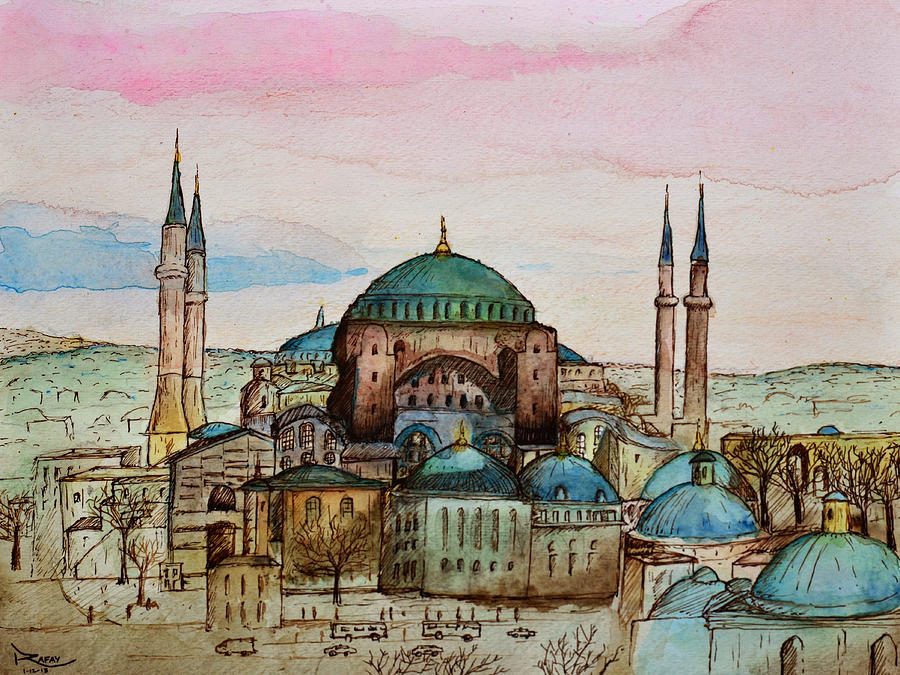
Hagia-Sophia-Laengsschnitthagia-sophia-rafay-zafer

The Hagia Sophia has become the focal point in Turkish society’s current struggle between secularists and Islamists. The Republic of Turkey was founded in 1923 as a secular, parliamentary democracy with a president as head of state. In 1935, the Hagia Sophia was converted into a museum and opened to the public by the Turkish government led by Mustafa Kemal Atatürk (1881-1938). It became a major tourist attraction in Istanbul. It was turned into a museum, presumably, to reconcile the troubled history between Christianity and Islam with the realities of Turkey’s modern, secular state. The Hagia Sophia was the seat of Orthodox Christianity, the Patriarch of Constantinople, for several centuries (537–1204), a Roman Catholic cathedral from (1204–1261) and back to the Orthodox Church (1261–1453) until the conquest of the city by the Turks. It served as the first of several Imperial Mosques for the Ottoman Empire from 1453-1931. In the present, the drive to restore the Hagia Sophia as a mosque gained momentum. In 2013, Turkish Deputy Prime Minister Bulent Arinc, expressing this desire, said: “We currently stand next to the Hagia Sophia Mosque… we are looking at a sad Hagia Sophia, but hopefully we will see it smiling again soon.” (as cited in Ansa med) On July 10, 2020, President Erdogan signed a decree, ordering the restoration of the Hagia Sophia as a mosque. Continue reading