
Tag Archives: religion and state

The religion then of every man must be left to the conviction and conscience of every man; and it is the right of every man to exercise it as these may dictate. — James Madison

Arizonapict31

Mika and I have never travelled to the United States together. We have, individually, visited the United States on a number of occasions. Growing up I lived in Laurel, Maryland for several months in 1965 with my family. My father was serving in the Canadian Army at the time and was posted to Washington DC briefly. As a boy, Mika visited Yellowstone National Park in Wyoming with his family. I have been as far south in the United States as Florida; I took a holiday with my family during March break in 1977. I have been to New England and in 2012 had a very nice time visiting with a good friend and his family in Washington state. I have made periodic visits across the border into upstate New York on shopping trips. For our first trip together to the United States, Arizona is a state Mika and I are interested in visiting for a holiday. The appeal for us is to see the desert habitat, its hot, dry climate, the plants, like Sonora cactus, the wildlife, like road runners and javelinas and to get a taste of the culture of the Southwestern United States. Continue reading

Piety is not a goal but a means to attain through the purest peace of mind the highest culture. — Johann Wolfgang von Goethe (1749-1832)

Quebecpiety

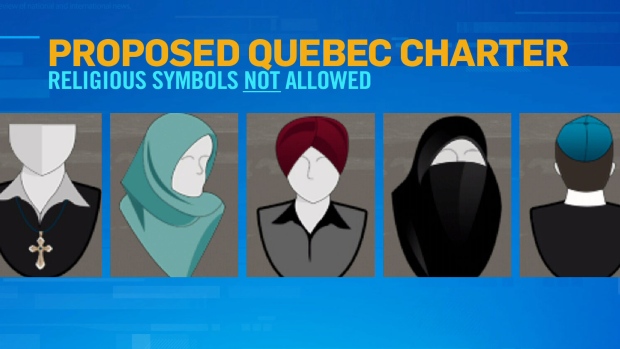
Years ago, I remembered while discussing theology with a group of friends, one in the group referred to himself as a pious atheist. I was taken aback by his comment as piety and atheism were not terms I associated with one another. Piety is most commonly associated with religious beliefs and practices. Since then, I gave this notion a great deal of thought: is secular piety a possibility? This question is worth considering in that how one expresses their piety in an increasingly secular society has become a contentious issue of late; as is evidenced by the controversy surrounding the proposed Quebec Charter of Values (Charte de la laïcité or Charte des valeurs québécoises). The stated aim of the charter is to ensure there is a clear separation of religion and state and that public employees have religious neutrality. What this means is wearing ostentatious religious symbols or garb on the job will be prohibited. Continue reading

A person’s sexuality is so much more than one word “gay.” No one refers to anyone as just “hetero” because that doesn’t say anything. Sexual identity is broader than a label. — Gus Van Sant

sex-question-personal-gay-pride-month-ecards-someecardssantorum-gay-sex

Recently the question came to mind as to why so many religious folk and social conservatives hold such a prurient fixation on what they imagine goes on in other people’s bedrooms. Sex is a part of every conjugal relationship: gay and straight. Sex is natural, a part of living and to enjoy. Sodomy laws, as they were called, were repealed in Canada in 1969. Then Minister of Justice Pierre Elliott Trudeau famously declaring in 1967, “there’s no place for the state in the bedrooms of the nation.” (CBC Digital Archives) Sodomy laws were repealed across the United States as of 2003 when U.S. Supreme Court in a 6-3 decision in Lawrence v. Texas Justice Anthony Kennedy, writing for the majority, ruled that the state could not single out gay people for harassment and discriminatory treatment simply “because of ‘moral disapproval’ of homosexuality. He wrote of ‘respect’ for same-sex couples and warned that ‘the state cannot demean their existence,’ describing same-sex relationships as a ‘personal bond’ involving much more than just sex. Kennedy also wrote that reducing same-sex couples to ‘sex partners,’ as anti-gay organizations often do, is offensive in the same way that describing a husband and wife as nothing more than sex partners would be offensive.” (National Gay and Lesbian Task Force) Continue reading

“Dignity is not negotiable. Dignity is the honor of the family.” — Vartan Gregorian

shame3shouldnt_real_family_values_value_all_families_tshirt-r9af494bc515f443588ea2190db93cf65_804gs_512

A good friend and hunting buddy of mine, Omer, is an observant Muslim whose family immigrated to Canada from Pakistan. Omer is an educated man as is the rest of his family. He is someone I have known several years and with whom I have enjoyed many in-depth discussions, learning about his faith and the culture in which he grew up before coming to Canada.  He tells me that family honour and shame are taken very seriously by some elements of Pakistani society. The phenomenon of honour killing is a reality for these elements of Pakistani society, particularly in the rural and tribal regions. Family honour is taken so seriously in this culture that if a family member (typically a girl or young woman) brings shame on the family the whole family suffers. They become untouchables; they are deemed unfit to associate with and most certainly are not welcome to marry into other families. The only way family honour can be restored in such a case is in killing the family member who brought the shame onto the family. This understanding of family honour is bound up in religion (Islam) and a culture in which men dominate. He certainly does not approve of this behaviour. He recognizes it as a problem that Pakistani society must address. Continue reading

I am a conservative Republican, but I believe in democracy and the separation of church and state. The conservative movement is founded on the simple tenet that people have the right to live life as they please as long as they don’t hurt anyone else in the process. — Barry Goldwater

2012-02-15-goldwater_0billboard

In a previously published essay, I discussed the life and career of Barry Goldwater, the Republican Senator from Arizona and his support of gays serving in the US military. Beyond this, he was in favour of gay rights in all of US society. This support was based on his conviction that there be a strict separation between religion and state. Goldwater’s position on gay rights and the separation of religion and state put him at odds with many conservatives, particularly the religious constituency known as the Christian right that supports the GOP and various socially conservative causes in the United States. The Christian right is composed primarily of the Moral Majority, renamed Moral Majority Coalition in 2004, the Christian Coalition of America, Focus on the Family and the Family Research Council. The most prominent figures in the Christian Right are Jerry Falwell (deceased), Pat Robertson, James Dobson and Tony Perkins. Continue reading