
Claude Hamilton Gresham, Jr. (June 21, 1922 – February 18, 2008), better known as Grits Gresham, was an avid sportsman and naturalist and a first-rate outdoor writer and broadcaster. I have many of his books in my library collection and his videos on duck and goose hunting. I have a great many books on hunting in my library collection from many different authors. Still, in my opinion, his book on waterfowl hunting, The Complete Wildfowler, is the finest ever written on the subject. He was from rural South Carolina and highly educated with a bachelor of science and master of science degrees, with a specialty in forestry and wildlife management, from Louisiana State University in Baton Rouge. He made his home in Louisiana and is remembered by Robert J. Barham, the Secretary of the Louisiana Department of Wildlife and Fisheries and a former Republican member of the Louisiana State Senate who recalled, “as a child, I got to meet him and be around him. He was just so easy to be around. Grits was nothing like the television celebrities of today. People were drawn to him. He made them feel at ease … he made me feel at ease, and I was just a child. … There will never be another like him.” (as cited in Wikipedia) Continue reading
Category Archives: Civil Rights
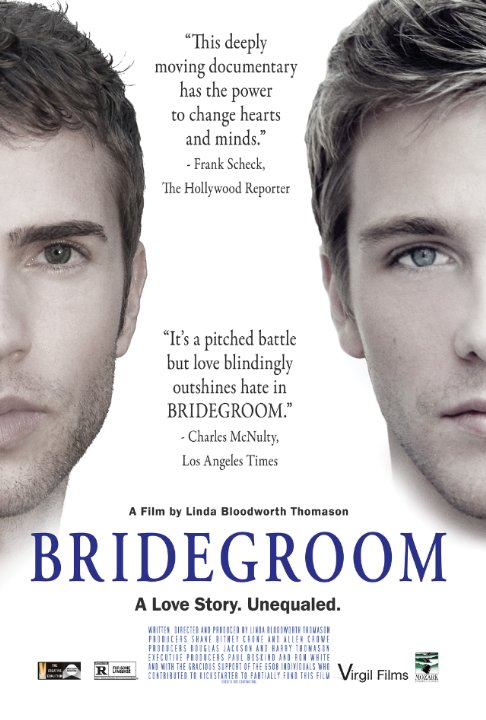
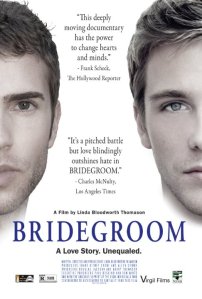
Bridegroom A Love Story, Unequaled
Mika and I enjoy reading and viewing biographies in print and on film. The latest addition to our library collection is a copy on DVD of the documentary film Bridegroom A Love Story, Unequaled, produced by Linda Bloodworth-Thomason. The documentary was inspired by the video It could happen to you, published on YouTube by Shane Bitney Crone in 2012. The video is a moving account of the loving relationship between Thomas Lee Bridegroom and Shane Bitney Crone, the untimely death of Tom Bridegroom in a tragic accident and the unfortunate events that followed. The story of the tragedy that struck these two young men has resonated with people across the world following publication of the YouTube video It could happen to you. The documentary film, Bridegroom A Love Story, Unequaled, while dealing with the disturbing events following Bridegroom’s death, presents a biography of both Thomas Lee Bridegroom and Shane Bitney Crone, giving more detailed accounts of their childhoods, formative years, how, as young men, they came to meet and become a couple.
The film is a blend of still photos and video footage of Thomas Lee Bridegroom and Shane Bitney Crone, their families, friends and acquaintances taken throughout their lives. If also features interviews with Bitney Crone, members of his family, friends and acquaintances of both men. Thomas Lee Bridegroom’s family has consistently exercised their right to silence and refused any comment on the matter and appear only in still photos and snippets of video taken before their son’s untimely death. The look into their respective childhoods was particularly interesting. Before viewing the film, I surmised that Bridegroom came from a comfortable, middle-class background. He attended the Culver Military Academy, which commands rather hefty school fees and enrolled at Vassar College following his graduation. I learned in viewing the film his parents mounted an extraordinary effort, his mother took a job at Culver to help raise the money to pay the school fees. They saw to it he had the opportunity for a very good education. Shane Bitney Crone attended state schools and left for Los Angeles following his graduation from high school to seek his fortune in the entertainment industry. He had the support of his family in pursuing his dream.
The tone of the film is quite temperate and gets the point across very gently and eloquently that gay people fall in love, become couples and set up households together. It shows just how precarious it is for a gay couple when their relationship is not given the same legal standing of that of a heterosexual couple; thereby making a strong case for marriage equality. It is well worth viewing and though inspired by the personal tragedy that befell Thomas Lee Bridegroom and Shane Bitney Crone, it documents, as the title indicates, a love story, unequaled.
Posted by Geoffrey and Mika
A person’s sexuality is so much more than one word “gay.” No one refers to anyone as just “hetero” because that doesn’t say anything. Sexual identity is broader than a label. — Gus Van Sant
Recently the question came to mind as to why so many religious folk and social conservatives hold such a prurient fixation on what they imagine goes on in other people’s bedrooms. Sex is a part of every conjugal relationship: gay and straight. Sex is natural, a part of living and to enjoy. Sodomy laws, as they were called, were repealed in Canada in 1969. Then Minister of Justice Pierre Elliott Trudeau famously declaring in 1967, “there’s no place for the state in the bedrooms of the nation.” (CBC Digital Archives) Sodomy laws were repealed across the United States as of 2003 when U.S. Supreme Court in a 6-3 decision in Lawrence v. Texas Justice Anthony Kennedy, writing for the majority, ruled that the state could not single out gay people for harassment and discriminatory treatment simply “because of ‘moral disapproval’ of homosexuality. He wrote of ‘respect’ for same-sex couples and warned that ‘the state cannot demean their existence,’ describing same-sex relationships as a ‘personal bond’ involving much more than just sex. Kennedy also wrote that reducing same-sex couples to ‘sex partners,’ as anti-gay organizations often do, is offensive in the same way that describing a husband and wife as nothing more than sex partners would be offensive.” (National Gay and Lesbian Task Force) Continue reading
Turks were a great nation even before they adopted Islam. This religion did not help the Arabs, Iranians, Egyptians and others to unite with Turks to form a nation. Conversely, it weakened the Turks’ national relations; it numbed Turkish national feelings and enthusiasm. This was natural, because Mohammedanism was based on Arab nationalism above all nationalities. — Mustafa Kemal Atatürk (1881–1938)
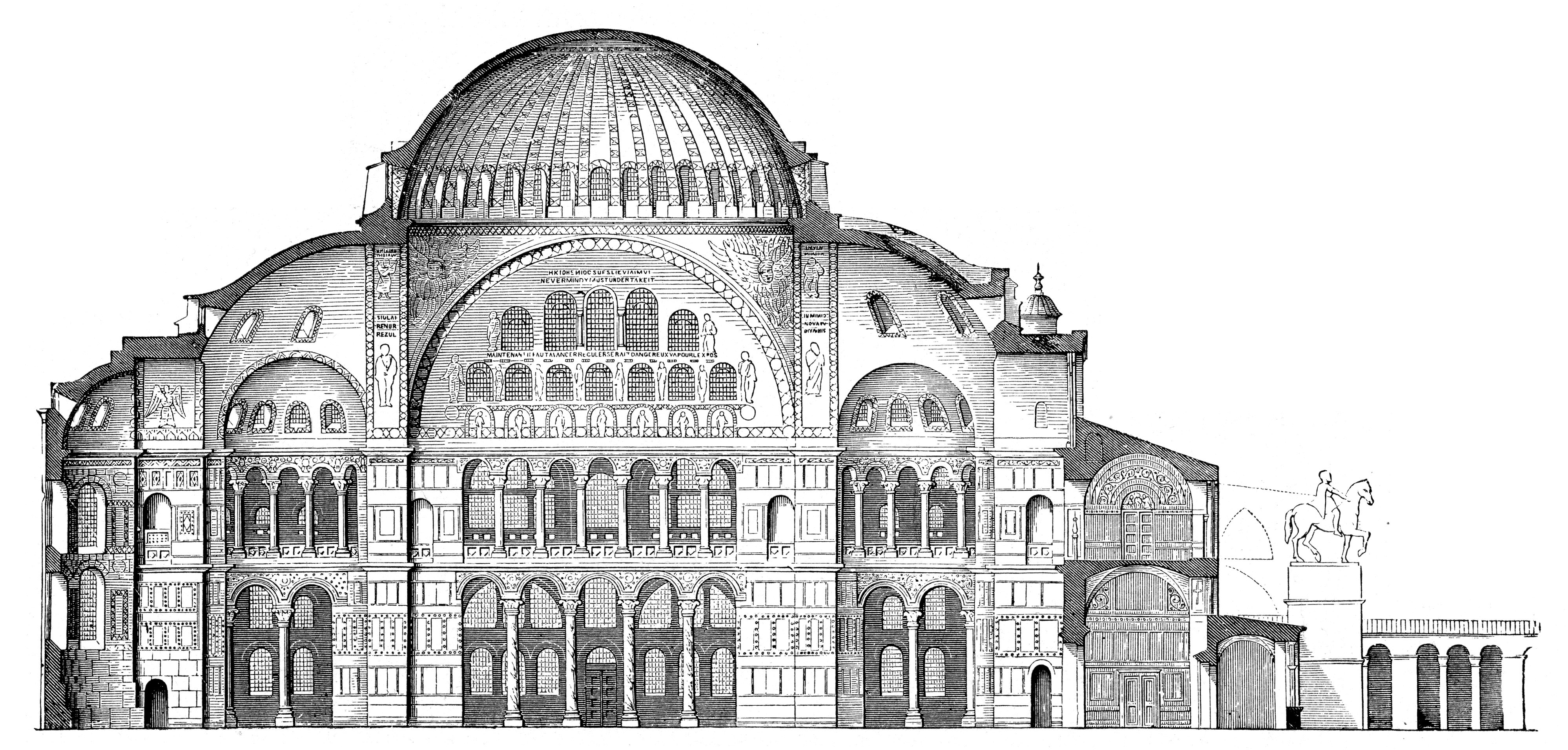
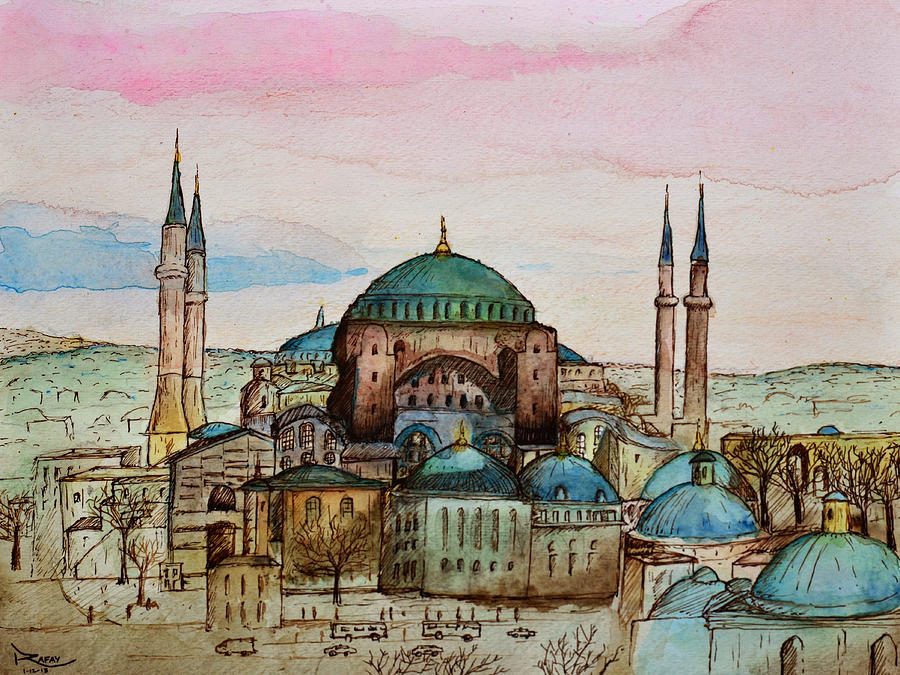
The Hagia Sophia has become the focal point in Turkish society’s current struggle between secularists and Islamists. The Republic of Turkey was founded in 1923 as a secular, parliamentary democracy with a president as head of state. In 1935, the Hagia Sophia was converted into a museum and opened to the public by the Turkish government led by Mustafa Kemal Atatürk (1881-1938). It became a major tourist attraction in Istanbul. It was turned into a museum, presumably, to reconcile the troubled history between Christianity and Islam with the realities of Turkey’s modern, secular state. The Hagia Sophia was the seat of Orthodox Christianity, the Patriarch of Constantinople, for several centuries (537–1204), a Roman Catholic cathedral from (1204–1261) and back to the Orthodox Church (1261–1453) until the conquest of the city by the Turks. It served as the first of several Imperial Mosques for the Ottoman Empire from 1453-1931. In the present, the drive to restore the Hagia Sophia as a mosque gained momentum. In 2013, Turkish Deputy Prime Minister Bulent Arinc, expressing this desire, said: “We currently stand next to the Hagia Sophia Mosque… we are looking at a sad Hagia Sophia, but hopefully we will see it smiling again soon.” (as cited in Ansa med) On July 10, 2020, President Erdogan signed a decree, ordering the restoration of the Hagia Sophia as a mosque. Continue reading
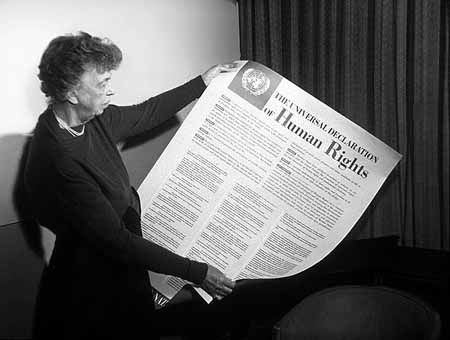
In the Universal Declaration of Human Rights (December 1948) in most solemn form, the dignity of a person is acknowledged to all human beings; and as a consequence there is proclaimed, as a fundamental right, the right of free movement in search for truth and in the attainment of moral good and of justice, and also the right to a dignified life. — Pope John XXIII, 1881-1963 Pacem in Terris, 1963
In essays published earlier on this blog the topic of religion in society, particularly the direction the Western world took in gradually establishing a clear separation of religion and state, relegating religion to the sphere of private conscience is discussed. The last remnants of Papal authority in temporal affairs ended with the signing of the Lateran Treaty between the Vatican and the Italian government in 1929. In the present, in the Western world, religious liberty is guaranteed in law and members of religious institutions are free to comment on moral and political issues just as anyone else. In the Islamic world, this distinction between religion and state never emerged, save for the Republic of Turkey which was founded as a secular state in 1923. The Ottoman Caliphate was abolished in 1924. The constitutional, civil and common law legal systems in effect across the Western world are rooted in the theory of natural rights, primarily as espoused by the men of the Enlightenment, such as John Locke and Thomas Paine. By contrast, across the Islamic world, the system of law, sharia, a religiously based moral and legal code applies. The differences in the legal systems and the place of religion in society between the Western world and the Islamic world are quite noticeable in comparing responses to the the Universal Declaration of Human Rights of 1948. Continue reading
“Dignity is not negotiable. Dignity is the honor of the family.” — Vartan Gregorian
A good friend and hunting buddy of mine, Omer, is an observant Muslim whose family immigrated to Canada from Pakistan. Omer is an educated man as is the rest of his family. He is someone I have known several years and with whom I have enjoyed many in-depth discussions, learning about his faith and the culture in which he grew up before coming to Canada. He tells me that family honour and shame are taken very seriously by some elements of Pakistani society. The phenomenon of honour killing is a reality for these elements of Pakistani society, particularly in the rural and tribal regions. Family honour is taken so seriously in this culture that if a family member (typically a girl or young woman) brings shame on the family the whole family suffers. They become untouchables; they are deemed unfit to associate with and most certainly are not welcome to marry into other families. The only way family honour can be restored in such a case is in killing the family member who brought the shame onto the family. This understanding of family honour is bound up in religion (Islam) and a culture in which men dominate. He certainly does not approve of this behaviour. He recognizes it as a problem that Pakistani society must address. Continue reading
We can only see a short distance ahead, but we can see plenty there that needs to be done. — Alan Turing (1912-1954)
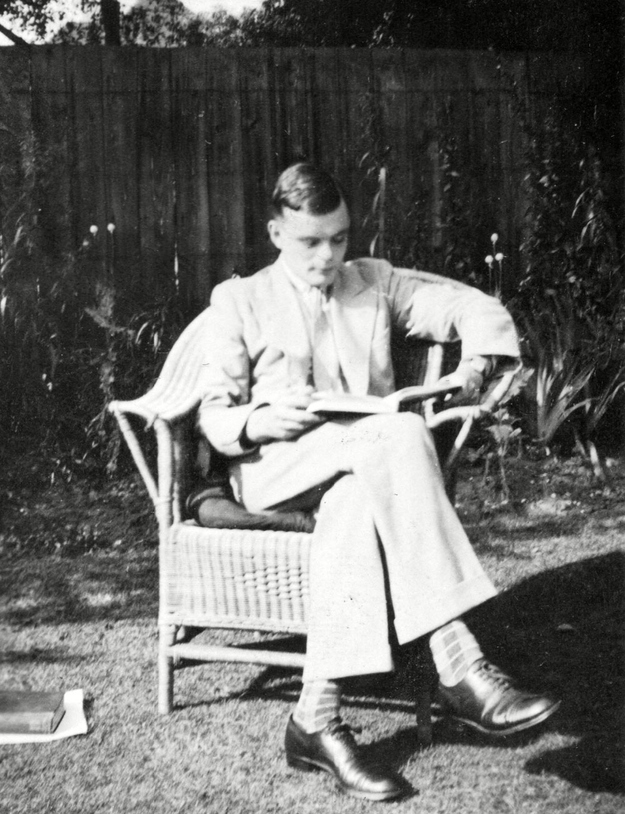
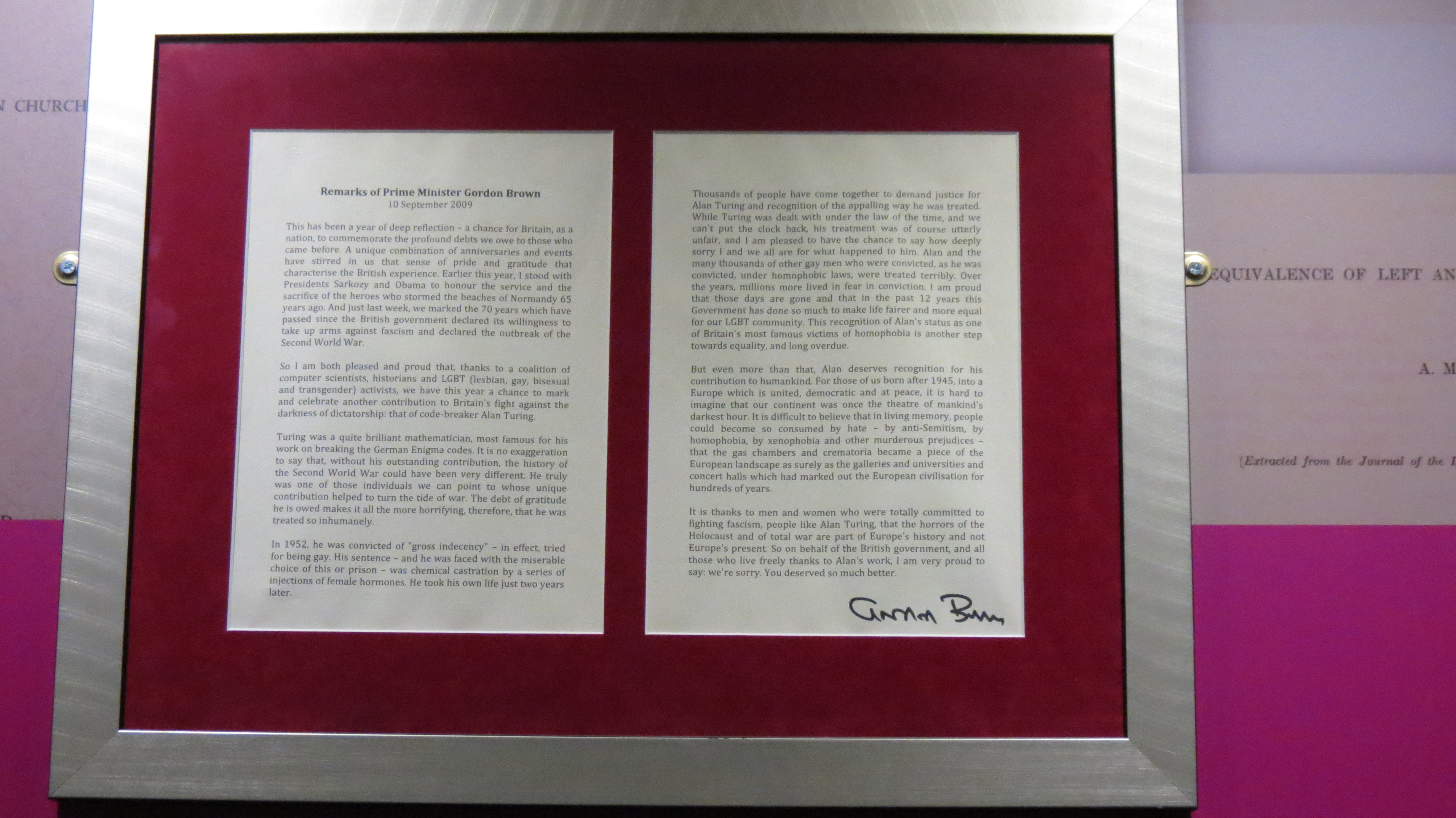
While Mika and I were enjoying our two weeks holiday in England last month among the sites we toured was Bletchley Park. This was especially of interest to Mika as he has a degree in computer science and mathematics from Queen’s University. Bletchley Park was the seat of British Intelligence, Government Code and Cypher School (GC&CS or GCCS, later renamed Government Communications Head Quarters GCHQ), during the Second World War where Axis radio transmissions were intercepted and decrypted. Those who worked there in the strictest secrecy and security made an invaluable contribution to the Allied war effort. Of those who worked at Bletchley Park during the Second World War was a mathematician and pioneering computer scientist named Alan Turing. It is held that “Turing’s brilliant ideas in solving codes, and developing computers to assist break them, may have saved more lives of military personnel in the course of the war than any other.” (Turing Biography) He is commemorated at Bletchley Park for his service to his King and country with a sculpture and a copy of the Letter of Apology from the British Government for the injustice he suffered following the war for having been identified as a “known homosexual,” an injustice that ruined his career, reputation, health and led to his suicide. Continue reading
Conservatives believe in the ties that bind us. Society is stronger when we make vows to each other and we support each other. I don’t support gay marriage in spite of being a conservative. I support gay marriage because I am a conservative. — David Cameron
Mika and I are supporters of the Conservative Party of Canada. While we support the government led by Prime Minister Harper, we do not have membership in the Conservative Party of Canada, nor do we donate money to the Party. Neither do we agree with every position taken by the Conservative government, and where instances of wrongdoing are exposed, we think those responsible should suffer the consequences. You may find it odd that a gay couple identifies as conservative, but we see ourselves moderate centre-right politically in our outlook and values. We value personal liberty, religious liberty (freedom of conscience), intellectual freedom, equality of opportunity and the pursuit of happiness. In our opinion, the Conservative Party of Canada, under the leadership of Prime Minister Stephen Harper, currently best represents these values. Continue reading
“Accumulating orthodoxy makes it harder year-by-year to be a Christian than it was in Jesus’ day.” ― Brian D. McLaren
When I started school, grade one to be precise, in Frontenac County in 1967 religious instruction was still part of the public school curriculum. While my family was Roman Catholic at the time, my mother and father were public school supporters. I recall every morning my teacher, Miss Boss, would read us a Bible story as part of our morning opening exercises. One of the first stories I remember she read to us was that of the parable of the Good Samaritan. At the time the nuances of the story were lost on me; it served as a basic moral lesson for me and my classmates that the Samaritan had done the right thing in helping the injured man, unlike the Priest and the Levite. Likewise so should we if confronted with a similar circumstance. It was not until many years later when I was a student at Queen’s University that I came to understand the story and the moral more fully. Continue reading
Morality is simply the attitude we adopt towards people whom we personally dislike.–Oscar Wilde (1854-1900)
While attitudes toward gay people have changed a great deal for the better in my lifetime, prejudice and stereotypes remain. There is one stereotype in particular that kept me from coming out until later in life: that of the gay man as a predator from whom children must be protected. I am told I am good in my interaction with children and young people. I am gentle and soft-spoken and very easy going, and children generally like me. Because of this, it was suggested that I consider a career in teaching by one of my mentors at Queen’s University. I was reluctant to go into teaching because of this stereotype. I was confronted with this stereotype and the prejudice against gay men as teachers in 1986, the year I graduated from Queen’s. The Chairman of the Frontenac County Board of Education, in commenting on the amendment to the Ontario Human Rights Code which added sexual orientation to the list of prohibited grounds of discrimination, was dismayed that he no longer had any legal grounds to refuse to hire a teacher if he knew he was dealing with an “obvious faggot.” Continue reading