In Canadian law, enshrined in the Constitution Act and in federal statutes, Northwest Territories Act, the Yukon Act and the Nunavut Act, what is known as separate school boards are allowed to operate along side the public school boards. The law allows for separate school boards to accommodate members of the Christian faith, either Catholic or Protestant, where their numbers make them a minority–this right does not apply to faiths outside Christianity–in the provinces of Alberta, Ontario and Saskatchewan and in the Northwest Territories, Yukon and Nunavut. In practice, most separate school boards serve Catholic populations. Both public and separate school boards are funded by provincial an territorial governments respectively and are subject to legislation governing curriculum. While there are separate, that is Catholic, school boards in these provinces and territories, they operate under the auspices of the provincial or territorial civil authority. The Catholic Church does not have a constitutional, legal, or proprietary interest in the separate school boards. In recent history there is an ongoing controversy over Catholic teachings on homosexuality and their place in the separate school curriculum in the Province of Ontario. Continue reading
Category Archives: Intellectual Freedom
The LDS (Mormon) Version of Satan
I was born and raised in the LDS (Mormon) church, and left during my teen years. To many, Mormonism is not considered a Christian religion, though Mormons consider themselves to be Christians and believe in the Bible. There is some overlap, as well as some contradiction, in the teachings of the Bible and the Book of Mormon. Seeing as Mormonism is what some would call a fringe sect of Christianity, Geoffrey recently asked me to share a few thoughts about the Mormon view of Satan.
Much of the Mormon version of Satan is in keeping with the traditional Christian version. To be honest, I have a hard time remembering which bits of doctrine are distinctly Mormon, and which come from the Bible. One could say that the lines are blurred, so to speak. But the “origin story” of Satan as far as Mormonism is concerned is as follows.
Before we were put on this earth, we were spirits in Heaven. We were all children of god, but we desired to have a physical body of flesh and blood, as he did. It is for this reason that god created the earth. We would come to earth to be put to a spiritual test, and if we passed, we would get to return to Heaven in our physical bodies. Two plans were proposed to god. One by Jesus Christ, the other, Satan (also called Lucifer). Satan’s plan was to not allow us, his spiritual brothers and sisters, to have the power of free agency or choice. His plan was designed to ensure that each and every one of us would be able to succeed in our test on earth, so that all of us would be able to live in Heaven with our Heavenly Father for all eternity.
Jesus’ plan, however, was to allow each of us to have free agency, or, the right to choose between good and evil. God chose Jesus’ plan, as it was a better test of worthiness. Satan became angry and waged a war against god, Jesus, and those who sided with them. It is said that one third of Heaven sided with Satan (how do we know that?). The one third that was on Satan’s side lost the war in Heaven, and was cast out forever, never to be given bodies.
It is in this way that Satan and his followers tempt us. They do not have physical bodies, so they are able to both infiltrate and be cast out of a room, area, etc. It is very curious that Mormons do not believe Satan has a physical body, because Brigham Young, the second president of the church, stated that apostates (people who leave the church) “will become gray haired, wrinkled, and black, just like the devil” * How on earth can a spirit have dark skin? Either he has a body, or he doesn’t. One without a body cannot have dark skin on that body which does not exist.
Not all Mormons subscribe to this bit of doctrine, and the church has even made efforts to cover the Journal of Discourses up, as it is riddled with absurdities (including a statement that people live on the surface of the sun).
I don’t think I’ve ever seen any official church doctrine teaching this, but I have heard it be said in the Mormon church that Satan is a homosexual. I repeat, this opinion is not official doctrine of the church. It doesn’t surprise me, though, that some members of the church believe this. They believe that Satan is the source of all evil, and seeing as they believe homosexuality to be immoral, it’s not hard to understand that some Mormons think of Satan as possessing this particular trait.
So there you have it, folks. Mormon Satan is an invisible, black, gray haired homosexual. I do adore the Mormon, and even Christian, Satan. He is an incredibly intriguing character, and the Mormon “origin story” would make a GREAT fantasy movie. Perhaps I’ll make that movie one day, and play Satan myself. It will be deliciously evil.
*Journal of Discourses, Volume 5, page 332. The Journal of Discourses is a series of volumes of talks given by early church leaders, as well as written passages. As far as I know, the church does not consider them to be doctrine (anymore), and they are not discussed in Mormon church. It’s clear that the church is embarrassed by them, which is why many Mormons have never even heard of the Journal of Discourses.
Posted by Tom
Franky and Johnny
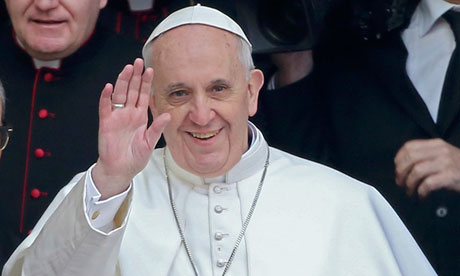
The election of Jorge Mario Bergoglio as Pope Francis I on March 13, 2013, strikes me as impressive in that he makes me think of one of his predecessors, Angelo Giuseppe Roncalli (1881-1963), who became Pope John XXIII (1958-1963). Like Pope John, he comes across as a humble and personable man. In choosing his regnal name, Pope John commented, “I choose John … a name sweet to us because it is the name of our father, dear to me because it is the name of the humble parish church where I was baptized, the solemn name of numberless cathedrals scattered throughout the world, including our own basilica [St. John Lateran]. Twenty-two Johns of indisputable legitimacy have [been Pope], and almost all had a brief pontificate. We have preferred to hide the smallness of our name behind this magnificent succession of Roman Popes.” (As cited in Wikipedia) As for Pope Francis, his choice of regnal name is inspired by Saint Francis of Assisi whom he admires as “the man of poverty, the man of peace, the man who loves and protects creation. These days we don’t have a very good relationship with creation, do we?” he said. “He is the man who gives us this spirit of peace, the poor man.” (As cited in Wikipedia)
If one of those bottles should happen to fall…
I have a passion for the study of history and for music. I love learning about the past and listening to music from across the ages. Occasionally the two passions become congruent as is the case of the opera by Francis Poulenc (1899-1963), “Dialogues des carmélites” (Dialogues of the Carmelites), composed in 1956. The opera is a fictionalized account of an order of Carmelite nuns who were executed during the Reign of Terror in the French Revolution and are remembered as the Martyrs of Compiègne. Continue reading
Coffee: that “Muslim drink”
Coffee, a hot beverage brewed from the ground beans of the Coffea plant, is a beverage I relish. I take two mugfuls of black coffee every morning, savouring the flavour as I sip it from my mug. The consumption of coffee is a pleasure so many people enjoy every day across the world. Coffee drinking originated in the Arab world in the 15th century and remains integral to Arab culture. Coffee was introduced to Europe in the 16th century by Venetian merchants who had trade relations with North Africa, Egypt and the Middle East. Coffee was approved as a Christian beverage by Pope Clement VIII (1536-1605) in 1600, having been frowned upon by some Christians as a “Muslim drink.” Kudos to His Holiness Pope Clement for doing so, as this delectable beverage and its consumption would play a role in transforming European society from the remnants of the social order of the Middle Ages to modernity. Continue reading
Freedom to Read Week 2013
Today, Sunday February 24, 2013 kicks off Freedom to Read Week in Canada (February 24 – March 2, 2013). As such, it is apropos to say a few words about censorship in Canada. Geoffrey is a librarian; Mika is a bibliophile. Between them they have a personal library collection of approximately 5000 volumes. Having the freedom to read is is something to cherish and not take lightly. Section 2.(b) of the Canadian Charter of Rights and Freedoms lists as “Fundamental Freedoms” guarantees “freedom of thought, belief, opinion and expression, including freedom of the press and other media of communication.” In spite of these guarantees in law, the reality is in Canada, a society founded on the principles of pluralism and liberalism, efforts to censor in the form of book challenges are all too common. Public libraries and school libraries are where most book challenges take place. For more information on Freedom to Read Week in Canada 2013, check out this website: www.freedomtoread.ca. By all means enjoy your freedom to read and never take this freedom for granted.
Posted by Geoffrey and Mika
To go against conscience is neither right nor safe. I cannot, and I will not recant. Here I stand. I can do no other, so help me God. Amen. — Martin Luther
Freedom of conscience is a cornerstone of Western Civilization. However, history demonstrates that freedom of conscience often carries a high price. The quotation listed as the title of this post is attributed to Martin Luther (1483-1546), who is said to have spoken these words at the Diet of Worms on April 18, 1521. What he really said is as follows:
Unless I am convinced by Scripture and plain reason – I do not accept the authority of the popes and councils, for they have contradicted each other – my conscience is captive to the Word of God. I cannot and will not recant anything for to go against conscience is neither right nor safe. God help me. Amen.
His protest against abuses in the Church, particularly the sale of indulgences, brought him to make this declaration, written down in his “95 Theses” in 1517. Before his appearance at the Diet of Worms, his “95 Theses” was forwarded to Rome, where several sentences, upon examination, were condemned as heretical. After ignoring a warning from Pope Leo X, Luther was excommunicated on January 3, 1521. Excommunication in 16th-century Europe meant proscription. You were made an outlaw; that is, you no longer had the protection of the law; it was forbidden for anyone to offer you food and shelter, and you could be killed on sight without consequence. As it was the responsibility of civil authority to enforce the law, Luther was offered the chance to recant at the Diet of Worms, which was the general assembly of the estates of the Holy Roman Empire with Emperor Charles V presiding. He refused, putting his life on the line in doing so. He was offered protection from Prince Frederick III, Elector of Saxony, and continued his efforts, which led to the Protestant Reformation.
Continue reading
Our agenda you say… oh really?
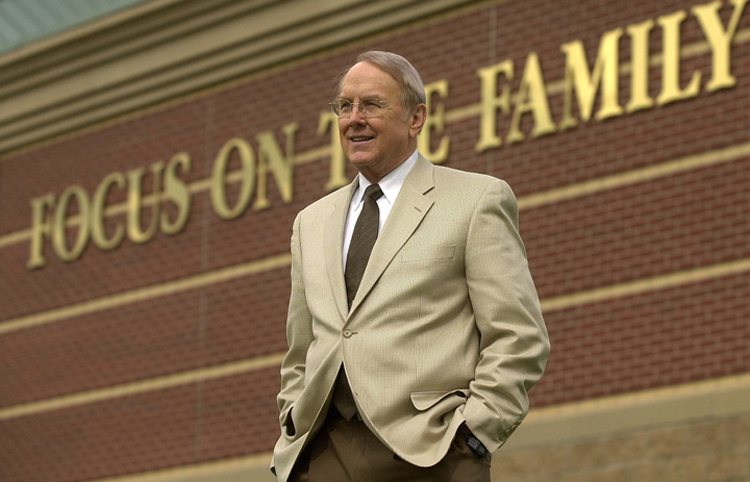
The term “homosexual agenda,” is a trope commonly used by social conservatives, particularly those from religious constituencies in referring to efforts by gay people who want tolerance, if not acceptance for who they are, their relationships and families. The term was invented by the Family Research Council in 1992, an Evangelical Protestant group and lobbying organization established in the United States in 1981 by James Dobson. Interestingly, Dobson is a licensed psychologist in the state of California. He has academic credentials, a doctorate in child development from the University of Southern California and held the position of Associate Clinical Professor of Pediatrics at the University of Southern California School of Medicine 14 years. In addition, he served for 17 years on the staff of the Children’s Hospital of Los Angeles in the Division of Child Development and Medical Genetics. Dobson is intelligent, but remains a minor figure in academic circles. He is better known for his business acumen and influence as a conservative lobbyist. Continue reading
Bent for bucks
Having come across a parody on youtube made my two “good old boys” who use crude stereotypes in portraying gay hunters I comment on being a gay man with a passion for hunting.
Posted by Geoffrey
Benedict eggs me on.
Pope Benedict XVI announced his resignation on February 11, 2013. The reason he gave for reaching this decision is as follows:
in today’s world, subject to so many rapid changes and shaken by questions of deep relevance for the life of faith, in order to govern the barque of St Peter and proclaim the gospel, both strength of mind and body are necessary. Strength which has in the past few months deteriorated in me to the extent that I have had to recognize my incapacity adequately to fulfill the ministry entrusted to me.
This came as quite a surprise to me and to many other people across the world. It is commonly understood that once elected pope, the holder stays in office for life. While I am no longer a practicing Roman Catholic, I am interested in the Church, its history, doctrines and current theological discussions. Continue reading