Category Archives: Theology

Art is permitted to survive only if it renounces the right to be different, and integrates itself into the omnipotent realm of the profane. — Theodor Adorno

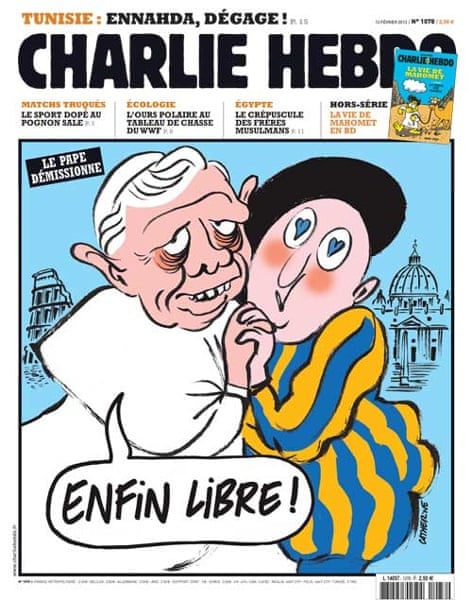
charlie-hebdo-cover-paris-shooting-012emile

The religious and the secular came to a head at the offices of the newspaper Charlie Hebdo in Paris when Saïd Kouachi and Chérif Kouachi, French citizens of North African ancestry, armed with Kalashnikov rifles opened fire, killing 12 people and wounding 11 in an Islamist terror attack. The attackers were heard shouting “Allahu akbar,” and “the Prophet has been avenged.” Charlie Hebdo, a satirical newspaper published weekly, produces satire in the form of caricatures, scrappy opinion pieces and jokes from a left-wing perspective. Among the targets of its brand of satire are the three Abrahamic faiths: Roman Catholicism (Christianity), Islam and Judaism. The caricatures published in Charlie Hebdo quite often consist of crude representations of religious figures such as Pope Benedict and Mohammed. Not surprisingly, this offends many people and generates controversy. The publishers of Charlie Hebdo were prepared to die to defend their right to freedom of expression; whereas, the Islamist attackers were prepared to kill to defend their faith. In the aftermath of the terror attack, differences of opinion concerning the right of freedom of expression and of religious liberty came to the fore. What was it that motivated the publishers of Charlie Hebdo and the Islamist attackers that resulted in this atrocity? Continue reading

I love to be individual, to step beyond gender. — Annie Lennox

a2-psych-gender-dysphoria-5-638joshua-alcorn

The suicide of Joshua Alcorn on December 28, 2014, marked the tragic end of his young life. He was seventeen years old. His death attracted worldwide attention as he published a suicide note on Tumblr in which he related the stress of suffering from gender dysphoria. This stress was too much for him to bear, so he opted for suicide. He adopted the name Leelah in his suicide note. He leaves behind his grieving parents, younger siblings and the rest of those who knew and loved him. Details are emerging as to the stress he endured and the degree of dysfunction in his family. He came from a Christian family. His parents (Doug and Carla Alcorn) did not understand what he was experiencing and essentially told him to “pray it away.” He said in his suicide note that his parents sent him to conversion therapy for treatment. Compounding this tragedy was the lynch mob mentality that took hold. Doug and Carla Alcorn experienced harassment, even a call from activist Dan Savage that they face prosecution. Is this warranted? Continue reading

True Islam taught me that it takes all of the religious, political, economic, psychological, and racial ingredients, or characteristics, to make the Human Family and the Human Society complete. — Malcolm X

territory iraq graphic blast in tikrit PAPER ISIS CORRECTEDimages

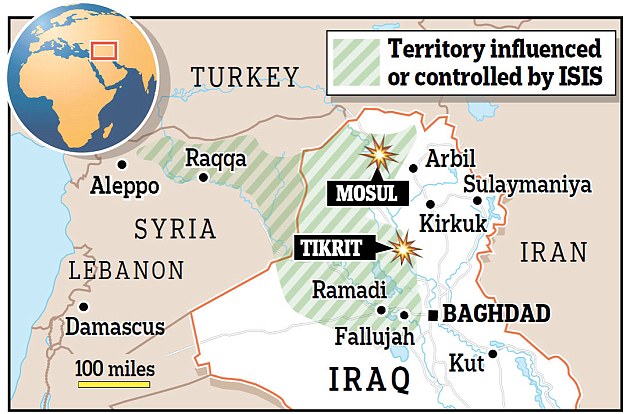
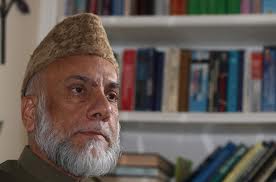
Imam  Syed Soharwardy is a respected Muslim cleric and scholar, chairman of the Al-Madinah Calgary Islamic Assembly and founder and president of the Islamic Supreme Council of Canada. His research interests in Islam consist of “Islamic beliefs, challenges for Muslims in the western world, conflicts within the Muslim community and interreligious conflict.” (Wikipedia) On August 22, 2014, Soharwardy drew attention to himself in announcing he was embarking on a 48 hour fast to protest the murder of James Foley, an American journalist, by the Islamic State of Iraq and Syria (ISIS) earlier in the week. In condemning the killing of James Foley, Soharwardy also made a bold statement declaring there is nothing Islamic in what ISIS represents, asserting:

I want to create awareness about the nature of their work — they are using Islam, they are quoting Qur’an, they look like Muslims, they pray like Muslims but they are not Muslim. They are deviant people, and they are doing exactly everything which goes against Islam. (CBC News Calgary)

In making this assertion, Soharwardy raises an interesting question. Do the actions of ISIS have nothing to do with Islam? Continue reading

The emphasis must be not on the right to abortion but on the right to privacy and reproductive control. — Ruth Bader Ginsburg

hobby-lobby_zps8425ff5a2RNS-HOBBY-LOBBY-SCOTUS

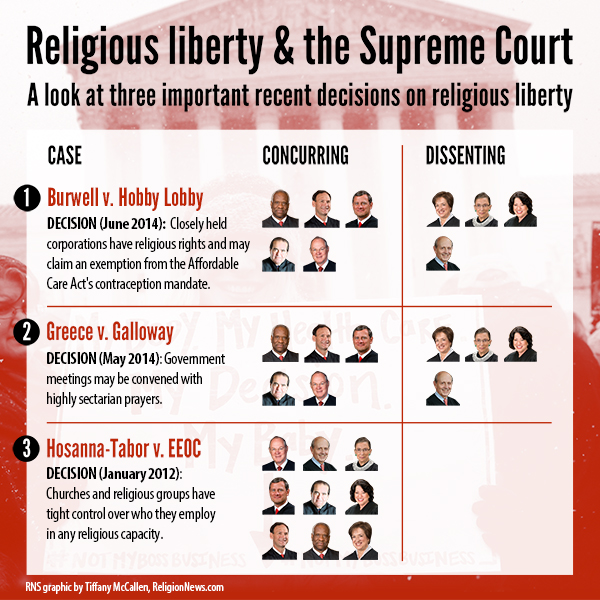
Controversy rages on in U. S. society over the issues of religious liberty and sexuality. The right to marry, the destigmatization of homosexuality and reproductive freedom are issues that, historically and in the present, conflict with deep-seated religious beliefs and traditions in U.S. society. While the U.S. Congress and State Legislatures addressed these issues, especially in passing legislation to guarantee religious liberty, disputes concerning religious freedom and sexuality more often are settled by the courts. In 1967 the Supreme Court of the United States (SCOTUS) ruled state bans on interracial marriage were unconstitutional in Loving v. Virginia. In 2013, SCOTUS struck down the Defense of Marriage Act (DOMA) and refused to hear the appeal of Proposition 8 in California. This removed legal barriers to same-sex marriage. Homosexuality was decriminalized in the U.S. in 2003 when SCOTUS ruled on Lawrence v. Texas. Most recently, the decision handed down by SCOTUS in Burwell v. Hobby Lobby is generating heated discussion in the media and blogosphere. In this instance, SCOTUS ruled on a dispute between the issues of religious liberty and reproductive rights. Continue reading

I do not feel obliged to believe that same God who endowed us with sense, reason, and intellect had intended for us to forgo their use. — Galileo Galilei

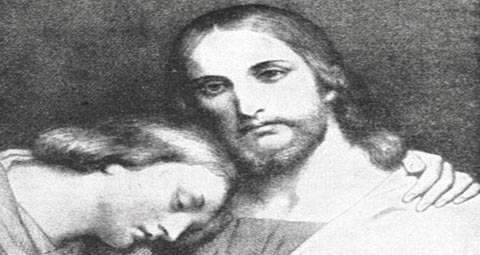
10-ST-JOHN-JESUSScreen-Shot-2014-05-10-at-8.42.11-PM-660x400

Continue reading

Piety is not a goal but a means to attain through the purest peace of mind the highest culture. — Johann Wolfgang von Goethe (1749-1832)

Quebecpiety

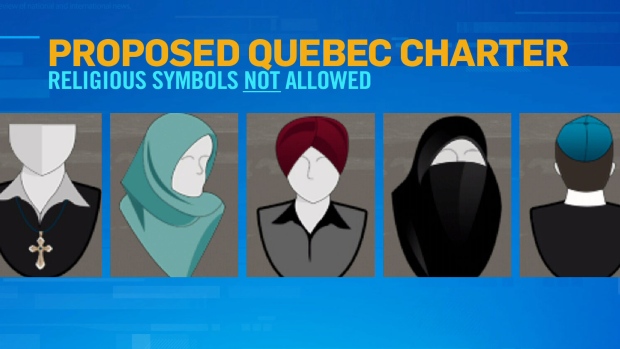
Years ago, I remembered while discussing theology with a group of friends, one in the group referred to himself as a pious atheist. I was taken aback by his comment as piety and atheism were not terms I associated with one another. Piety is most commonly associated with religious beliefs and practices. Since then, I gave this notion a great deal of thought: is secular piety a possibility? This question is worth considering in that how one expresses their piety in an increasingly secular society has become a contentious issue of late; as is evidenced by the controversy surrounding the proposed Quebec Charter of Values (Charte de la laïcité or Charte des valeurs québécoises). The stated aim of the charter is to ensure there is a clear separation of religion and state and that public employees have religious neutrality. What this means is wearing ostentatious religious symbols or garb on the job will be prohibited. Continue reading

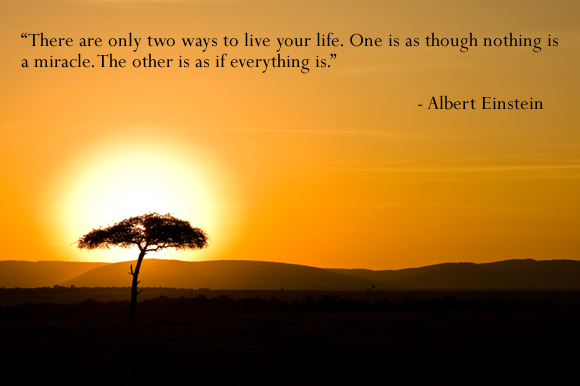
Miracles, in the sense of phenomena we cannot explain, surround us on every hand: life itself is the miracle of miracles. — George Bernard Shaw

index1miracle2

A miracle is a form of religious experience, essentially an event without a rational explanation attributed to the divine. I first remember learning about miracles as a boy in grade school. Religious instruction, Christian, was part of the public school curriculum in Ontario in the mid-1960s when I started school. My first-grade teacher, Miss Boss, read bible stories to the class every morning before we started the day’s lessons. If memory serves, I was most impressed by the story of the loaves and fishes. A year later, at junior school in England, one of the teachers, Mrs. Checketts, told us the story of Jesus raising a girl from the dead. As Mrs. Checketts related the story to us, “He called to her spirit “Talitha koum!” (which means “Little girl, I say to you, get up!”) and she was returned to life.” Again, I was duly impressed, but as I grew older, I began to wonder about the veracity of these accounts and of miracles in general. I started to wonder, also, just how common it is for people to continue to believe in miracles and how a miracle is identified in the present. Continue reading

“Capitalism itself is not to be condemned. And surely it is not vicious of its very nature, but it has been vitiated.” — Pope Pius XI (1857-1939)

Rushimages-1

Pope Francis continues to raise eyebrows with his public pronouncements, the most recent coming from the publication of his apostolic exhortation Evangelii Gaudium, in which he criticizes “an economy of exclusion and inequality.” (Evangellii Gaudium) In news reports discussing the publication of Evangelli Gaudium, it is said Pope Francis calls “unfettered capitalism tyranny and urges rich to share wealth.” (Guardian) This led to mixed responses, which is not at all surprising. President Obama cited a portion of the document–seemingly in agreement with Pope Francis–in a speech on inequality in US society, observing “some of you may have seen just last week the pope himself spoke about this at eloquent length. How can it be, he wrote, that it’s not a news item when an elderly homeless person dies of exposure, but it is news when the stock market loses two points. But this increasing inequality is most pronounced in our country. And it challenges the very essence of who we are as a people.” (as cited in SALON) A far less temperate response was delivered by the conservative pundit, Rush Limbaugh, who retorted, “This is the president citing the pope, his new best friend, because the pope is ripping America, the pope [is] ripping capitalism… and Obama’s having an orgasm. Jeremiah Wright is beside himself. Jeremiah Wright thought he was Obama’s preacher, now [the] pope somehow has co-opted Obama.” (as cited in SALON) Continue reading

Much of what is called Christianity has more to do with disguising the ego behind the screen of religion and culture than any real movement toward a God beyond the small self, and a new self in God. — Richard Rohr.

catholic_christian_wall_decalcatholic-or-christian

Some years ago while I ordered lunch at a restaurant in the food court at the University Centre, at the university where I work, I asked the young man serving me if he and his family celebrated the Day of the Dead. I had gotten to know him a little in snippets of conversation we had during times he served me, and I learned he was from Mexico. He replied that they did not as this was a Catholic custom, adding, in referring to himself and his family, “we’re Christian.” I was startled by the remark, though it was not the first time I was confronted with this point of view. The first time I remember being confronted by someone with this attitude toward Roman Catholicism was when I was in my first year at university. I was introduced to people from different Christian denominations on campus and at a meet and greet I was speaking to a man who asked to which church I was a member. When I told him I was a Roman Catholic, he retorted “I used to be Catholic, but now I am a Christian.” Later during my years at university, I was given a book by an acquaintance who was forever trying to get me to join his Church, the title escapes me, but it was the account of a Pentecostal Christian and the subtitle was a young Catholic encounters Christ. Continue reading

Turks were a great nation even before they adopted Islam. This religion did not help the Arabs, Iranians, Egyptians and others to unite with Turks to form a nation. Conversely, it weakened the Turks’ national relations; it numbed Turkish national feelings and enthusiasm. This was natural, because Mohammedanism was based on Arab nationalism above all nationalities. — Mustafa Kemal Atatürk (1881–1938)

Hagia-Sophia-Laengsschnitthagia-sophia-rafay-zafer

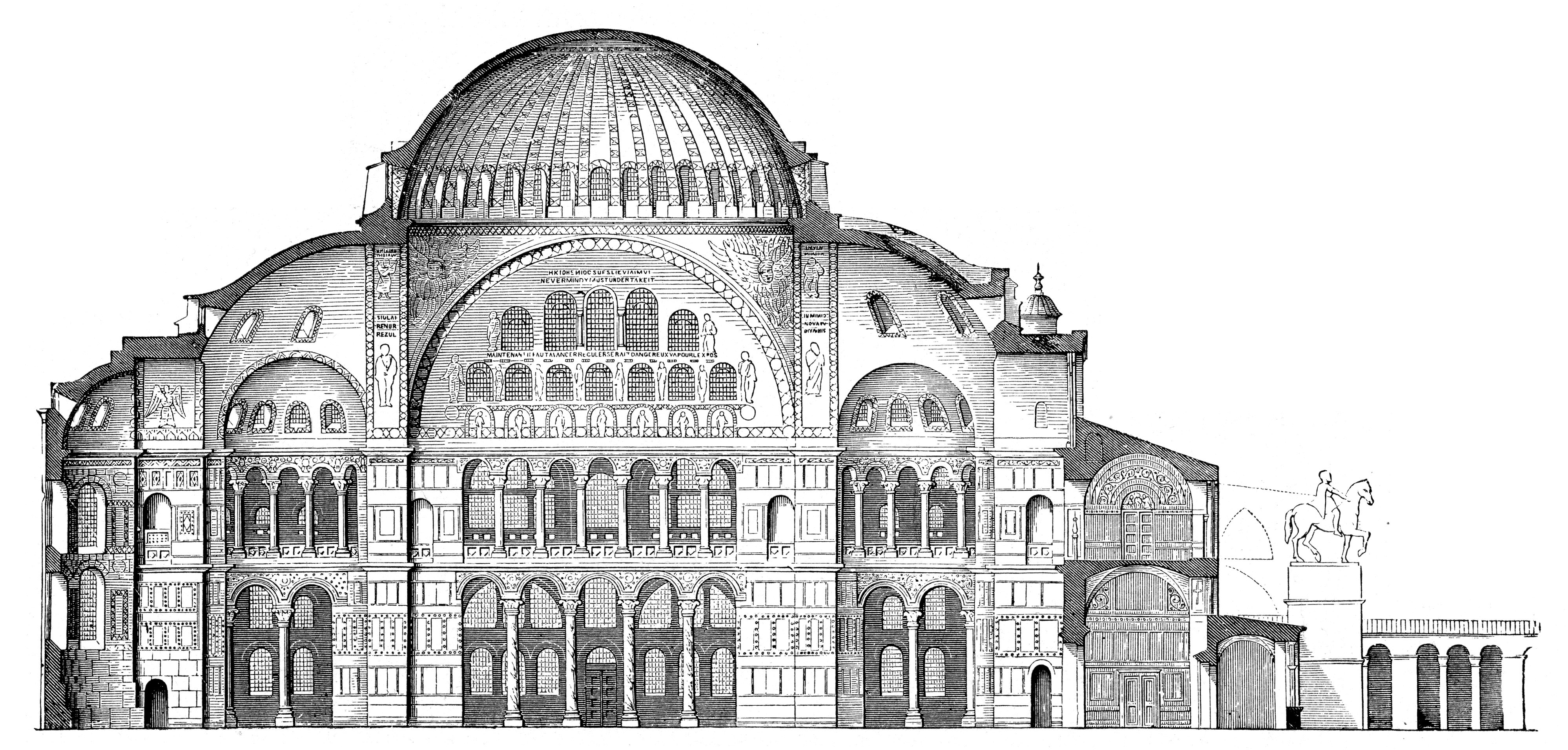
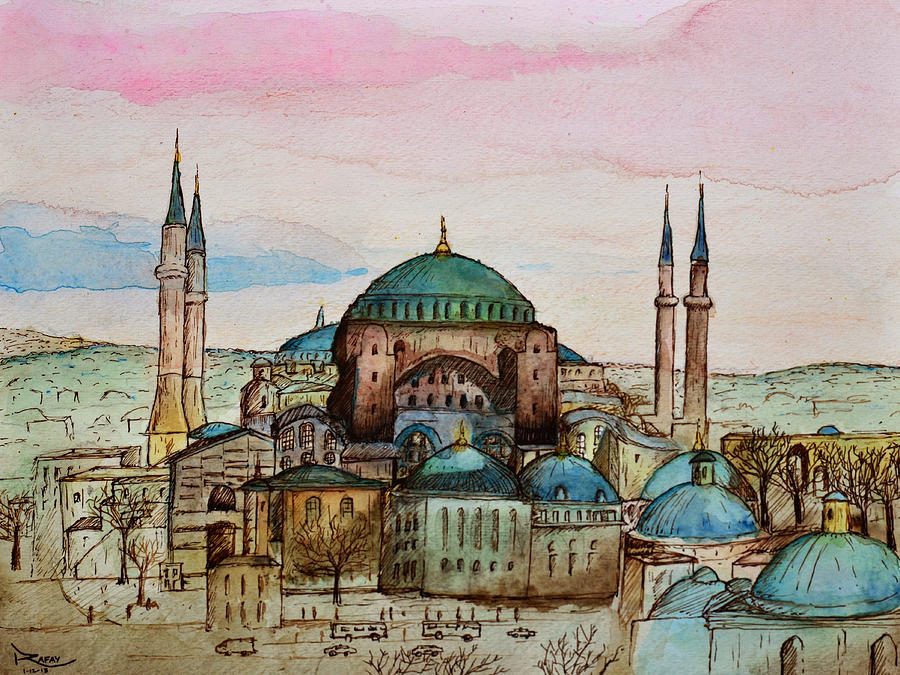
The Hagia Sophia has become the focal point in Turkish society’s current struggle between secularists and Islamists. The Republic of Turkey was founded in 1923 as a secular, parliamentary democracy with a president as head of state. In 1935, the Hagia Sophia was converted into a museum and opened to the public by the Turkish government led by Mustafa Kemal Atatürk (1881-1938). It became a major tourist attraction in Istanbul. It was turned into a museum, presumably, to reconcile the troubled history between Christianity and Islam with the realities of Turkey’s modern, secular state. The Hagia Sophia was the seat of Orthodox Christianity, the Patriarch of Constantinople, for several centuries (537–1204), a Roman Catholic cathedral from (1204–1261) and back to the Orthodox Church (1261–1453) until the conquest of the city by the Turks. It served as the first of several Imperial Mosques for the Ottoman Empire from 1453-1931. In the present, the drive to restore the Hagia Sophia as a mosque gained momentum. In 2013, Turkish Deputy Prime Minister Bulent Arinc, expressing this desire, said: “We currently stand next to the Hagia Sophia Mosque… we are looking at a sad Hagia Sophia, but hopefully we will see it smiling again soon.” (as cited in Ansa med) On July 10, 2020, President Erdogan signed a decree, ordering the restoration of the Hagia Sophia as a mosque. Continue reading