Security is the mother of danger and the grandmother of destruction — Thomas Fuller

japannotMontague_Placard

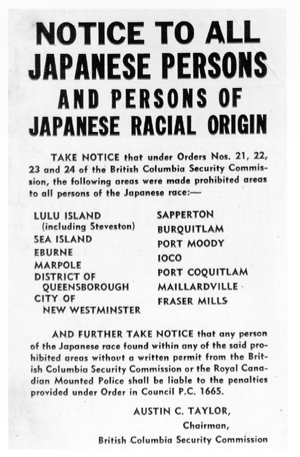
The Canadian Firearms Program, a component of the Canadian Firearms Act, a stupid law, drafted by the Liberal government led by Prime Minister Jean Chretien and enacted in 1995, burdens peaceful and law-abiding hunters, sport shooters and gun collectors with oppressive regulations. Moreover, it enables belligerent and defiant bureaucrats in the Royal Canadian Mounted Police (RCMP) to arbitrarily order the prohibition and confiscation of legally acquired and owned firearms. The decision to proceed with this policy was rooted in the moral panic that arose following the mass murder of fourteen women at an engineering school in Montreal in 1989. Moral panic is defined as “an intense feeling expressed in a population about an issue that appears to threaten the social order.” (Jones, M, and E. Jones as cited in Wikipedia)  Following this tragedy, Canadian gun owners were singled out as a menace to the social order. This was not the first time in Canadian history that a federal government responded to a moral panic in pushing forward with stupid legislation, against the counsel of advisors from within its ranks. A stupid law that resulted in the oppressive regulation and confiscation of property from a segment of the population in Canadian society who were unjustly deemed to threaten the social order. Continue reading →

The bedfellows politics made are never strange. It only seems that way to those who have not watched the courtship. — Marcel Achard

Mathison-ElectropsychometerHgh-River-RCMP-Gun-Seizures

The following comment was posted as a response to my recent post on the current state of firearms laws in Canada.

I think male homosexuality repellent, and therefore do not follow those issues closely. Because I am a genuine (which is to say, 19th century, tolerant, John-Stuart-Mill-type liberal) I believe that things which are none of my business are, you know, none of my business: You do not need, nor would receive, my approval, much less “celebration” for whatever passes for your lifestyle choice. But whatever consenting adults want to do that does not harm or threaten others is NONE OF MY BUSINESS. It is most certainly none of government’s business, and I believed that, and supported homosexual rights, from the times when homosexuality was an imprisonable felony in Canada.
I am heartened to see therefore, that with your lifestyle, you account responsible arms ownership on the list of things that are None Of Government’s Business.
When the government wants to prosecute those who harm or threaten others, they have my entire support. When they want to persecute those whose lifestyle choices are contrary to contemporary fashion, the resistance, subversion, and defiance are called for.

Continue reading →

The Firearms Act is about licensing and registration, not confiscation. — Former Justice Minister Anne McLellan, July 31, 1998.

gun-typescdn_flag_bg

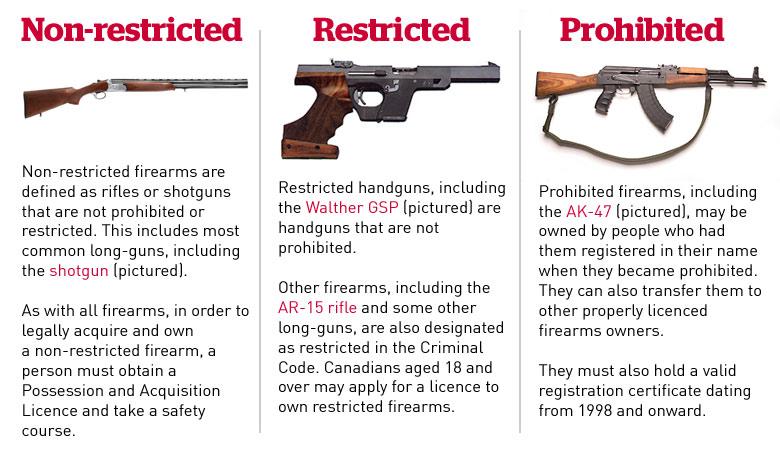
I bought my first gun in a private sale, back in 1977 when I was sixteen. As it happens, 1977 was a turning point in the regulatory framework for gun owners in Canada; it was the last of the good old days for gun owners in Canada. The familiar classification system for firearms was in effect (non restricted, restricted and prohibited). This was enacted in 1969 with the passage of Criminal Law Amendment Act, 1968-69 (S.C. 1968-69, c. 38), which, coincidentally, also decriminalized homosexuality. In 1977 it was unlawful to sell guns to individuals of unsound mind or those under prohibition orders, otherwise Canadians were free to own and use guns for hunting, sport shooting and collecting without having the state on their back. As the Minister Justice, Pierre Elliott Trudeau, observed in shepherding the Criminal Law Amendment Act, 1968-69 through parliament, “obviously, the state’s responsibility should be to legislate rules for a well-ordered society. It has no right or duty to creep into the bedrooms of the nation.” (as cited in Wikipedia) In 1977, just as the state had no business in bedrooms of the nation, neither did the state have any business in the basements and gun cabinets of the nation.

Continue reading →

We are living at a time when creeds and ideologies vary and clash. But the gospel of human sympathy is universal and eternal. — Samuel Hopkins Adams

whatIsSB1062Hundreds_rally_against_SB1062_in_Flagsta_1360360000_3123610_ver1_0_640_480

Is religious liberty under threat in the United States? This is an interesting question and bears examination. The controversy over the passage of SB 1062 in Arizona and the decision by the Governor, Jan Brewer, to veto the legislation has many people insisting their religious liberty is threatened and determined to stiffen their resistance to this perceived threat. Regarding religious liberty in US society, the National Council of the Churches of Christ in the USA, in 1944 (then Federal Council of Churches of Christ), formed the following definition:

Religious liberty shall be interpreted to include freedom to worship according to conscience and to bring up children in the faith of their parents; freedom for the individual to change his religion; freedom to preach, educate, publish and carry on missionary activities; and freedom to organize with others, and to acquire and hold property, for these purposes. (as cited in Wikipedia)

At present, these are fundamental freedoms guaranteed in US law. Is there any reason to believe they are at risk? Continue reading →

The religion then of every man must be left to the conviction and conscience of every man; and it is the right of every man to exercise it as these may dictate. — James Madison

Arizonapict31

Mika and I have never travelled to the United States together. We have, individually, visited the United States on a number of occasions. Growing up I lived in Laurel, Maryland for several months in 1965 with my family. My father was serving in the Canadian Army at the time and was posted to Washington DC briefly. As a boy, Mika visited Yellowstone National Park in Wyoming with his family. I have been as far south in the United States as Florida; I took a holiday with my family during March break in 1977. I have been to New England and in 2012 had a very nice time visiting with a good friend and his family in Washington state. I have made periodic visits across the border into upstate New York on shopping trips. For our first trip together to the United States, Arizona is a state Mika and I are interested in visiting for a holiday. The appeal for us is to see the desert habitat, its hot, dry climate, the plants, like Sonora cactus, the wildlife, like road runners and javelinas and to get a taste of the culture of the Southwestern United States. Continue reading →

A hallucination is a fact, not an error; what is erroneous is a judgment based upon it. — Bertrand Russell

Fran_alanjpgGender-Gap

Gender neutrality or gender-neutralism or the gender neutrality movement is a topic that keeps cropping up in discussions across the blogosphere. These terms describe “the idea that policies, language, and other social institutions should avoid distinguishing roles according to people’s sex or gender, to avoid discrimination arising from the impression that there are social roles for which one gender is more suited than the other.” (Wikipedia) At face value, this looks quite reasonable. Historically, the division of labour in the Western world was based on sex. Men worked outside the home and were mobilized in times of war to fight; whereas, women worked in the home and acted as a reserve labour force when the men were away fighting in wartime. In the present, men and women work alongside one another in the labour force and the military. Sex or gender-based segregation is mostly a thing of the past, but for a very long time, it was a reality. Some occupations and past-times were denied to women because they were deemed unsuitable for women. Continue reading →

Piety is not a goal but a means to attain through the purest peace of mind the highest culture. — Johann Wolfgang von Goethe (1749-1832)

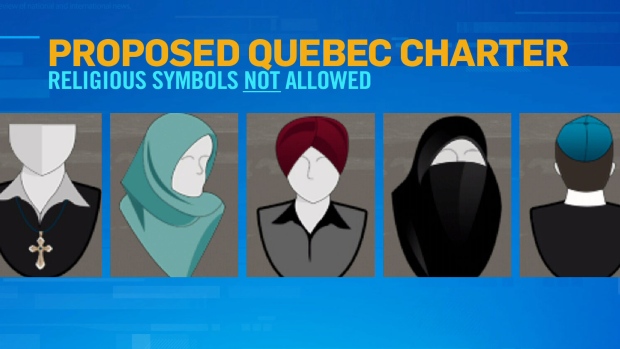
Quebecpiety

Years ago, I remembered while discussing theology with a group of friends, one in the group referred to himself as a pious atheist. I was taken aback by his comment as piety and atheism were not terms I associated with one another. Piety is most commonly associated with religious beliefs and practices. Since then, I gave this notion a great deal of thought: is secular piety a possibility? This question is worth considering in that how one expresses their piety in an increasingly secular society has become a contentious issue of late; as is evidenced by the controversy surrounding the proposed Quebec Charter of Values (Charte de la laïcité or Charte des valeurs québécoises). The stated aim of the charter is to ensure there is a clear separation of religion and state and that public employees have religious neutrality. What this means is wearing ostentatious religious symbols or garb on the job will be prohibited. Continue reading →

I think Islam is in a sense, in crisis. It needs to question and re-question itself. — Azar Nafisi

shariaimagesCARN2W12

Criticism of religion is a tender subject. Criticism of Islam, in particular, is especially so as is evidenced by the court battle that threatened to take shape between the National Council of Canadian Muslims (NCCM), Prime Minister Stephen Harper and Jason MacDonald (spokesman for Prime Minister Harper). The NCCM filed a notice of libel in the Ontario Superior Court of Justice over remarks made by Jason MacDonald in dismissing their objection to the inclusion of Rabbi Daniel Korobkin of the Beth Avraham Yosef Synagogue in Toronto as part of the delegation that accompanied Prime Minister Harper on a visit to Israel in January 2014. MacDonald dismissed their objection stating “we will not take seriously criticism from an organization with documented ties to terrorist organization such as Hamas.” (as cited in CTV News) The NCCM objected to the inclusion of Rabbi Korobkin in the delegation accompanying Prime Minister Harper because he hosted speaking engagements featuring Robert Spencer and Pamela Geller, two noted critics of Islam, in September 2013. Continue reading →

Miracles, in the sense of phenomena we cannot explain, surround us on every hand: life itself is the miracle of miracles. — George Bernard Shaw

index1miracle2

A miracle is a form of religious experience, essentially an event without a rational explanation attributed to the divine. I first remember learning about miracles as a boy in grade school. Religious instruction, Christian, was part of the public school curriculum in Ontario in the mid-1960s when I started school. My first-grade teacher, Miss Boss, read bible stories to the class every morning before we started the day’s lessons. If memory serves, I was most impressed by the story of the loaves and fishes. A year later, at junior school in England, one of the teachers, Mrs. Checketts, told us the story of Jesus raising a girl from the dead. As Mrs. Checketts related the story to us, “He called to her spirit “Talitha koum!” (which means “Little girl, I say to you, get up!”) and she was returned to life.” Again, I was duly impressed, but as I grew older, I began to wonder about the veracity of these accounts and of miracles in general. I started to wonder, also, just how common it is for people to continue to believe in miracles and how a miracle is identified in the present. Continue reading →

If a believer demands that I, as a nonbeliever, observe his taboos in the public domain, he is not asking for my respect, but for my submission. ― Flemming Rose

separatione342d3_ce5f6ee1b725db96bedda2be61c99425

Religion is part of the fabric of Canadian society; Canadians hold a plurality of beliefs. The most recent census data (from the 2001 census) show that Christianity remains the most widely held and practiced religion with Roman Catholics in the majority at 43.2 %. People of non-Christian faiths make up a tiny percentage of the population: Muslims 2.0 %, Jewish 1.1 %, Hindus 1.0 %, Sikhs 0.9 %, Buddhist 1.0 %. Freedom of belief and conscience is enshrined in Canadian law; it is guaranteed in the Charter of Rights and Freedoms in section 2 Fundamental Freedoms. That said, it is important to note that religion is a matter of private conscience. Canada is a secular nation-state. There is no state religion in Canada. Religious belief is something one chooses; no one is forcing you to adhere to a particular set of ideas and the rules of any specific religious institution. Issues are arising in the present over the accommodation of religious folk in the secular, public realm of Canadian society. Continue reading →