As long as teachers give tests, there will always be prayer in schools. — Unknown

9jMzRN92011-08-02_prayer-in-school

The issue of the practice of religion and religious education in Ontario schools has been a contentious issue throughout their history. The first Board of Education was established in Upper Canada (what became the Province of Ontario) in 1823. In 1824 the Board of Education was allotted funds to provide  for the “moral and religious instruction of the more indigent and remote settlements.” (The school system of Ontario) While Christianity was the dominant religion in Ontario in the 19th century there were sectarian divisions, notably those between Protestant and Roman Catholic, but there was also division between the various Protestant denominations, Anglican, Methodist, Presbyterian, for example. These divisions created strife and hard feelings regarding the provision of moral and religious instruction in Ontario schools. By the 1840s Egerton Ryerson (1803-1882), a Methodist clergyman and champion of public education, proposed “common schools” to educate children of all faiths. This was really quite forward thinking of Ryerson, but the divisions in Christendom at the time were so pronounced this was not possible. Continue reading

Violence can only be concealed by a lie, and the lie can only be maintained by violence. — Aleksandr Solzhenitsyn

200421-women-violencepp_wide_elliotrodgers

In light of a recent mass murder-suicide in Santa Barbara, California, there has been a frenzy of intense speculation about what spurred the killer, Elliot Rodger, into carrying out his crime. One point of view put forward is that it was the phenomenon of violence against women, not just on his part, but on the part of men in general that spurred him on to commit this crime. That and abuse of women by men is tolerated in US society in a “culture of misogyny and toxic masculinity.” The abuse of women is a problem and, without any doubt, reprehensible, but is it fair to solely blame men? Is it reasonable to assert that the abuse of women is tolerable in US society? These questions merit discussion, but in short, my answer to both questions is a resounding no. Continue reading

I do not feel obliged to believe that same God who endowed us with sense, reason, and intellect had intended for us to forgo their use. — Galileo Galilei

10-ST-JOHN-JESUSScreen-Shot-2014-05-10-at-8.42.11-PM-660x400

Continue reading

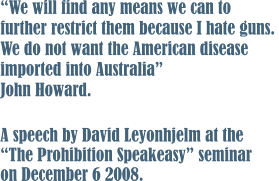
In reaching a historic agreement on prohibition of weapons, we made a mighty contribution to delivering a safer and more secure Australian society. — John Howard

Quotation-John-Howard-hate-Meetville-Quotes-55329leyonhjelm%20mid

Continue reading

The weapons’ menacing looks, coupled with the public’s confusion over fully automatic machine guns versus semi-automatic assault weapons—anything that looks like a machine gun is assumed to be a machine gun—can only increase the chance of public support for restrictions on these weapons. — Josh Sugarmann

gbMini-14sm10bseriesvo3

The term assault weapon comes up frequently in media reports on guns in society. The term has its origins in the 1980s and is credited to Josh Sugarmann executive director and founder of the Violence Policy Center (VPC) and noted prohibitionist. Before founding the Violence Policy Center in 1988, Sugarmann served as communications director for the National Coalition to Ban Handguns (renamed the Coalition to Stop Gun Violence (CSGV) in 1989). The term assault weapon entered common parlance after Sugarmann authored a publication entitled Assault Weapons and Accessories in America in 1988. Sugarmann and the Violence Policy Center are among those advocates of prohibition who frame the argument that ban is a matter of public health and safety, that this trumps the individual right to own and use guns. In their effort to advance this agenda, prohibitionists resort to the underhanded tactic of framing the debate in a manner that confuses the issue, causing people to quarrel over what is they view as good guns vs bad guns. Continue reading

What will survive of us is love. — Phillip Larkin’s An Arundel Tomb

536072_486556508070130_1208265843_nGeoffrey and Mika in their library.

The story of the life and love shared by Thomas Lee Bridegroom and Shane Bitney Crone resonates with me to this day. I learned of their life together and the tragedy that befell them in viewing It could happen to you, the YouTube video produced by Shane Bitney Crone in memory of Thomas Lee Bridegroom, who died in a tragic accident on May 7, 2011. Though I do not know either of these men, I was so moved in a way that I normally am not upon hearing of a personal tragedy that strikes people who are strangers to me. Watching It could happen to you had a profound effect on me; I felt grief and outrage well up inside me upon learning of the injustice and iniquity that was heaped on Shane Bitney Crone following the death of his partner, Thomas Lee Bridegroom. As same sex couples could not marry in California at the time of Tom’s death, Shane had no legal standing as Tom’s partner and could do nothing as the Bridegroom family claimed Tom’s body, his assets and barred Shane from attending his funeral. This is so wrong and it happens to other couples. From the grief and outrage I experienced I was inspired to join in the effort to advocate for full civil rights for gay people, marriage rights in particular. Continue reading

I’m concerned about how accessible guns are. — Stevie Wonder

new-model2RealGunSafety

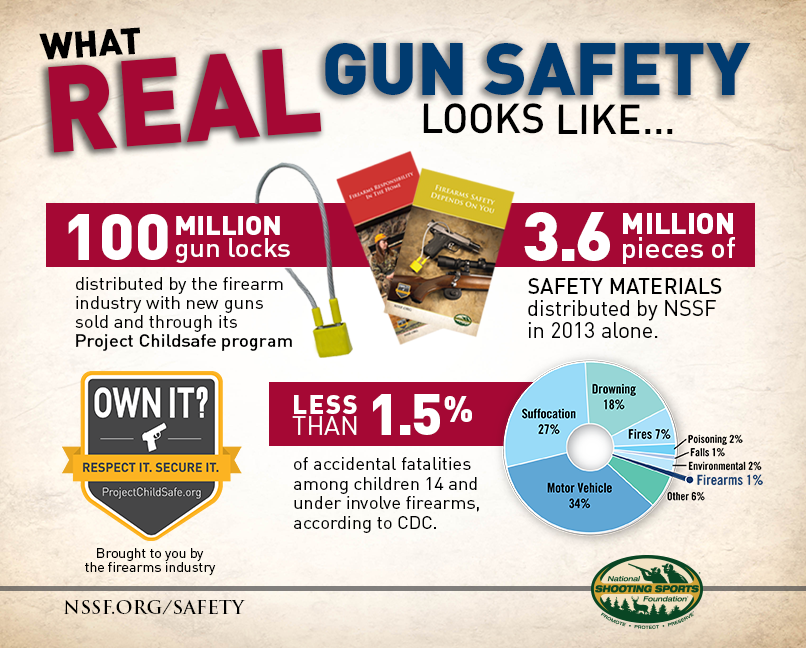
A shooting at a sawmill in Nanaimo, British Columbia on April 30, 2014, has left two men dead and two in the hospital recovering from gunshot wounds. The gunman, a 47-year-old former employee, is in custody. The murder weapon is a shotgun. I will not be surprised if prohibitionists use this tragedy to step up their complaints that it is the “availability of guns,” that it is too easy to get a gun, as to what is to blame for such incidents. “Availability” or “access to guns” is commonly held as a problem in the ranks of prohibitionists who tirelessly assert this claim. Researchers have tried to test this theory that there is a causal link between the availability of guns and deaths and injuries by gun. The difficulty for researchers studying this theory is in generating data that can be tested using scientific research methods. However, their inability to find a causal link between the availability of guns and deaths and injuries by gun has not stopped prohibitionists from advancing their belief that such a relationship exists. Continue reading

Nothing we’re going to do is going to fundamentally alter or eliminate the possibility of another mass shooting… ― Joe Biden

polls_cho_gun_1853_66708_answer_2_xlargegun_control_zps3630a9b3

How often am I confronted with the assertion that “a gun is for killing?” Invariably this assertion is used by prohibitionists in debates and discussions over gun ownership. It is intended to end the debate or discussion in putting those who argue in favour of gun ownership on the defensive. The expectation is you will have to reply with “yeah, but…” This expectation is nonsensical, of course; it is a common fallacy, the argument from ignorance. Those who put forth the assertion “a gun is for killing” insist it must be true as it has yet to be proven false. Is this assertion true? Are guns for killing? If this question demands a yes or no answer, then the answer is no, guns are not for killing. In short, a gun is a device that fires a single projectile or with a shotgun, many smaller sub-projectiles, or one large projectile. However, the answer to that question is not that simple; it requires a more nuanced response. Continue reading

I really feel like knife skills – not just in the kitchen, but in life – are really critical. — Timothy Ferriss

knifeNP0130-ASa (12).jpg

Humans have survived and become the dominant species on Earth as they are living, intelligent beings who apply their ingenuity in making and using tools. From the Stone Age on, humans fashioned an array of tools, of which blades were and are a primary implement. In the Stone Age, there were individuals who mastered the craft of knapping flint to form knives, spears and arrowheads for hunting and butchering game. In time, humans mastered metallurgy, fashioning knives, swords, spears and arrowheads first from bronze and finally iron. In ancient Mesoamerica, Mayans, Aztecs, Incas, fashioned blades from obsidian. In the present day, knives are mostly made from a blend of carbon steel and stainless steel. Knives are a common household item found in the kitchens in every home. Together with their use as common household items, knives are still used for hunting and warfare. With a sharp edge and pointed tip, the knife has to be handled with care. It can inflict a nasty wound if handled carelessly or with malice. Continue reading

No studies have been done to link gun legislation to declining firearms-related deaths, but you can draw your own conclusions. — Heidi Rathjen

liberalprohibition

I try to tune out the white noise that is generated by assorted gun prohibitionists as I learned there is nothing to gain in engaging in futile quarrels with them. Certainly, it bothers me when they spout their nonsensical assertions and point their fingers at hunters, sport shooters and collectors, spewing vitriol and denouncing them as the enemies of humankind. I always knew there were people who disapproved of gun ownership and hunting, but thought of it as their problem. If you do not like guns, do not keep them and if you disapprove of hunting, do not go hunting and if you are a landowner, you are free to post your property against hunting. If only it were that simple. In reality, however, Canada’s gun owners find themselves in a very precarious position. Beginning with the passage of the Criminal Law Amendment Act, 1968-69 (S.C. 1968-69, c. 38) in 1969, continuing with amendments to the Criminal Code of Canada, Bill C-51 in 1978, Bill C-17 in 1991 and Bill C-68 in 1995, Canada’s gun owners are now saddled with the Canadian Firearms Act. In the span of 26 years, Canada’s gun owners have seen their freedoms to own and use their property for lawful and safe past-times such as hunting and sport shooting, drastically curtailed and the character of the gun owner defamed brazenly by an array of public and non-governmental associations. Continue reading