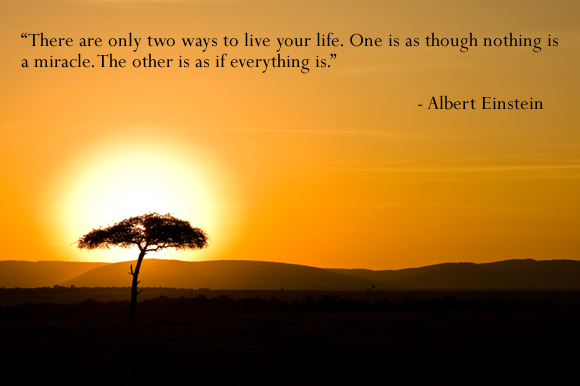
A miracle is a form of religious experience, essentially an event without a rational explanation attributed to the divine. I first remember learning about miracles as a boy in grade school. Religious instruction, Christian, was part of the public school curriculum in Ontario in the mid-1960s when I started school. My first-grade teacher, Miss Boss, read bible stories to the class every morning before we started the day’s lessons. If memory serves, I was most impressed by the story of the loaves and fishes. A year later, at junior school in England, one of the teachers, Mrs. Checketts, told us the story of Jesus raising a girl from the dead. As Mrs. Checketts related the story to us, “He called to her spirit “Talitha koum!” (which means “Little girl, I say to you, get up!”) and she was returned to life.” Again, I was duly impressed, but as I grew older, I began to wonder about the veracity of these accounts and of miracles in general. I started to wonder, also, just how common it is for people to continue to believe in miracles and how a miracle is identified in the present. Continue reading
Tag Archives: Christianity
If a believer demands that I, as a nonbeliever, observe his taboos in the public domain, he is not asking for my respect, but for my submission. ― Flemming Rose
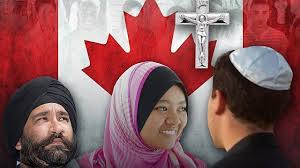
Religion is part of the fabric of Canadian society; Canadians hold a plurality of beliefs. The most recent census data (from the 2001 census) show that Christianity remains the most widely held and practiced religion with Roman Catholics in the majority at 43.2 %. People of non-Christian faiths make up a tiny percentage of the population: Muslims 2.0 %, Jewish 1.1 %, Hindus 1.0 %, Sikhs 0.9 %, Buddhist 1.0 %. Freedom of belief and conscience is enshrined in Canadian law; it is guaranteed in the Charter of Rights and Freedoms in section 2 Fundamental Freedoms. That said, it is important to note that religion is a matter of private conscience. Canada is a secular nation-state. There is no state religion in Canada. Religious belief is something one chooses; no one is forcing you to adhere to a particular set of ideas and the rules of any specific religious institution. Issues are arising in the present over the accommodation of religious folk in the secular, public realm of Canadian society. Continue reading
Much of what is called Christianity has more to do with disguising the ego behind the screen of religion and culture than any real movement toward a God beyond the small self, and a new self in God. — Richard Rohr.
Some years ago while I ordered lunch at a restaurant in the food court at the University Centre, at the university where I work, I asked the young man serving me if he and his family celebrated the Day of the Dead. I had gotten to know him a little in snippets of conversation we had during times he served me, and I learned he was from Mexico. He replied that they did not as this was a Catholic custom, adding, in referring to himself and his family, “we’re Christian.” I was startled by the remark, though it was not the first time I was confronted with this point of view. The first time I remember being confronted by someone with this attitude toward Roman Catholicism was when I was in my first year at university. I was introduced to people from different Christian denominations on campus and at a meet and greet I was speaking to a man who asked to which church I was a member. When I told him I was a Roman Catholic, he retorted “I used to be Catholic, but now I am a Christian.” Later during my years at university, I was given a book by an acquaintance who was forever trying to get me to join his Church, the title escapes me, but it was the account of a Pentecostal Christian and the subtitle was a young Catholic encounters Christ. Continue reading
Let justice be done, though the world perish. (Fiat justitia et pereat mundus.) — Ferdinand I (1503–1564), Hungarian King of Bohemia and Hungary, Holy Roman Emperor 1558-1564
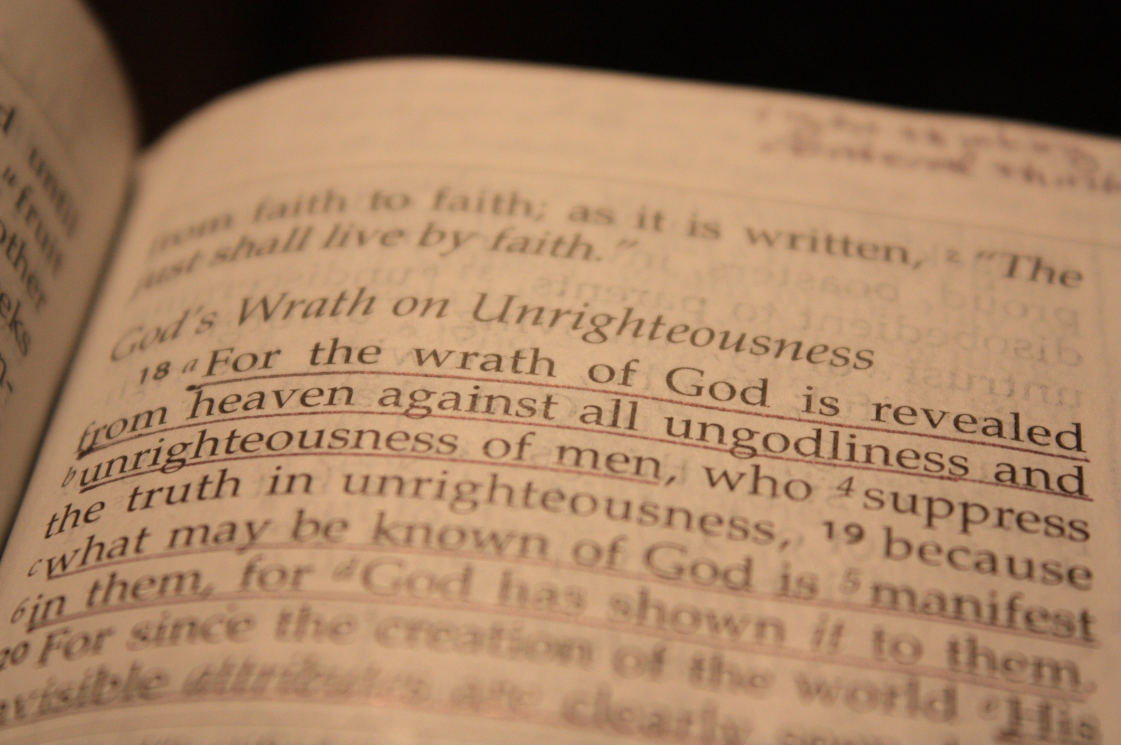
I took the time to comment on a Facebook thread, the premise of which was, that Western nations should discontinue immigration from the Islamic world. I do not think this course of action is warranted and doubt any government in the Western world would take up such a policy, but what got me thinking was a comment from an individual who believes the difficulties of integrating newcomers in Canadian society, with its official policy of multiculturalism, is divine punishment for what he sees as our having abandoned Christian principles as a society. This belief in divine punishment or retribution or justice is very old and not found solely in Christianity. Though I am no longer a practicing Christian, I admit such thoughts have crossed my mind when I experienced hard times and personal tragedy in my own life. When my four year old Brittany, Juno, succumbed to cancer in 2012, I remember talking to the breeder who sold her to me, asking if there had ever been any incidence of cancer in her dogs at such a young age. She told me no and she was just as shocked and horrified as me by the news. I then asked her “is it something I have done?” “What have I done to deserve this?” The questions were essentially rhetorical, but she answered, saying no, it was not anything I had done and assured me that “God does not hand us a burden He knows we cannot bear.” Continue reading
“Dignity is not negotiable. Dignity is the honor of the family.” — Vartan Gregorian
A good friend and hunting buddy of mine, Omer, is an observant Muslim whose family immigrated to Canada from Pakistan. Omer is an educated man as is the rest of his family. He is someone I have known several years and with whom I have enjoyed many in-depth discussions, learning about his faith and the culture in which he grew up before coming to Canada. He tells me that family honour and shame are taken very seriously by some elements of Pakistani society. The phenomenon of honour killing is a reality for these elements of Pakistani society, particularly in the rural and tribal regions. Family honour is taken so seriously in this culture that if a family member (typically a girl or young woman) brings shame on the family the whole family suffers. They become untouchables; they are deemed unfit to associate with and most certainly are not welcome to marry into other families. The only way family honour can be restored in such a case is in killing the family member who brought the shame onto the family. This understanding of family honour is bound up in religion (Islam) and a culture in which men dominate. He certainly does not approve of this behaviour. He recognizes it as a problem that Pakistani society must address. Continue reading
If you want a religion to make you feel really comfortable, I certainly don’t recommend Christianity. — C.S. Lewis (1898-1963)
Christianity continues to appeal to me despite the fact I no longer practice the faith. My family was nominally Roman Catholic when I was growing up. I remember attending Sunday mass regularly as a small boy and being enrolled in classes to prepare me for my First Communion when I was in first grade. I never completed these classes as they were interrupted when my father was sent to work in England for two years and my mother, myself and my siblings went along also. I remember learning about Jesus in those early years of my life, that He is the Son of God, that as a child He never talked back to his parents or fought with other children, that He accepted crucifixion for our sins and our redemption. At the time I really had no reason not to believe. I trusted that what my parents and teachers were telling me was true. The two years we resided in England my siblings and I attended a private Christian school, Berkhampstead, in Cheltenham. On the whole I remember this as a positive experience. We had regular religious instruction given in a way that was pleasant and seemed quite reasonable. The best part of school for me at that age was when the teacher read to us and Bible stories were as engaging as any other collection of tales. Continue reading
“After all, what’s a life, anyway? We’re born, we live a little while, we die.” ― E.B. White, Charlotte’s Web
In memory of my beloved Juno (May 21, 2008 – August 15, 2012)
“Each of us owes God a death.” So I heard Gwynne Dyer proclaim in an episode of his television series War. Death is a reality; it comes for us all. When I was a small boy I did not understand the reality of death. I remember, I must have been three years old and seeing my grandmother with some old baby clothes and toys she said were my aunt Lonny’s. My impression in seeing this was to imagine that people must grow up, then grow back down to being babies again. I asked my mother if this was so and she corrected me, telling me no, people grow, then they grow old and die. She added that nobody wants to die, but everyone has to. I did not really understand what it meant to die and did not give it much thought until I was a little older, maybe five years old when I asked my mother and father “what happens when you die?” They told me “your spirit goes up,” presumably to heaven. I still did not understand and was a little frightened by the prospect, but decided that must be a long way off so I would not worry about it. Continue reading
The caliphate is the sign of Islamic unity, and the manifestation of the connection between the Islamic peoples, and an Islamic symbol which the Muslims are obligated to think about, and to be concerned with its issue — Imam Hasan al-Banna
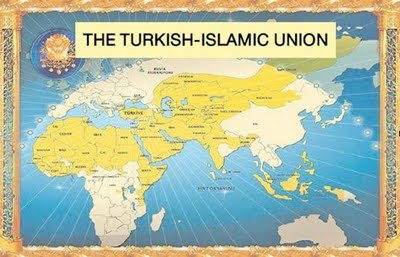
In previous essays I discussed the topic of religion and state in the Western world, notably the role of Christianity, Catholic and Protestant, in the development of Western civilization. For centuries the Catholic Church had authority in temporal affairs and collected taxes in much of Europe. Following the Reformation in the 16th century there were instances where Protestant Churches had authority in temporal affairs. Geneva under the rule of John Calvin (1509-1564), the founder of Calvinism, was governed according to the Ecclesiastical Ordinances which were administered by the Consistory. The Enlightenment in the 18th century introduced new thinking in the natural rights of man and the place of religion in society. Enlightenment thinkers valued religious liberty, but also favoured a strict separation between religion and the state. By the end of the 18th century there were the American and French Revolutions which introduced constitutional law and separation of church and state. In the 19th century the last vestiges of church authority in temporal affairs were swept away with capture of Rome and the Papal States in the drive to unify Italy as a nation. Constitutional guarantees of religious liberty and separation of religion and state make religious pluralism an integral part of Western societies in the present, while Christianity remains the dominant faith, people are free to practice any religion they wish or none at all. How does the history and development of the Islamic world then compare to that of the Western world? Continue reading
Tell the Devil to go to Hell
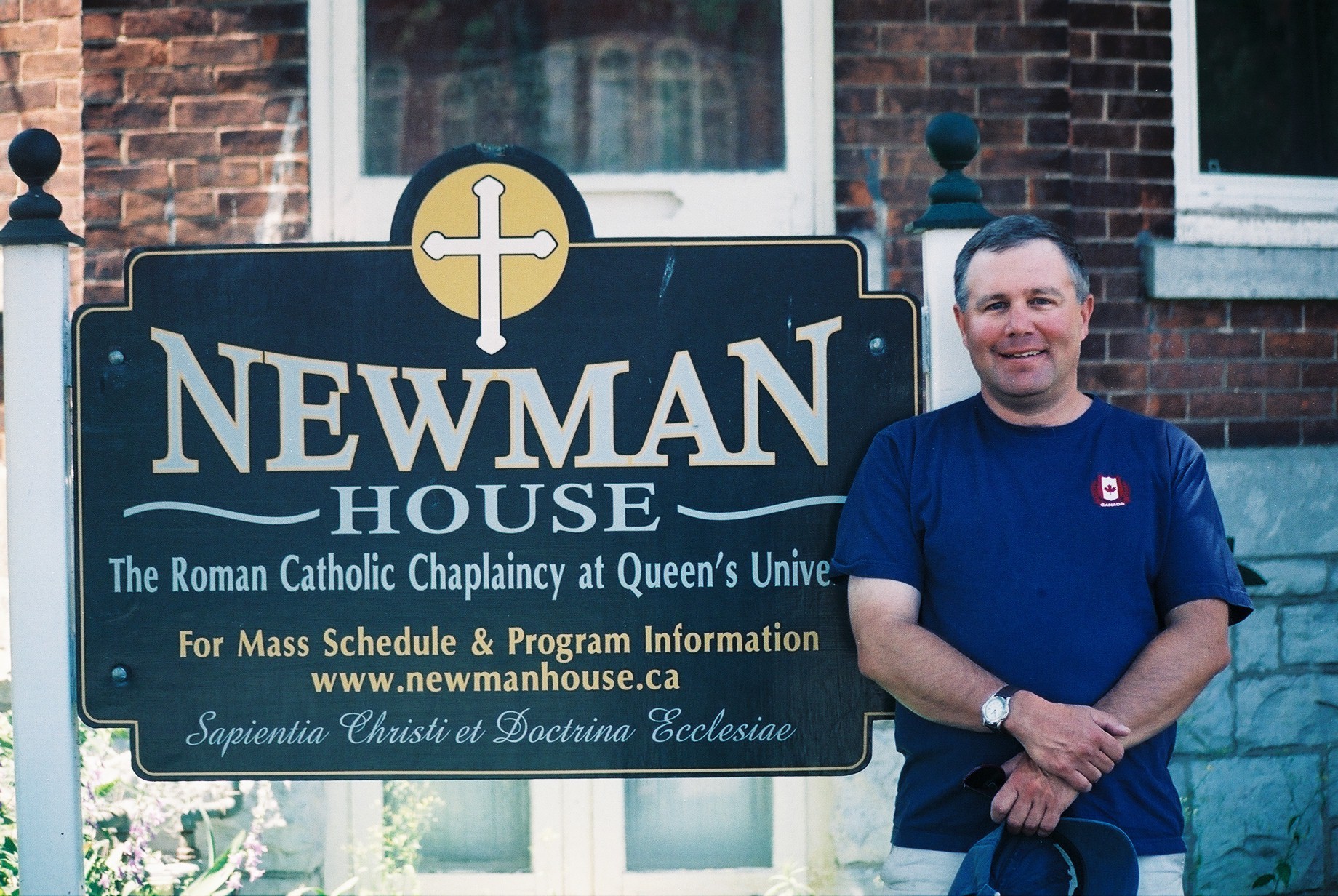
Tell the devil to go to hell,” good advice given to me by a priest who heard my confession at St. Mary’s Cathedral. I was a student at Queen’s University and practicing Roman Catholic in the 1980s. My confessor was speaking figuratively, of course. Neither he nor I believed to “tell the devil to go to hell” involves addressing the creature sporting horns, a tail and cloven hooves. The devil, in the context of our discussion, was a metaphor for humanity’s evils. My confessor told me that I should heed the dictates of my conscience to choose to good and avoid doing evil. What made me think of this was Pope Francis’s thoughts in a sermon, in which he intimated that atheists are redeemed. That is, they do not face damnation when they choose to do good and avoid doing evil. This sermon raises an interesting point. I understood that in practicing Roman Catholicism, redemption and sanctification are granted via the grace of God through faith in Christ. I am no longer a practicing Roman Catholic, though not an atheist. I am a Deist. I listen to the dictates of my conscience in trying to do good and avoid doing evil, in effect telling the devil to go to hell. And until hearing the news of Pope Francis’ homily, understood, from the perspective of Catholic teaching, I am putting my soul at risk of damnation. Continue reading
If God had wanted me otherwise, He would have created me otherwise. — Johann von Goethe (1749-1832)
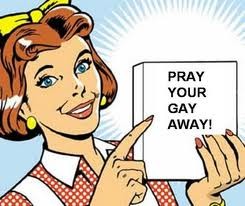
Recruitment is defined among other things as “the action of finding new people to join an organization or support a cause.” (Oxford Dictionaries) It is so common to come across the claim that gays recruit others into being gay, that you choose to be gay, that someone lured your into this “lifestyle.” Speaking on behalf of myself, I can say that no one recruited me into being gay. Same-sex attraction manifests itself naturally in me. It is who I am. During my formative years in the latter half of the 1970s, the only impression I had of homosexuality was not good. Aside from a steady stream of disparaging, anti-gay jokes, remarks and slurs commonly in use at the time), there were a series of news reports about police raids on bathhouses in Toronto, culminating in Operation Soap in 1981. The impression of the “gay lifestyle” presented to me came up short if it was intended to win me as a recruit. I have written about my experience in how I came to accept that I am gay in previous posts, see Tap, Tap, Tap…, for example. It was a long and challenging process that dragged on over several years. I tried desperately to ignore, suppress, will even pray away the feelings of same-sex attraction. For a long time, I really wanted the gayness to go away. Continue reading