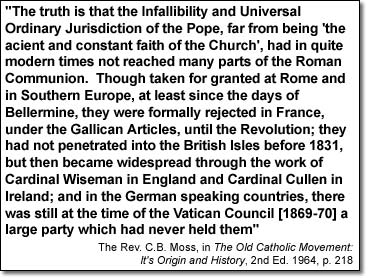
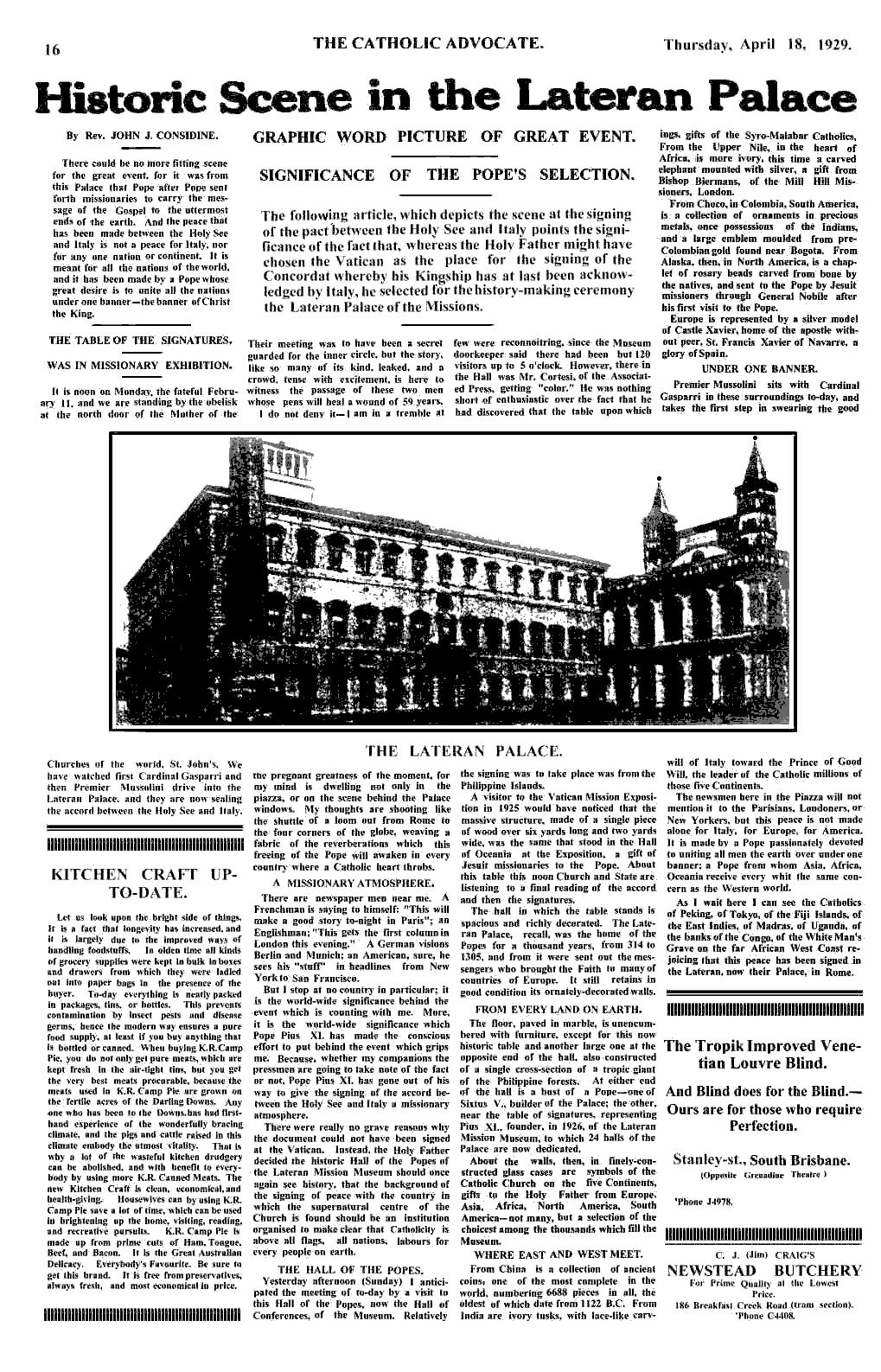
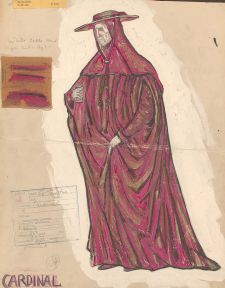
The papacy was in a very precarious position when Pope Pius IX convened the First Vatican Council on June 29, 1868. The drive for Italian unification was underway, with a revolution in 1848 that led to the exile of Pius IX in the castle of Gaeta in the Kingdom of the Two Sicilies from November 24, 1848, until his return to Rome in April 1850. The revolutionaries declared the Roman Republic comprised of the Papal States and in accordance with the ideals of the Enlightenment religious liberty and tolerance was enshrined in the new constitution by article 7 of the Principi fondamentali. Prior to this development only Christianity and Judaism were allowed by law to be practiced in the Papal States. The independence of the pope as head of the Catholic Church was guaranteed by article 8 of the Principi fondamentali. While providing constitutional guarantees of religious liberty and papal authority over the Catholic Church, the framers of the Constitution of the Italian Republic curtailed the temporal authority of the Pope which was referred to as an “historical lie, a political imposture, and a religious immorality” by a reform-minded priest, Abbé Arduini. (as cited in Wikipedia) However, by June 1849 the Roman Republic was overthrown by French military intervention and Pius IX restored in office, returning to Rome and reclaiming governance of the Papal States. Continue reading
Category Archives: Philosophy
Merrily rides the huntsman bold, Blithesome and gay rides he … — Brothers Grimm
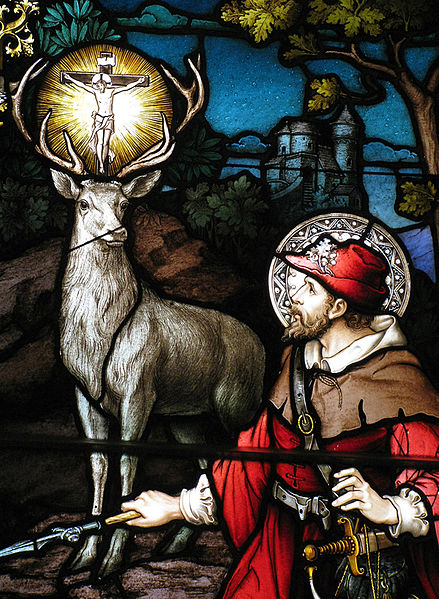
“Funny, you don’t look it” is a typical response when people learn I am a hunter. Aside from the fact I am gay, I am a gentle and thinking man. People find it hard to believe that I can choose to hunt down and kill a game bird or animal. Yes, hunting, unlike my gayness, is an ethical choice I make. It is a moral choice I keep to myself a great deal of the time as I find I have more venom spat at me for choosing hunting than for being gay. I concealed that I was gay and in a relationship with Mika from most of my hunting buddies. My hunting buddies are men and women from various ethnic and religious backgrounds. They are generally conservative. I feared I might lose them as friends and hunting buddies if they knew the truth, or at the very least, they would be uncomfortable knowing. It turns out they were not bothered in the least and are happy for me that I am in a long-term relationship with Mika. We remain friends and hunting buddies, taking to the field to pursue game and enjoy our sport. Everyone who takes up hunting has their reasons for doing so, but as for me, I have had a lifelong passion for hunting, the outdoors and wildlife. Continue reading
Tell the Devil to go to Hell
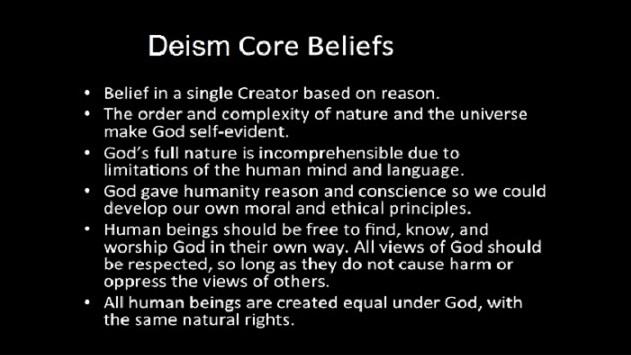
Tell the devil to go to hell,” good advice given to me by a priest who heard my confession at St. Mary’s Cathedral. I was a student at Queen’s University and practicing Roman Catholic in the 1980s. My confessor was speaking figuratively, of course. Neither he nor I believed to “tell the devil to go to hell” involves addressing the creature sporting horns, a tail and cloven hooves. The devil, in the context of our discussion, was a metaphor for humanity’s evils. My confessor told me that I should heed the dictates of my conscience to choose to good and avoid doing evil. What made me think of this was Pope Francis’s thoughts in a sermon, in which he intimated that atheists are redeemed. That is, they do not face damnation when they choose to do good and avoid doing evil. This sermon raises an interesting point. I understood that in practicing Roman Catholicism, redemption and sanctification are granted via the grace of God through faith in Christ. I am no longer a practicing Roman Catholic, though not an atheist. I am a Deist. I listen to the dictates of my conscience in trying to do good and avoid doing evil, in effect telling the devil to go to hell. And until hearing the news of Pope Francis’ homily, understood, from the perspective of Catholic teaching, I am putting my soul at risk of damnation. Continue reading
I desire not to keep my place in this government an hour longer than I may preserve England in its just rights, and may protect the people of God in such a just liberty of their consciences… — Oliver Cromwell (1599-1658)
How often have I heard it said that it is the precepts of Christianity that are the foundation of Western civilization? When confronted with this claim, my typical response is to roll my eyes and think, “that old chestnut.” This is particularly the case when the claim is framed so egregiously by the likes of Glenn Beck, who stated, in referring to origins of the United States, “it is God’s finger that wrote the Declaration of Independence and the Constitution. This is God’s country; these are God’s rights. I have no idea what he wants us to do with them, other than protect them, and stand with Him.” (As cited in Tony’s Curricublog) While it is easy to dismiss such claims as stuff and nonsense, it is worth considering the role of religious belief in the growth and development of Western civilization, its transition from the primacy of Christian doctrine in public life to the rise of liberal democracy and the rule of law in the secular nation-state, though not in the way many religious folks, such as Glenn Beck, imagine it to be. Continue reading
Scripture, Tradition and Reformation
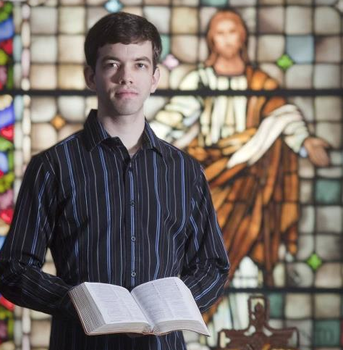
Recently, Mika and I attended a meeting of gay and lesbian Catholics. Several people of all ages were in attendance. We had a very interesting discussion and it was very nice meeting these people. Among those present was a young gay man, Jesse, who has faith in Christ and the Roman Catholic Church. Jesse, like so many gay people, just wants to find conjugal love and companionship with someone who happens to be the same sex. Jesse took the time to write a heartfelt letter to Pope Francis, explaining who he is, that he is gay, leading a very normal life, hoping to have married life with a man someday and asking for acceptance in the Church. He expressed some concern he might face excommunication for what he wrote, but we assured him this is not very likely. What he can realistically expect is a polite reply from the appropriate branch of the Vatican bureaucracy thanking him for his letter and reminding him that as Roman Catholic it is expected that he abstain from sex outside of marriage. That the Church does not accept same sex relationships at present leaves him in a bind.
Continue reading
Why I am not an atheist

I was, for a time, a very pious Roman Catholic. I attended mass every day, said my prayers, studied theology, and accepted the authority of the Sacred Scriptures and the Apostolic Tradition. Throughout it all, however, doubt always nagged at me. I remember following the Easter Sunday mass at the Mother House of Sisters of Providence of Saint Vincent DePaul (my great aunt Olive was a member of the order), joining in with a priest reciting Revelation 11:15, “And He shall reign forever and ever.” The priest added emphatically, “Yes, forever and ever.” “Oh wow, you really believe that?” was the first thought that crossed my mind. Doubt was ever present while I tried to practice Roman Catholicism. Some years later, at a suburban parish at the Easter Vigil, a woman behind me was pouring candies from a bag into her children’s hands while the priest was busy reciting the words for the lighting of the Sacred Fire. The sound of the candies pouring out of the bag was an annoying distraction, and it was following this that seemingly out of nowhere, doubt struck, and I found myself wondering, “What on Earth am I doing here? Do I really believe any of this?” I left the Vigil as I felt it wasn’t very good of me to stay.
The LDS (Mormon) Version of Satan
I was born and raised in the LDS (Mormon) church, and left during my teen years. To many, Mormonism is not considered a Christian religion, though Mormons consider themselves to be Christians and believe in the Bible. There is some overlap, as well as some contradiction, in the teachings of the Bible and the Book of Mormon. Seeing as Mormonism is what some would call a fringe sect of Christianity, Geoffrey recently asked me to share a few thoughts about the Mormon view of Satan.
Much of the Mormon version of Satan is in keeping with the traditional Christian version. To be honest, I have a hard time remembering which bits of doctrine are distinctly Mormon, and which come from the Bible. One could say that the lines are blurred, so to speak. But the “origin story” of Satan as far as Mormonism is concerned is as follows.
Before we were put on this earth, we were spirits in Heaven. We were all children of god, but we desired to have a physical body of flesh and blood, as he did. It is for this reason that god created the earth. We would come to earth to be put to a spiritual test, and if we passed, we would get to return to Heaven in our physical bodies. Two plans were proposed to god. One by Jesus Christ, the other, Satan (also called Lucifer). Satan’s plan was to not allow us, his spiritual brothers and sisters, to have the power of free agency or choice. His plan was designed to ensure that each and every one of us would be able to succeed in our test on earth, so that all of us would be able to live in Heaven with our Heavenly Father for all eternity.
Jesus’ plan, however, was to allow each of us to have free agency, or, the right to choose between good and evil. God chose Jesus’ plan, as it was a better test of worthiness. Satan became angry and waged a war against god, Jesus, and those who sided with them. It is said that one third of Heaven sided with Satan (how do we know that?). The one third that was on Satan’s side lost the war in Heaven, and was cast out forever, never to be given bodies.
It is in this way that Satan and his followers tempt us. They do not have physical bodies, so they are able to both infiltrate and be cast out of a room, area, etc. It is very curious that Mormons do not believe Satan has a physical body, because Brigham Young, the second president of the church, stated that apostates (people who leave the church) “will become gray haired, wrinkled, and black, just like the devil” * How on earth can a spirit have dark skin? Either he has a body, or he doesn’t. One without a body cannot have dark skin on that body which does not exist.
Not all Mormons subscribe to this bit of doctrine, and the church has even made efforts to cover the Journal of Discourses up, as it is riddled with absurdities (including a statement that people live on the surface of the sun).
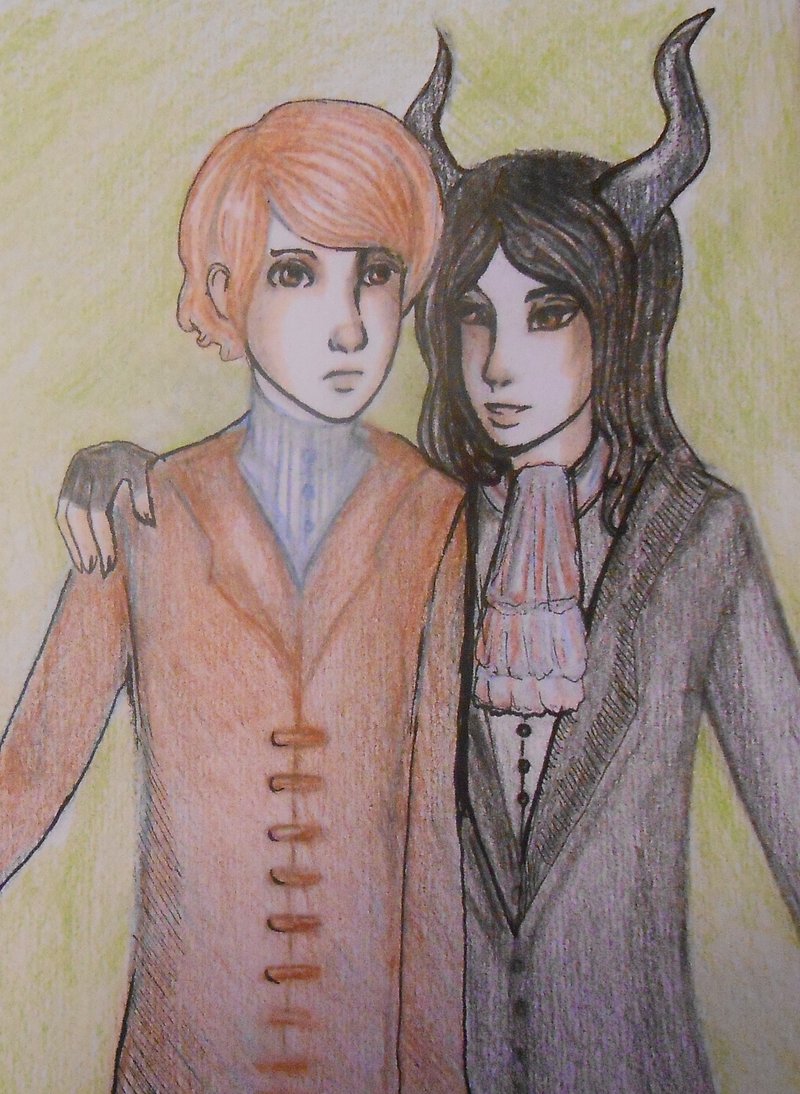
I don’t think I’ve ever seen any official church doctrine teaching this, but I have heard it be said in the Mormon church that Satan is a homosexual. I repeat, this opinion is not official doctrine of the church. It doesn’t surprise me, though, that some members of the church believe this. They believe that Satan is the source of all evil, and seeing as they believe homosexuality to be immoral, it’s not hard to understand that some Mormons think of Satan as possessing this particular trait.
So there you have it, folks. Mormon Satan is an invisible, black, gray haired homosexual. I do adore the Mormon, and even Christian, Satan. He is an incredibly intriguing character, and the Mormon “origin story” would make a GREAT fantasy movie. Perhaps I’ll make that movie one day, and play Satan myself. It will be deliciously evil.
*Journal of Discourses, Volume 5, page 332. The Journal of Discourses is a series of volumes of talks given by early church leaders, as well as written passages. As far as I know, the church does not consider them to be doctrine (anymore), and they are not discussed in Mormon church. It’s clear that the church is embarrassed by them, which is why many Mormons have never even heard of the Journal of Discourses.
Posted by Tom
Franky and Johnny
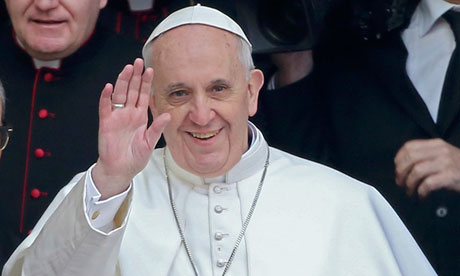
The election of Jorge Mario Bergoglio as Pope Francis I on March 13, 2013, strikes me as impressive in that he makes me think of one of his predecessors, Angelo Giuseppe Roncalli (1881-1963), who became Pope John XXIII (1958-1963). Like Pope John, he comes across as a humble and personable man. In choosing his regnal name, Pope John commented, “I choose John … a name sweet to us because it is the name of our father, dear to me because it is the name of the humble parish church where I was baptized, the solemn name of numberless cathedrals scattered throughout the world, including our own basilica [St. John Lateran]. Twenty-two Johns of indisputable legitimacy have [been Pope], and almost all had a brief pontificate. We have preferred to hide the smallness of our name behind this magnificent succession of Roman Popes.” (As cited in Wikipedia) As for Pope Francis, his choice of regnal name is inspired by Saint Francis of Assisi whom he admires as “the man of poverty, the man of peace, the man who loves and protects creation. These days we don’t have a very good relationship with creation, do we?” he said. “He is the man who gives us this spirit of peace, the poor man.” (As cited in Wikipedia)
If one of those bottles should happen to fall…
I have a passion for the study of history and for music. I love learning about the past and listening to music from across the ages. Occasionally the two passions become congruent as is the case of the opera by Francis Poulenc (1899-1963), “Dialogues des carmélites” (Dialogues of the Carmelites), composed in 1956. The opera is a fictionalized account of an order of Carmelite nuns who were executed during the Reign of Terror in the French Revolution and are remembered as the Martyrs of Compiègne. Continue reading
Coffee: that “Muslim drink”
Coffee, a hot beverage brewed from the ground beans of the Coffea plant, is a beverage I relish. I take two mugfuls of black coffee every morning, savouring the flavour as I sip it from my mug. The consumption of coffee is a pleasure so many people enjoy every day across the world. Coffee drinking originated in the Arab world in the 15th century and remains integral to Arab culture. Coffee was introduced to Europe in the 16th century by Venetian merchants who had trade relations with North Africa, Egypt and the Middle East. Coffee was approved as a Christian beverage by Pope Clement VIII (1536-1605) in 1600, having been frowned upon by some Christians as a “Muslim drink.” Kudos to His Holiness Pope Clement for doing so, as this delectable beverage and its consumption would play a role in transforming European society from the remnants of the social order of the Middle Ages to modernity. Continue reading