Tag Archives: human-rights

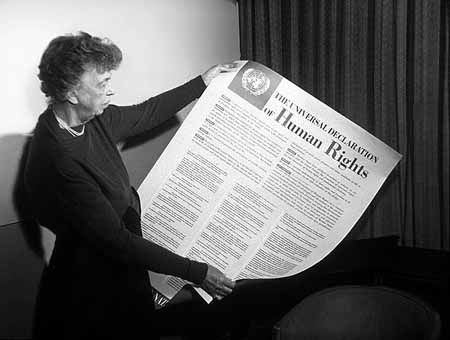
In the Universal Declaration of Human Rights (December 1948) in most solemn form, the dignity of a person is acknowledged to all human beings; and as a consequence there is proclaimed, as a fundamental right, the right of free movement in search for truth and in the attainment of moral good and of justice, and also the right to a dignified life. — Pope John XXIII, 1881-1963 Pacem in Terris, 1963

eleanor-rooseveltcairo-1990-declaration

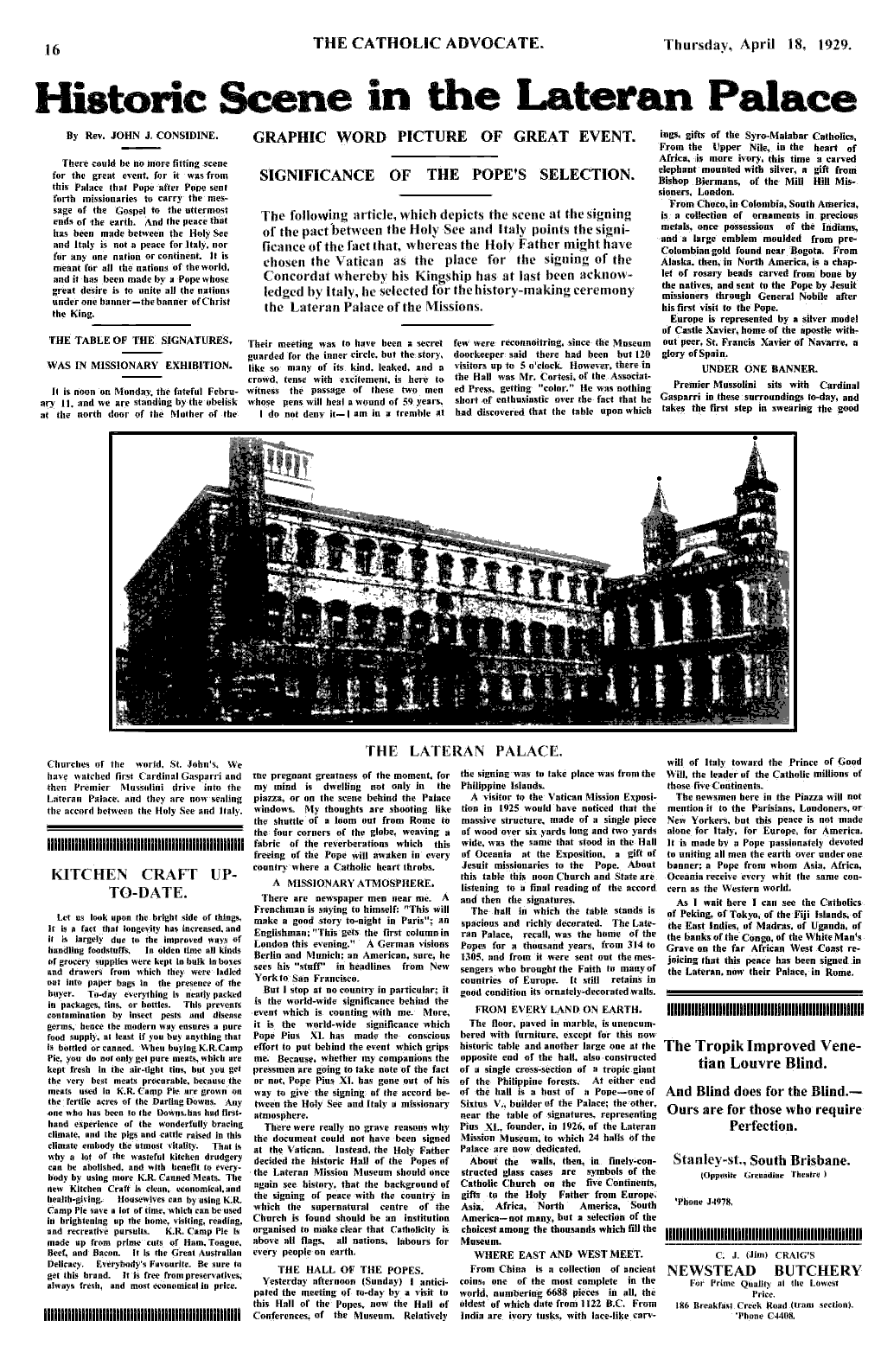
In essays published earlier on this blog the topic of religion in society, particularly the direction the Western world took in gradually establishing a clear separation of religion and state, relegating religion to the sphere of private conscience is discussed. The last remnants of Papal authority in temporal affairs ended with the signing of the Lateran Treaty between the Vatican and the Italian government in 1929. In the present, in the Western world, religious liberty is guaranteed in law and members of religious institutions are free to comment on moral and political issues just as anyone else. In the Islamic world, this distinction between religion and state never emerged, save for the Republic of Turkey which was founded as a secular state in 1923. The Ottoman Caliphate was abolished in 1924. The constitutional, civil and common law legal systems in effect across the Western world are rooted in the theory of natural rights, primarily as espoused by the men of the Enlightenment, such as John Locke and Thomas Paine. By contrast, across the Islamic world, the system of law, sharia, a religiously based moral and legal code applies. The differences in the legal systems and the place of religion in society between the Western world and the Islamic world are quite noticeable in comparing responses to the the Universal Declaration of Human Rights of 1948. Continue reading

“Dignity is not negotiable. Dignity is the honor of the family.” — Vartan Gregorian

shame3shouldnt_real_family_values_value_all_families_tshirt-r9af494bc515f443588ea2190db93cf65_804gs_512

A good friend and hunting buddy of mine, Omer, is an observant Muslim whose family immigrated to Canada from Pakistan. Omer is an educated man as is the rest of his family. He is someone I have known several years and with whom I have enjoyed many in-depth discussions, learning about his faith and the culture in which he grew up before coming to Canada.  He tells me that family honour and shame are taken very seriously by some elements of Pakistani society. The phenomenon of honour killing is a reality for these elements of Pakistani society, particularly in the rural and tribal regions. Family honour is taken so seriously in this culture that if a family member (typically a girl or young woman) brings shame on the family the whole family suffers. They become untouchables; they are deemed unfit to associate with and most certainly are not welcome to marry into other families. The only way family honour can be restored in such a case is in killing the family member who brought the shame onto the family. This understanding of family honour is bound up in religion (Islam) and a culture in which men dominate. He certainly does not approve of this behaviour. He recognizes it as a problem that Pakistani society must address. Continue reading

“Accumulating orthodoxy makes it harder year-by-year to be a Christian than it was in Jesus’ day.” ― Brian D. McLaren

pope on homosexualitythe20samaritan_jpg

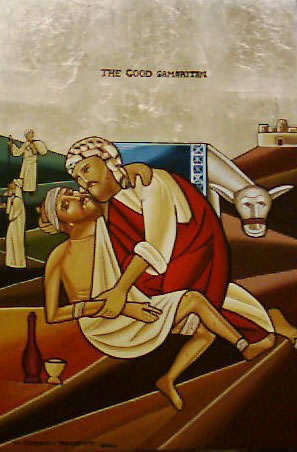
When I started school, grade one to be precise, in Frontenac County in 1967 religious instruction was still part of the public school curriculum. While my family was Roman Catholic at the time, my mother and father were public school supporters. I recall every morning my teacher, Miss Boss, would read us a Bible story as part of our morning opening exercises. One of the first stories I remember she read to us was that of the parable of the Good Samaritan. At the time the nuances of the story were lost on me; it served as a basic moral lesson for me and my classmates that the Samaritan had done the right thing in helping the injured man, unlike the Priest and the Levite. Likewise so should we if confronted with a similar circumstance. It was not until many years later when I was a student at Queen’s University that I came to understand the story and the moral more fully. Continue reading

“Every man has a right to utter what he thinks truth, and every other man has a right to knock him down for it. Martyrdom is the test.”–Samuel Johnson (1709-1784)

Polish_Righteous_Józef_and_Wiktoria_Ulmaglorification-of-martyrs

Martyrdom is a concept with which I have been familiar since I was very young. From my Roman Catholic background growing up I remember reading accounts of the lives of saints, many of whom were martyred in the most grisly fashions imaginable. In the summer of 1969 my family, myself, my three siblings, our mother and father and my mother’s parents toured Europe, traveling in a Volkswagen van. Among the sights we saw were a number of art galleries where I viewed a great many works of art depicting the martyrdom of various saints. The martyrdom of Saint Sebastian is one of the more memorable depictions I recall, but it was the depiction of one event in particular from the Bible that really made an impression on me: that of the Massacre of the Innocents. From the first time I heard that story read to me I was troubled by it. I struggled to understand why God would allow such an atrocity. In one version of the story, written for children, I remember reading that we should find solace  in that the mothers of the slain baby boys would have found comfort had they known their murdered sons were the first Christian martyrs. This raised a question for me I have pondered over the years: can children be martyrs? Continue reading

I believe that the tendency to classify all persons who oppose [this type of relationship] as ‘prejudiced’ is in itself a prejudice,” a psychologist said. “Nothing of any significance is gained by such a marriage. — Loving v. Virginia

The Supreme Court of the United States (SCOTUS) handed down rulings this week concerning marriage equality in law for same sex couples at the federal and state levels. The Defense of Marriage Act (DOMA), the law which prohibited the federal government from recognizing same sex marriages, was declared unconstitutional and the court refused to hear the appeal of Proposition 8 in California, the ballot measure that changed the California Constitution to add a new section 7.5 to Article I, which reads: “Only marriage between a man and a woman is valid or recognized in California.” Proposition 8 was declared unconstitutional by a lower court, the Ninth Circuit Court of Appeals, in 2012 and the government of California chose not to defend the law on its appeal to SCOTUS. Consequently, a majority of the Justices refused to hear the appeal on the grounds the appellants did not have the constitutional authority, or legal standing, to defend the law in higher courts after the state refused to appeal its loss at trial. These rulings are the latest in an interesting history of legal battles over the definition of marriage in the United States.
Continue reading

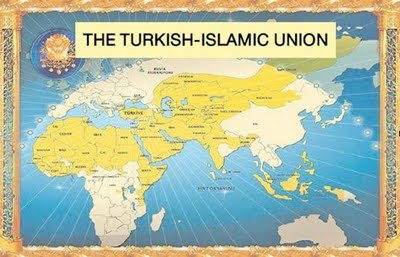
The caliphate is the sign of Islamic unity, and the manifestation of the connection between the Islamic peoples, and an Islamic symbol which the Muslims are obligated to think about, and to be concerned with its issue — Imam Hasan al-Banna

CaliphateTurkish-Islamic-Union002175-003_772

In previous essays I discussed the topic of religion and state in the Western world, notably the role of Christianity, Catholic and Protestant, in the development of Western civilization. For centuries the Catholic Church had authority in temporal affairs and collected taxes in much of Europe. Following the Reformation in the 16th century there were instances where Protestant Churches had authority in temporal affairs. Geneva under the rule of John Calvin (1509-1564), the founder of Calvinism, was governed according to the Ecclesiastical Ordinances which were administered by the Consistory. The Enlightenment in the 18th century introduced new thinking in the natural rights of man and the place of religion in society. Enlightenment thinkers valued religious liberty, but also favoured a strict separation between religion and the state. By the end of the 18th century there were the American and French Revolutions which introduced constitutional law and separation of church and state. In the 19th century the last vestiges of church authority in temporal affairs were swept away with capture of Rome and the Papal States in the drive to unify Italy as a nation. Constitutional guarantees of religious liberty and separation of religion and state make religious pluralism an integral part of Western societies in the present, while Christianity remains the dominant faith, people are free to practice any religion they wish or none at all. How does the history and development of the Islamic world then compare to that of the Western world? Continue reading

“The law of humanity ought to be composed of the past, the present, and the future, that we bear within us; whoever possesses but one of these terms, has but a fragment of the law of the moral world.” — Edgar Quinet (1803-1875)

ujquote4lateran3

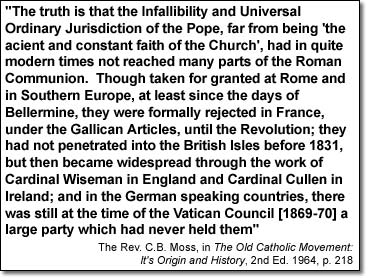
The papacy was in a very precarious position when Pope Pius IX convened the First Vatican Council on June 29, 1868. The drive for Italian unification was underway, with a revolution in 1848 that led to the exile of Pius IX in the castle of Gaeta in the Kingdom of the Two Sicilies from November 24, 1848, until his return to Rome in April 1850. The revolutionaries declared the Roman Republic comprised of the Papal States and in accordance with the ideals of the Enlightenment religious liberty and tolerance was enshrined in the new constitution by article 7 of the Principi fondamentali. Prior to this development only Christianity and Judaism were allowed by law to be practiced in the Papal States. The independence of the pope as head of the Catholic Church was guaranteed by article 8 of the Principi fondamentali. While providing constitutional guarantees of religious liberty and papal authority over the Catholic Church, the framers of the Constitution of the Italian Republic curtailed the temporal authority of the Pope which was referred to as an “historical lie, a political imposture, and a religious immorality” by a reform-minded priest, Abbé Arduini. (as cited in Wikipedia) However, by June 1849 the Roman Republic was overthrown by French military intervention and Pius IX restored in office, returning to Rome and reclaiming governance of the Papal States. Continue reading

Keep passing the open windows. — John Irving, The Hotel New Hampshire

motherBobby-Griffith-at-19-prayers-for-bobby-4727579-305-448

“Keep passing the open windows” is the phrase that comes from the John Irving novel The Hotel New Hampshire, published in 1981. It is a catchphrase among the Berry family, the characters whose story is told in the book. It is drawn from a story that the Berry parents tell their children about a street performer called “The King of Mice.” He committed suicide by jumping from a window. “Keep passing the open windows” is the family’s way of telling each other to carry on when the going gets tough. I read the novel in 1983 and saw the feature film version released in 1984. This catchphrase and the sentiment behind it has remained with me over the years, and I have applied it in my own life in “passing the open windows.” However, I understand that while it is easy to tell someone troubled, having a hard time coping with life, joys, and sorrows, to “keep passing the open windows,” promising them things will get better, sadly, not all stories have a happy ending. Continue reading

If God had wanted me otherwise, He would have created me otherwise. — Johann von Goethe (1749-1832)

gay-cure-apppray_gay-17607

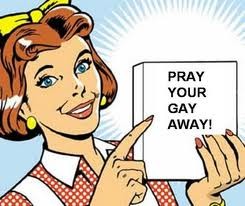
Recruitment is defined among other things as “the action of finding new people to join an organization or support a cause.” (Oxford Dictionaries) It is so common to come across the claim that gays recruit others into being gay, that you choose to be gay, that someone lured your into this “lifestyle.” Speaking on behalf of myself, I can say that no one recruited me into being gay. Same-sex attraction manifests itself naturally in me. It is who I am. During my formative years in the latter half of the 1970s, the only impression I had of homosexuality was not good. Aside from a steady stream of disparaging, anti-gay jokes, remarks and slurs commonly in use at the time), there were a series of news reports about police raids on bathhouses in Toronto, culminating in Operation Soap in 1981. The impression of the “gay lifestyle” presented to me came up short if it was intended to win me as a recruit.  I have written about my experience in how I came to accept that I am gay in previous posts, see Tap, Tap, Tap…, for example. It was a long and challenging process that dragged on over several years. I tried desperately to ignore, suppress, will even pray away the feelings of same-sex attraction. For a long time, I really wanted the gayness to go away. Continue reading

Once again, there will be a chorus screaming “special rights” when the subject of gay bashing being punished as a hate crime arises. But near as anybody can tell, the opportunity to be threatened, humiliated and to live in fear of being beaten to death is the only “special right” our culture bestows on homosexuals. — Diane Carman

bash1bash

Is gay bashing a hate crime? Does it merit prosecution and punishment as a hate crime? The murder of Matthew Shepard, a 21-year-old student at the University of Wyoming, in 1998 ignited the debate over these questions when it was alleged his assailants, Aaron McKinney and Russell Henderson, targeted him because he was gay. In the course of the court proceedings against Aaron McKinney in November 1999, Prosecutor Calvin Rerucha stated:

The two had led Shepard to believe they were gay. Matthew, believing they wanted to discuss the politics and struggle of the gay movement, followed McKinney and Henderson into their truck. After getting in the truck, Henderson said “McKinney pulled out a gun and told Matthew Shepard to give him his wallet.” McKinney said “Guess what. We’re not gay. And you’re gonna get jacked.” When Matthew refused, McKinney hit him with the gun. With Henderson behind the wheel, they drove more than a mile outside Laramie, as Matthew begged for his life, McKinney struck him while Henderson laughed. “He (McKinney) told me to get a rope out of the truck,” Henderson said. According to Henderson, McKinney allegedly tied Shepard’s beaten body to a wooden split-rail post fence, robbed him of his wallet and patent leather shoes, continued to beat him and then left him to die for over 18 hours bleed profusely in near freezing temperatures “with only the constant Wyoming wind as his companion.” (as cited in Matthew Shepard)

His assailants pistol-whipped him so severely that he suffered fractures to the back of his head and in front of his right ear. He experienced severe brainstem damage, which affected his body’s ability to regulate heart rate, body temperature, and other vital functions. There were also about a dozen minor lacerations around his head, face, and neck. His injuries were too severe for doctors to operate. He never regained consciousness, succumbing to his injuries at 12:53 a.m. on October 12, 1998, at Poudre Valley Hospital in Fort Collins, Colorado.

I remember being horrified when hearing news reports of Matthew Shepard’s murder. Aaron McKinney and Russell Henderson were tried separately on charges of kidnapping and murder, convicted on both counts and handed life sentences for both crimes to be served consecutively. They will die in prison. In the aftermath of their son’s murder, Dennis and Judy Shepard established the Matthew Shepard Foundation. Its stated aim is “… to honour Matthew in a manner that was appropriate to his dreams, beliefs, and aspirations, the Foundation seeks to “Replace Hate with Understanding, Compassion, & Acceptance” through its varied educational, outreach and, advocacy programs and by continuing to tell Matthew’s story.” Also, Judy Shepard joined in the campaign for the inclusion of sexual orientation in hate crimes laws in the United States. It was a tough fight, but she prevailed when, on October 28, 2009, President Obama signed the Matthew Shepard Act into law.

Opposition to the campaign for the inclusion of sexual orientation in hate crimes laws in the United States was tenacious. It came from the ranks of religious and social conservative interests such as James Dobson, founder of Focus on the Family. Dobson holds the belief that homosexuality is either a lifestyle choice or a mental disorder that afflicts a minuscule percentage of the population. Therefore, gay people are not a legitimate minority, and to include sexual orientation in hate crimes laws gives gay people “special rights.” These “special rights,” according to James Dobson, include:

universal acceptance of the gay lifestyle, discrediting of scriptures that condemn homosexuality, muzzling of the clergy and Christian media, granting of special privileges and rights in the law, overturning laws prohibiting pedophilia, indoctrinating children and future generations through public education, and securing all the legal benefits of marriage for any two or more people who claim to have homosexual tendencies.

That James Dobson and like-minded people hold such egregious thoughts and beliefs about homosexuality is disappointing to me personally and not very helpful for gay people from families who subscribe to these beliefs. Still, I find satisfaction that US society is moving forward despite this opposition. Attitudes toward gay people are changing in the United States, with the opinion of the majority favouring acceptance, as polls listed by the American Enterprise Institute in March 2013 indicate. Earlier this month (May 2013), the states of Delaware, Minnesota and Rhode Island enacted legislation that gives same-sex couples the right to marry, joining the states of Connecticut, Iowa, Maine, Maryland, Massachusetts, New Hampshire, New York, Vermont and Washington, plus the District of Columbia that allow same-sex marriage. The Supreme Court of the United States (SCOTUS) is expected to hand down a judgement in June (2013) on the legality of the 1996 Defense of Marriage Act, which defines marriage as a union between a male and a female for federal purposes and California’s Proposition 8, a 2008 voter initiative that narrowly overturned the state’s Supreme Court ruling that granted gays and lesbians the right to marry. It is anyone’s guess as to how the SCOTUS will rule on these cases, but whatever the outcome, the movement toward marriage equality will move forward.

While this is all very encouraging, there was an incident in New York City where a gay couple, Nick Porto and Kevin Atkins, were attacked and beaten in broad daylight on May 5, 2013. The beating took place in plain view of passersby and serves as a sobering reminder there are still elements of US society who think it just fine to harass and assault gay people or people they perceive to be gay. The New York City Police Department is investigating the crime and searching for the assailants and has released surveillance photos of one of the men suspected to have taken part. Whether or not this proves to have been a hate crime is up to the courts to decide, but this incident brings home the reality to gay people that this remains a possibility wherever they choose to live. The fact that this attack took place in broad daylight in the middle of New York City in front of people who stood by and did nothing but photographs and videos of the attack is frightening. Still, I do not think there is any need for panic. I am confident that most people are duly horrified and disgusted with this crime and want to see that justice is served. I hope, also, that the wider heterosexual society will more fully appreciate the fact that gay people still face discrimination and, in extreme cases, outright hatred, which does, sometimes, manifest itself in gay bashing.

Posted by Geoffrey