Tag Archives: History

Much of what is called Christianity has more to do with disguising the ego behind the screen of religion and culture than any real movement toward a God beyond the small self, and a new self in God. — Richard Rohr.

catholic_christian_wall_decalcatholic-or-christian

Some years ago while I ordered lunch at a restaurant in the food court at the University Centre, at the university where I work, I asked the young man serving me if he and his family celebrated the Day of the Dead. I had gotten to know him a little in snippets of conversation we had during times he served me, and I learned he was from Mexico. He replied that they did not as this was a Catholic custom, adding, in referring to himself and his family, “we’re Christian.” I was startled by the remark, though it was not the first time I was confronted with this point of view. The first time I remember being confronted by someone with this attitude toward Roman Catholicism was when I was in my first year at university. I was introduced to people from different Christian denominations on campus and at a meet and greet I was speaking to a man who asked to which church I was a member. When I told him I was a Roman Catholic, he retorted “I used to be Catholic, but now I am a Christian.” Later during my years at university, I was given a book by an acquaintance who was forever trying to get me to join his Church, the title escapes me, but it was the account of a Pentecostal Christian and the subtitle was a young Catholic encounters Christ. Continue reading

Turks were a great nation even before they adopted Islam. This religion did not help the Arabs, Iranians, Egyptians and others to unite with Turks to form a nation. Conversely, it weakened the Turks’ national relations; it numbed Turkish national feelings and enthusiasm. This was natural, because Mohammedanism was based on Arab nationalism above all nationalities. — Mustafa Kemal Atatürk (1881–1938)

Hagia-Sophia-Laengsschnitthagia-sophia-rafay-zafer

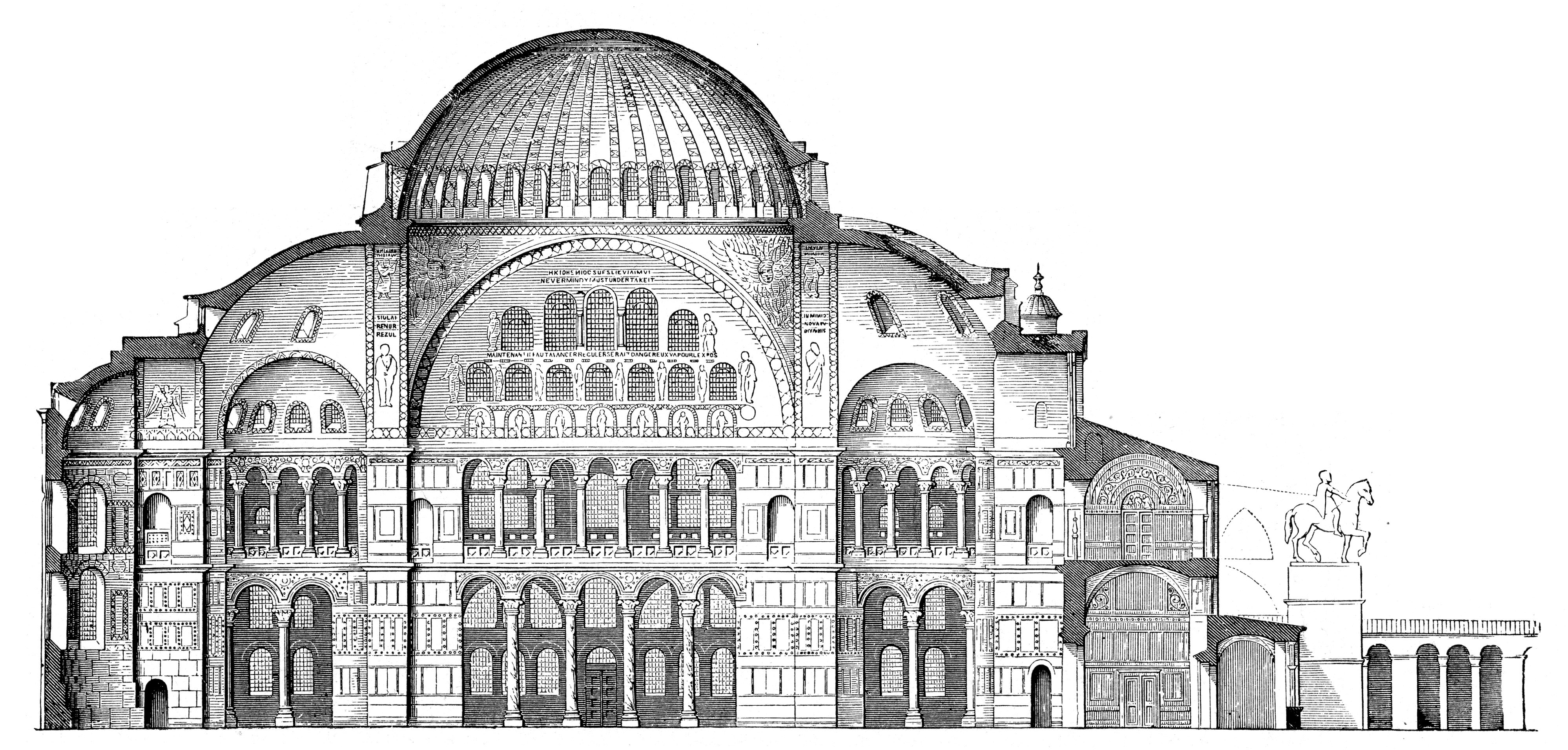
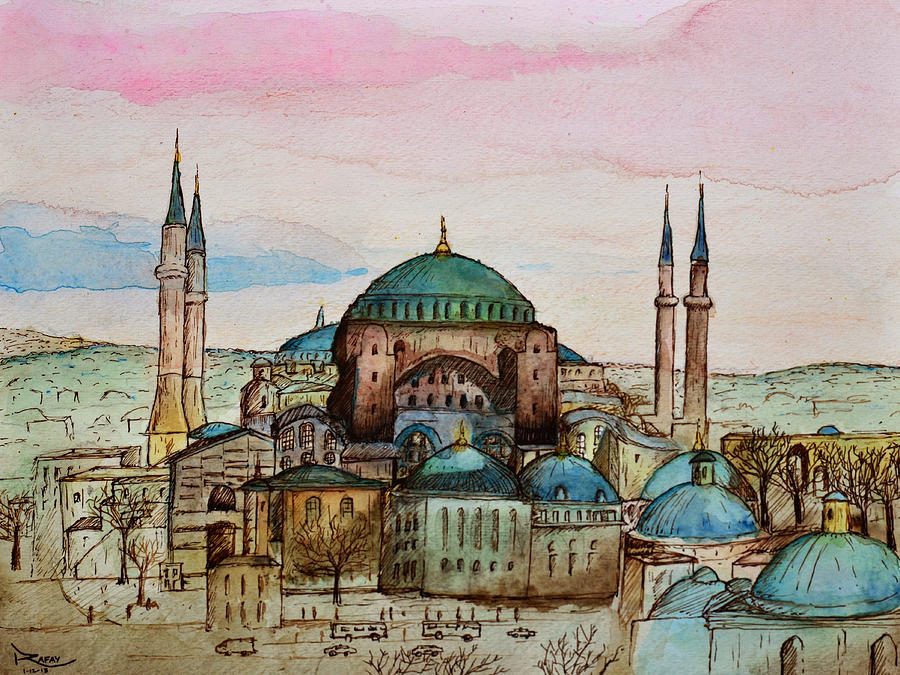
The Hagia Sophia has become the focal point in Turkish society’s current struggle between secularists and Islamists. The Republic of Turkey was founded in 1923 as a secular, parliamentary democracy with a president as head of state. In 1935, the Hagia Sophia was converted into a museum and opened to the public by the Turkish government led by Mustafa Kemal Atatürk (1881-1938). It became a major tourist attraction in Istanbul. It was turned into a museum, presumably, to reconcile the troubled history between Christianity and Islam with the realities of Turkey’s modern, secular state. The Hagia Sophia was the seat of Orthodox Christianity, the Patriarch of Constantinople, for several centuries (537–1204), a Roman Catholic cathedral from (1204–1261) and back to the Orthodox Church (1261–1453) until the conquest of the city by the Turks. It served as the first of several Imperial Mosques for the Ottoman Empire from 1453-1931. In the present, the drive to restore the Hagia Sophia as a mosque gained momentum. In 2013, Turkish Deputy Prime Minister Bulent Arinc, expressing this desire, said: “We currently stand next to the Hagia Sophia Mosque… we are looking at a sad Hagia Sophia, but hopefully we will see it smiling again soon.” (as cited in Ansa med) On July 10, 2020, President Erdogan signed a decree, ordering the restoration of the Hagia Sophia as a mosque. Continue reading

Let justice be done, though the world perish. (Fiat justitia et pereat mundus.) — Ferdinand I (1503–1564), Hungarian King of Bohemia and Hungary, Holy Roman Emperor 1558-1564

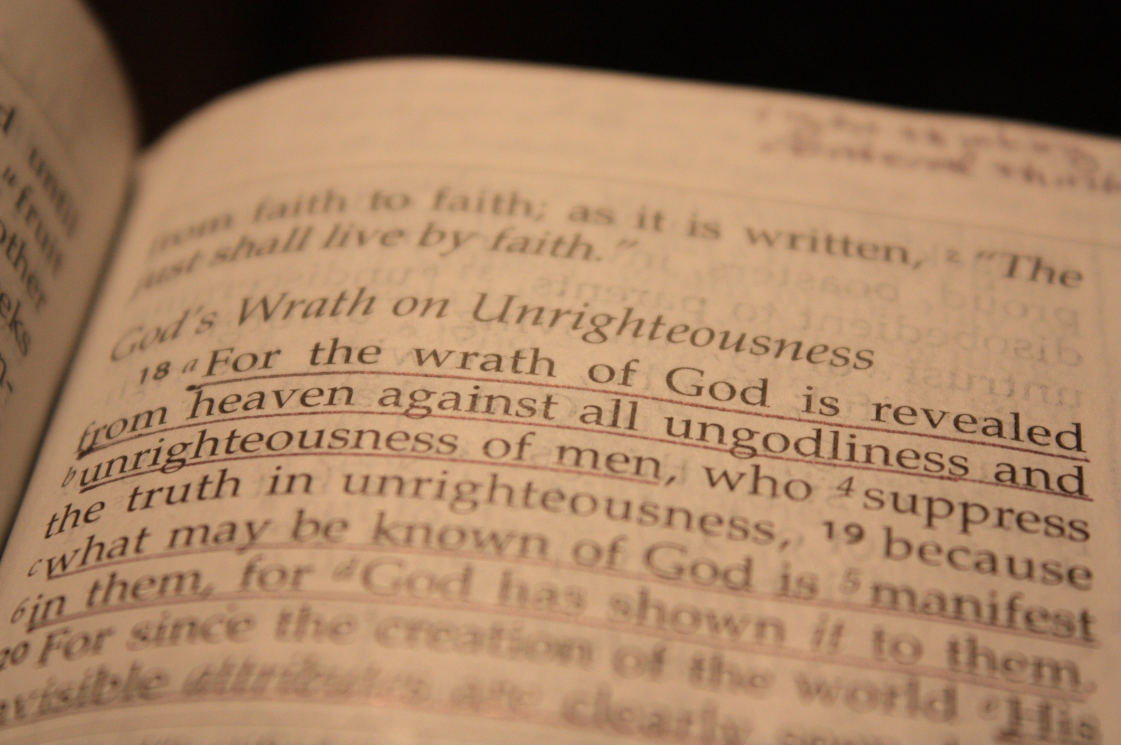
black-death-4the-wrath-of-god

I took the time to comment on a Facebook thread, the premise of which was, that Western nations should discontinue immigration from the Islamic world. I do not think this course of action is warranted and doubt any government in the Western world would take up such a policy, but what got me thinking was a comment from an individual who believes the difficulties of integrating newcomers in Canadian society, with its official policy of multiculturalism, is divine punishment for what he sees as our having abandoned Christian principles as a society. This belief in divine punishment or retribution or justice is very old and not found solely in Christianity. Though I am no longer a practicing Christian, I admit such thoughts have crossed my mind when I experienced hard times and personal tragedy in my own life. When my four year old Brittany, Juno, succumbed to cancer in 2012, I remember talking to the breeder who sold her to me, asking if there had ever been any incidence of cancer in her dogs at such a young age. She told me no and she was just as shocked and horrified as me by the news. I then asked her “is it something I have done?” “What have I done to deserve this?” The questions were essentially rhetorical, but she answered, saying no, it was not anything I had done and assured me that “God does not hand us a burden He knows we cannot bear.” Continue reading

“Dignity is not negotiable. Dignity is the honor of the family.” — Vartan Gregorian

shame3shouldnt_real_family_values_value_all_families_tshirt-r9af494bc515f443588ea2190db93cf65_804gs_512

A good friend and hunting buddy of mine, Omer, is an observant Muslim whose family immigrated to Canada from Pakistan. Omer is an educated man as is the rest of his family. He is someone I have known several years and with whom I have enjoyed many in-depth discussions, learning about his faith and the culture in which he grew up before coming to Canada.  He tells me that family honour and shame are taken very seriously by some elements of Pakistani society. The phenomenon of honour killing is a reality for these elements of Pakistani society, particularly in the rural and tribal regions. Family honour is taken so seriously in this culture that if a family member (typically a girl or young woman) brings shame on the family the whole family suffers. They become untouchables; they are deemed unfit to associate with and most certainly are not welcome to marry into other families. The only way family honour can be restored in such a case is in killing the family member who brought the shame onto the family. This understanding of family honour is bound up in religion (Islam) and a culture in which men dominate. He certainly does not approve of this behaviour. He recognizes it as a problem that Pakistani society must address. Continue reading

We can only see a short distance ahead, but we can see plenty there that needs to be done. — Alan Turing (1912-1954)

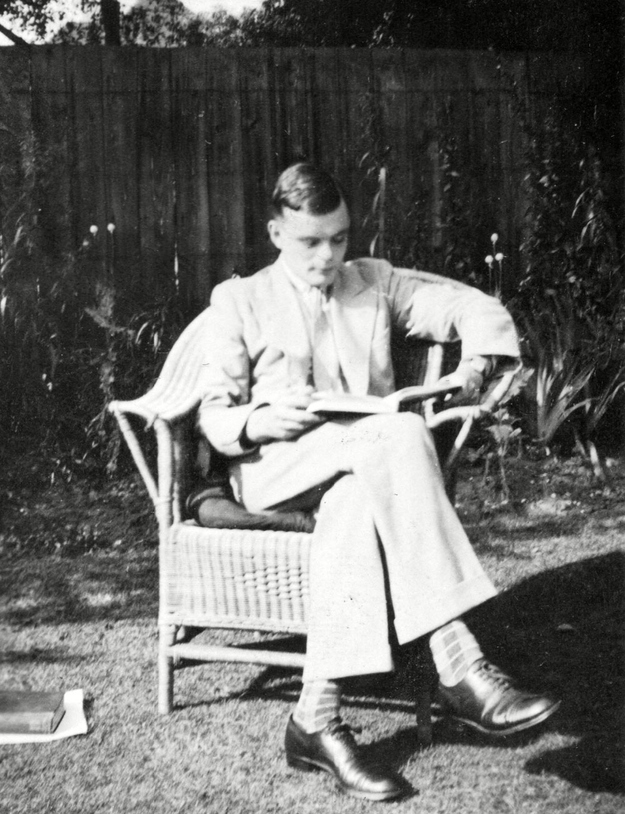
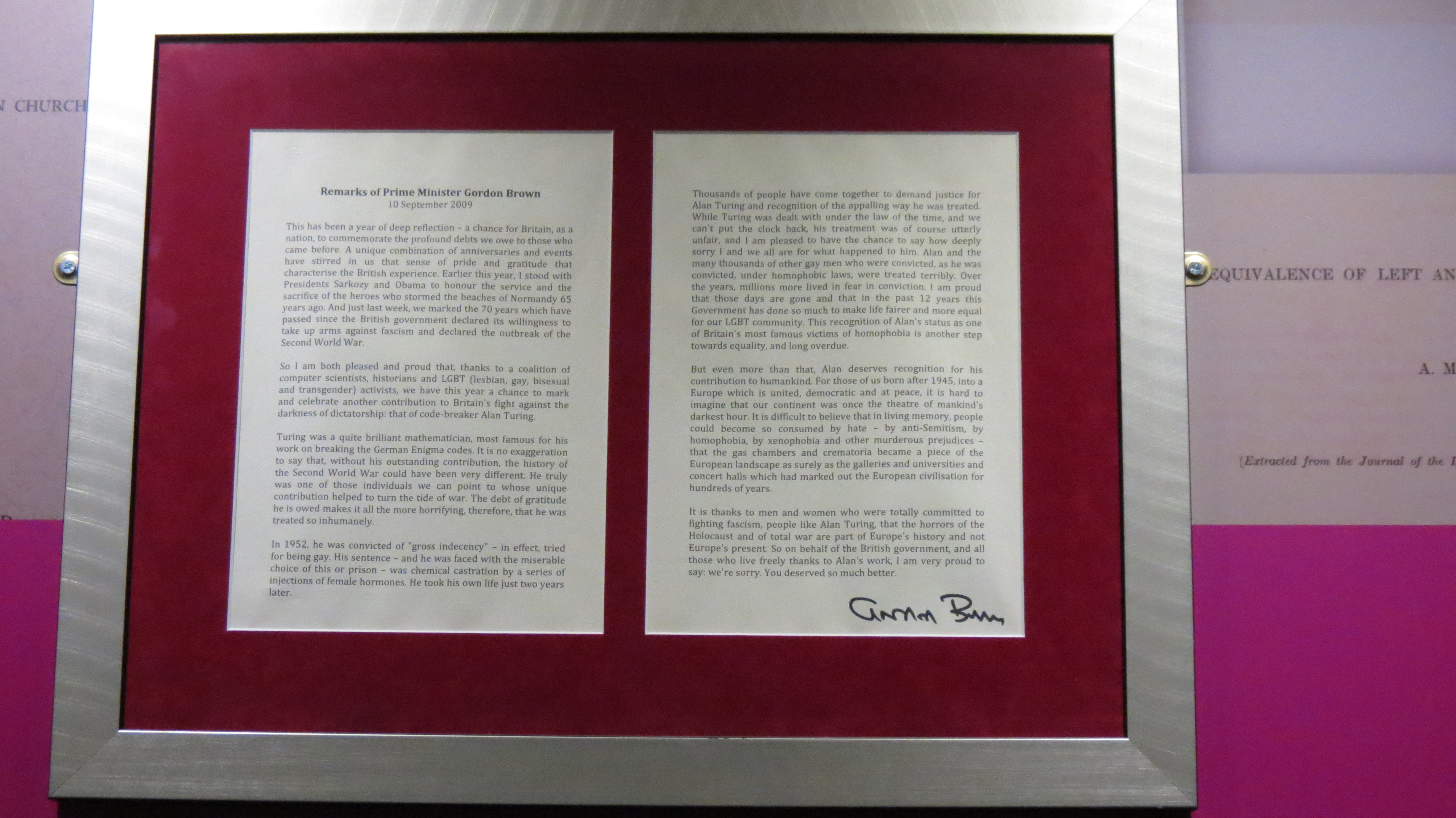
enhanced-buzz-15299-1379589344-0IMG_1283

While Mika and I were enjoying our two weeks holiday in England last month among the sites we toured was Bletchley Park. This was especially of interest to Mika as he has a degree in computer science and mathematics from Queen’s University. Bletchley Park was the seat of British Intelligence, Government Code and Cypher School (GC&CS or GCCS, later renamed Government Communications Head Quarters GCHQ), during the Second World War where Axis radio transmissions were intercepted and decrypted. Those who worked there in the strictest secrecy and security made an invaluable contribution to the Allied war effort. Of those who worked at Bletchley Park during the Second World War was a mathematician and pioneering computer scientist named Alan Turing. It is held that “Turing’s brilliant ideas in solving codes, and developing computers to assist break them, may have saved more lives of military personnel in the course of the war than any other.” (Turing Biography) He is commemorated at Bletchley Park for his service to his King and country with a sculpture and a copy of the Letter of Apology from the British Government for the injustice he suffered following the war for having been identified as a “known homosexual,” an injustice that ruined his career, reputation, health and led to his suicide. Continue reading

You don’t have to be straight to be in the military; you just have to be able to shoot straight. — Barry Goldwater (1909-1998)

66752_162144940601785_2132611037_ngoldwater1

The repeal of the Defense of Marriage Act (DOMA) in the United States is great news for gay couples who are employed by the federal government, particularly those who are serving in the US military. Interestingly, the ban on gays serving in the US military was lifted before the repeal of DOMA, and the effort to lift this ban was supported by what you might think was an unlikely advocate: none other than Barry Goldwater (1909-1998).  Goldwater was a staunch conservative, an anti-communist politician whose career in federal politics began in 1952 as a Senator for the State of Arizona and presidential candidate for the Republican Party in 1964, continuing until his retirement in 1987. He was forthright and transparent in his thoughts concerning gay rights in US society and gays serving in the US military, and not in the way you may be thinking.  Concerning gays serving in the military, he stated, “everyone knows that gays have served honorably in the military since at least the time of Julius Caesar. They’ll still be serving long after we’re all dead and buried. That should not surprise anyone.” He added:

The conservative movement, to which I subscribe, has as one of its basic tenets the belief that government should stay out of people’s private lives. Government governs best when it governs least – and stays out of the impossible task of legislating morality. But legislating someone’s version of morality is exactly what we do by perpetuating discrimination against gays. (Lifting ban on gays in military should be conservative cause)

Continue reading

I believe that the tendency to classify all persons who oppose [this type of relationship] as ‘prejudiced’ is in itself a prejudice,” a psychologist said. “Nothing of any significance is gained by such a marriage. — Loving v. Virginia

The Supreme Court of the United States (SCOTUS) handed down rulings this week concerning marriage equality in law for same sex couples at the federal and state levels. The Defense of Marriage Act (DOMA), the law which prohibited the federal government from recognizing same sex marriages, was declared unconstitutional and the court refused to hear the appeal of Proposition 8 in California, the ballot measure that changed the California Constitution to add a new section 7.5 to Article I, which reads: “Only marriage between a man and a woman is valid or recognized in California.” Proposition 8 was declared unconstitutional by a lower court, the Ninth Circuit Court of Appeals, in 2012 and the government of California chose not to defend the law on its appeal to SCOTUS. Consequently, a majority of the Justices refused to hear the appeal on the grounds the appellants did not have the constitutional authority, or legal standing, to defend the law in higher courts after the state refused to appeal its loss at trial. These rulings are the latest in an interesting history of legal battles over the definition of marriage in the United States.
Continue reading

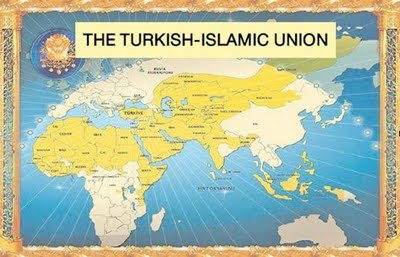
The caliphate is the sign of Islamic unity, and the manifestation of the connection between the Islamic peoples, and an Islamic symbol which the Muslims are obligated to think about, and to be concerned with its issue — Imam Hasan al-Banna

CaliphateTurkish-Islamic-Union002175-003_772

In previous essays I discussed the topic of religion and state in the Western world, notably the role of Christianity, Catholic and Protestant, in the development of Western civilization. For centuries the Catholic Church had authority in temporal affairs and collected taxes in much of Europe. Following the Reformation in the 16th century there were instances where Protestant Churches had authority in temporal affairs. Geneva under the rule of John Calvin (1509-1564), the founder of Calvinism, was governed according to the Ecclesiastical Ordinances which were administered by the Consistory. The Enlightenment in the 18th century introduced new thinking in the natural rights of man and the place of religion in society. Enlightenment thinkers valued religious liberty, but also favoured a strict separation between religion and the state. By the end of the 18th century there were the American and French Revolutions which introduced constitutional law and separation of church and state. In the 19th century the last vestiges of church authority in temporal affairs were swept away with capture of Rome and the Papal States in the drive to unify Italy as a nation. Constitutional guarantees of religious liberty and separation of religion and state make religious pluralism an integral part of Western societies in the present, while Christianity remains the dominant faith, people are free to practice any religion they wish or none at all. How does the history and development of the Islamic world then compare to that of the Western world? Continue reading

“The law of humanity ought to be composed of the past, the present, and the future, that we bear within us; whoever possesses but one of these terms, has but a fragment of the law of the moral world.” — Edgar Quinet (1803-1875)

ujquote4lateran3

The papacy was in a very precarious position when Pope Pius IX convened the First Vatican Council on June 29, 1868. The drive for Italian unification was underway, with a revolution in 1848 that led to the exile of Pius IX in the castle of Gaeta in the Kingdom of the Two Sicilies from November 24, 1848, until his return to Rome in April 1850. The revolutionaries declared the Roman Republic comprised of the Papal States and in accordance with the ideals of the Enlightenment religious liberty and tolerance was enshrined in the new constitution by article 7 of the Principi fondamentali. Prior to this development only Christianity and Judaism were allowed by law to be practiced in the Papal States. The independence of the pope as head of the Catholic Church was guaranteed by article 8 of the Principi fondamentali. While providing constitutional guarantees of religious liberty and papal authority over the Catholic Church, the framers of the Constitution of the Italian Republic curtailed the temporal authority of the Pope which was referred to as an “historical lie, a political imposture, and a religious immorality” by a reform-minded priest, Abbé Arduini. (as cited in Wikipedia) However, by June 1849 the Roman Republic was overthrown by French military intervention and Pius IX restored in office, returning to Rome and reclaiming governance of the Papal States. Continue reading

I desire not to keep my place in this government an hour longer than I may preserve England in its just rights, and may protect the people of God in such a just liberty of their consciences… — Oliver Cromwell (1599-1658)

8RainerCromwellLL

How often have I heard it said that it is the precepts of Christianity that are the foundation of Western civilization? When confronted with this claim, my typical response is to roll my eyes and think, “that old chestnut.” This is particularly the case when the claim is framed so egregiously by the likes of Glenn Beck, who stated, in referring to origins of the United States, “it is God’s finger that wrote the Declaration of Independence and the Constitution. This is God’s country; these are God’s rights. I have no idea what he wants us to do with them, other than protect them, and stand with Him.” (As cited in Tony’s Curricublog) While it is easy to dismiss such claims as stuff and nonsense, it is worth considering the role of religious belief in the growth and development of Western civilization, its transition from the primacy of Christian doctrine in public life to the rise of liberal democracy and the rule of law in the secular nation-state, though not in the way many religious folks, such as Glenn Beck, imagine it to be. Continue reading