Category Archives: History

Let justice be done, though the world perish. (Fiat justitia et pereat mundus.) — Ferdinand I (1503–1564), Hungarian King of Bohemia and Hungary, Holy Roman Emperor 1558-1564

black-death-4the-wrath-of-god

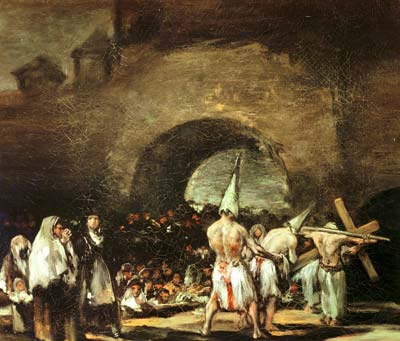
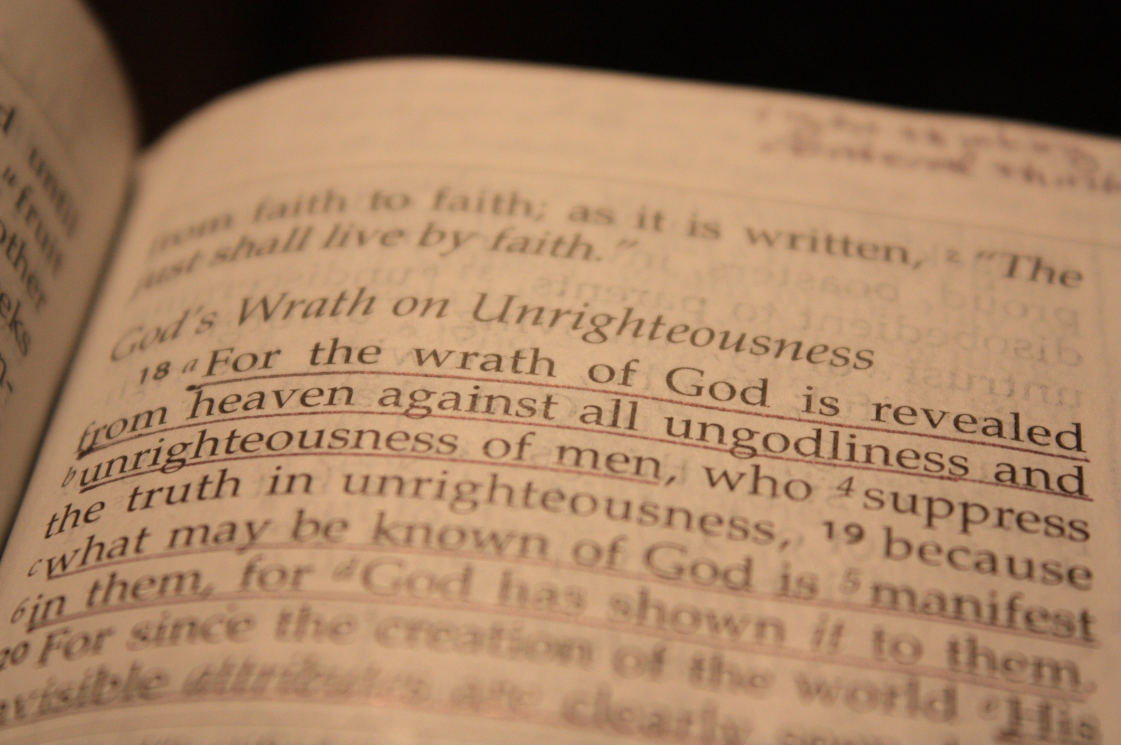
I took the time to comment on a Facebook thread, the premise of which was, that Western nations should discontinue immigration from the Islamic world. I do not think this course of action is warranted and doubt any government in the Western world would take up such a policy, but what got me thinking was a comment from an individual who believes the difficulties of integrating newcomers in Canadian society, with its official policy of multiculturalism, is divine punishment for what he sees as our having abandoned Christian principles as a society. This belief in divine punishment or retribution or justice is very old and not found solely in Christianity. Though I am no longer a practicing Christian, I admit such thoughts have crossed my mind when I experienced hard times and personal tragedy in my own life. When my four year old Brittany, Juno, succumbed to cancer in 2012, I remember talking to the breeder who sold her to me, asking if there had ever been any incidence of cancer in her dogs at such a young age. She told me no and she was just as shocked and horrified as me by the news. I then asked her “is it something I have done?” “What have I done to deserve this?” The questions were essentially rhetorical, but she answered, saying no, it was not anything I had done and assured me that “God does not hand us a burden He knows we cannot bear.” Continue reading
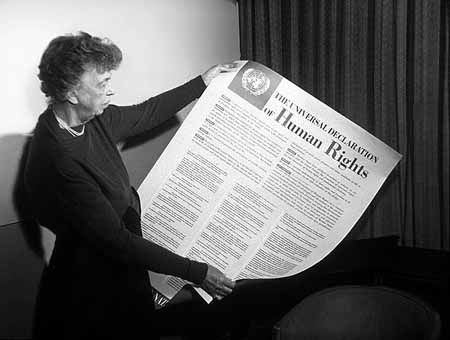
In the Universal Declaration of Human Rights (December 1948) in most solemn form, the dignity of a person is acknowledged to all human beings; and as a consequence there is proclaimed, as a fundamental right, the right of free movement in search for truth and in the attainment of moral good and of justice, and also the right to a dignified life. — Pope John XXIII, 1881-1963 Pacem in Terris, 1963

eleanor-rooseveltcairo-1990-declaration

In essays published earlier on this blog the topic of religion in society, particularly the direction the Western world took in gradually establishing a clear separation of religion and state, relegating religion to the sphere of private conscience is discussed. The last remnants of Papal authority in temporal affairs ended with the signing of the Lateran Treaty between the Vatican and the Italian government in 1929. In the present, in the Western world, religious liberty is guaranteed in law and members of religious institutions are free to comment on moral and political issues just as anyone else. In the Islamic world, this distinction between religion and state never emerged, save for the Republic of Turkey which was founded as a secular state in 1923. The Ottoman Caliphate was abolished in 1924. The constitutional, civil and common law legal systems in effect across the Western world are rooted in the theory of natural rights, primarily as espoused by the men of the Enlightenment, such as John Locke and Thomas Paine. By contrast, across the Islamic world, the system of law, sharia, a religiously based moral and legal code applies. The differences in the legal systems and the place of religion in society between the Western world and the Islamic world are quite noticeable in comparing responses to the the Universal Declaration of Human Rights of 1948. Continue reading

“Dignity is not negotiable. Dignity is the honor of the family.” — Vartan Gregorian

shame3shouldnt_real_family_values_value_all_families_tshirt-r9af494bc515f443588ea2190db93cf65_804gs_512

A good friend and hunting buddy of mine, Omer, is an observant Muslim whose family immigrated to Canada from Pakistan. Omer is an educated man as is the rest of his family. He is someone I have known several years and with whom I have enjoyed many in-depth discussions, learning about his faith and the culture in which he grew up before coming to Canada.  He tells me that family honour and shame are taken very seriously by some elements of Pakistani society. The phenomenon of honour killing is a reality for these elements of Pakistani society, particularly in the rural and tribal regions. Family honour is taken so seriously in this culture that if a family member (typically a girl or young woman) brings shame on the family the whole family suffers. They become untouchables; they are deemed unfit to associate with and most certainly are not welcome to marry into other families. The only way family honour can be restored in such a case is in killing the family member who brought the shame onto the family. This understanding of family honour is bound up in religion (Islam) and a culture in which men dominate. He certainly does not approve of this behaviour. He recognizes it as a problem that Pakistani society must address. Continue reading

We can only see a short distance ahead, but we can see plenty there that needs to be done. — Alan Turing (1912-1954)

enhanced-buzz-15299-1379589344-0IMG_1283

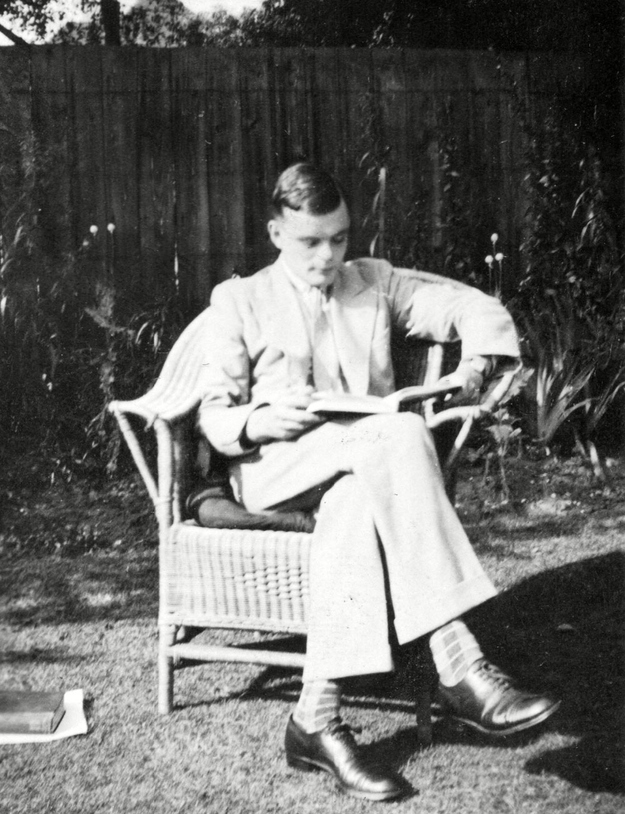
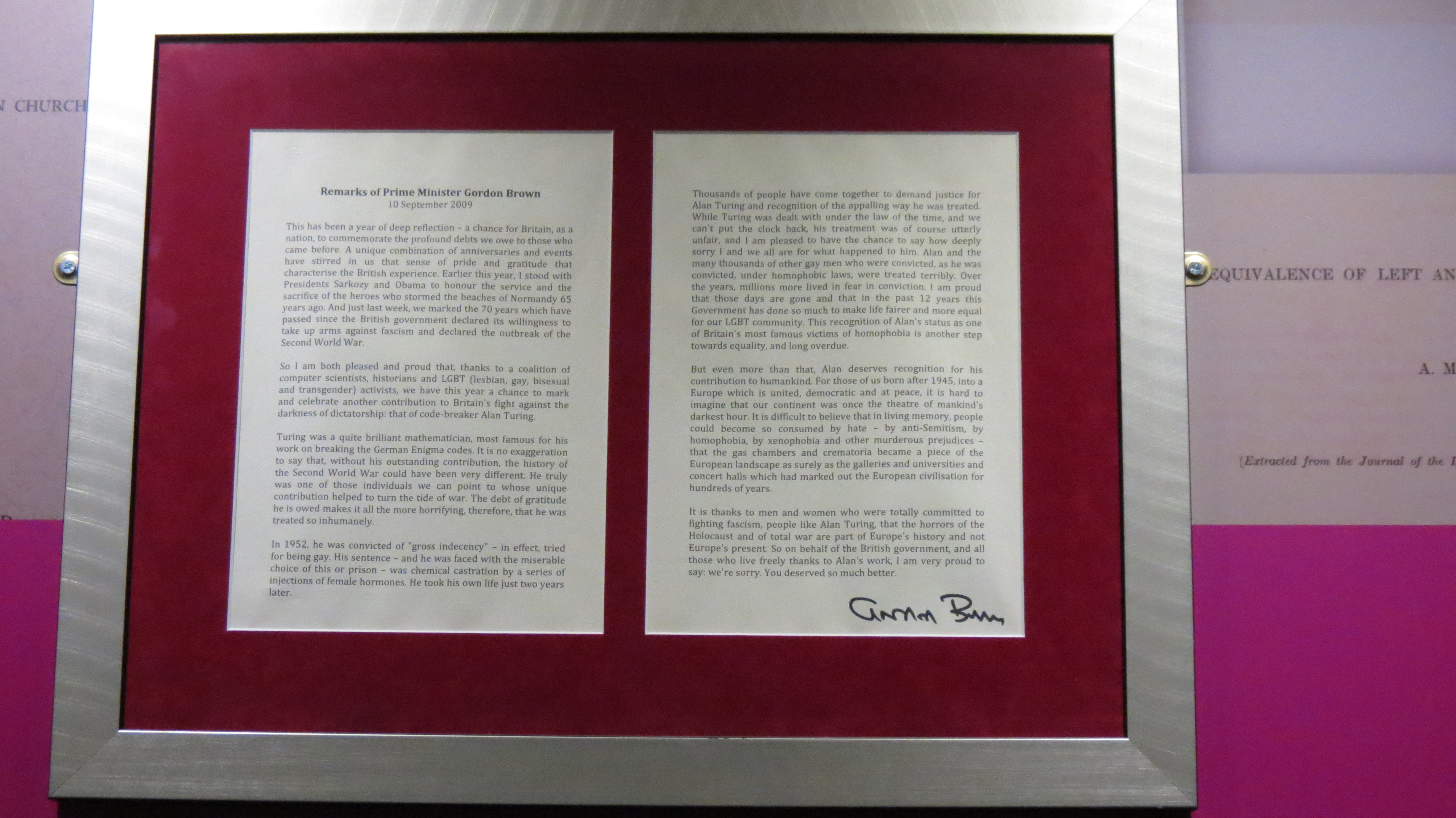
While Mika and I were enjoying our two weeks holiday in England last month among the sites we toured was Bletchley Park. This was especially of interest to Mika as he has a degree in computer science and mathematics from Queen’s University. Bletchley Park was the seat of British Intelligence, Government Code and Cypher School (GC&CS or GCCS, later renamed Government Communications Head Quarters GCHQ), during the Second World War where Axis radio transmissions were intercepted and decrypted. Those who worked there in the strictest secrecy and security made an invaluable contribution to the Allied war effort. Of those who worked at Bletchley Park during the Second World War was a mathematician and pioneering computer scientist named Alan Turing. It is held that “Turing’s brilliant ideas in solving codes, and developing computers to assist break them, may have saved more lives of military personnel in the course of the war than any other.” (Turing Biography) He is commemorated at Bletchley Park for his service to his King and country with a sculpture and a copy of the Letter of Apology from the British Government for the injustice he suffered following the war for having been identified as a “known homosexual,” an injustice that ruined his career, reputation, health and led to his suicide. Continue reading

Our trip to England

Nothing new has been published on the blog the past couple of weeks as Mika and I were on holiday in England from the 10th-25th of September. We stayed in London with our friends Des and Keith. This was Mika’s first trip to the British Isles. I lived there as a boy from 1968-1970 and went back for a holiday on my own in 2005. We had a really good time taking in various historic sites such as the Tower of London, the Monument, Westminster Abbey, Hampton Court, Handel House, the British Museum, the Museum of Natural History and the British Library. I will add I was a little disappointed with how commercialized London has become. The sense of British identity I remembered from my boyhood and wanted to see again really seems watered down in London in the present. There is a plethora of shops and kiosks where cheesy trinkets are hawked to tourists and some of the historic sites, notably the Tower of London, have the feel of a theme park to them. The next time we visit England we will take in more of the sites maintained by the National Heritage Trust as I understand these better represent British identity.

Posted by Geoffrey

Conservatives believe in the ties that bind us. Society is stronger when we make vows to each other and we support each other. I don’t support gay marriage in spite of being a conservative. I support gay marriage because I am a conservative. — David Cameron

RainbowLeaves2.jpgConservative_Party_of_Canada-logo-617795D556-seeklogo.com

Mika and I are supporters of the Conservative Party of Canada. While we support the government led by Prime Minister Harper, we do not have membership in the Conservative Party of Canada, nor do we donate money to the Party. Neither do we agree with every position taken by the Conservative government, and where instances of wrongdoing are exposed, we think those responsible should suffer the consequences. You may find it odd that a gay couple identifies as conservative, but we see ourselves moderate centre-right politically in our outlook and values. We value personal liberty, religious liberty (freedom of conscience), intellectual freedom, equality of opportunity and the pursuit of happiness. In our opinion, the Conservative Party of Canada, under the leadership of Prime Minister Stephen Harper, currently best represents these values. Continue reading

“Every man has a right to utter what he thinks truth, and every other man has a right to knock him down for it. Martyrdom is the test.”–Samuel Johnson (1709-1784)

Polish_Righteous_Józef_and_Wiktoria_Ulmaglorification-of-martyrs

Martyrdom is a concept with which I have been familiar since I was very young. From my Roman Catholic background growing up I remember reading accounts of the lives of saints, many of whom were martyred in the most grisly fashions imaginable. In the summer of 1969 my family, myself, my three siblings, our mother and father and my mother’s parents toured Europe, traveling in a Volkswagen van. Among the sights we saw were a number of art galleries where I viewed a great many works of art depicting the martyrdom of various saints. The martyrdom of Saint Sebastian is one of the more memorable depictions I recall, but it was the depiction of one event in particular from the Bible that really made an impression on me: that of the Massacre of the Innocents. From the first time I heard that story read to me I was troubled by it. I struggled to understand why God would allow such an atrocity. In one version of the story, written for children, I remember reading that we should find solace  in that the mothers of the slain baby boys would have found comfort had they known their murdered sons were the first Christian martyrs. This raised a question for me I have pondered over the years: can children be martyrs? Continue reading

I believe the fear of the rope, as it is generally called among certain classes, is a very great deterrent. — Rayner Goddard, Baron Goddard (10 April 1877 – 29 May 1971)

PierrepointWands3

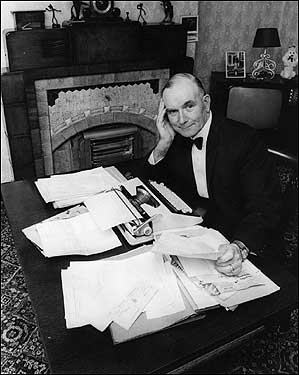
Mika and I are celebrating our fifteenth year together this month, August 2013. In all these years as a couple, we have never gone away together for a holiday. At long last, we are taking a holiday next month, a trip to England for two weeks. This will be Mika’s first visit to England. I lived in England from 1968-1970. I remember upon learning I would be travelling to England with my family imagining England was a land with castles where kings and queens resided and frequently ordered that people’s heads be chopped off. While this was true in the past, it happily was no longer the case by the late 1960s. In fact, capital punishment was no longer in use when I arrived in England with my family. Still, this is one facet of English history and law I find fascinating: the application of capital punishment. Judicial hanging was by far the most common form of execution in English history, although the cruel punishments of hanging, drawing and quartering, burning at the stake and beheading were practiced for centuries also. By the 20th century judicial hanging was the only method of execution (outside of the military where one could be shot at dawn) employed and the English had perfected its practice applying it liberally in executing people convicted of murder and high treason. Continue reading

I am a conservative Republican, but I believe in democracy and the separation of church and state. The conservative movement is founded on the simple tenet that people have the right to live life as they please as long as they don’t hurt anyone else in the process. — Barry Goldwater

2012-02-15-goldwater_0billboard

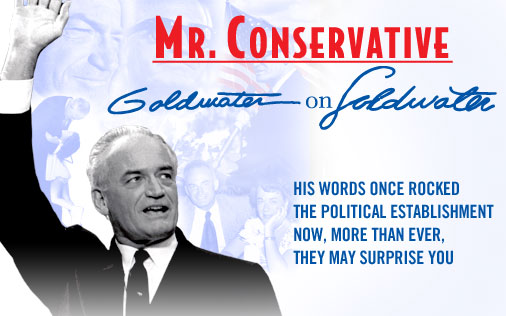
In a previously published essay, I discussed the life and career of Barry Goldwater, the Republican Senator from Arizona and his support of gays serving in the US military. Beyond this, he was in favour of gay rights in all of US society. This support was based on his conviction that there be a strict separation between religion and state. Goldwater’s position on gay rights and the separation of religion and state put him at odds with many conservatives, particularly the religious constituency known as the Christian right that supports the GOP and various socially conservative causes in the United States. The Christian right is composed primarily of the Moral Majority, renamed Moral Majority Coalition in 2004, the Christian Coalition of America, Focus on the Family and the Family Research Council. The most prominent figures in the Christian Right are Jerry Falwell (deceased), Pat Robertson, James Dobson and Tony Perkins. Continue reading

You don’t have to be straight to be in the military; you just have to be able to shoot straight. — Barry Goldwater (1909-1998)

66752_162144940601785_2132611037_ngoldwater1

The repeal of the Defense of Marriage Act (DOMA) in the United States is great news for gay couples who are employed by the federal government, particularly those who are serving in the US military. Interestingly, the ban on gays serving in the US military was lifted before the repeal of DOMA, and the effort to lift this ban was supported by what you might think was an unlikely advocate: none other than Barry Goldwater (1909-1998).  Goldwater was a staunch conservative, an anti-communist politician whose career in federal politics began in 1952 as a Senator for the State of Arizona and presidential candidate for the Republican Party in 1964, continuing until his retirement in 1987. He was forthright and transparent in his thoughts concerning gay rights in US society and gays serving in the US military, and not in the way you may be thinking.  Concerning gays serving in the military, he stated, “everyone knows that gays have served honorably in the military since at least the time of Julius Caesar. They’ll still be serving long after we’re all dead and buried. That should not surprise anyone.” He added:

The conservative movement, to which I subscribe, has as one of its basic tenets the belief that government should stay out of people’s private lives. Government governs best when it governs least – and stays out of the impossible task of legislating morality. But legislating someone’s version of morality is exactly what we do by perpetuating discrimination against gays. (Lifting ban on gays in military should be conservative cause)

Continue reading